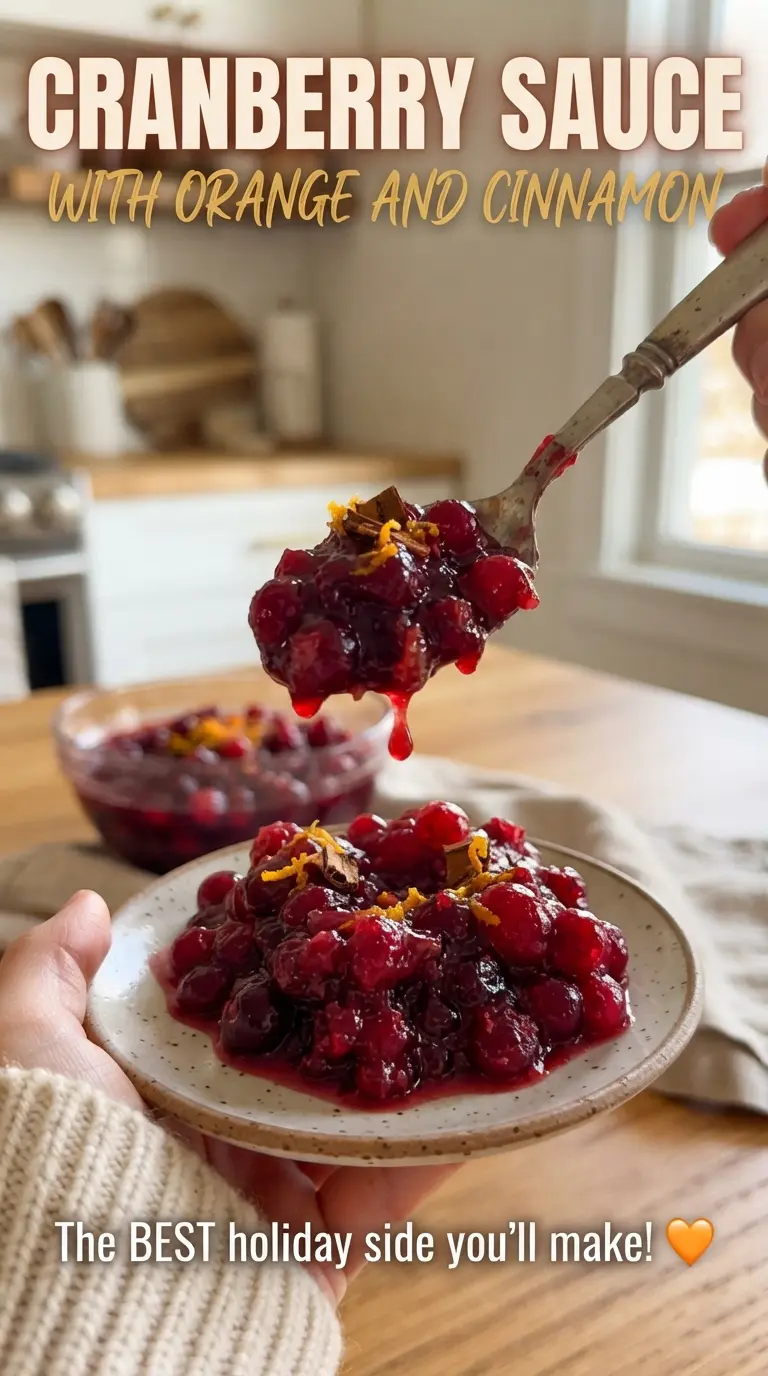
Bright cranberry sauce turns from a side dish into the thing people spoon back onto their plates first when it’s glossy, tart-sweet, and perfumed with orange and cinnamon. The best versions hold a soft set instead of running all over the plate, with whole berries that burst just enough to give the sauce body while still leaving a little texture.
This version leans on orange juice for sweetness and depth, then finishes with fresh zest after cooking so the citrus stays vivid instead of dulling out in the pot. The cinnamon sticks steep while the sauce simmers, which gives a warmer, rounder spice than ground cinnamon alone, and the small pinch of salt keeps the whole bowl from tasting flat.
Below, I’ve included the little details that matter most: when to stop cooking before it turns jammy, how to adjust the sweetness if your cranberries are extra sharp, and what to do if you want to make it a day or two ahead.
The sauce thickened up beautifully as it cooled, and the orange zest at the end kept it from tasting too sweet. I served it with roast turkey, and my husband kept sneaking spoonfuls straight from the bowl.
Save this cranberry sauce with orange and cinnamon for the holiday table or any roast dinner that needs a bright, spiced finish.
The Trick to Cranberry Sauce That Sets Instead of Turning Watery
The biggest mistake with cranberry sauce is pulling it off the stove while it still looks loose and thinking it will stay that way. It won’t. Cranberries carry a lot of pectin, which means the sauce thickens as it cools, and that thickening starts the moment the berries burst and their skins soften. If you cook it until it already looks thick in the pan, it usually ends up stiff after chilling.
The other thing that helps here is starting with the sugar dissolved in the orange juice, water, and spices before the cranberries go in. That gives the berries an even cooking liquid and keeps the sauce from tasting sharply tart in one bite and flat in the next.
- Orange juice — This does more than add liquid. It softens the tart edge of the cranberries and gives the sauce enough brightness that it still tastes fresh after a day in the fridge. Fresh-squeezed is nicest, but bottled juice works fine if it’s 100% juice.
- Cinnamon sticks — Whole sticks steep cleanly and give a slow, warm spice without making the sauce gritty. Ground cinnamon alone can work in a pinch, but it won’t give the same rounded flavor, so use both if you want the strongest cinnamon note.
- Orange zest — Stir this in after cooking. If it goes in too early, the oils lose their lift and the sauce tastes cooked instead of bright.
- Fresh cranberries — Frozen cranberries also work straight from the freezer. Don’t thaw them first; they break down in the pot just fine and can even help the sauce keep its shape better.
What Each Ingredient Is Actually Doing in This Recipe
- Primary ingredient (the star) — Quality matters most. Choose the best you can find.
- Cooking medium (oil, butter, or broth) — This carries flavors and prevents dryness.
- Seasonings (salt, pepper, spices, herbs) — Layer flavors so nothing overpowers. Build depth gradually.
- Aromatics (garlic, onion, herbs) — Cook with fat to bloom flavors. Become the foundation.
- Supporting ingredients — Complement the main ingredient without overpowering it.
- Sauce or liquid (if applicable) — Brings flavors together. Balance richness with acid.
- Acid (lemon, vinegar, wine, or other) — Brightens and prevents flat-tasting results.
- Final finish (garnish, glaze, or sauce) — Prevents one-dimensional taste and adds visual appeal.
How to Cook It So the Berries Burst at the Right Time
Build the Spiced Syrup First
Combine the sugar, orange juice, water, cinnamon sticks, ground cinnamon, and salt in the saucepan and bring it to a boil. You’re looking for the sugar to fully dissolve and the liquid to smell warm and citrusy before the cranberries go in. If the liquid still tastes sharp at this stage, don’t panic — the berries will soften it. A full boil matters here because it sets the flavor base before the fruit starts releasing pectin.
Let the Cranberries Pop Without Overcooking Them
Once the cranberries are in, the pot should move from a simmer to steady bubbling pretty quickly. Stir occasionally and listen for the berries to start popping; that’s the sign their skins are splitting and the sauce is beginning to thicken. Keep cooking for about 10 to 12 minutes, but watch the texture more than the clock. If it starts looking jam-like in the pot, it’s already a step past what you want after chilling.
Finish With Zest and Cool It Down
Take the pan off the heat and stir in the orange zest while the sauce is still hot. That lets the zest perfume the whole batch without cooking off the citrus oils. Leave the cinnamon sticks in while it cools if you want a deeper spice note, then pull them out before serving or storing. The sauce will look thinner than the final result when it’s warm, so give it time in the fridge before deciding whether it needs anything else.
How to Adapt This Cranberry Sauce When You Need a Different Finish
Less Sweet, More Tart
Cut the sugar back to 1/2 cup if you like a sharper sauce that stands up to rich meats. The texture will still set, but the finished flavor will read brighter and a little more traditional. If the cranberries are especially sour, start with 1/2 cup and add a spoonful more after cooking only if it still tastes too intense.
Dairy-Free and Naturally Gluten-Free
This recipe already fits both dairy-free and gluten-free eating without any changes. That’s part of why it works so well for a mixed holiday table: the flavor comes from fruit, spice, and citrus rather than butter or flour. Just double-check that your orange juice is pure juice and not a cocktail blend with extra additives.
Make It Ahead for the Fridge
This sauce is actually better after a night in the refrigerator because the flavors settle and the texture firms up. If you’re making it ahead, stop cooking when it still looks slightly loose in the pan. By the next day, it will be spoonable and glossy instead of runny.
Extra-Spiced Version
For a deeper spice note, add a small strip of orange peel to the pot while the sauce simmers, then remove it with the cinnamon sticks. That gives you a more aromatic finish without making the sauce taste like potpourri. Don’t add more ground cinnamon than the recipe calls for unless you want the fruit to take a back seat.
Storage and Reheating
- Refrigerator: Store in an airtight container for up to 1 week. It thickens as it chills, so expect a firmer spoonful the next day.
- Freezer: Cranberry sauce freezes well for up to 2 months. Freeze in a sealed container with a little headspace, then thaw overnight in the fridge.
- Reheating: Warm it gently on the stove over low heat or serve it cold. If you reheat it, add a splash of water or orange juice only if it seems too stiff; boiling it hard can loosen the set and make it loose again.
Questions I Get Asked About This Recipe
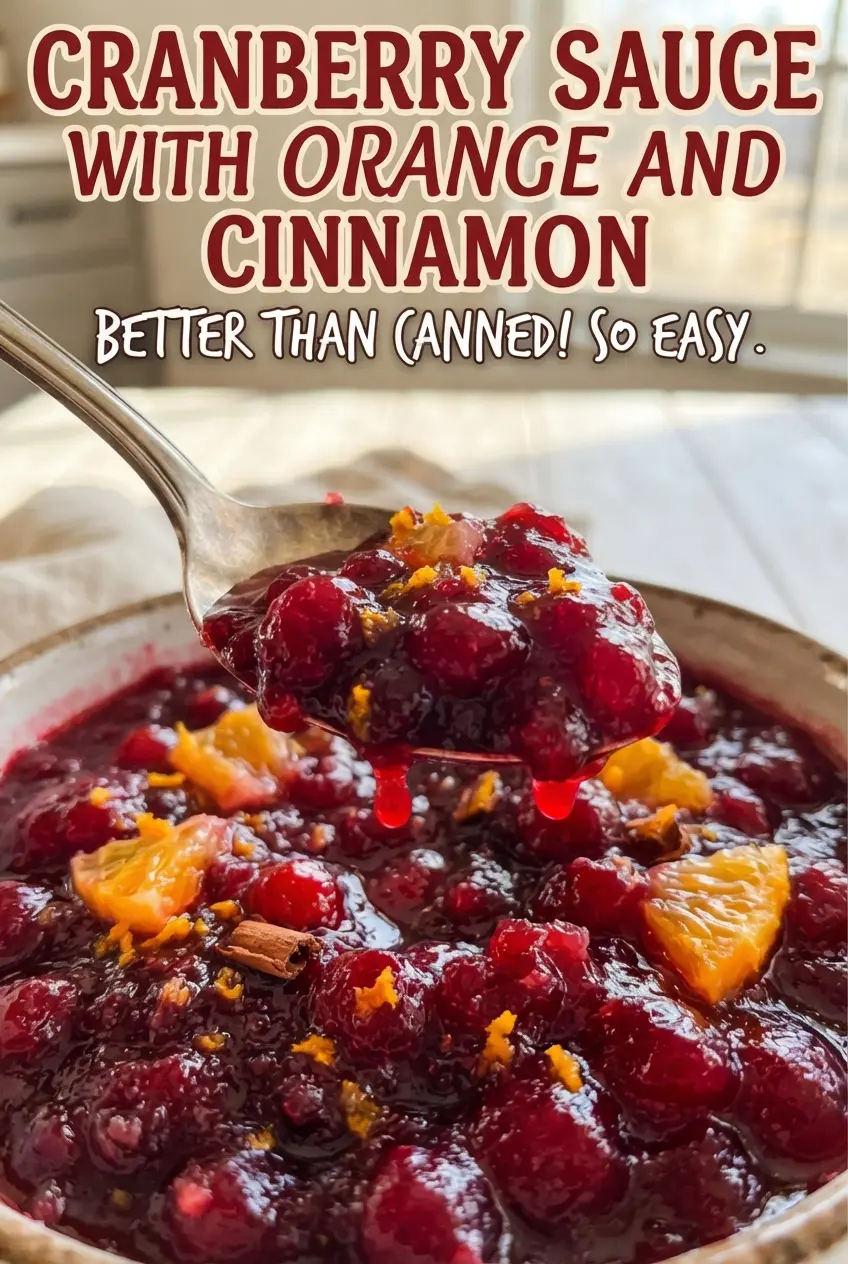
Cranberry Sauce with Orange and Cinnamon
Ingredients
Equipment
Method
- Combine sugar, orange juice, water, cinnamon sticks, ground cinnamon, and salt in a saucepan. Bring to a boil over medium-high heat, stirring until the sugar dissolves and the mixture turns glossy.
- Add fresh cranberries to the boiling mixture. Simmer for 10-12 minutes, stirring occasionally, until most berries burst and the sauce thickens.
- Remove the saucepan from the heat and stir in orange zest. Leave the cinnamon sticks in as it cools to intensify the spice.
- Remove the cinnamon sticks after the sauce has cooled. Chill before serving to set the texture.