Golden roast chicken gets a bright, glossy finish here, with cranberry pan juices that taste sharp, sweet, and deeply savory all at once. The skin turns lacquered and burnished in the oven, while the onions soften in the drippings and the cranberries burst into a sauce that clings to every slice. It’s the kind of roast that feels special enough for company but still practical enough for a Sunday dinner.
The trick is layering flavor at every stage. Butter rubbed under and over the skin keeps the meat juicy and helps the rosemary perfume the bird from the inside out. Maple syrup alone can turn sticky and one-note, so it gets cut with Dijon mustard and loosened with broth, which keeps the glaze balanced and gives you enough pan sauce to spoon generously over the carved chicken.
Below, I’ve added the cues I use to keep the skin browned without drying out the breast, plus the small timing details that make the glaze cling instead of slide off. The cranberry sauce is simple, but it rewards paying attention to the pan at the end.
The glaze was glossy and the cranberries burst right into the pan juices, so the sauce had this perfect sweet-tart balance. My chicken hit 165 on the dot and the skin stayed crisp even after resting.
Save this Cranberry Maple Roast Chicken for a glossy holiday-style roast with crisp skin and tart cranberry pan sauce.
The Reason the Glaze Stays Bright Instead of Burning
A maple glaze can go from glossy to bitter fast if it hits the oven too early or spends too long exposed to high heat. That’s why the first stretch of roasting happens without the glaze. The chicken needs time to render fat and start browning on its own before the syrup goes on, or the sugars darken before the meat is fully cooked.
The other thing that keeps this recipe steady is the Dijon. It doesn’t just add tang; it helps the maple coat the chicken in a thinner, more even layer instead of pooling in sticky patches. Once the cranberries go into the pan, they burst into the broth and turn the glaze into a sauce that tastes finished, not just sweet.
- Roasting at 425°F — high enough to brown the skin well, but not so hot that the glaze scorches before the thigh is done.
- Adding the glaze halfway through — this keeps the maple flavor clear and keeps the skin from turning dark before the chicken cooks through.
- Resting before carving — the juices settle back into the meat, and the sauce thickens a little as it cools off the heat.
What Each Ingredient Is Actually Doing in This Roast
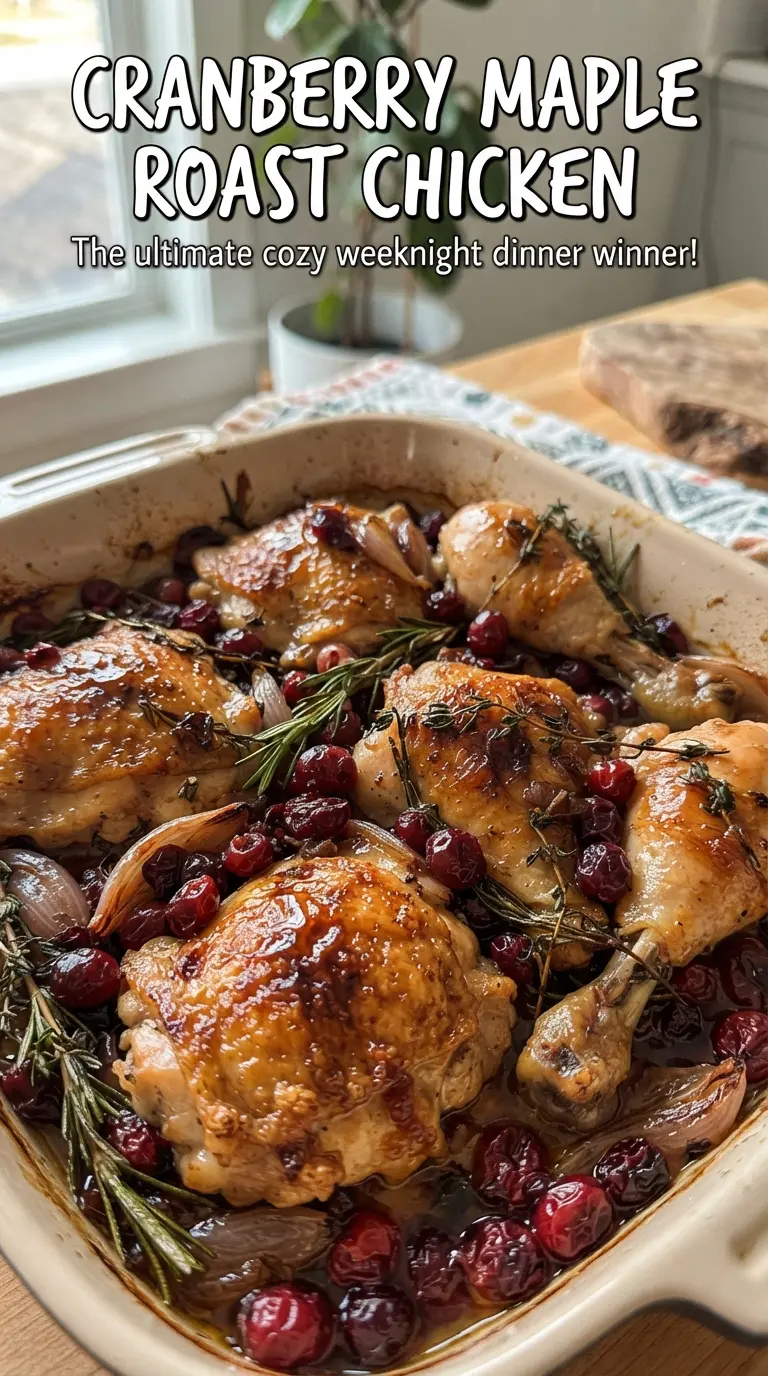
- Whole chicken — A 5-pound bird roasts evenly in the time given and gives you both crisp skin and enough meat for six. If yours runs larger, expect the timing to stretch; the thigh temperature matters more than the clock.
- Butter and rosemary — Softened butter under and over the skin seasons the meat all the way through and keeps the breast from drying out. Fresh rosemary matters here because dried rosemary stays a little sharp and dusty; chop it fine so it spreads without clumping.
- Orange and garlic — These perfume the cavity from the inside as the chicken roasts. The orange adds a faint citrus lift, while the garlic softens and sweetens; neither one makes the chicken taste strongly of citrus or garlic, but both keep the drippings from tasting flat.
- Cranberries, maple syrup, Dijon, and broth — This is the sauce. Cranberries bring the tartness, maple brings the gloss, Dijon keeps the sweetness in check, and broth thins everything into spoonable pan juices instead of a syrupy glaze.
- Red onion — The wedges roast in the drippings and become soft, sweet, and a little jammy. They’re worth keeping large so they don’t disappear into the pan before the chicken is done.
Building the Roast in Two Phases So the Skin Stays Crisp
Seasoning Under the Skin
Pat the chicken dry first. Wet skin steams, and steamed skin never crisps the way you want it to. Work the softened butter mixed with rosemary under the skin over the breast and legs, then rub the outside with the salt and pepper. If the butter is too cold, it tears the skin instead of sliding underneath it, so let it sit on the counter until it spreads easily.
Roasting Before the Glaze Goes On
Set the chicken over the onion and roast it for the first 50 minutes without touching it. That first stretch is when the bird builds color and starts rendering fat into the pan. If the skin is pale at this point, give it a few more minutes before glazing; the color you build now is what keeps the finished roast looking deep and lacquered instead of pale and sticky.
Brushing and Finishing
Whisk the maple syrup and Dijon together, then brush on half once the chicken has browned. Add the cranberries and broth to the pan so they can burst and reduce around the bird, then brush with the remaining glaze near the end. Pull the chicken when the thigh reaches 165°F, not when the breast looks done; breast meat dries out faster, and the thigh temperature tells you the bird is safely cooked without guessing.
How to Adapt This Roast Without Losing the Sweet-Tart Balance
Dairy-Free Version
Replace the butter with olive oil or a plant-based butter that’s meant for baking and roasting. Olive oil gives you good browning and a cleaner finish, while plant-based butter keeps a little more of the same richness. The skin will still roast well, though it won’t taste quite as round as it does with dairy butter.
Lower-Sugar Version
Cut the maple syrup to 1/4 cup and add an extra splash of broth to keep the glaze brushable. You’ll get a less sticky finish and a little less shine, but the cranberries still bring enough brightness to keep the dish lively.
Herb Swap for What’s in the Fridge
If you’re out of rosemary, use thyme instead. Thyme is softer and a little more floral, so the roast tastes less piney and a touch gentler, but it still plays well with cranberry and orange. Use the same amount and chop it finely so it distributes evenly under the skin.
Storage and Reheating
- Refrigerator: Store leftovers for up to 4 days. The skin softens, but the meat stays juicy if it’s kept covered with a little sauce.
- Freezer: Freeze sliced chicken and pan sauce together for up to 2 months. The texture of the cranberries softens after thawing, but the flavor holds up well.
- Reheating: Reheat gently covered in a 325°F oven with a spoonful of broth or sauce so the meat doesn’t dry out. High heat tightens the chicken fast and makes the glaze taste harsh.
Answers to the Questions Worth Asking
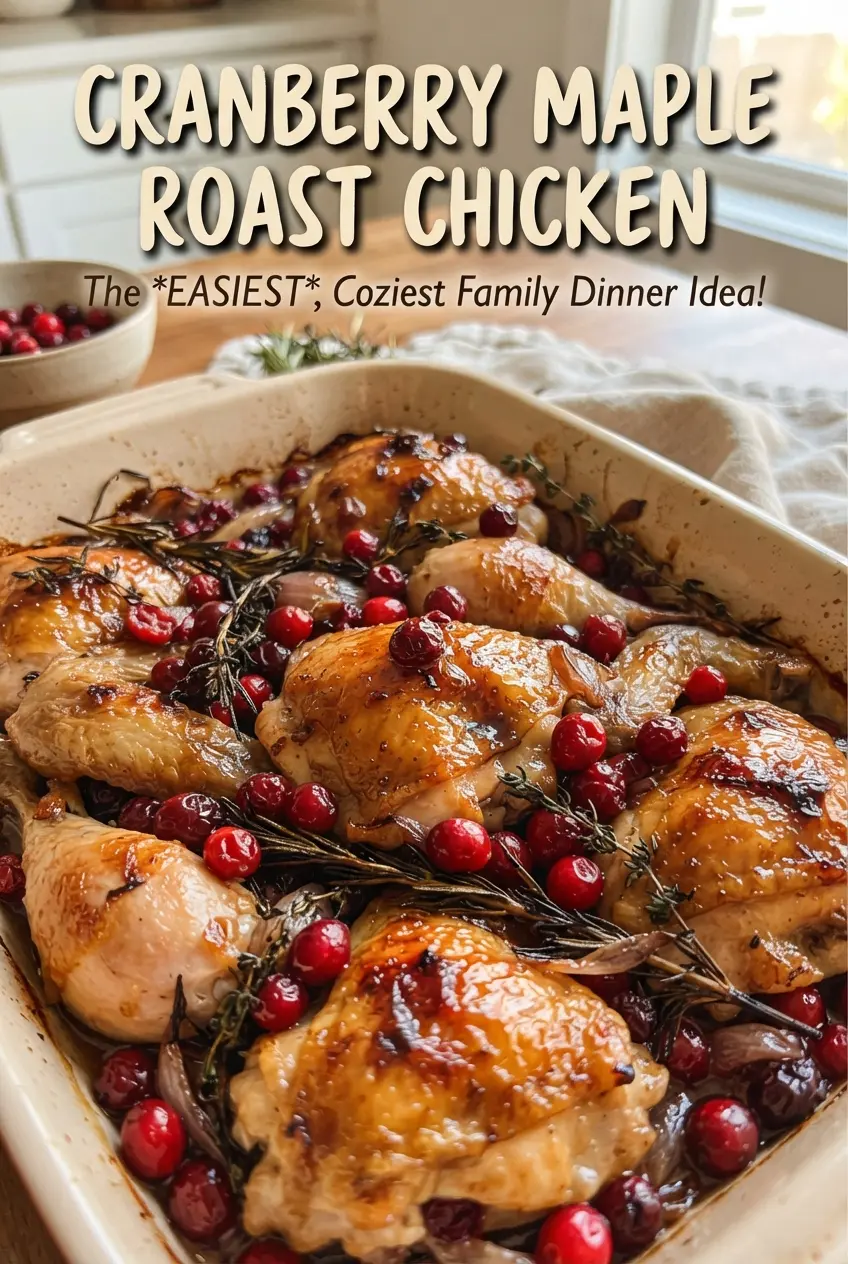
Cranberry Maple Roast Chicken
Ingredients
Equipment
Method
- Preheat oven to 425F. Let it fully come up to temperature before roasting.
- Season the chicken inside and out with salt and black pepper. Rub the softened butter mixed with chopped fresh rosemary under and over the skin for even coverage.
- Stuff the cavity with orange halves and garlic. Place the chicken in a roasting pan and surround it with red onion wedges.
- Roast for 50 minutes at 425F. Look for the skin to turn deep golden as it cooks.
- Whisk maple syrup and Dijon mustard, then brush half over the chicken. Reserve the remaining glaze for the end of cooking.
- Add fresh cranberries and chicken broth to the pan. Scatter the cranberries around the chicken so they begin to burst in the glaze.
- Roast 25-30 minutes more at 425F, brushing with the remaining glaze as it cooks. Roast until the thigh reaches 165F.
- Rest the chicken for 15 minutes. This helps the juices set so carving is clean.
- Carve the chicken and spoon the cranberry pan sauce over the top. Serve hot with the pan glaze and cranberries.