Deeply golden broth, tender shredded chicken, and soft egg noodles make this chicken noodle soup feel like the bowl people reach for when they want comfort with a little extra backbone. The ginger, garlic, turmeric, lemon, and vinegar don’t just add flavor; they give the broth a clean, bright edge that keeps each spoonful from tasting flat or heavy. It still eats like the chicken noodle soup you know, just with more lift and a little more punch.
What makes this version work is the order. The chicken simmers first with the vegetables and aromatics, so the broth picks up body and flavor before the noodles go in. The lemon juice and apple cider vinegar are stirred in at the end, where they stay fresh and sharp instead of cooking off. Turmeric adds color and a warm earthiness, but it needs the ginger and garlic beside it or it can taste thin on its own.
Below, I’ve included the small details that keep the broth clear, the noodles tender, and the chicken juicy. There’s also a few smart swaps and storage notes for the times you want to make a pot ahead.
The broth turned a beautiful golden color and the lemon at the end kept it tasting bright, not heavy. I made it when I was coming down with a cold and it was exactly what I wanted.
Save this cold fighting chicken noodle soup for the days when you want a bright, gingery broth with tender chicken and lemon at the finish.
The Broth Needs Time to Taste Like Something, Not Just Be Hot
Chicken noodle soup can turn bland fast when everything goes into the pot and then gets rushed to the table. The broth here gets its flavor in layers: onion, celery, carrot, garlic, ginger, thyme, and the chicken all simmer together long enough to give you a broth that tastes like it was cared for. If you pull the chicken too early, the broth stays thin. If you boil it hard the whole time, the chicken goes stringy and the broth turns cloudy.
The simmer matters more than the boil. A gentle bubble keeps the chicken tender and lets the aromatics soften without breaking apart. The turmeric gives the broth that deep golden look, but it’s the ginger and garlic that keep it from tasting flat or dusty.
- Bone-in chicken pieces — These give the broth body and a fuller, rounder taste than boneless meat. Skin-on pieces add extra richness, but if you only have skinless bone-in chicken, it still works well.
- Fresh ginger and garlic — Fresh is worth it here. Powdered versions won’t give you the same sharp, clean heat that makes the broth feel restorative.
- Turmeric — Use it for color and warmth, not as the main spice. Too much turmeric can taste chalky, so keep it to the measured spoonful.
- Egg noodles — These are best cooked at the end so they stay soft but not mushy. If they sit in the broth too long, they keep absorbing liquid and can turn bloated.
What Each Ingredient Is Actually Doing in This Recipe

- Primary ingredient (the star) — Quality matters most. Choose the best you can find.
- Cooking medium (oil, butter, or broth) — This carries flavors and prevents dryness.
- Seasonings (salt, pepper, spices, herbs) — Layer flavors so nothing overpowers. Build depth gradually.
- Aromatics (garlic, onion, herbs) — Cook with fat to bloom flavors. Become the foundation.
- Supporting ingredients — Complement the main ingredient without overpowering it.
- Sauce or liquid (if applicable) — Brings flavors together. Balance richness with acid.
- Acid (lemon, vinegar, wine, or other) — Brightens and prevents flat-tasting results.
- Final finish (garnish, glaze, or sauce) — Prevents one-dimensional taste and adds visual appeal.
Building the Pot in the Right Order
Starting with the Chicken and Aromatics
Put the chicken, vegetables, garlic, ginger, broth, turmeric, and thyme into the pot together and bring it just to a boil before lowering the heat. That first boil gets things moving, but the real work happens at a gentle simmer. You want the surface to ripple, not roar. If the pot cooks too hard, the broth can turn greasy and the chicken fibers tighten up before they’ve had a chance to soften.
Simmering Until the Meat Lets Go
After about 25 minutes, the chicken should be easy to lift and the meat should be falling off the bone with almost no resistance. Take the pieces out while they’re still hot enough to shred cleanly. If you leave them in until they’re overcooked, the meat gets dry and stringy once it goes back into the pot.
Cooking the Noodles at the End
Add the egg noodles only after the chicken is shredded and returned to the broth. They usually need 6 to 8 minutes, depending on the brand, and you want them tender with a little spring left. This is the point where a lot of soups go wrong: the noodles sit too long and steal too much broth. If you plan to have leftovers, cook the noodles slightly underdone or boil them separately.
Finishing with Lemon and Vinegar
Stir in the lemon juice and apple cider vinegar at the very end, then taste and season with salt and pepper. Acid wakes the whole pot up, but if you add it early, some of that brightness disappears during simmering. The finished broth should taste clean, savory, and a little lively at the back of the throat.
What to Change When You Need a Different Kind of Bowl
Make It Gluten-Free
Swap the egg noodles for your favorite gluten-free noodle, but cook them separately if possible. Gluten-free noodles can cloud the broth and soften faster than wheat noodles, so keeping them out of the main pot preserves both texture and the clearest broth.
Use Boneless Chicken in a Pinch
Boneless thighs or breasts will work, but the broth will be lighter and less rich. Cut the simmering time back and start checking earlier so the meat stays tender. You can add a little extra broth or a parmesan rind if you want more depth.
Add More Heat
A pinch of red pepper flakes or a sliced fresh chili fits naturally here. Add it with the garlic and ginger so the heat softens into the broth instead of landing as a sharp, raw bite at the end.
Storage and Reheating
- Refrigerator: Store for up to 4 days. The noodles will keep soaking up broth, so expect the soup to thicken as it sits.
- Freezer: The broth and chicken freeze well, but the noodles don’t. Freeze the soup without noodles if you can, then cook fresh noodles when reheating.
- Reheating: Warm it gently on the stove over medium-low heat until steaming. A hard boil can make the chicken dry and the noodles mushy, especially if they’ve already sat in the broth overnight.
Questions I Get Asked About This Recipe
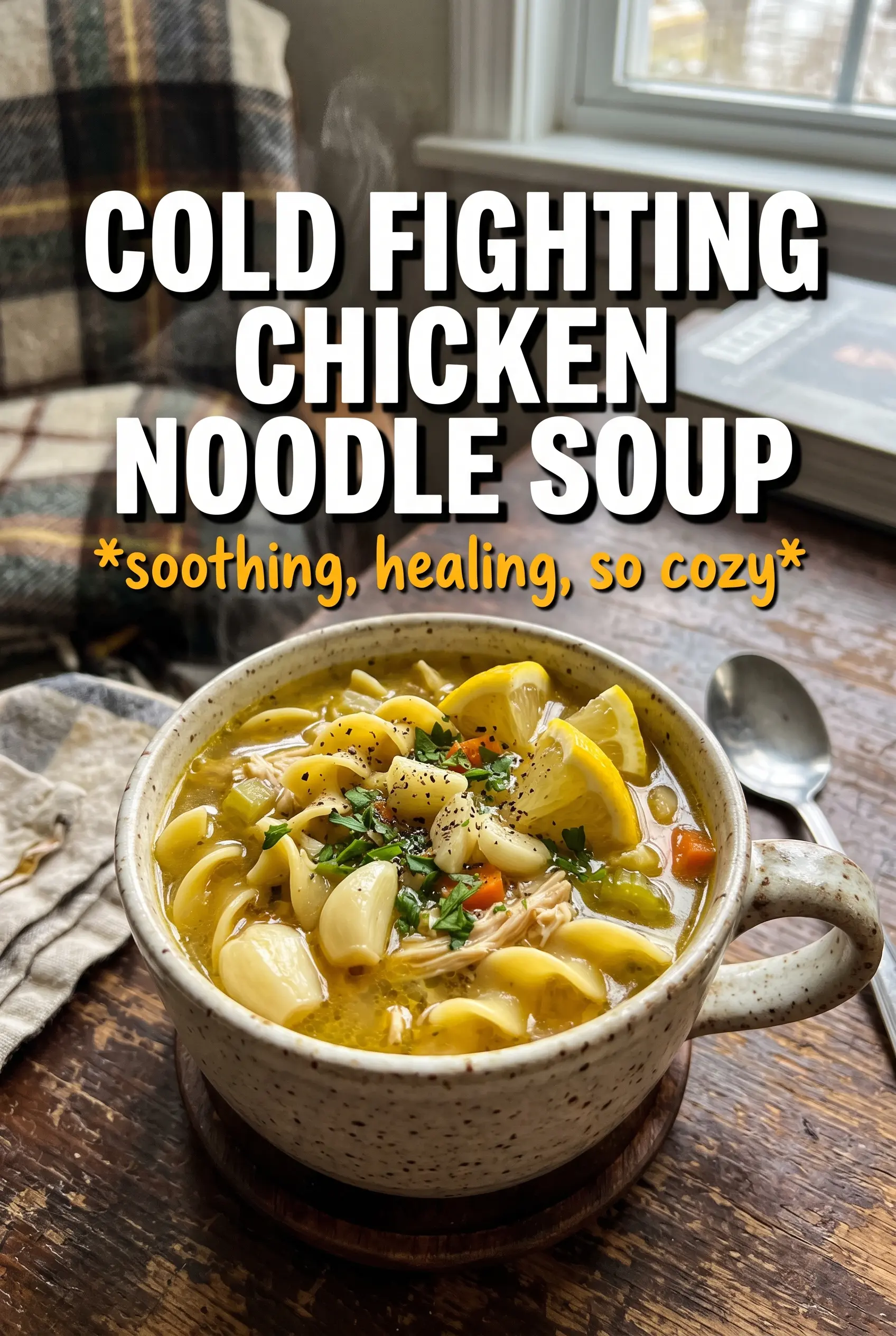
Cold Fighting Chicken Noodle Soup
Ingredients
Equipment
Method
- Add chicken pieces, sliced carrots, sliced celery, diced onion, minced garlic, grated fresh ginger, chicken broth, turmeric, and dried thyme to a large pot. Bring to a boil over high heat, then reduce to a simmer and cook for 25 minutes until the chicken is falling off the bone.
- Remove the chicken from the pot and shred it, discarding the skin and bones. Return the shredded chicken to the pot and bring it back to a simmer.
- Add egg noodles and cook for 6-8 minutes until tender. The broth should look lightly thickened and the noodles should be fully cooked.
- Stir in lemon juice and apple cider vinegar, then season with salt and pepper to taste. Taste and adjust seasoning so the broth has a bright, balanced finish.
- Ladle into bowls and serve with fresh parsley and lemon wedges. Add a squeeze of lemon just before eating for the most vivid flavor.