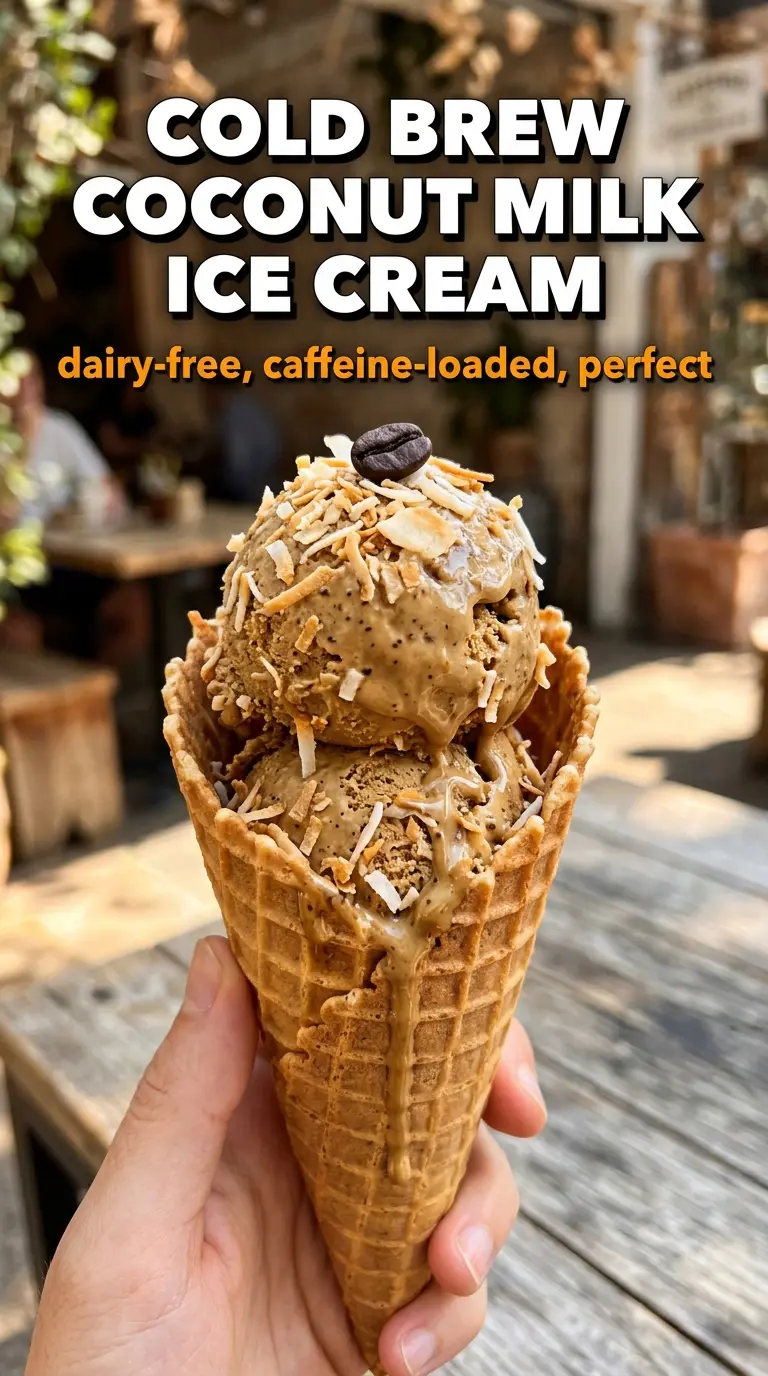
Cold brew coffee ice cream hits harder when the base is clean, creamy, and deeply roasted instead of watered down by extra dairy. Coconut milk gives this version a lush body that carries the coffee without muting it, and the result scoops like a classic custard-style ice cream even though there’s no cream or egg yolks in the mix. The finish is bold, a little tropical, and smooth enough that the coffee flavor stays front and center.
The key is treating the ice cream base like a cooked sauce for just long enough to dissolve the sugar and activate the thickener. Arrowroot or cornstarch gives the mixture a subtle body before it ever goes into the churn, which helps keep the final texture from turning icy. Full-fat coconut milk matters here. The lighter stuff leaves the ice cream thin and the coffee comes across sharp instead of rounded.
Below you’ll find the small details that matter most, including how to keep the base from tasting chalky and which swaps still give you that dense, scoopable finish.
The coconut milk made it unbelievably creamy, and the coffee flavor stayed strong after freezing. I loved that it scooped cleanly after a few hours in the freezer instead of turning into a brick.
Save this cold brew coffee and coconut milk ice cream for the nights when you want a bold, dairy-free scoop with a deep coffee finish.
The Trick That Keeps This Dairy-Free Ice Cream From Turning Icy
Coconut milk ice cream fails when the base is too thin or the starch never gets a chance to do its job. In a dairy-free mix, fat alone won’t save the texture. You need enough body in the base before churning so the freezer doesn’t turn every spoonful into hard crystals. That’s why the quick stovetop step matters here.
The cornstarch or arrowroot thickens the mixture just enough to improve the freeze without making it taste pudding-like. If you skip that brief heat, the sugar can stay a little gritty and the final ice cream sets up loose and icy. The other thing that matters is using full-fat coconut milk from the can, not carton coconut beverage. Carton milk won’t give you the rich, stable base this flavor needs.
- Full-fat coconut milk — This is the backbone of the recipe. Shake the cans before opening, then whisk the contents well so the cream and liquid stay evenly mixed. If one can looks separated, that’s normal.
- Cold brew coffee concentrate — Use a concentrate that tastes good on its own, because freezing softens flavor a little. A weak brew will disappear. A strong concentrate keeps the coffee edge bold after churning.
- Arrowroot or cornstarch — Either one helps the base freeze smoother. Cornstarch gives a slightly more familiar ice cream texture, while arrowroot works well too but can thin out if you boil it hard or too long.
- Maple syrup swap — Maple syrup works if you want a deeper, rounder sweetness, but it will nudge the flavor toward caramel. Granulated sugar gives the cleanest coffee taste and a slightly firmer freeze.
What Each Ingredient Is Actually Doing in This Ice Cream
- Base ingredient (cream, milk, or custard) — This provides the foundation and richness. Quality matters.
- Sweetener (sugar, honey, or condensed milk) — This sweetens and prevents ice crystals. The ratio is critical.
- Flavor element (vanilla, fruit, chocolate, or other) — This defines the ice cream personality. Use quality ingredients.
- Egg yolks (if making custard base) — These create richness and silky texture. Optional but elevates ice cream.
- Churning (if using ice cream maker) — This incorporates air and prevents ice crystals. Critical for smooth texture.
- Freezing temperature and time — Proper freezing prevents rock-hard texture. Store at 0°F or below.
- Mix-ins (chocolate, cookies, fruit, or swirls) — These add texture and prevent one-dimensional flavor. Add near end of churning.
- Serving temperature (slightly soft, not rock hard) — This provides creamy mouthfeel. Remove from freezer 5 minutes before serving.
The 15 Minutes That Set Up the Scoop
Whisking the Base Smooth
Start with a saucepan and whisk the coconut milk, cold brew concentrate, sugar, starch, vanilla, and salt until the mixture looks completely smooth. Any little clumps of starch now will show up later as gummy spots. The sugar won’t look dissolved yet, and that’s fine. The goal is an even mixture before heat goes on.
Heating Just Until It Thickens
Warm the base over medium heat while whisking constantly. After about 5 minutes, it should look glossy and a touch thicker, like a thin cream sauce that coats the whisk without turning pasty. If it simmers hard, pull the pan back. Too much heat can make the coconut milk taste cooked and can push the starch texture into something chalky.
Cooling Fast, Then Chilling Fully
Set the pan in an ice bath and stir until the mixture stops steaming, then refrigerate it until completely cold. This step is not busywork. A warm base churns poorly and gives you softer, icier ice cream. If the mixture goes into the machine even slightly warm, it won’t pick up enough air and the texture will suffer.
Churning and Freezing to Scoop
Churn according to your machine’s instructions until the ice cream looks like thick soft-serve and pulls away from the sides in ribbons. Transfer it to a container and freeze until scoopable. The surface should set, but the center should still give a little when you press it. For serving, drizzle a little more cold brew concentrate on top right before it hits the bowl.
Make It Sweeter and More Coffee-Forward
Add an extra tablespoon or two of sugar if your cold brew concentrate is especially bitter. If you want a darker coffee finish, reduce the vanilla slightly so it doesn’t pull attention away from the roast. The ice cream will taste more like straight coffee with a creamy body.
Use Maple Syrup Instead of Sugar
Maple syrup gives the base a warmer, rounder sweetness and keeps the recipe fully dairy-free and refined sugar-free if that matters to you. The tradeoff is a slightly softer freeze and a faint maple note in the background. It still works, but the coffee flavor reads less sharp and clean.
Make It Vegan and Gluten-Free Without Changes
This recipe already lands naturally as vegan and gluten-free as written, which is one reason it works so well for a crowd. Just double-check that your cold brew concentrate has no added dairy and that your starch is pure. The texture stays the same, so you don’t lose anything by keeping it plant-based.
Storage and Reheating
- Refrigerator: The churned base should be refrigerated before freezing for at least 4 hours, but it won’t keep as a liquid dessert base for more than 2 days without losing freshness.
- Freezer: Store the finished ice cream in a lidded container for up to 2 weeks. After that, the texture starts to get frostier, especially around the edges.
- Reheating: Let it sit at room temperature for 5 to 10 minutes before scooping. Don’t microwave it; that melts the edges fast and leaves the center icy.
Answers to the Questions Worth Asking
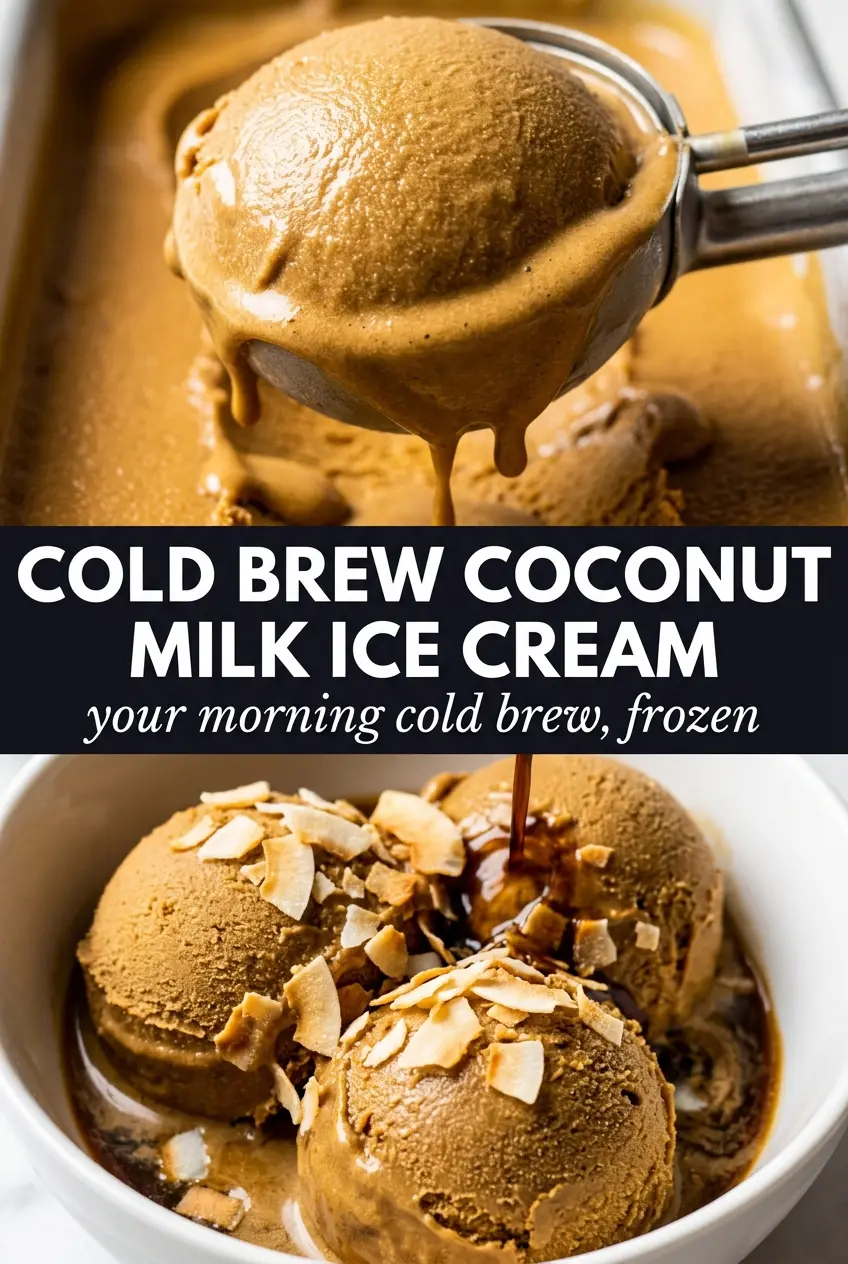
Cold Brew Coffee and Coconut Milk Ice Cream
Ingredients
Equipment
Method
- Whisk full-fat coconut milk, cold brew coffee concentrate, granulated sugar or maple syrup, arrowroot or cornstarch, vanilla extract, and salt together in a saucepan until smooth.
- Heat the mixture over medium heat, whisking constantly, until it thickens slightly and the sugar dissolves, about 5 minutes, then remove from heat.
- Cool the mixture completely over an ice bath until no longer warm.
- Refrigerate at least 4 hours until thoroughly chilled.
- Churn in an ice cream maker according to the manufacturer’s instructions, stopping when it reaches a soft-serve consistency.
- Freeze until scoopable, then serve with an extra drizzle of cold brew coffee concentrate.