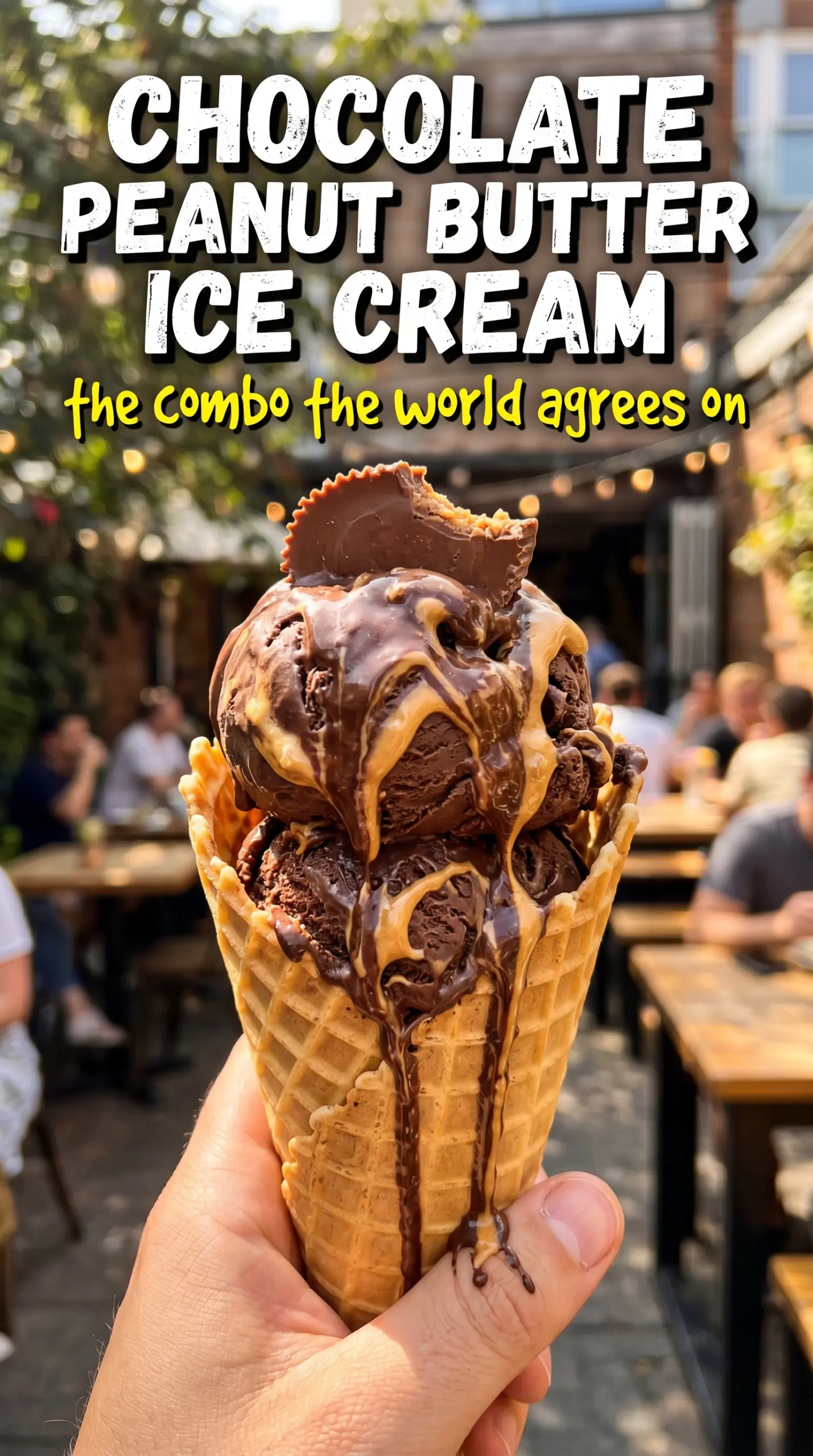
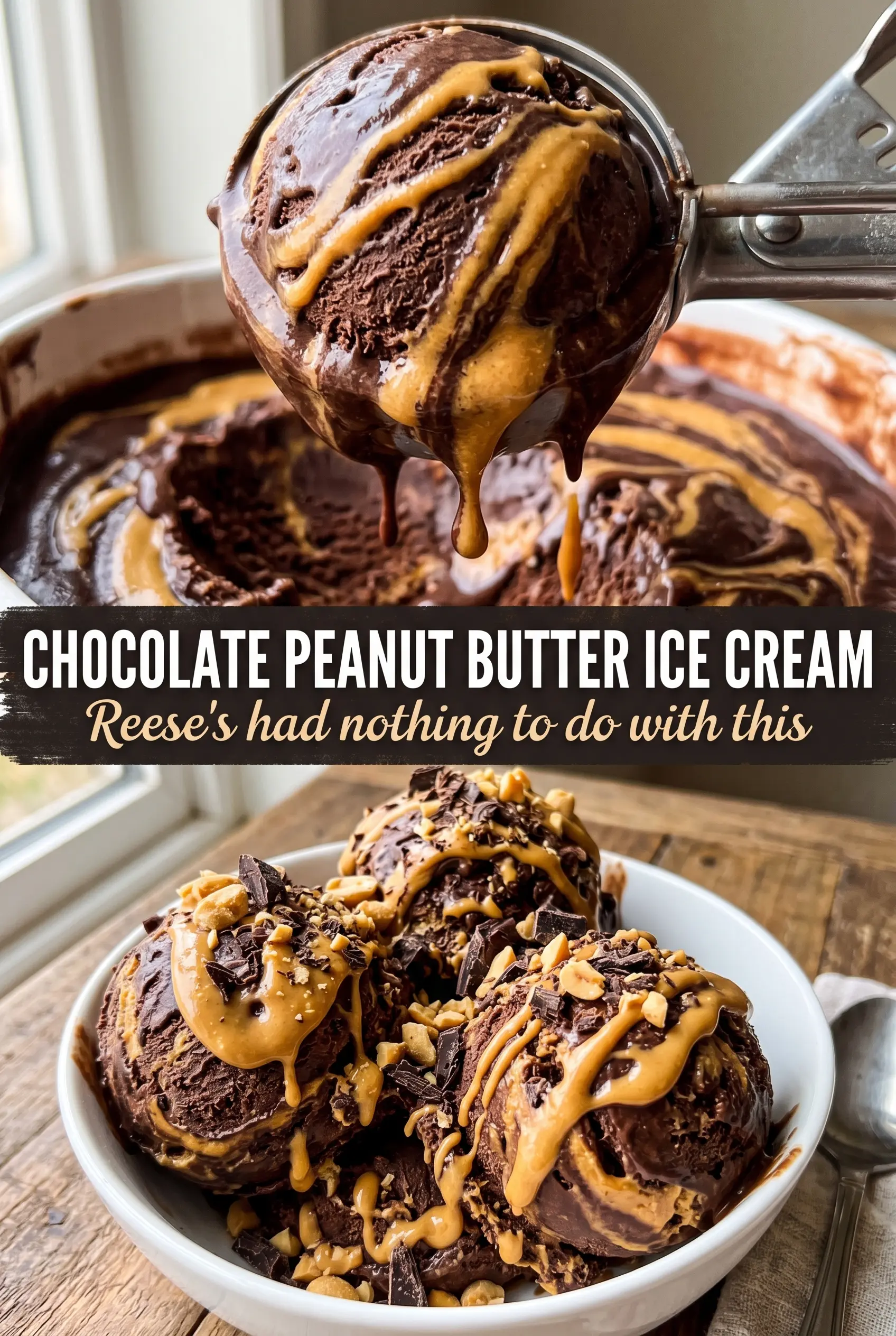
Deep chocolate ice cream with thick ribbons of creamy peanut butter is the kind of dessert that disappears fast because every spoonful hits both directions at once: bittersweet, cold, and rich, then salty and nutty right after. The chocolate base stays dense and scoopable, while the peanut butter swirls cut through it with that soft, almost fudge-like pull you want in a homemade ice cream.
What makes this version work is the custard base. Cocoa gets whisked into the cream and milk first, so it blooms before the eggs go in, and chopped dark chocolate melts into that base for a deeper chocolate taste than cocoa alone can give. The peanut butter is added at the end, warm enough to drizzle but not so hot that it disappears into the ice cream.
Below, I’ll walk through the one step that keeps the custard smooth, the best way to get those peanut butter ribbons instead of a muddy swirl, and a few swaps that still keep the texture right.
The chocolate base came out silky and the peanut butter stayed in real ribbons instead of dissolving. I let it chill overnight and the texture was scoopable straight from the freezer.
Like this chocolate peanut butter ice cream? Save it to Pinterest for the nights when you want a rich custard base and thick peanut butter swirls in every scoop.
The Custard Has to Cook Before It Looks Thick
The biggest mistake with homemade ice cream is pulling the custard too early. It looks thin right up until it doesn’t, and if you stop at warm instead of 175F, the finished ice cream can freeze icy instead of creamy. The custard should coat the back of a spoon and leave a clean line when you run your finger through it.
That slow cook also matters because cocoa and chopped chocolate need time to fully melt into the dairy before the eggs set the base. If the heat is too high, the eggs can curdle before the chocolate mixture thickens. Keep the burner at medium-low and stir constantly, scraping the bottom and corners of the pan so nothing catches.
What Each Ingredient Is Doing in This Ice Cream
- Heavy cream — This gives the ice cream its plush, dense body. Don’t swap in half-and-half if you want the same scoopable texture; it freezes harder and tastes flatter.
- Whole milk — The milk keeps the base from becoming overly rich. Lower-fat milk will work in a pinch, but the ice cream will freeze more firmly and lose some of that custard softness.
- Unsweetened cocoa powder — Cocoa builds the deep chocolate flavor without making the base waxy. Whisk it into the dairy before heating so it hydrates evenly and doesn’t stay dusty or grainy.
- Dark chocolate — This is what gives the ice cream a fuller, darker chocolate finish. Semi-sweet chocolate also works, but the result will be sweeter and a little less intense.
- Egg yolks — The yolks are what turn this from sweet frozen cream into real custard ice cream. If the mixture looks scrambled at any point, the heat went up too fast; strain it immediately and chill it before churning.
- Peanut butter — Warm it just until it flows from the spoon. If it’s too thick, it clumps; if it’s too hot, it melts into the base instead of staying in ribbons.
Churning the Base and Swirling the Peanut Butter at the Right Moment
Blooming the Cocoa and Melting the Chocolate
Whisk the cocoa into the cream and milk before the pan goes over the heat. That step keeps the cocoa from floating on top and gives you a smooth, dark base from the start. Once the mixture is steaming, add the chopped chocolate and whisk until it disappears completely and the mixture looks glossy, not speckled. If any bits stay unmelted, let the hot dairy sit for a minute before whisking again instead of cranking up the heat.
Tempering the Yolks Without Scrambling Them
Whisk the egg yolks and sugar until pale and slightly thickened. Then add the hot chocolate mixture in a slow stream while whisking constantly. That gradual step raises the temperature of the eggs without turning them into little curds. If you dump the hot liquid in all at once, the yolks seize before they can thicken the base.
Cooking to the Spoon-Coating Point
Return the mixture to the saucepan and cook it until it reaches 175F. The custard should thicken enough to coat a spoon, but it should never boil. If you see bubbles breaking hard at the surface, pull the pan down and keep stirring off the heat. Strain the finished custard, then stir in the vanilla and salt while it’s still warm so they blend in cleanly.
Layering in the Peanut Butter Swirl
Chill the custard completely before churning, or the ice cream maker will never build the right texture. Once the churned ice cream is ready, layer it into a container and drizzle warm peanut butter between each layer. Drag a knife through just a few times. If you overmix, you lose the ribbons and end up with a uniform tan color instead of distinct swirls.
Use natural peanut butter for a looser swirl
Natural peanut butter stays softer when warm and gives you long, dramatic ribbons. Stir it well before warming, since the oil separation can leave the swirl uneven if you scoop from the top of the jar.
Make it dairy-free with full-fat coconut milk
Use two cans of full-fat coconut milk in place of the cream and whole milk for a dairy-free version. The texture will be a little softer and the coconut flavor will come through, but the chocolate and peanut butter still carry it well.
Skip the custard and make a no-egg version
If you want an egg-free ice cream, replace the yolks with 2 tablespoons cornstarch whisked into the cold dairy before heating. The base won’t taste as rich, but it will still churn into a creamy chocolate ice cream with good body.
Add chopped peanut butter cups for more crunch
Fold in chopped peanut butter cups at the end of churning if you want more texture. Add them after the ice cream has thickened, not before, or they’ll sink and soften too much during freezing.
Storage and Reheating
- Refrigerator: Not suitable for fridge storage once churned; it will melt. Keep the custard base chilled up to 2 days before churning.
- Freezer: Store in an airtight container for up to 2 weeks for the best texture. After that, the peanut butter swirl can get a little icy around the edges.
- Reheating: Let the container sit at room temperature for 5 to 10 minutes before scooping. If it’s rock hard, don’t microwave the whole thing; that softens the edges while leaving the center frozen.
Questions I Get Asked About This Recipe
Chocolate Peanut Butter Ice Cream
Ingredients
Equipment
Method
- Whisk cocoa powder into the heavy cream and whole milk, then heat until steaming and small bubbles appear around the edges, with the cocoa fully dissolved (about 5 minutes).
- Add the chopped dark chocolate and whisk until completely melted and smooth, with the mixture glossy and dark (about 2 minutes).
- Whisk the egg yolks and granulated sugar until pale and slightly thick, with the mixture looking lighter in color (about 2 minutes).
- Slowly whisk the hot chocolate cream into the egg yolk mixture to temper it, keeping a steady stream so it stays smooth.
- Return the mixture to a saucepan and cook until it reaches 175°F, stirring constantly until it coats the back of a spoon.
- Strain the custard to remove any bits of egg, then whisk in vanilla extract and salt.
- Cool completely at room temperature, then refrigerate until fully cold (at least 4 hours), until the surface looks set and chilled.
- Churn the chilled custard in an ice cream maker according to the manufacturer’s instructions until thick and scoopable.
- Layer the churned ice cream into a container, drizzling warm creamy peanut butter between each layer.
- Swirl the peanut butter through the layers with a knife, creating thick ribbons visible on top and throughout.
- Freeze the ice cream for at least 2 hours until firm, with a solid texture that holds a defined scoop shape.