Vanilla ice cream loaded with chunks of soft, buttery cookie dough is one of those desserts that disappears fast because every spoonful gives you two textures at once: creamy custard and cold little bites of brown sugar dough. The cookie dough stays distinct instead of dissolving into the base, so you get that classic cookie-dough-in-ice-cream experience all the way through the carton.
What makes this version work is that both parts are handled on purpose. The flour gets heat-treated so the dough is safe to eat, then the dough balls are frozen before they ever meet the churned custard. That keeps the pieces from smearing into the ice cream and helps them stay chewy enough to taste like actual cookie dough, not cookie crumbs.
Below, I walk through the parts that matter most: how to keep the custard silky, how to stop the dough from turning icy, and what to change if you want a different mix-in or need a dairy-free direction.
The cookie dough stayed in perfect little chunks and the custard came out smooth, not icy. I followed the freezing step exactly and it scooped like a dream after overnight chilling.
Like this cookie dough ice cream? Save it to Pinterest for the nights when you want big dough chunks in every scoop and a silky vanilla custard base.
The trick that keeps the dough from disappearing into the custard
The biggest mistake with cookie dough ice cream is adding soft dough straight into freshly churned ice cream and expecting clean chunks later. At that point, the dough is too warm and too pliable, so it breaks apart and streaks through the base instead of staying in pieces. Freezing the dough balls first gives them enough structure to survive the churn.
The custard matters too. Egg yolks and sugar give the base body, but cooking it gently to 175F is what keeps it smooth. If you rush the heat, the eggs scramble, and once that happens you can’t strain your way back to silkiness. The goal is a thickened custard that coats a spoon and leaves a clear line when you run your finger across the back.
- Heat-treated flour — This is nonnegotiable for safe edible dough. Bake it long enough to kill off any raw flour concerns, then cool it completely before mixing or it will melt the butter and make the dough greasy.
- Mini chocolate chips — Mini chips distribute better than regular chips and give you more bites with chocolate in them. If you only have standard chips, chop them a bit so the dough pieces stay smaller and easier to scoop.
- Heavy cream and whole milk — The cream gives richness and the milk keeps the base from turning heavy. Swapping in lower-fat milk makes the finished ice cream icier, especially once the cookie dough is folded through.
- Egg yolks — They build the custard and help the ice cream freeze with a smoother texture. There isn’t a true one-to-one substitute here if you want the same body, so this is not the place to cut corners.
What Each Ingredient Is Actually Doing in This Ice Cream

- Base ingredient (cream, milk, or custard) — This provides the foundation and richness. Quality matters.
- Sweetener (sugar, honey, or condensed milk) — This sweetens and prevents ice crystals. The ratio is critical.
- Flavor element (vanilla, fruit, chocolate, or other) — This defines the ice cream personality. Use quality ingredients.
- Egg yolks (if making custard base) — These create richness and silky texture. Optional but elevates ice cream.
- Churning (if using ice cream maker) — This incorporates air and prevents ice crystals. Critical for smooth texture.
- Freezing temperature and time — Proper freezing prevents rock-hard texture. Store at 0°F or below.
- Mix-ins (chocolate, cookies, fruit, or swirls) — These add texture and prevent one-dimensional flavor. Add near end of churning.
- Serving temperature (slightly soft, not rock hard) — This provides creamy mouthfeel. Remove from freezer 5 minutes before serving.
Building the custard so it stays smooth and scoopable
Heat-treating the flour
Spread the flour on a baking sheet and bake it at 350F for 5 minutes, then let it cool completely. That short bake is enough to make the flour safe without toasting it so far that it changes the dough flavor. If you mix warm flour into the butter, the dough turns soft and hard to roll, which is exactly what you don’t want before freezing.
Mixing the edible dough
Beat the softened butter and brown sugar until the mixture looks thick and creamy, then add the milk, vanilla, and salt. Stir in the cooled flour until you get a soft dough, then fold in the mini chips. Roll the dough into small balls and freeze them solid; small pieces are easier to distribute evenly, and they don’t overpower the custard with huge frozen lumps.
Cooking the vanilla custard
Warm the cream and milk, then whisk the hot dairy into the egg yolks and sugar gradually so the eggs temper instead of curdling. Put everything back on the heat and cook it until it reaches 175F and lightly coats the spoon. If the custard looks grainy or starts to scramble, it got too hot too fast, so strain it immediately and chill it fully before churning.
Churning and folding in the chunks
Churn the cold custard until it reaches soft-serve texture, then add the frozen cookie dough pieces during the last few minutes. Waiting until the end keeps the chunks from getting beat to pieces by the machine. Transfer the ice cream to a freezer container and freeze it until firm enough to scoop cleanly; if you stop at soft-serve stage, it will taste loose and melt too fast in the bowl.
How to adjust this without losing the cookie-dough effect
Dairy-free version with a custard-style base
Use full-fat canned coconut milk in place of the cream and milk, then build the custard the same way with egg yolks. The result is a little more coconut-forward and less classic vanilla, but it still freezes creamy. Keep the cookie dough dairy-free too by using plant butter and a non-dairy milk.
Extra cookie dough pieces
If you want a chunkier ice cream, make a half batch more dough and fold in a few extra frozen pieces after churning. The tradeoff is a denser freeze and slightly less clean scoop, but the payoff is a carton that tastes packed with dough in every bite.
No ice cream maker
You can freeze the custard in a shallow container and stir it every 30 to 45 minutes until it thickens, then fold in the dough near the end. The texture won’t be as airy as churned ice cream, but it still works. The important part is keeping the dough frozen so it doesn’t sink and smear.
Storage and Reheating
- Refrigerator: Not recommended, since ice cream softens and loses its structure quickly in the fridge.
- Freezer: Store in an airtight container for up to 2 weeks. After that, the texture starts to pick up ice crystals and the dough pieces get less tender.
- Reheating: Let it sit at room temperature for 5 to 10 minutes before scooping. If it’s frozen hard, don’t microwave the whole container or you’ll melt the edges before the center loosens.
Questions I Get Asked About This Recipe
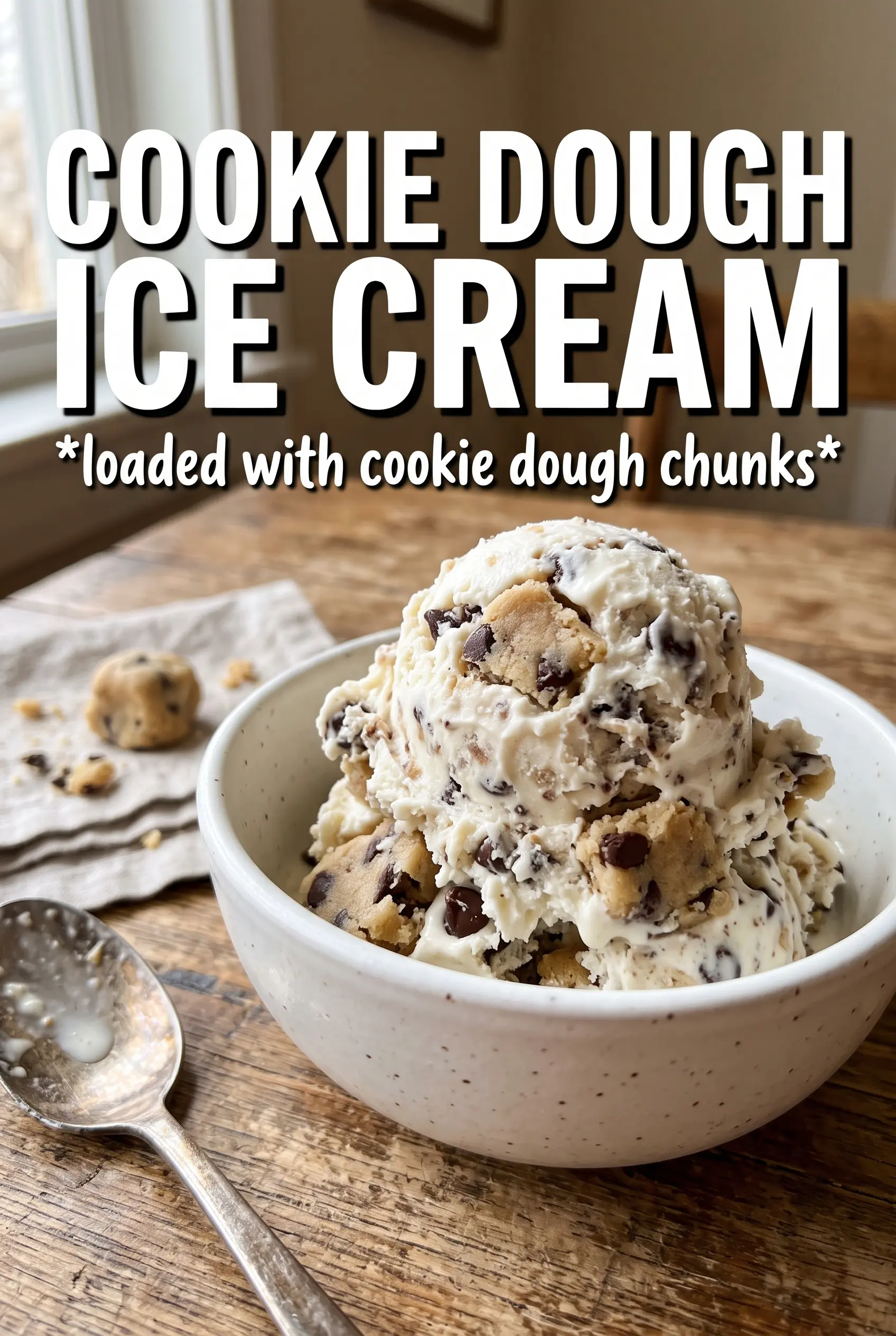
Chocolate Chip Cookie Dough Ice Cream
Ingredients
Equipment
Method
- Spread the all-purpose flour on a sheet pan and bake at 350F for 5 minutes, then let it cool completely before using.
- Keep the cooled heat-treated flour ready so it won’t melt the dough when mixed.
- Mix softened unsalted butter with packed brown sugar, milk, vanilla extract, and salt until smooth.
- Stir in the heat-treated all-purpose flour and mini chocolate chips until a thick dough forms.
- Roll the dough into small balls, place on a tray, and freeze until solid.
- Heat the heavy cream and whole milk just until steaming.
- Whisk egg yolks with granulated sugar until smooth, then slowly whisk in the hot cream-milk mixture.
- Cook the custard while stirring until it reaches 175F, then strain for a silky texture.
- Stir in vanilla extract and salt, then cool to room temperature and refrigerate for 4 hours.
- Churn the chilled custard in an ice cream maker according to the manufacturer instructions.
- Fold in the frozen cookie dough pieces during the last 5 minutes of churning so the chunks stay intact.
- Transfer to a container and freeze until firm.