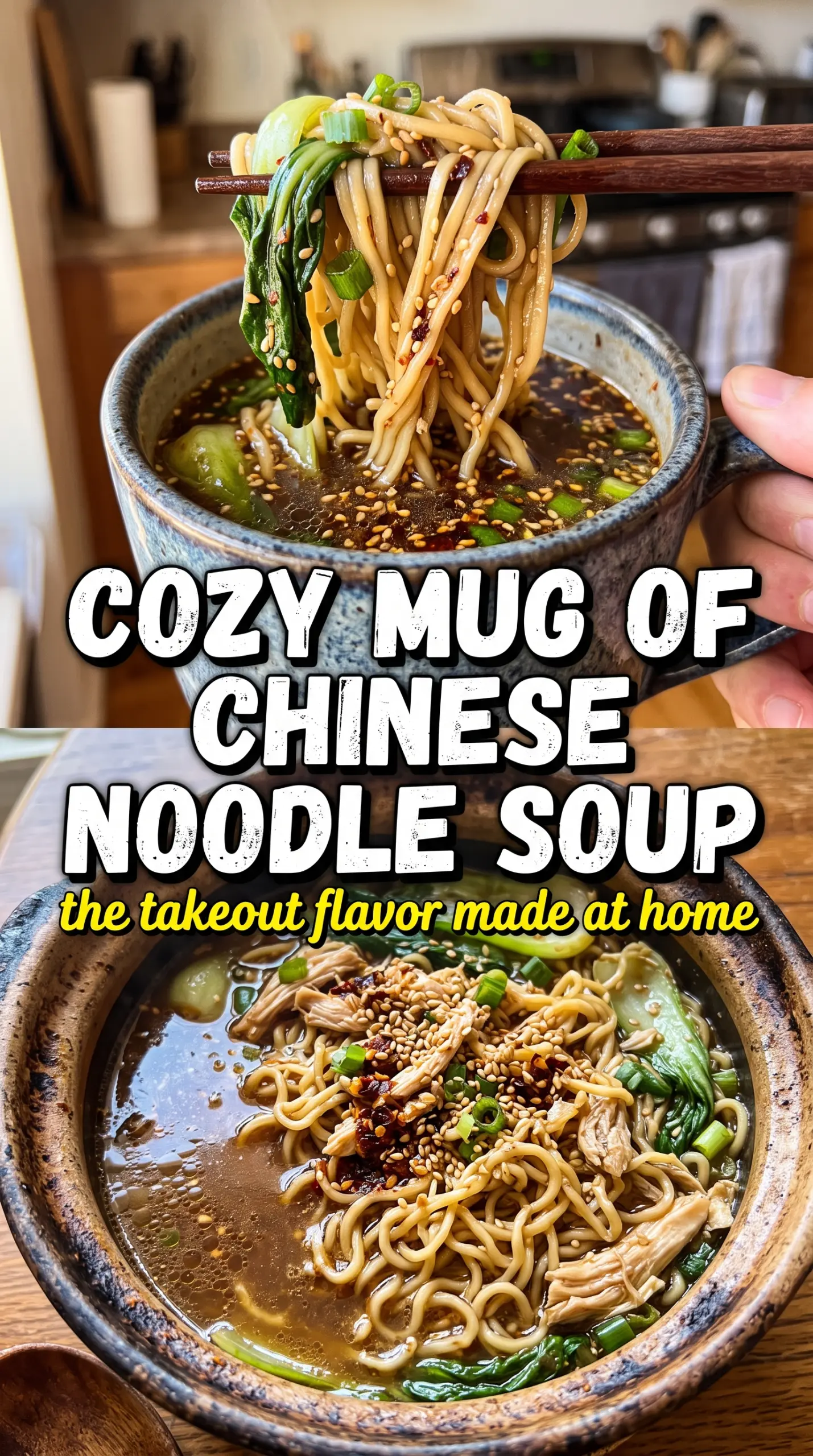
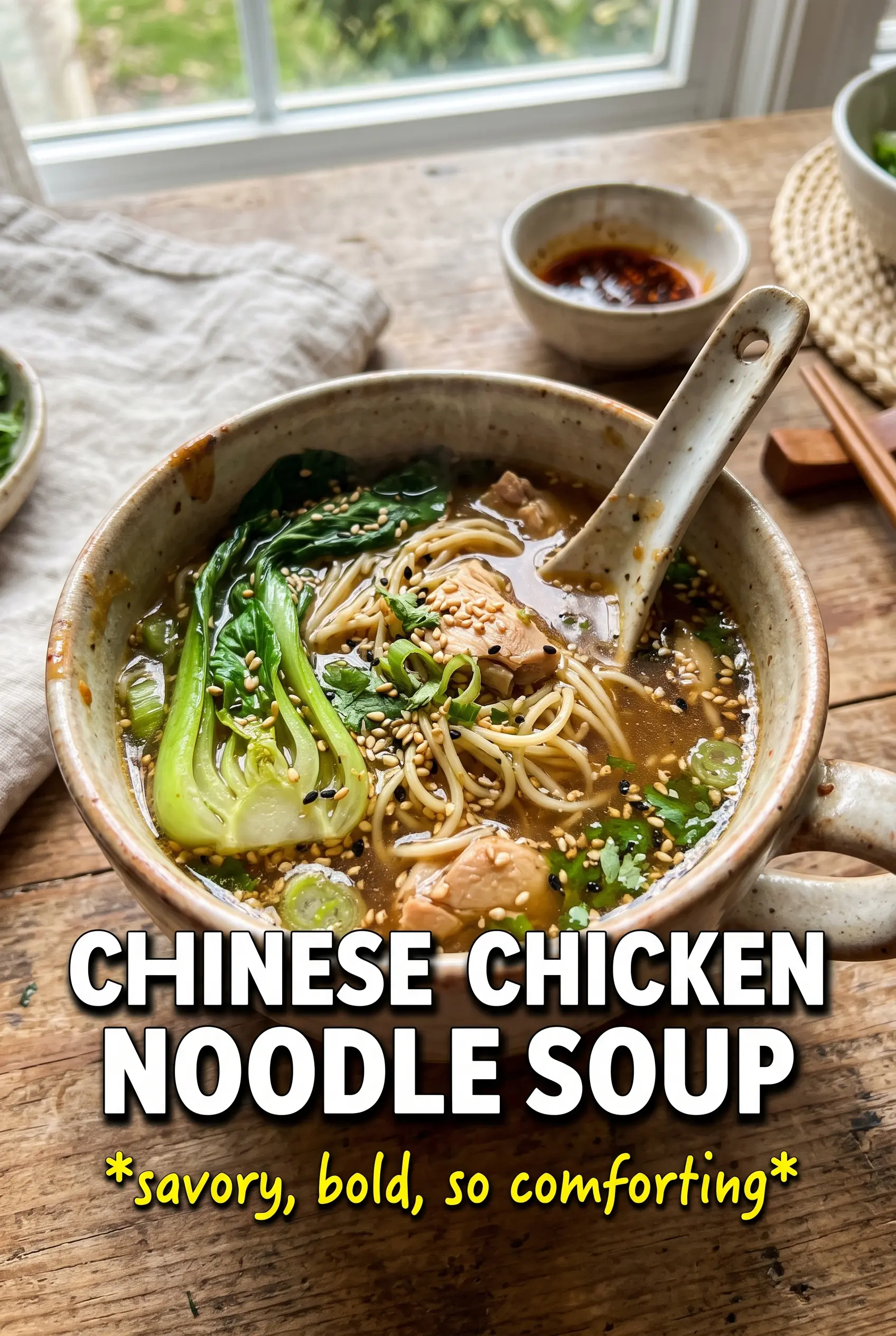
Clear broth, tender chicken, and slurpable noodles make Chinese chicken noodle soup one of those bowls that lands hard when you want comfort without heaviness. The broth stays light and clean, but it still tastes full because garlic, ginger, soy sauce, and sesame oil build flavor from the start instead of getting dumped in at the end. The bok choy keeps some bite, the mushrooms bring savoriness, and the white pepper gives the whole bowl that subtle restaurant-style warmth.
What makes this version work is the order. Garlic and ginger simmer first so the broth tastes aromatic before the chicken even goes in, and the noodles are cooked separately so they don’t steal liquid or turn mushy in the pot. That little bit of rice vinegar brightens the broth just enough to keep it from tasting flat, while sesame oil is used with a light hand so it perfumes the soup instead of overpowering it.
Below, I’ll walk through the one step people often rush, the ingredients that carry the flavor, and the small changes you can make if you want to use what you already have on hand.
The broth stayed clear, the chicken was tender, and the noodles held up even after I ladled everything into bowls. My husband kept going back for more of the ginger and sesame flavor.
Save this Chinese chicken noodle soup for the nights when you want a clear ginger-garlic broth with tender noodles and a quick, satisfying dinner.
The Broth Needs Time to Taste Like More Than Hot Water
The biggest mistake in noodle soup is treating the broth like a backdrop. If the aromatics only sit in the pot for a minute, the soup tastes thin even when you’ve added soy sauce and sesame oil. Here, the ginger and garlic simmer long enough to soften and perfume the broth, which gives the chicken and noodles a better base to stand on.
White pepper matters more than people expect. It has a softer, earthier heat than black pepper, and it reads much more like the flavor you get in Chinese-American soups. Add it at the end so you can judge the salt first; once the broth is seasoned properly, the whole bowl tastes rounded instead of sharp.
What Each Ingredient Is Actually Doing in This Recipe
- Primary ingredient (the star) — Quality matters most. Choose the best you can find.
- Cooking medium (oil, butter, or broth) — This carries flavors and prevents dryness.
- Seasonings (salt, pepper, spices, herbs) — Layer flavors so nothing overpowers. Build depth gradually.
- Aromatics (garlic, onion, herbs) — Cook with fat to bloom flavors. Become the foundation.
- Supporting ingredients — Complement the main ingredient without overpowering it.
- Sauce or liquid (if applicable) — Brings flavors together. Balance richness with acid.
- Acid (lemon, vinegar, wine, or other) — Brightens and prevents flat-tasting results.
- Final finish (garnish, glaze, or sauce) — Prevents one-dimensional taste and adds visual appeal.
What Each Ingredient Is Actually Doing in the Bowl
- Chicken breast — Thin slicing is what keeps it tender. If you cut it thick, it can go stringy before the center is done. Chicken thighs work too if you want a richer bowl, and they’re more forgiving if the soup simmers a little longer.
- Shiitake mushrooms — They bring the deep savory note that makes this taste like more than chicken and noodles. Fresh shiitakes give the cleanest texture, but dried shiitakes rehydrated in hot water can make the broth even more flavorful.
- Bok choy — Add it near the end so the stems stay crisp-tender and the leaves turn silky. Napa cabbage can step in if that’s what you have, but bok choy gives the bowl a more distinct, fresh bite.
- Thin Chinese wheat noodles or rice noodles — Thin noodles cook fast and keep the soup light. Cook them separately so they don’t swell in the broth and turn the whole pot starchy. Rice noodles are the best gluten-free swap, but they need careful timing because they soften quickly.
- Sesame oil, soy sauce, and rice vinegar — This trio builds the flavor balance: savory, nutty, and bright. The sesame oil should be fragrant, not heavy; if you pour in too much, the soup starts tasting oily instead of clean.
Building the Soup Without Overcooking the Noodles
Start with the Broth, Not the Chicken
Bring the broth to a simmer first, then add the garlic and ginger and let them cook long enough to lose their raw edge. You should smell the broth before you even stir in the soy sauce. If the heat is too high, the aromatics can taste harsh instead of mellow, so keep the pot at a gentle simmer, not a rolling boil.
Cook the Chicken Until It’s Just Done
Add the sliced chicken and mushrooms and simmer until the chicken turns opaque and feels tender when pressed, about 10 to 12 minutes. Thin slices cook quickly, and that’s the whole point here; if you leave them in too long, they tighten up and dry out. The broth should stay clear and lightly shimmering, not cloudy from hard boiling.
Keep the Noodles Out of the Pot
Cook the noodles separately and divide them into bowls before you ladle in the broth. This keeps the noodles from soaking up all the liquid and lets each bowl stay brothy from the first sip to the last. If you toss them straight into the soup pot, they keep absorbing liquid while the soup sits, and the texture goes soft fast.
Finish with Greens, Heat, and Brightness
Add the bok choy just long enough to wilt the leaves and soften the stems slightly. Then season with white pepper and salt after the soup is assembled, because broth reduction and noodle timing can change how salty it tastes. The final drizzle of chili oil and scatter of green onions and cilantro should hit the bowl right before serving so the top stays fragrant.
How to Change This Bowl Without Losing the Point
Make It Gluten-Free with Rice Noodles
Rice noodles keep the soup light and still give you that slurpable texture. Swap in gluten-free tamari for the soy sauce if needed, and cook the noodles just until flexible so they don’t go gummy in the bowl.
Use Chicken Thighs for a Richer Broth
Boneless thighs add a little extra body to the broth and stay juicy even if they simmer a few minutes longer. The bowl gets a deeper chicken flavor, which is useful if your broth is on the mild side to begin with.
Go Vegetarian Without Making It Bland
Use a rich vegetable broth and add extra mushrooms so the soup still tastes layered. A splash more soy sauce and a little extra sesame oil help replace the savoriness you’d normally get from chicken.
Storage and Reheating
- Refrigerator: Store the broth, chicken, and vegetables separately from the noodles for up to 4 days. The noodles keep their texture much better this way.
- Freezer: Freeze the broth with chicken and mushrooms, but leave out the noodles and bok choy. Those two don’t hold up well after thawing, so add fresh ones when you reheat.
- Reheating: Warm the soup gently on the stove until steaming, then add fresh cooked noodles or separately reheated noodles to each bowl. Don’t boil it hard or the chicken can turn tough and the broth can taste flat.
Questions I Get Asked About This Recipe
Chinese Chicken Noodle Soup
Ingredients
Equipment
Method
- Bring chicken broth to a simmer in a large pot. Add garlic and ginger and cook for 5 minutes, until fragrant.
- Stir in soy sauce, sesame oil, and rice vinegar. Taste and adjust to your preference for balance.
- Add sliced chicken and shiitake mushrooms to the broth. Simmer for 10-12 minutes until the chicken is cooked through and the mushrooms are tender.
- Cook the noodles separately according to package directions. Drain, then divide into bowls so they don’t overcook in the soup.
- Add bok choy to the simmering broth. Cook for 3 minutes until wilted but still bright.
- Ladle the hot soup over the noodles in each bowl. Season with white pepper and salt.
- Top with green onions, cilantro, and a drizzle of chili oil. Serve immediately while the broth is steaming.