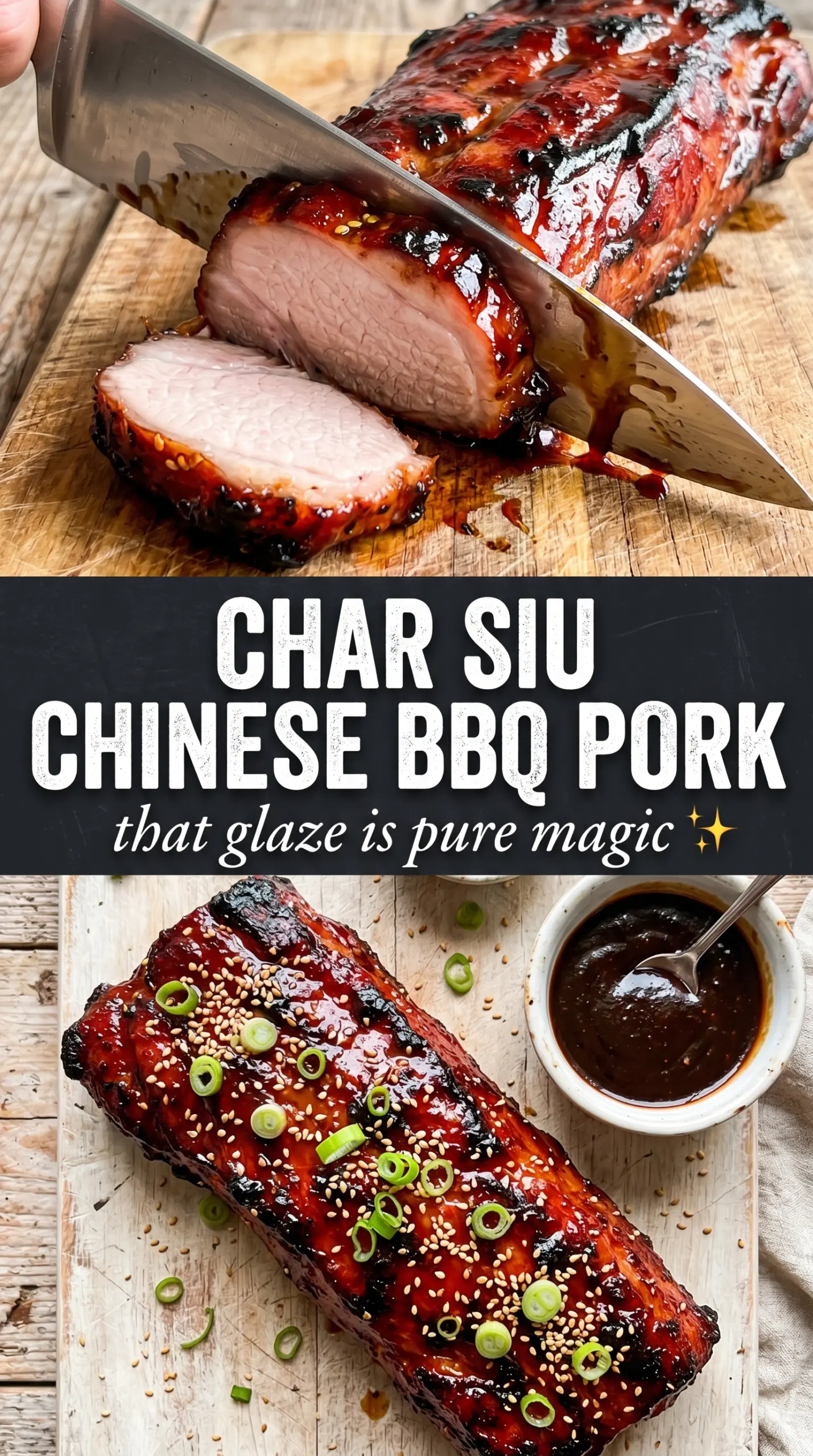
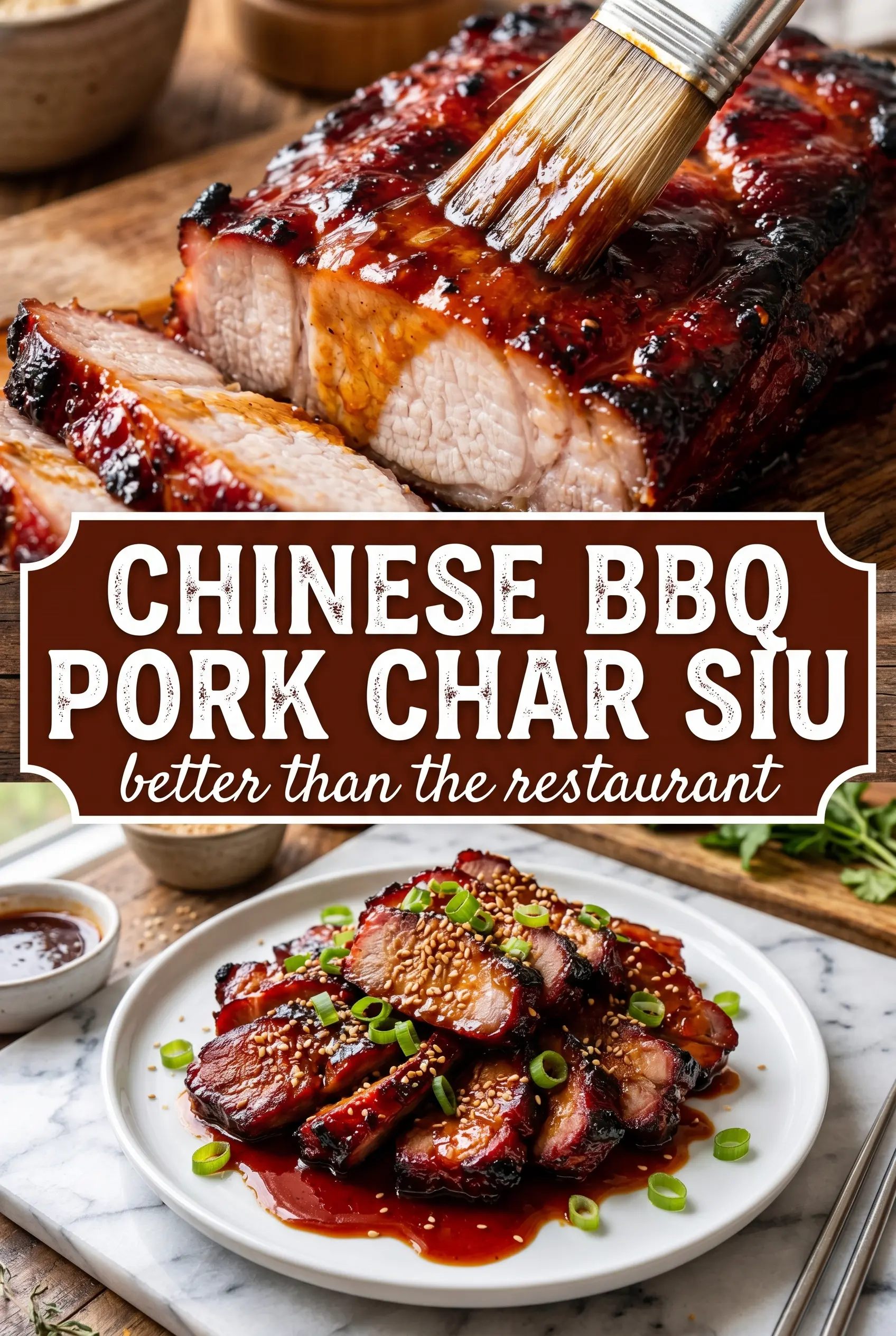
Chinese BBQ pork comes out with that glossy, lacquered finish people chase in takeout windows, but the real payoff is the texture: caramelized edges, a sticky-sweet crust, and a tender pink center that slices cleanly instead of shredding. The glaze tastes layered, not just sweet, because hoisin, soy, oyster sauce, and five-spice all pull in different directions and land in the same bite.
The key is giving the pork enough time to absorb the marinade and then roasting it on a rack so the sugars can darken without the meat sitting in its own drippings. A quick broil at the end does the part that a long roast can’t — it tightens the surface and gives you those charred spots that make char siu taste like char siu. The reserved marinade gets brushed on with a little honey halfway through, which builds the shine without flooding the meat.
The glaze turned sticky and shiny exactly like the restaurant version, and the pork stayed juicy even after I broiled it for those last couple of minutes. I used the tenderloin and it sliced beautifully for rice bowls the next day.
Like this char siu? Save it for the nights when you want glossy Chinese BBQ pork with caramelized edges and tender slices for rice bowls.
The Part That Makes Char Siu Taste Like Char Siu
The difference between decent roasted pork and proper char siu is the glaze behavior in the oven. Sugar alone burns before the meat has a chance to finish, which is why this recipe leans on hoisin, oyster sauce, and honey for depth, then adds the extra honey later when the pork is already mostly cooked. That second brush gives you shine without turning the surface bitter.
Roasting on a wire rack matters just as much. If the pork sits flat on a pan, the sugars pool and scorch in one spot while the underside turns pale and steamy. The rack keeps the hot air moving around the strips, so you get even browning and those sticky, slightly charred edges that should cling to the knife when you slice.
What Each Ingredient Is Actually Doing in the Glaze
- Pork shoulder — This gives you the richest, juiciest result because it has enough fat to stay tender under high heat. Tenderloin cooks faster and slices neatly, but it won’t have the same deep pork flavor. Either works; just pull tenderloin a little earlier so it doesn’t dry out.
- Hoisin sauce — This is the backbone of the marinade. It brings sweetness, salt, and that dark, fermented note that makes the glaze taste round instead of flat. There isn’t a clean substitute for it, though barbecue sauce can pinch-hit in an emergency if you accept a different flavor.
- Chinese rice wine or dry sherry — This loosens the marinade and helps the pork absorb flavor instead of coating the surface like syrup. If you don’t have either, use a dry white wine, but skip anything sweet or it will throw the balance off.
- Five spice powder — Use the real thing here. It’s the spice that makes the pork smell like char siu as soon as it hits the oven. Go light if yours is old, because stale five-spice can lean dusty instead of fragrant.
- Red food coloring — Optional, but it gives the pork that classic red lacquer without changing the flavor. The dish still tastes right without it; the color is only for the look people expect from char siu.
- Honey — Use it twice: once in the marinade and again for the finishing glaze. The second application is what gives you that glassy surface, so don’t skip it if you want the pork to look and taste like char siu.
Getting the Marinade, Roast, and Broil to Work Together
Mix the glaze until it turns smooth
Stir the hoisin, soy sauce, honey, rice wine, oyster sauce, brown sugar, sesame oil, five-spice, food coloring if using, and garlic until the mixture looks glossy and unified. If the honey clings to the bottom of the bowl, the pork won’t coat evenly, and you’ll get patches that caramelize faster than others. A smooth marinade is what lets the strips cook at the same rate.
Let the pork soak long enough to change the texture
Coat the pork thoroughly, cover it, and refrigerate it for at least 4 hours, though overnight gives a deeper color and better seasoning all the way through. Short marinating leaves the outside sticky but the inside bland. If you’re using tenderloin, keep the marinating time on the shorter end so the texture stays supple.
Roast high enough to build color
Set the oven to 425°F and place a foil-lined baking sheet on the rack below the pork to catch drips. Roast the strips on a wire rack so the heat can circulate, and don’t crowd them or they’ll steam. After 15 minutes, flip them and brush with reserved marinade mixed with a spoonful of honey; that’s when the glaze starts to set into a lacquer instead of just baking on as a sauce.
Finish with a fast broil
Broil for 2 to 3 minutes at the end until the edges darken and pick up little charred spots. Watch it closely because the difference between lacquered and burnt can be under a minute once the sugar is concentrated. Let the pork rest a few minutes before slicing so the juices stay in the meat instead of running onto the board.
How to Adapt This Without Losing the Character of the Dish
Use pork shoulder for richer slices
Pork shoulder gives you more fat and a deeper porky flavor, which is why it tastes closer to the restaurant version. It also stays forgiving under the broiler. Slice it against the grain so the strips stay tender instead of chewy.
Use tenderloin for a leaner, cleaner slice
Tenderloin works well if you want a lighter version with a soft, even texture. It cooks faster and dries out sooner, so start checking it early and pull it once the center is just cooked through. You’ll get less richness than shoulder, but the glaze still carries the dish.
Make it gluten-free without changing the method
Use gluten-free soy sauce or tamari and check that your hoisin and oyster sauce are labeled gluten-free. The technique stays the same, and the glaze still turns sticky and dark. This is the easiest swap because the structure of the recipe depends more on sauce balance than on flour or starch.
Skip the red coloring and lean on the roast
Leaving out the food coloring won’t change the flavor at all. The pork will still caramelize into a deep mahogany color from the sugars and soy in the marinade. If you like the classic look, keep it in; if not, the flavor holds on its own.
Storage and Reheating
- Refrigerator: Store leftovers in an airtight container for up to 4 days. The glaze stays sticky, though the surface softens a bit after chilling.
- Freezer: Freeze sliced pork for up to 2 months. Wrap it well so the glaze doesn’t pick up freezer flavor, and thaw it in the fridge before reheating.
- Reheating: Warm gently in a covered skillet over low heat with a spoonful of water or extra glaze. High heat dries out the edges and turns the sugars tacky in a bad way before the center has a chance to warm through.
Questions I Get Asked About This Recipe
Chinese BBQ Pork (Char Siu)
Ingredients
Equipment
Method
- In a bowl, mix hoisin sauce, soy sauce, honey, Chinese rice wine (or dry sherry), oyster sauce, brown sugar, sesame oil, five spice powder, red food coloring (optional), and minced garlic until smooth.
- Coat the pork shoulder or tenderloin strips thoroughly in the marinade, cover, and refrigerate for 4–8 hours or overnight.
- Preheat oven to 425°F and place a rack in the upper third with a foil-lined baking sheet on the rack below to catch drips.
- Place the marinated pork strips on a wire rack over the sheet and reserve the marinade.
- Roast for 15 minutes, then flip the pork and brush with reserved marinade mixed with a spoonful of honey.
- Roast 12–15 more minutes until edges are caramelized and the glaze looks glossy.
- Broil for 2–3 minutes for deeper char, then slice and serve.