Chicken potato soup lands in that perfect middle ground between hearty and creamy. The potatoes give it body, the chicken makes it satisfying, and the broth turns silky once the cream goes in. What you get is a bowl that eats like a full meal, with soft potato cubes, tender shreds of chicken, and just enough richness to feel comforting without turning heavy.
The trick is building the flavor in stages instead of dumping everything in at once. Simmering the chicken in the broth seasons the base from the start, and using the same pot for the vegetables means the soup keeps every bit of flavor that develops along the way. A quick flour cook before the broth goes back in keeps the soup from tasting pasty, and the cream gets stirred in at the end so it stays smooth.
Below, I’m breaking down the parts that matter most: how to keep the potatoes from falling apart, which chicken gives the best texture, and what to change if you want to make it a little lighter or stretch it farther.
The potatoes stayed perfectly tender and the broth turned creamy without getting grainy. I used thighs, and the soup had so much more flavor than the chicken soups I usually make.
Creamy chicken potato soup with tender potatoes and a silky broth is worth saving for the nights you want one pot, real comfort, and leftovers that hold up well.
The Trick to Keeping the Broth Creamy Instead of Starchy
Potatoes can make soup feel naturally thick, but they can also tip it into gluey territory if you boil them too hard or too long. Here, the broth gets a light flour base first, which gives the soup structure before the potatoes start softening. That means the cream thickens the soup at the end instead of trying to rescue it after the potatoes have broken down.
The other thing that matters is heat. Once the cream goes in, keep the soup at a gentle simmer, not a hard boil. Boiling cream can make it look split or greasy on top, especially if the pot has been raging underneath. Soft bubbles and a steady stir are enough.
What Each Ingredient Is Actually Doing in the Pot
- Chicken breasts or thighs — Breasts give you a leaner soup, but thighs bring a little more flavor and stay juicier after shredding. If you use breasts, pull them as soon as they’re cooked so they don’t go stringy.
- Russet potatoes — These break down just enough to help thicken the broth while still holding cubes if you cut them evenly. Yukon Golds work too, but the soup will stay a little more defined and less velvety.
- Butter and flour — This is the base that gives the soup its creamy body without needing a lot of cream. Cook the flour for a minute or two so it loses that raw, chalky taste before the broth goes in.
- Carrots, celery, onion, and garlic — They build the savory backbone of the soup. Dice them small so they soften at the same pace and disappear into the broth instead of tasting chunky and undercooked.
- Heavy cream — This finishes the soup and gives it that smooth, rounded texture. Half-and-half works in a pinch, but the soup will be thinner and a little less luxurious.
- Thyme and garlic powder — Thyme gives the soup a classic chicken soup note, and garlic powder reinforces the fresh garlic without making the broth taste sharp. If your thyme is old and dusty, replace it; dried herbs lose a lot of punch over time.
Building the Soup in the Right Order
Cook the Chicken in the Broth First
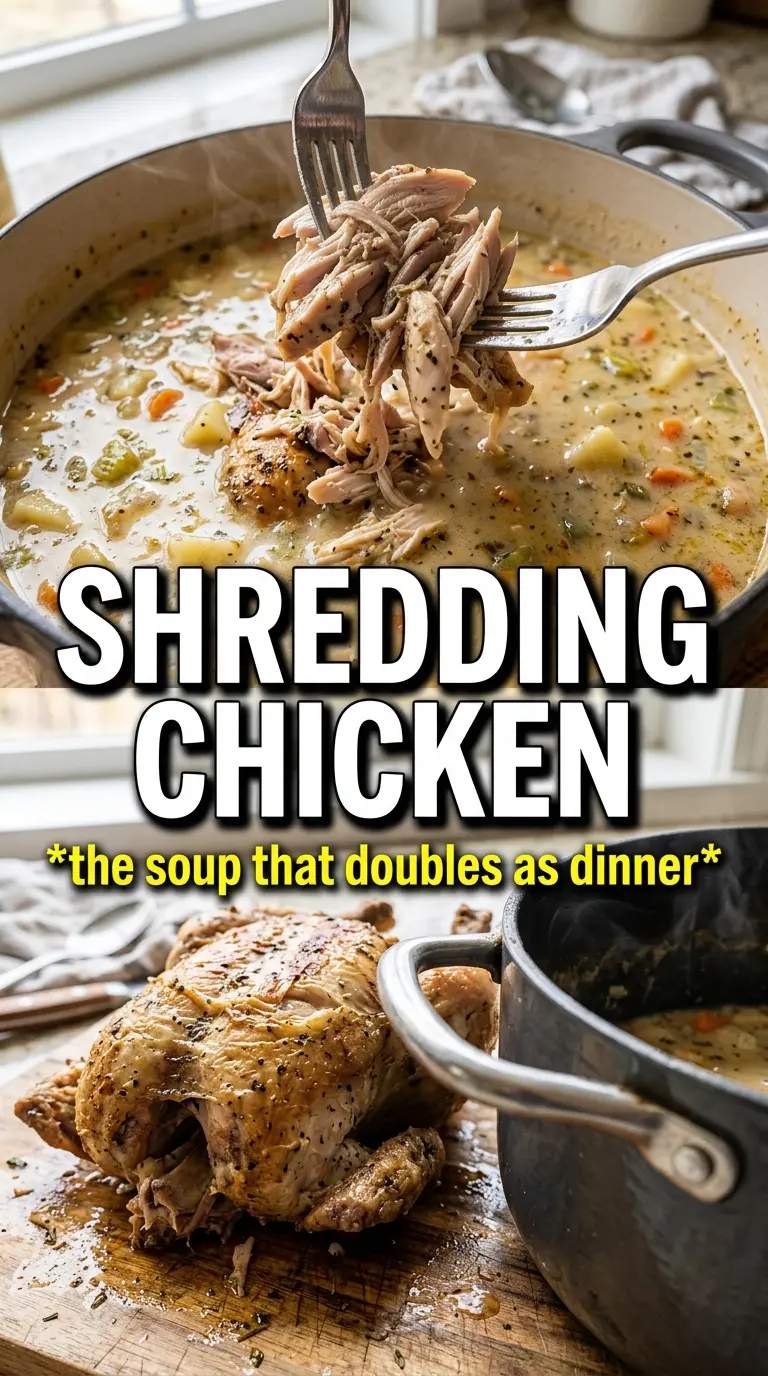
Start by simmering the chicken directly in the broth until it’s cooked through and easy to shred. This does two things at once: it cooks the protein and deepens the broth with chicken flavor. Keep the heat at a gentle simmer so the chicken stays tender; a rolling boil will tighten it up and make shredding harder later. Pull the chicken out once it reaches opaque all the way through and set it aside before anything else gets overcooked.
Soften the Vegetables Before You Thicken Anything
Melt the butter in the same pot and cook the onion, carrots, and celery until they start to soften and smell sweet. If the pan is too hot, the garlic and onions will brown before the vegetables have time to mellow, and the soup will taste sharp instead of rounded. Add the garlic at the end of this stage so it only cooks for about a minute. You want it fragrant, not browned.
Whisk in the Flour, Then Bring the Pot Back to Life
Sprinkle in the flour and stir it through the vegetables until it looks pasty and no dry spots remain. Let it cook briefly so the raw flour taste disappears. Then pour in the reserved broth gradually, whisking as you go so the base stays smooth. If you dump the liquid in all at once without stirring, you’ll get lumps that are annoying to chase down once the potatoes go in.
Finish with Potatoes, Cream, and Chicken
Add the potatoes, thyme, and garlic powder, then simmer until the potatoes are tender enough to pierce cleanly with a fork but not collapsing. Stir in the cream and shredded chicken near the end and let everything warm through for a few minutes. This is where the soup turns from a loose pot of stew ingredients into one cohesive bowl. Taste at the end and season with salt and pepper after the cream is in, since dairy softens saltiness and can hide a badly seasoned broth.
How to Adapt Chicken Potato Soup Without Losing the Good Part
Use Thighs for a Richer Bowl
Chicken thighs make the soup taste deeper and stay tender even after a longer simmer. They’re the best swap if you want a more savory, old-fashioned result. Breasts still work, but thighs give you a little more forgiveness if you get distracted and leave the pot on the stove a few extra minutes.
Make It Dairy-Free
Swap the butter for olive oil or a plant-based butter and use full-fat unsweetened coconut milk or an unsweetened oat cream in place of the heavy cream. The soup will still be creamy, but the finish will be a little lighter and less rich. Add the dairy-free cream at the very end and keep the heat low so it doesn’t separate.
Use a Thicker or Thinner Finish
For a thicker soup, mash a few potato cubes against the side of the pot before adding the cream. For a thinner soup, add a splash of extra broth after the potatoes are tender. Both adjustments change the body of the soup without messing up the flavor.
Storage and Reheating
- Refrigerator: Store in an airtight container for up to 4 days. The potatoes will absorb some broth as it sits, so expect the soup to thicken.
- Freezer: It freezes, but the cream and potatoes can change texture a bit after thawing. If you want to freeze it, stop before adding the cream and stir that in after reheating.
- Reheating: Warm it slowly over medium-low heat, stirring often. Don’t boil it hard or the cream can separate and the potatoes can turn mealy.
Questions I Get Asked About This Recipe

Chicken Potato Soup
Ingredients
Equipment
Method
- Bring the chicken and chicken broth to a gentle simmer over medium heat and cook for 15-20 minutes, until the chicken is cooked through. The surface should show steady small bubbles around the pot.
- Remove the chicken from the pot, shred it, and set it aside. Skim any excess foam from the broth if needed and keep the broth hot.
- Melt the butter in the same pot over medium heat, then sauté the onion, carrots, and celery for 5 minutes until softened. Stir until the vegetables look glossy and lightly aromatic.
- Add the garlic and cook for 1 minute. Whisk in the flour and cook for 1-2 minutes, until it smells nutty and the mixture looks smooth.
- Pour in the reserved broth, then add the potatoes, dried thyme, and garlic powder. Stir until everything is evenly combined.
- Simmer for 15-18 minutes, until the potatoes are tender. You should be able to pierce a potato cube easily with a fork.
- Stir in the heavy cream and the shredded chicken, then simmer for 5 minutes. The soup should look creamy and hot, with gentle bubbling.
- Season with salt and pepper to taste, then garnish with fresh parsley. Serve while hot, with a visible parsley sprinkle on top.