Golden chicken cutlets and a bright lemon-butter-caper sauce are one of those dinners that tastes like you worked harder than you did. The chicken stays thin and crisp at the edges, the sauce clings in a silky layer, and every bite gets a sharp little hit of lemon that keeps the whole dish from feeling heavy. It’s fast, but it doesn’t taste rushed.
The trick is in the order. Lightly flouring the cutlets gives the pan sauce something to grip, while the chicken browns quickly enough to stay juicy. The wine gets a chance to reduce before the broth and lemon go in, which builds flavor instead of leaving you with a thin, tart sauce. Finishing off the heat with cold butter is what gives you that glossy texture piccata is known for.
Below, I’m walking through the parts that matter most: how thin the chicken should be, when to pull the pan off the burner, and what to do if your sauce looks a little loose at first. That’s the difference between a decent weeknight dinner and a plate you’ll want to make again.
The sauce turned out silky and bright, and the chicken stayed crisp even after I spooned it on top. I usually worry about caper sauces tasting too sharp, but this one balanced out perfectly after the butter went in at the end.
Save this Chicken Piccata for the nights when you want a crisp cutlet and a glossy lemon-caper pan sauce without a long ingredient list.
The Part That Keeps the Sauce Silky Instead of Thin
Chicken piccata looks simple, but the sauce can go flat fast if you rush the reduction or let the butter boil. The wine needs time to cook down before the broth and lemon are added, because that step removes the harsh edge and leaves the pan with a deeper base. If you skip that, the finished sauce can taste sharp instead of balanced.
The other thing that matters is heat control at the end. Cold butter whisked in off the burner emulsifies the sauce and gives it that faint sheen you want clinging to the chicken. If the pan is still boiling when the butter goes in, the sauce can break and look greasy instead of glossy.
What Each Ingredient Is Actually Doing in This Dish
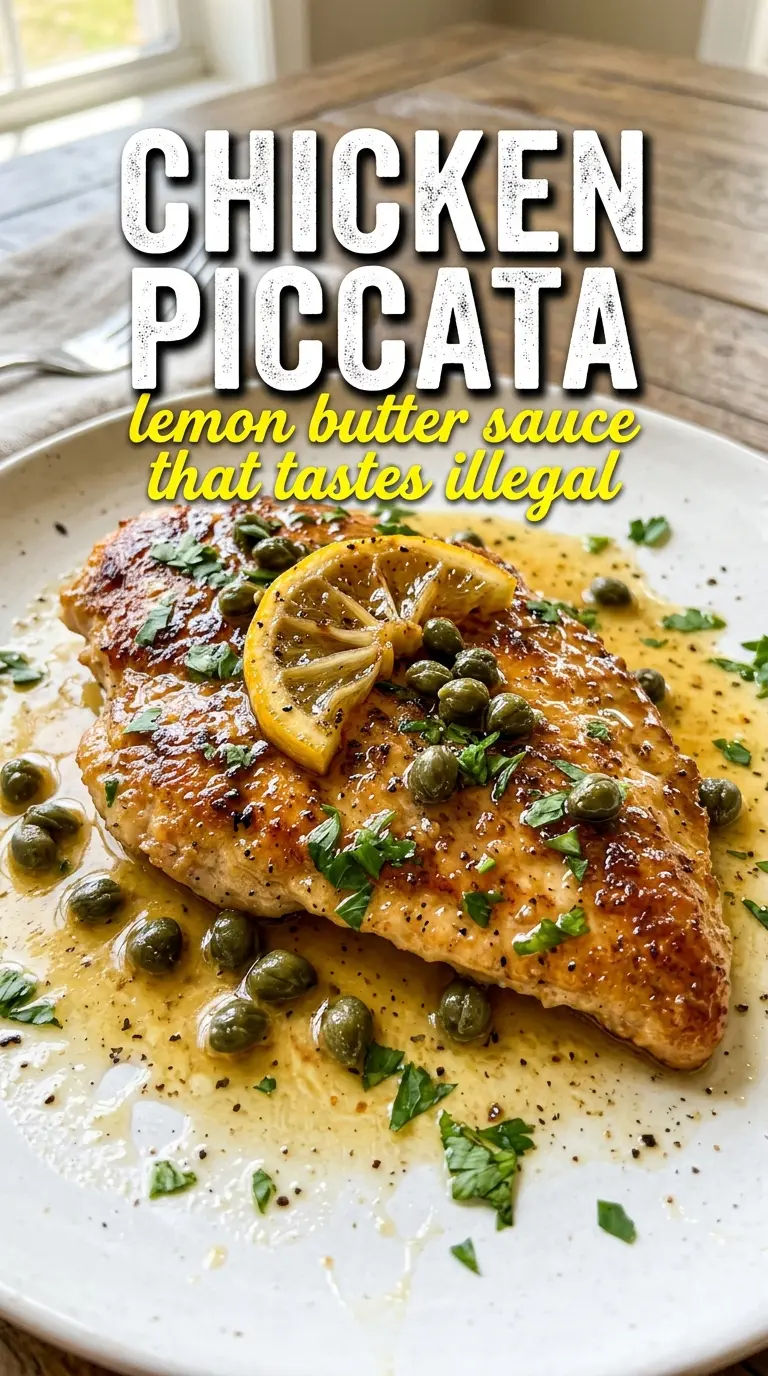
- Chicken breasts — Halving them into thin cutlets is what gives you quick, even cooking and those crisp browned edges. If your breasts are very thick, pound them lightly after slicing so they’re an even thickness from end to end.
- Flour — The light dredge does two jobs: it helps the chicken brown and it gives the sauce enough starch to cling. Don’t coat heavily or you’ll end up with a pasty pan instead of a clean, silky sauce.
- Dry white wine — This adds depth and helps lift the browned bits from the skillet. A dry Sauvignon Blanc or Pinot Grigio works well; use something you’d actually drink, because a sweet wine will throw the whole sauce off.
- Lemon juice and capers — These are the signature flavors, and fresh lemon matters here. Bottled juice tastes dull and can make the sauce harsh, while capers bring the salty, briny edge that keeps the dish lively.
- Butter — Two tablespoons start the cooking, but the final cold butter is the finishing move. It smooths out the sauce and pulls everything together without turning it heavy.
Building the Cutlets and Finishing the Pan Sauce
Coating the Chicken Lightly
Season the cutlets first, then dredge them in flour and shake off the excess. You want a dusting, not a thick shell, because too much flour makes the crust gummy and can thicken the sauce in a clumpy way. Set the cutlets on a plate while you heat the skillet so the flour hydrates slightly and sticks better in the pan.
Getting a Fast, Even Sear
Heat the olive oil and butter until the butter foams, then add the chicken in batches. If you crowd the pan, the cutlets steam and turn pale instead of developing that thin golden crust. Cook until the edges look set and the underside releases easily, then flip and finish; forcing the cutlets too early tears the coating.
Reducing the Sauce the Right Way
After the chicken comes out, add the garlic for just a short burst so it perfumes the oil without browning. Pour in the wine and scrape the pan well, then let it simmer so the liquid drops by about half before the broth, lemon juice, capers, and lemon slices go in. If the sauce tastes too sharp at this stage, keep reducing; once you add the butter, the flavors mellow and come together.
Finishing Off Heat
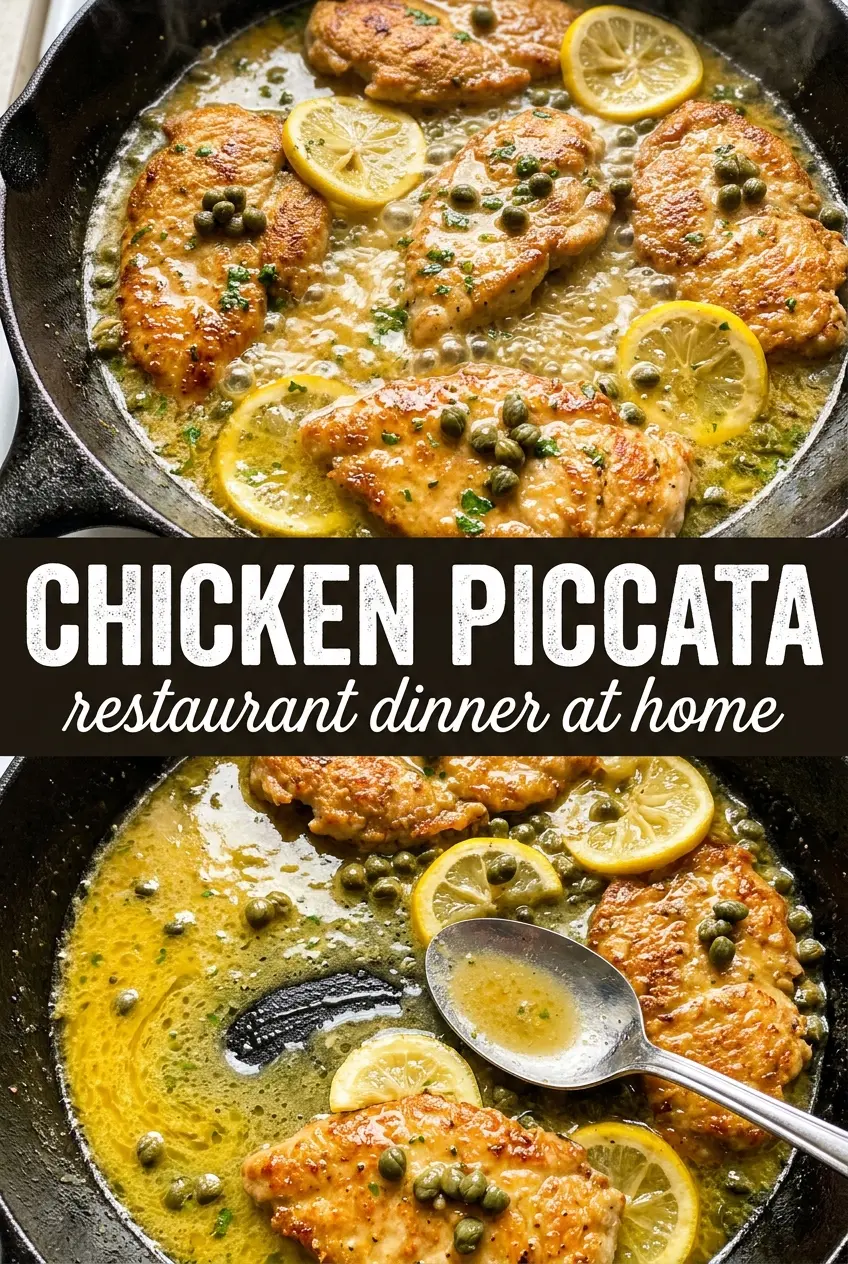
Take the skillet off the burner before swirling in the remaining butter. That’s what keeps the sauce smooth and glossy instead of separated. Slide the chicken back in, spoon the sauce over the top, and let it sit for a minute so the cutlets soak up a little of the lemon-caper flavor before serving.
Three Ways to Make Chicken Piccata Work for Your Kitchen
Gluten-Free Piccata
Swap the all-purpose flour for a gluten-free flour blend or a light dusting of cornstarch. Cornstarch gives you a slightly crisper coating and a cleaner sauce, while a blend behaves more like traditional flour and is the better choice if you want the most familiar texture.
Dairy-Free Version
Use olive oil in place of the butter for both the sear and the finish. You’ll lose a little of the sauce’s roundness and gloss, but the lemon and capers stay bright, and the dish still works well if you keep the heat lower during the final simmer.
No Wine, No Problem
Replace the wine with extra chicken broth plus 1 teaspoon of white wine vinegar or a little more lemon juice. The sauce will be a touch less layered, but it still deglazes the pan well and keeps the final flavor sharp and clean.
Making It Ahead for Dinner
Cook the chicken and sauce, then store them together so the cutlets stay moist. The crust softens as it sits, which is normal for this dish, but the flavor holds up well and the sauce reheats smoothly if you warm it gently.
Storage and Reheating
- Refrigerator: Store in an airtight container for up to 3 days. The chicken will lose some crispness, but the flavor stays strong.
- Freezer: It freezes, but the sauce can separate a bit when thawed. Freeze the chicken and sauce together in a shallow container for up to 2 months, then thaw overnight in the fridge.
- Reheating: Warm gently in a covered skillet over low heat with a splash of broth. High heat is the mistake here, because it tightens the chicken and can make the sauce oily.
Answers to the Questions Worth Asking
Chicken Piccata
Ingredients
Equipment
Method
- Season the chicken cutlets with salt and pepper, then dredge lightly in the all-purpose flour and shake off excess for an even, thin coating.
- Heat the olive oil and 2 tablespoons butter in a large skillet over medium-high heat until shimmering.
- Cook the chicken in batches for 3-4 minutes per side, until golden and cooked through, then remove and set aside.
- Add the minced garlic and cook for 30 seconds, stirring until fragrant.
- Pour in the dry white wine and scrape up the browned bits from the skillet, then simmer for 2 minutes.
- Add the chicken broth, fresh lemon juice, capers, and lemon slices, then simmer for 4-5 minutes until the sauce reduces by about a third.
- Remove the skillet from the heat and swirl in the remaining 2 tablespoons cold butter until the sauce is glossy.
- Return the chicken cutlets to the skillet, spoon the sauce over each cutlet so it pools, and garnish with chopped fresh parsley.