Homemade chicken noodle soup has a way of tasting bigger than the sum of its parts. The broth comes out deep and savory, the chicken turns tender enough to shred with a fork, and the noodles pick up just enough of that rich stock to taste like they belong there. This is the kind of soup that feels calm and complete in the bowl, with enough body to eat as dinner and enough comfort to make a second bowl feel like a good idea.
What separates this version from a thin, flat pot of soup is the broth-first method. Simmering a whole chicken with aromatics, peppercorns, parsley stems, and thyme builds a stock that tastes layered instead of one-note. Straining the broth before adding the fresh vegetables keeps it clear and clean-tasting, while cooking the noodles at the very end keeps them from going soft and mushy.
Below, I’ll walk through the parts that matter most: how to get a broth that tastes homemade in the best way, how to keep the noodles from taking over, and what to change if you want to make it ahead or adapt it for what’s in your kitchen.
The broth had that deep homemade taste I never get from store-bought soup, and the noodles stayed perfectly tender instead of turning to mush. I made it on a Sunday and my husband kept going back for another bowl.
Save this chicken noodle soup from scratch for the day you want a broth that tastes slow-simmered and noodles that stay perfectly tender.
The Broth Is the Soup, So Don't Rush It
With chicken noodle soup, the broth isn't a background element. It is the whole point. If the liquid tastes weak, the whole pot tastes weak, no matter how much chicken and noodle you add later. Starting with a whole chicken gives you both meat and collagen, and that is what creates the fuller body you notice in the spoon. The long, gentle simmer pulls flavor from the bones without turning the broth cloudy and bitter.
The common mistake is boiling hard the whole time. A hard boil throws fat and protein all over the pot, which gives you a murky broth and stringy chicken. A steady simmer keeps the surface moving lazily, with just a few bubbles breaking through. Skim the foam early, then leave the pot alone while the chicken slowly gives up flavor.
- Whole chicken — This is what gives the broth body and the shredded meat for the finished soup. A cut-up chicken works in a pinch, but you lose some of that round, rich stock.
- Parsley stems — They add fresh herbal depth without making the broth taste leafy. Save the leaves for the end where they stay bright.
- Peppercorns and bay leaves — These season the broth from the inside out. Ground pepper added too early can muddy the liquid, so keep it whole here.
- Cold water — Starting cold helps pull flavor from the chicken gradually. Hot water shortens that process and gives you less developed broth.
What Each Ingredient Is Actually Doing in the Pot
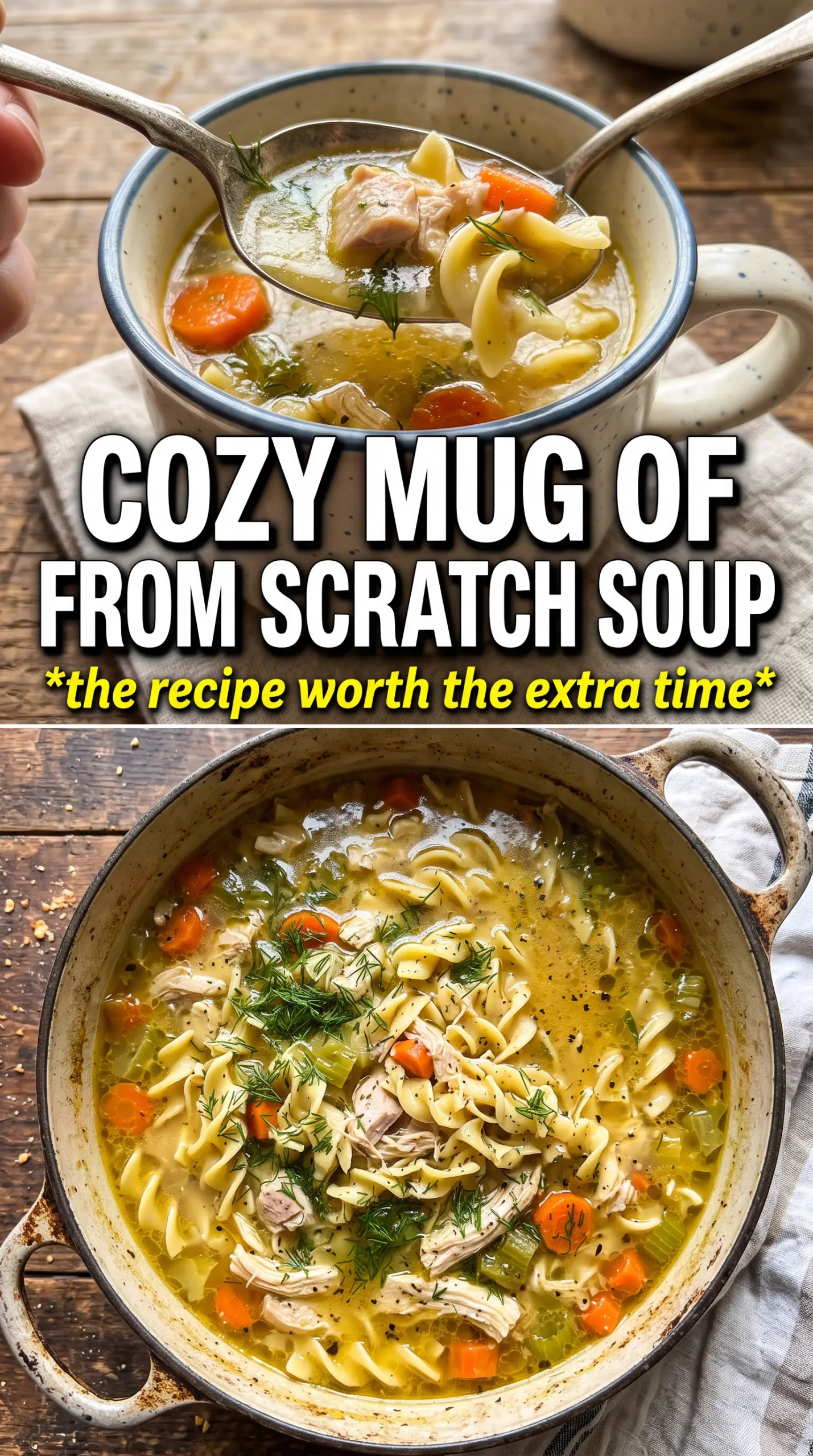
- Carrots, celery, and onion — These are doing double duty in the broth and the soup base. The first round perfumes the stock; the second round stays in the finished bowl for texture and sweetness.
- Garlic — Six cloves gives the broth a quiet savory backbone without turning it into garlic soup. If you want a stronger note, smash the cloves instead of leaving them whole.
- Wide egg noodles — These hold up better than thin pasta and taste right in a broth like this. Cook them at the end or they'll absorb too much liquid and swell past their best texture.
- Fresh parsley — Stir it in at the very end so it stays green and fragrant. Dried parsley disappears here; it won't give the same clean finish.
How to Build the Broth, Then Keep the Noodles from Going Soft
Start the Stock Cold and Let It Come Up Slowly
Put the chicken and broth ingredients in the pot, cover with cold water, and bring everything up together. That slow climb matters because it gives the chicken time to release flavor before the proteins seize up. When the pot reaches a boil, you'll see gray foam rise to the top; skim it off and then lower the heat until the surface is barely moving. If the broth looks turbulent, the heat is too high.
Strain Before You Add the Fresh Vegetables
Once the chicken is tender, pull it out and strain the broth into a clean pot. Discard the cooked broth vegetables; they've already done their job, and leaving them in gives you a soft, washed-out texture. Taste the broth at this point and salt it before the fresh vegetables go in. A properly seasoned broth makes the carrots and celery taste like part of the soup instead of separate add-ins.
Cook the Noodles at the End, Not in the Broth All Day
Add the fresh carrots, celery, and onion first and simmer them until they start to turn tender. Then add the noodles and cook just until they're cooked through, not floppy. Egg noodles keep absorbing liquid even after the heat is off, so if you cook them too far, the soup gets thick in a heavy, pasty way. Add the shredded chicken and parsley last, stir, and serve while the noodles still have a little bite.
How to Adapt This Bowl for Different Kitchens and Different Days
Gluten-Free Version
Swap the egg noodles for a gluten-free pasta shape that can hold up in broth, or use cooked rice if you want something sturdier. Gluten-free noodles soften faster, so add them only in the last few minutes and serve right away. If they sit too long, they can break down and cloud the broth.
Extra-Rich Version with Dark Meat
Use a whole chicken that leans heavier on thighs and legs, or add a couple of extra drumsticks. Dark meat gives the broth a deeper, rounder flavor and stays juicy after shredding. The soup will taste a little more savory and less lean, which is a good trade if you want a heartier bowl.
Vegetable-Packed Variation
Add diced parsnips, peas, or mushrooms after the broth is strained and before the noodles go in. Parsnips add sweetness, peas bring freshness, and mushrooms add earthiness, but each one changes the clean classic profile a little. Keep the total volume in check so the broth still tastes like soup, not stew.
Storage and Reheating
- Refrigerator: Store up to 4 days. The noodles will keep soaking up broth, so expect the soup to thicken as it sits.
- Freezer: Freeze the broth and chicken without the noodles for the best texture. Thaw, reheat, and add fresh noodles when you're ready to serve.
- Reheating: Warm it gently over medium-low heat until steaming. High heat can make the chicken stringy and overcook the noodles, especially if they were already sitting in the broth.
Questions I Get Asked About This Recipe
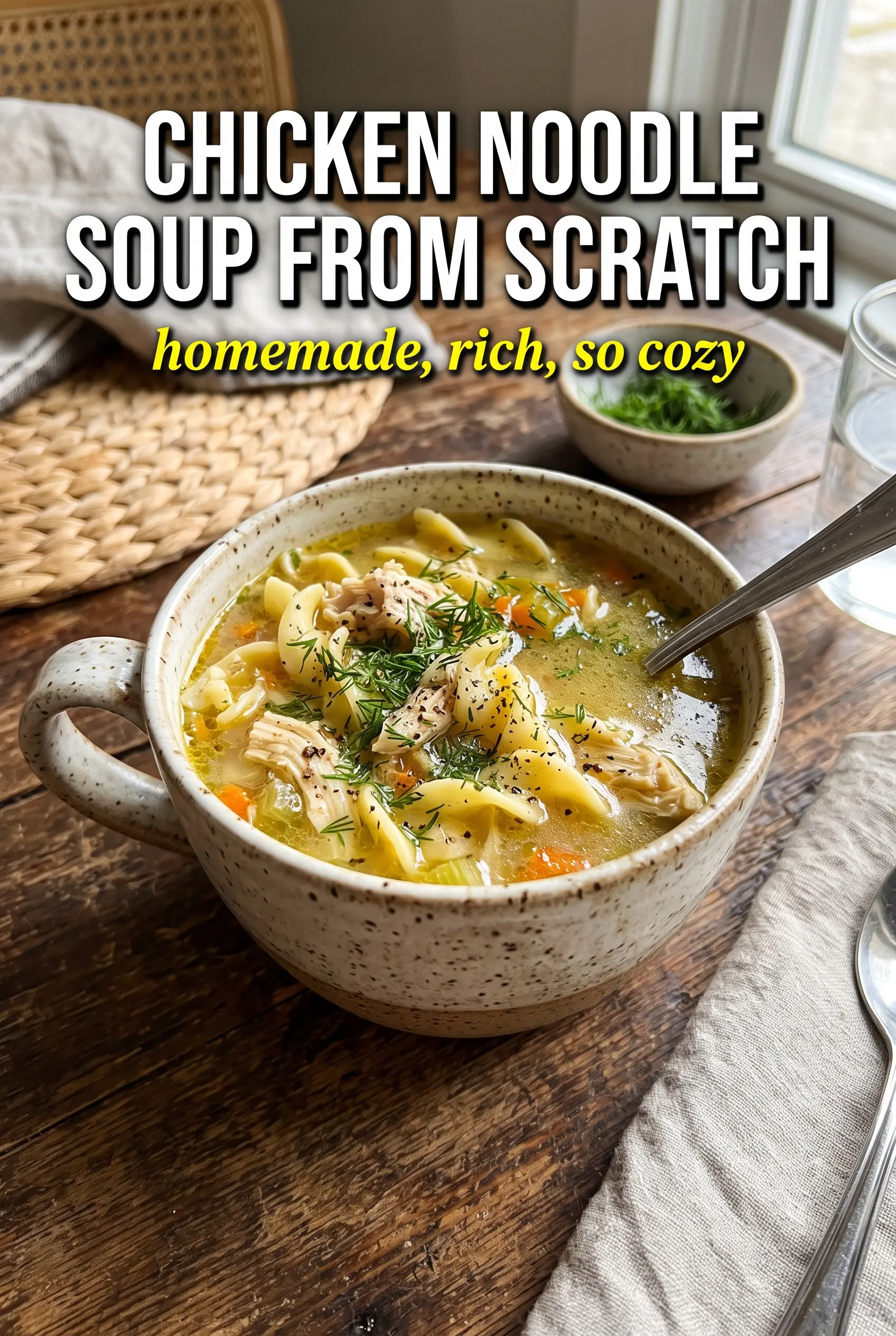
Chicken Noodle Soup From Scratch
Ingredients
Equipment
Method
- Place whole chicken and all broth ingredients in a very large pot with cold water, then heat over high until it reaches a boil. Skim off the foam as it rises so the broth stays clear.
- Reduce the heat to a gentle simmer and keep the liquid bubbling lightly. Simmer for 1.5 hours until the chicken is very tender, turning opaque and easily shreddable.
- Strain the broth through a strainer, discarding the used vegetables and any peppercorns. Remove all meat from the chicken and shred it into bite-size pieces.
- Return the clear broth to the pot and taste. Season with salt so the base has a savory flavor before adding the vegetables.
- Bring the broth back to a simmer. Add sliced carrots, celery, and diced onion so they cook through evenly.
- Simmer for 10 minutes, stirring occasionally, until the vegetables are tender. You should see the onion turn translucent and the carrot edges soften.
- Add wide egg noodles and stir to separate them. Simmer for 6-8 minutes until the noodles are tender but still hold their shape.
- Add shredded chicken and chopped fresh parsley, then simmer briefly until warmed through. Mix until the chicken disperses through the broth and the herbs turn bright green.
- Taste and adjust the seasoning with salt and pepper. The soup is done when the broth tastes balanced and the noodles are properly cooked.