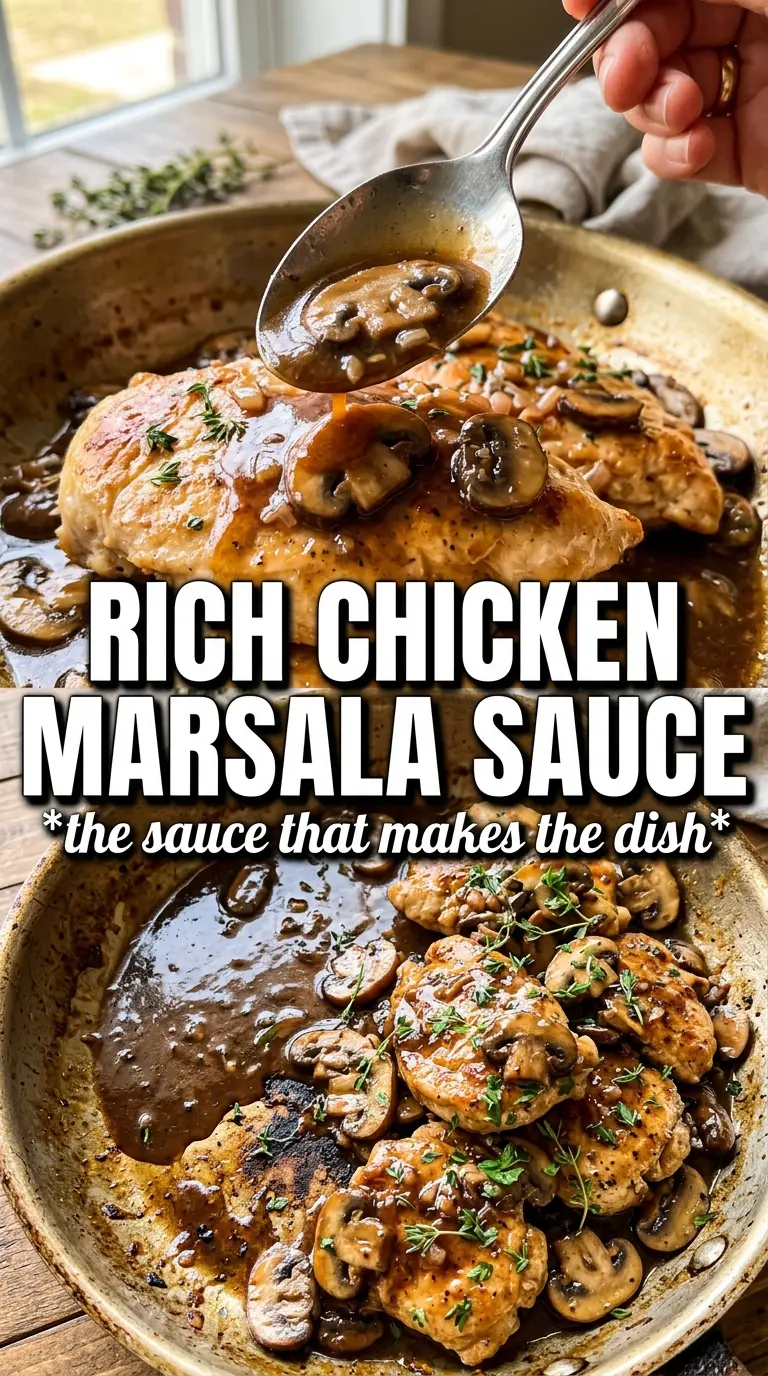
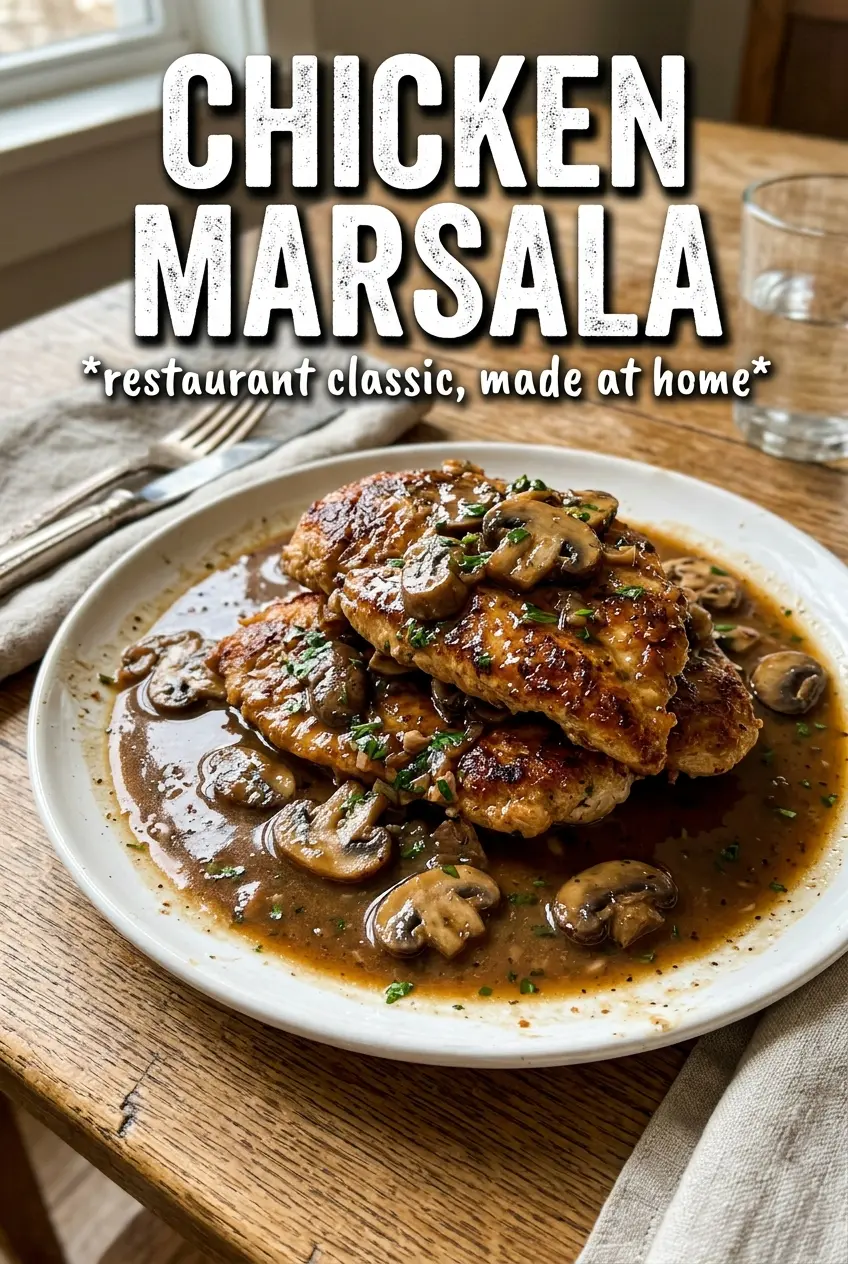
Golden chicken cutlets in a dark Marsala mushroom sauce hit that sweet spot between restaurant-style and completely manageable at home. The chicken stays tender because it’s pounded thin and cooked fast, and the sauce gets its depth from the browned bits left in the pan after the cutlets come out. When the sauce is finished with cold butter, it turns glossy instead of heavy, which is exactly what makes this version worth making again.
The main trick is keeping the heat where it belongs. Too hot and the flour coating burns before the chicken cooks through; too low and you lose the quick sear that gives the sauce its backbone. Marsala also matters here: use dry Marsala for a savory, layered sauce, not a sweet one that pushes the dish in the wrong direction. The mushrooms, shallots, and thyme do the rest, building a pan sauce that tastes like it simmered for much longer than it did.
Below, you’ll find the small details that keep the sauce silky, plus a few smart swaps and fixes if you need to adjust the recipe without losing what makes Chicken Marsala work.
The sauce thickened up beautifully and the chicken stayed juicy even after I put it back in the pan. The Marsala flavor was deep, not too sweet, and the mushrooms tasted like they soaked up every bit of it.
Like this chicken Marsala? Save it for the nights when you want tender cutlets, a glossy mushroom sauce, and that classic Marsala finish without a long simmer.
The Pan Sauce Falls Apart When the Chicken Stays in Too Long
Chicken Marsala is at its best when the cutlets sear fast, come out of the pan, and go back in only at the end. If you leave the chicken in while the sauce reduces, the flour coating softens and the sauce can turn muddy instead of clean and glossy. Taking the chicken out after browning gives you a better crust on the meat and leaves the fond behind, which is where the sauce gets its deep, savory base.
Thin cutlets are not just a convenience here. They cook through before the flour browns too darkly, and they return to the sauce at the exact moment they need to warm through. That keeps the texture tender instead of stringy.
What Each Ingredient Is Actually Doing in This Recipe
- Primary ingredient (the star) — Quality matters most. Choose the best you can find.
- Cooking medium (oil, butter, or broth) — This carries flavors and prevents dryness.
- Seasonings (salt, pepper, spices, herbs) — Layer flavors so nothing overpowers. Build depth gradually.
- Aromatics (garlic, onion, herbs) — Cook with fat to bloom flavors. Become the foundation.
- Supporting ingredients — Complement the main ingredient without overpowering it.
- Sauce or liquid (if applicable) — Brings flavors together. Balance richness with acid.
- Acid (lemon, vinegar, wine, or other) — Brightens and prevents flat-tasting results.
- Final finish (garnish, glaze, or sauce) — Prevents one-dimensional taste and adds visual appeal.
What the Mushrooms and Marsala Are Each Doing Here
- Dry Marsala wine — This is the backbone of the sauce. Dry Marsala gives you nutty, savory sweetness without making the dish taste sugary. If all you have is sweet Marsala, use a little less and expect a rounder, softer sauce.
- Cremini mushrooms — These hold up well to browning and bring a deeper flavor than white button mushrooms. Slice them evenly so they cook at the same pace and actually caramelize instead of steaming.
- Shallots — They melt into the sauce faster than onions and add sweetness without distracting from the wine. If you swap in onion, keep the dice fine and cook it a minute longer so it loses its raw edge.
- Heavy cream — Just enough cream smooths the wine and ties the sauce together without turning it into Alfredo. If you skip it, the sauce will be thinner and sharper; if you use too much, the Marsala gets buried.
- Cold butter at the end — This is what gives the sauce its sheen. Stir it in off the heat or on very low heat so it emulsifies instead of splitting.
Building the Sauce in the Right Order
Dredging for a Thin, Even Crust
Season the chicken first, then coat it lightly in flour and shake off the excess. You want a dusting, not a thick jacket, because too much flour turns gummy in the pan and clogs the sauce later. The flour helps the cutlets brown quickly and gives the sauce enough body to cling to the chicken.
Getting a Real Sear on the Cutlets
Use medium-high heat and enough fat to coat the pan, then lay the chicken in and leave it alone until the underside is deep golden. If you move it too early, the crust tears and sticks. Pull the cutlets out as soon as they’re cooked through; they’ll finish later in the sauce, and that second heat is enough to warm them without drying them out.
Letting the Mushrooms Brown Before the Wine Goes In
After the chicken comes out, cook the mushrooms and shallots in the same pan until the moisture cooks off and the edges start to color. That browning is what gives the sauce its savory depth. Add the garlic near the end so it perfumes the pan without burning, because burnt garlic makes the whole dish taste harsh.
Reducing the Marsala Without Losing Its Brightness
When the wine hits the pan, it should bubble briskly and smell sharp at first, then settle as it reduces. Let it cook long enough to lose the raw alcohol edge before adding broth and cream. If you rush this step, the sauce tastes boozy instead of balanced.
Finishing for Gloss and Balance
Once the sauce has simmered, whisk or swirl in the cold butter until it looks shiny and slightly thickened. Stir in the thyme, then return the chicken just long enough to warm through and coat it in sauce. The goal is a silky finish that coats the spoon, not a heavy gravy that sits on top of the meat.
How to Adapt Chicken Marsala Without Losing the Character of the Dish
Dairy-Free Version
Skip the cream and finish the sauce with a little extra chicken broth plus a touch more butter substitute if needed. The sauce will be slightly less plush, but the Marsala and mushrooms still carry the dish. Use a dairy-free butter that melts cleanly, not a margarine with a strong flavor.
Gluten-Free Chicken Marsala
Swap the all-purpose flour for a good gluten-free flour blend or a light dusting of cornstarch. Cornstarch gives a slightly silkier sauce and a lighter crust, while a blend behaves more like regular flour. Keep the coating thin either way, or the sauce can turn pasty.
Using Chicken Thighs Instead of Breasts
Boneless thighs work well if you want a richer, juicier result. Pound them to an even thickness so they cook at the same pace as the breasts would, and give them a little more time in the pan if they’re thicker. The sauce will taste a touch more savory because thighs bring more fat to the table.
Making It Ahead
You can cook the sauce and chicken separately, then combine them right before serving. That keeps the crust from softening too soon. If you need to hold it, keep the chicken under the sauce so it stays moist instead of drying on top of the pan.
Storage and Reheating
- Refrigerator: Store leftovers in an airtight container for up to 3 days. The sauce will thicken as it chills, and the crust will soften a bit.
- Freezer: This freezes, but the cream sauce can separate slightly when thawed. Freeze the chicken and sauce together only if you don’t mind a less polished texture after reheating.
- Reheating: Warm it gently in a covered skillet over low heat with a splash of broth or water. High heat is the mistake here; it tightens the chicken and can break the sauce.
Answers to the Questions Worth Asking
Chicken Marsala
Ingredients
Equipment
Method
- Season the chicken cutlets with salt and black pepper, then dredge them in all-purpose flour and shake off the excess so the cutlets look lightly coated.
- Heat olive oil and 2 tbsp butter in a cast iron skillet over medium-high heat until shimmering, then pan-fry the cutlets for 3-4 minutes per side until golden; remove to a plate.
- In the same pan, add the cremini mushrooms and shallots and cook for 5-6 minutes until golden.
- Stir in the minced garlic and cook for 1 minute until fragrant.
- Pour in the dry Marsala wine and let it bubble for 2-3 minutes to reduce slightly.
- Add chicken broth and heavy cream, then simmer for 5 minutes to create a smooth, lightly thickened sauce.
- Swirl in the remaining 2 tbsp cold butter until the sauce is glossy, then stir in the fresh thyme leaves.
- Return the cutlets to the pan and spoon the sauce over them, then garnish with fresh parsley before serving.