Golden seared chicken breasts in a silky white wine cream sauce are the reason Chicken Florentine earns a permanent spot on the dinner rotation. The spinach softens into the sauce without turning dull or muddy, the Parmesan gives it body, and the lemon keeps the whole skillet from feeling heavy. What you get is elegant on the plate but still practical enough for a weeknight.
The trick here is building flavor in layers. The chicken gets real color first, then the garlic, wine, broth, cream, and cheese turn those browned bits into the sauce. Adding the spinach at the end keeps it bright and tender instead of overcooked, and the lemon juice plus zest wakes everything up right before serving.
Below, I’m walking through the parts that matter most: how to get the sauce smooth, which substitutions hold up, and what to do if you want to serve it over pasta, rice, or something lighter. If you’ve ever had creamy chicken go flat or grainy, this version fixes that.
The sauce thickened up beautifully and stayed silky even after I added the spinach. I served it over rice, and my husband went back for seconds before I’d even sat down.
Save this Chicken Florentine for a creamy skillet dinner with seared chicken, wilted spinach, and a lemony Parmesan sauce.
The Sauce Breaks When You Rush the Pan
The biggest mistake with Chicken Florentine is treating the sauce like it can take the heat the whole time. It can’t. Once the wine goes in, the pan needs time to calm down before the cream follows, or the sauce can split and look greasy instead of smooth. Keeping the simmer gentle is what gives you that pale, velvety finish instead of a broken skillet sauce.
Don’t wipe out the pan after searing the chicken. Those browned bits are the base of the sauce, and they dissolve into the wine in a few seconds. If they start sticking hard, the pan is too hot; pull it down for a moment and let the liquid loosen everything naturally.
What Each Ingredient Is Actually Doing in This Skillet
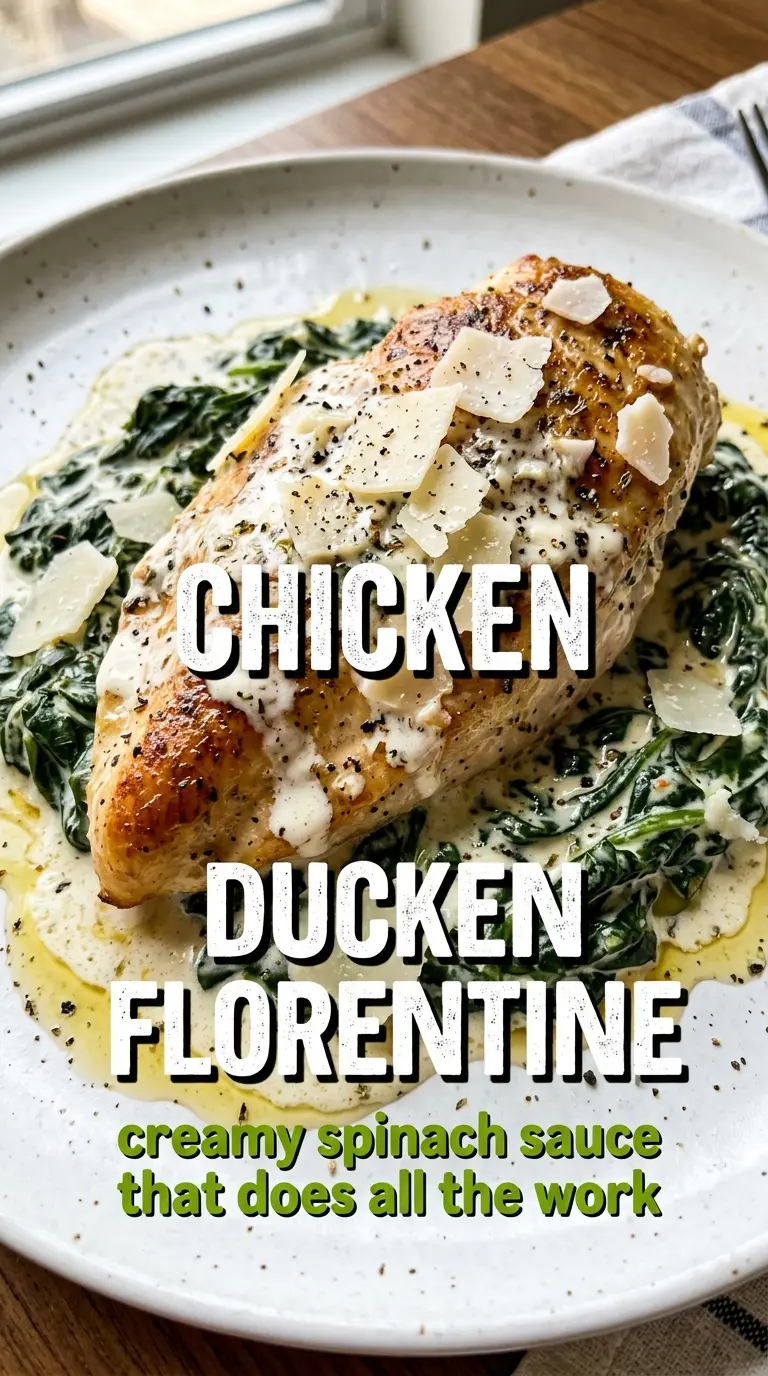
- Chicken breasts — Boneless, skinless breasts cook fast and slice cleanly into the sauce. If one end is much thicker, pound it lightly so it cooks evenly and doesn’t dry out before the thickest part is done.
- Dry white wine — This adds acidity and depth that broth alone can’t give you. Use something dry enough to drink, like Sauvignon Blanc or Pinot Grigio; sweet wine will throw the sauce off.
- Heavy cream — This is what gives the sauce its body and silkiness. Half-and-half can work in a pinch, but it won’t reduce as richly and it’s easier to end up with a thinner sauce.
- Parmesan — Grated Parmesan melts into the sauce and helps it thicken. Use a real wedge if you can; pre-grated cheese sometimes clumps instead of melting cleanly.
- Fresh spinach — Baby spinach wilts fast and disappears into the sauce in the right way. Larger mature leaves work too, but they need a little longer and a few extra stirs to soften.
- Lemon juice and zest — These brighten the cream sauce so it tastes balanced instead of flat. The zest matters just as much as the juice because it gives the dish that fresh, restaurant-style finish.
Getting the Chicken Seared Before the Cream Goes In
The Golden Crust
Season the chicken generously on both sides before it hits the pan. You’re looking for a deep golden crust that releases cleanly when it’s ready to flip, not a pale surface that sticks and tears. If the chicken is crowding the skillet, it will steam instead of sear, so cook in batches if needed.
Building the Sauce in the Same Pan
After the chicken comes out, keep the pan on the heat just long enough to soften the garlic in the oil and drippings. When you add the wine, it should hiss and loosen the browned bits immediately. Let it simmer until the sharp alcohol smell fades, then add the cream and broth and keep the simmer low; high heat is what makes cream sauces look grainy.
Finishing with Spinach, Cheese, and Citrus
Stir in the Parmesan before the spinach so the sauce has a chance to thicken first. Add the spinach in handfuls and turn it until it wilts into the sauce without clumping at the top. The lemon goes in at the end, after the heat is down a bit, so the sauce stays smooth and the citrus tastes fresh instead of harsh.
How to Adapt Chicken Florentine Without Losing the Character of the Dish
Dairy-Free Version
Use full-fat coconut cream in place of heavy cream and a dairy-free Parmesan alternative or nutritional yeast for the finishing note. The sauce won’t taste exactly the same, but it will still be rich and spoonable. Keep the lemon in place because it helps balance the coconut and keeps the dish from tasting heavy.
Lower-Carb Serving Option
Serve the chicken over zucchini noodles, cauliflower mash, or roasted asparagus instead of pasta or rice. The sauce is already naturally low in carbs, so the main adjustment is what you put underneath it. Keep the sauce a little thicker so it clings to the vegetables instead of sliding off.
No Wine Version
Replace the wine with extra chicken broth plus 1 teaspoon of lemon juice. You’ll lose a little depth, but the sauce still works. Let the broth simmer long enough to concentrate before adding the cream so the flavor doesn’t taste flat.
Making It for a Crowd
Double the sauce before you double the spinach, because the greens take up a lot of room at first and shrink fast. If you’re serving more than four people, sear the chicken in batches so the pan stays hot enough to color the meat properly. The sauce reheats well if you keep the heat low and add a splash of broth to loosen it.
Storage and Reheating
- Refrigerator: Store in an airtight container for up to 3 days. The sauce will thicken as it chills, and the spinach will soften a bit more.
- Freezer: This freezes, but cream sauces can separate slightly when thawed. Freeze only if you need to, and thaw overnight in the refrigerator before reheating.
- Reheating: Warm gently in a skillet over low heat with a splash of broth or cream. Don’t boil it; that’s the fastest way to break the sauce and dry out the chicken.
Answers to the Questions Worth Asking

Chicken Florentine
Ingredients
Equipment
Method
- Season the chicken breasts generously on both sides with salt, pepper, garlic powder, and Italian seasoning.
- Heat the olive oil in a large skillet over medium-high heat and sear the chicken for 5-6 minutes per side until golden and cooked through to 165°F; remove and set aside.
- In the same pan, cook the minced garlic over medium heat for 30 seconds until fragrant, not browned.
- Deglaze with the dry white wine and simmer for 2 minutes, scraping up the browned bits, until slightly reduced.
- Add the heavy cream and chicken broth and simmer for 4-5 minutes until the sauce is slightly thickened and glossy.
- Stir in the grated Parmesan, fresh lemon juice, and lemon zest until the cheese melts and the sauce turns pale and smooth.
- Add the baby spinach and stir until wilted throughout, about 1-2 minutes, with spinach flecks visible in the sauce.
- Return the chicken to the pan and spoon the creamy spinach sauce over each breast so it pools around the chicken.
- Garnish with fresh parsley and lemon and serve over pasta or rice.