Juicy seared chicken breasts tucked into a velvety garlic cream sauce have a way of turning an ordinary skillet dinner into something that feels restaurant-worthy without adding much work. The chicken stays tender because it’s cooked hard and fast first, then finished gently in the sauce so it doesn’t dry out. The sauce clings to the meat instead of running all over the plate, which is exactly what you want when garlic is the star.
This version gets its depth from two layers of garlic and a smart pan build. Fresh garlic cooks in butter until fragrant and lightly golden, then the pan gets deglazed so every browned bit from the chicken ends up in the sauce. Parmesan thickens it just enough to coat a spoon, while a pinch of cayenne keeps the cream from tasting flat.
Below, I’ve included the one timing detail that keeps the sauce smooth, plus a few swaps that still give you a rich result when you’re out of wine or need a dairy-free direction.
The sauce thickened beautifully and stayed silky all the way through. I used the wine, and the pan flavor was incredible — my husband kept spooning extra sauce over his potatoes.
Creamy garlic chicken worth pinning for the nights when you want a silky sauce, a fast skillet sear, and dinner that lands like comfort food.
The Part That Keeps the Sauce from Going Grainy
The biggest mistake with a cream sauce like this is rushing the heat once the dairy goes in. If the pan is too hot, the cream can look broken or oily before the Parmesan has a chance to melt smoothly. This recipe works because the garlic gets cooked first, the pan is deglazed while it still has plenty of flavor stuck to the bottom, and the cream comes to a gentle simmer instead of a hard boil.
The chicken also matters here. A good sear gives you browned bits for the sauce, but it also builds texture on the outside so the finished breast doesn’t taste boiled in cream. Pull it at 165°F and let the sauce do the final warming; that keeps the meat juicy.
What Each Ingredient Is Actually Doing Here
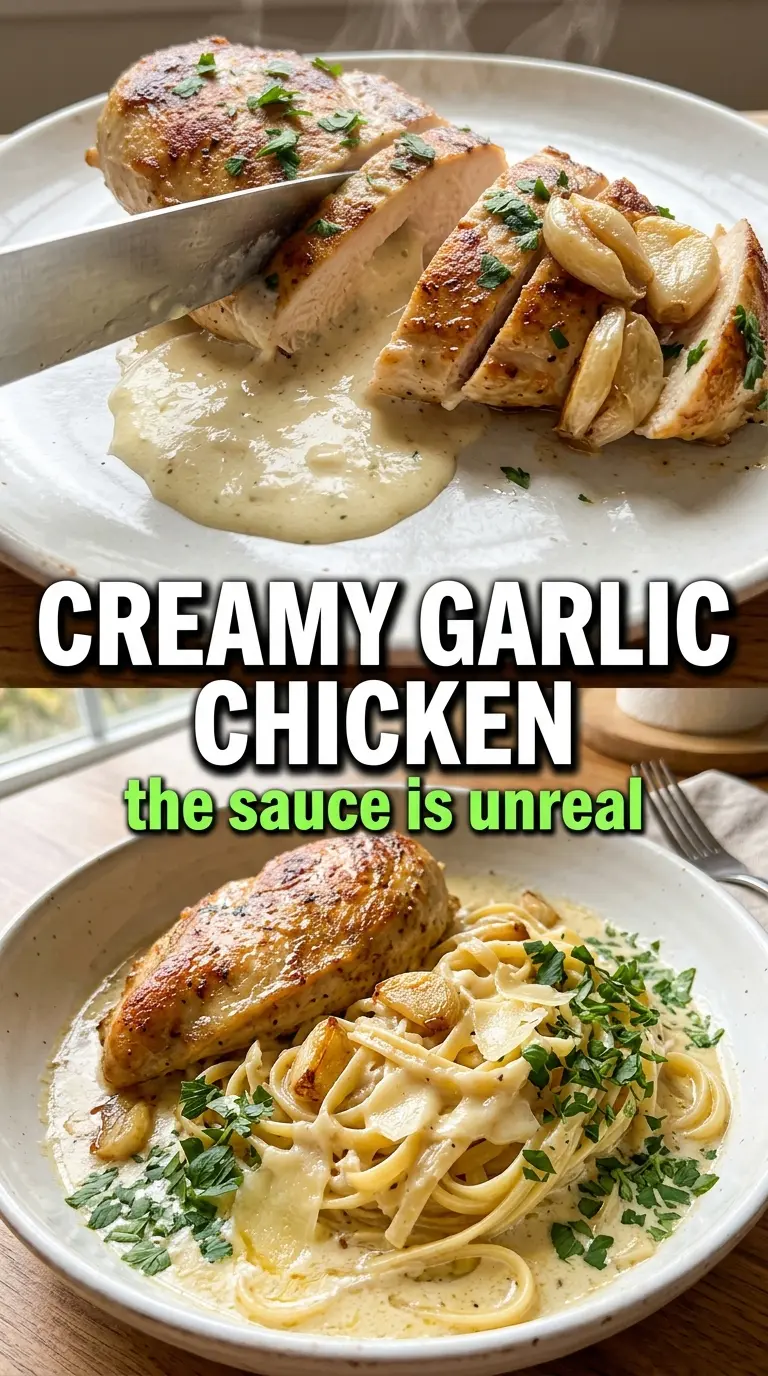
- Chicken breasts — Boneless, skinless breasts work well because they sear fast and give the sauce a clean base. If yours are thick on one end, pound them to an even thickness so the thinner side doesn’t dry out before the center is done.
- Garlic — Eight cloves gives you the bold, savory backbone this dish needs. Fresh garlic matters here; jarred garlic can taste dull once it’s cooked in cream, and this sauce needs that sharp, fragrant edge.
- Heavy cream — This is what makes the sauce luxurious and stable. Half-and-half can work in a pinch, but it won’t reduce into the same thick, glossy coating and it’s more likely to look thin at the end.
- Parmesan — Use finely grated Parmesan so it melts smoothly. Bigger shreds can clump if you dump them in all at once, especially if the pan is too hot.
- Dry white wine or chicken broth — Wine adds brightness and helps lift the browned bits from the pan. Broth gives you a gentler, savory sauce if you want to skip the alcohol, and it still deglazes well.
- Butter and olive oil — The oil helps the chicken sear without scorching, and the butter brings flavor to the garlic. Using both gives you better browning than butter alone.
Building the Skillet in the Right Order
Searing the Chicken First
Season the chicken well before it hits the pan. You want a deep golden crust, not pale steamed meat, so use medium-high heat and leave the breasts alone long enough to brown properly. If they stick when you try to turn them, give them another minute; once a crust forms, they’ll release more cleanly. Remove them as soon as they reach 165°F, because they’ll go back into the sauce later.
Cooking the Garlic Without Burning It
Once the chicken is out, lower the heat to medium and add the butter. Garlic needs only about 2 minutes here, and the goal is fragrant and lightly golden, not brown. If it turns dark fast, the pan is too hot and the garlic will taste bitter in the finished sauce. Stir constantly so it cooks evenly in the butter instead of catching on the bottom.
De-glazing and Thickening the Cream Sauce
Pour in the wine or broth and scrape up the browned bits right away. Let that simmer for a couple of minutes so the sharp edge cooks off, then add the cream and bring it to a gentle simmer. Parmesan goes in next, followed by Italian seasoning and cayenne, and the sauce should turn glossy and thick enough to coat the back of a spoon after 4 to 5 minutes. If it looks loose, give it a little more time; if it boils hard, drop the heat and stir so it stays smooth.
Finishing the Chicken in the Sauce
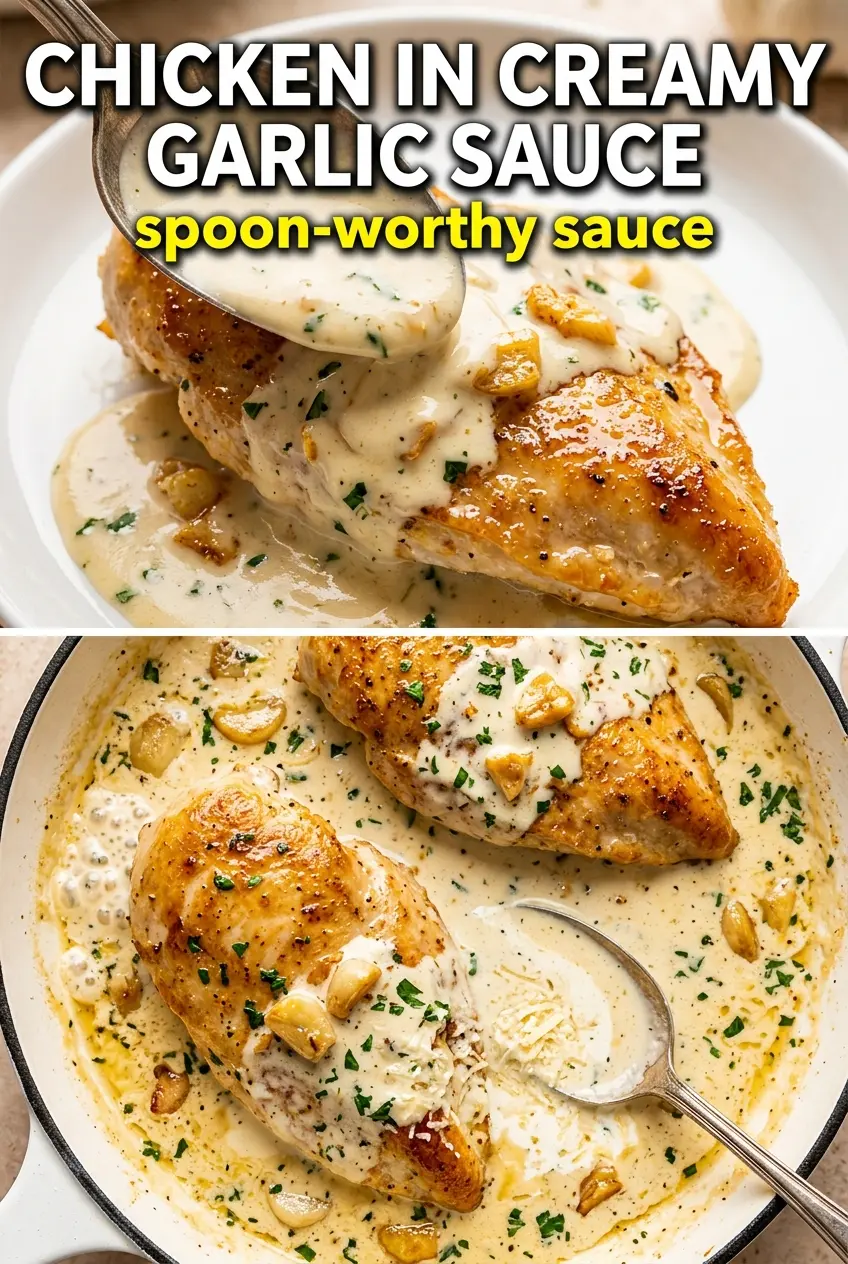
Return the chicken to the pan and spoon the sauce over the top. This last simmer warms the meat through and lets the breasts pick up the garlic flavor without overcooking. The sauce should pool around the edges of the plate and cling to the chicken instead of sliding off. Finish with thyme and parsley right at the end so they stay bright.
Three Ways to Make This Work in Your Kitchen
Make It Dairy-Free
Use full-fat coconut cream in place of heavy cream and skip the Parmesan, then add a little extra salt and a squeeze of lemon at the end to replace the brightness the cheese normally brings. The sauce will be a touch sweeter and less sharp, but it still turns silky and coats the chicken well.
Use Chicken Thighs Instead
Boneless thighs give you richer flavor and a little more forgiveness if you’re nervous about overcooking. They may need a few extra minutes in the pan, but the sauce still builds the same way and the finished dish tastes even more savory.
Skip the Wine
Chicken broth works well if you want a non-alcoholic version. The sauce will be a little rounder and less bright, so a tiny splash of lemon juice at the end helps wake it back up.
Storage and Reheating
- Refrigerator: Store leftovers in an airtight container for up to 3 days. The sauce will thicken as it chills, which is normal.
- Freezer: I don’t recommend freezing this one. Cream sauces can separate after thawing, and the chicken can turn a little spongy.
- Reheating: Warm it gently in a skillet over low heat with a splash of broth or cream. High heat is the mistake that makes the sauce split and the chicken tighten up.
Answers to the Questions Worth Asking
Chicken Breasts in Creamy Garlic Sauce
Ingredients
Equipment
Method
- Season the chicken breasts with salt, pepper, and smoked paprika to taste. Heat olive oil in a large skillet over medium-high heat and sear the chicken for 5-6 minutes per side until golden, cooking until the internal temperature reaches 165°F, then remove to a plate.
- Melt butter in the same pan over medium heat, then add minced garlic and cook for 2 minutes, stirring constantly, until fragrant and starting to turn golden.
- Deglaze with white wine and cook for 2 minutes, stirring to lift browned bits.
- Stir in the heavy cream and bring the mixture to a simmer. Add Parmesan, Italian seasoning, and cayenne, then simmer for 4-5 minutes until the sauce is thick and glossy.
- Return the chicken breasts to the pan and spoon the garlic cream sauce over each breast so it pools around the edges.
- Garnish with fresh thyme and parsley right before serving for a fresh green aroma and color.