Clear broth, tender noodles, and little bites of chicken make this Chick-fil-A chicken noodle soup the kind of bowl you keep coming back to. It tastes clean and comforting, with just enough vegetables to feel hearty without turning heavy. The best part is how closely it nails that fast-food soup vibe while still tasting homemade and fresh.
The trick is keeping the chicken finely diced instead of shredded. Small cubes stay neat in the spoon and blend into the broth the way the restaurant version does. The vegetables are cut small too, so they soften at the same pace and don’t overwhelm the bowl. A short simmer keeps the broth bright instead of muddy, and the corn adds the same little pop of sweetness people remember from the original.
Below, I’ll walk through the one detail that keeps the broth clear, why the chicken cut matters more than you’d think, and a few easy swaps if you need them.
The broth stayed clear and the chicken pieces stayed tender instead of stringy. I loved how the noodles soaked up the flavor without getting mushy, and my kids finished every bowl.
Save this Chick-fil-A chicken noodle soup for the nights when you want a clear, cozy broth with tender noodles and small bites of chicken.
The Detail That Keeps This Soup Clear Instead of Cloudy
A lot of chicken noodle soups lose their clean look because everything cooks too hard, too long, or both. This version stays bright because the vegetables soften first, the chicken goes in after the broth has already picked up their flavor, and the noodles only cook until tender at the end. That order matters. If you add the noodles too early, they release starch into the pot and the broth turns dull fast.
The second thing that keeps this soup on track is the cut size. Small dice on the carrots, celery, onion, and chicken means each spoonful feels balanced instead of clunky. You want pieces that fit neatly on the spoon with the noodles, not chunks that overpower the broth.
What Each Ingredient Is Actually Doing in This Bowl
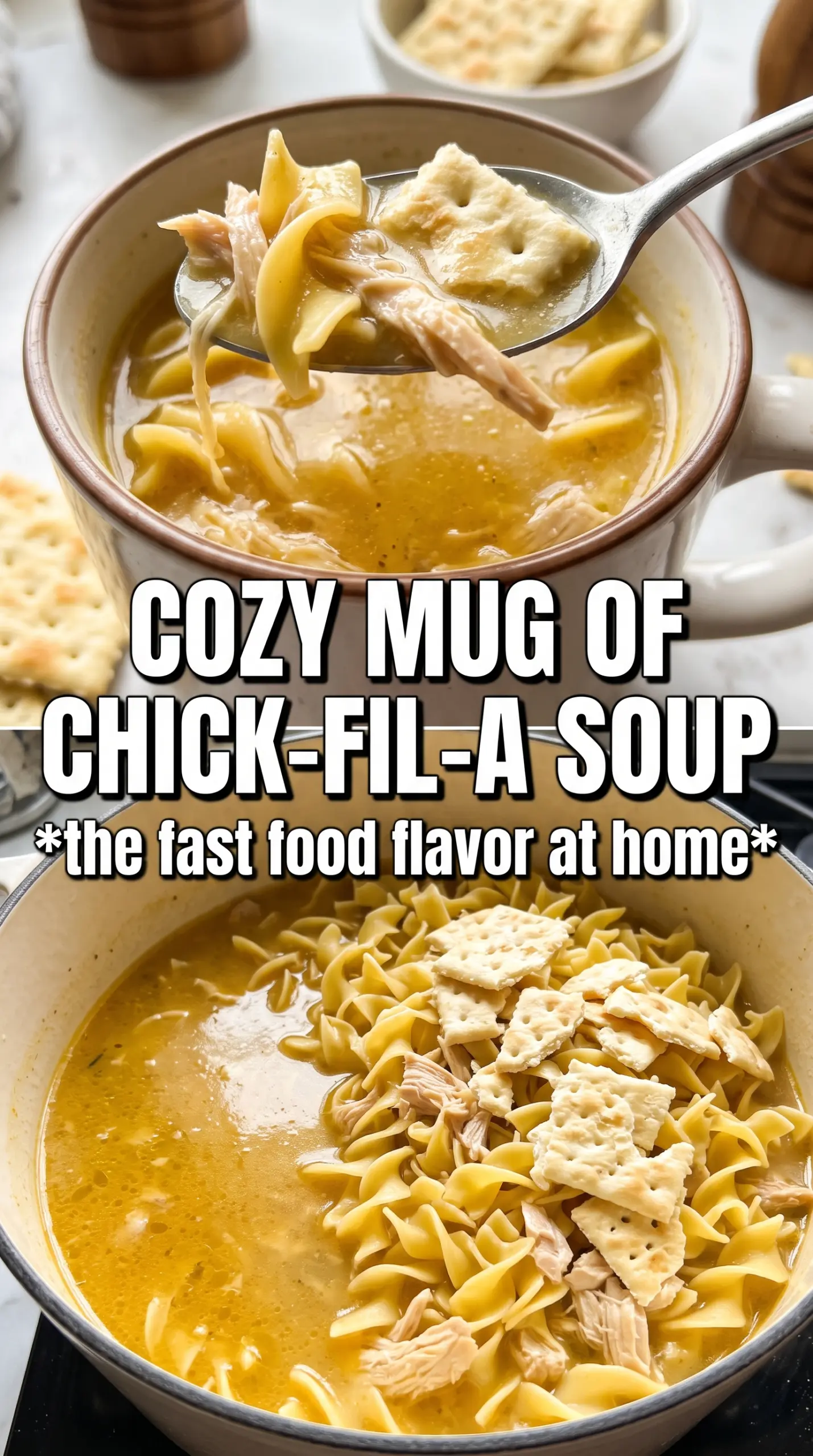
- Cooked chicken breast — Finely diced chicken gives you the same neat spoonful you get in the restaurant version. Shredded chicken makes the soup feel stringy and less polished. If you have leftover rotisserie chicken, use it, but trim it into small cubes instead of pulling it apart.
- Chicken broth — This is the base of the whole soup, so use one that tastes clean and savory on its own. A weak broth gives you a flat soup no matter how much seasoning you add. If yours is low-sodium, that’s fine; it just gives you more control at the end.
- Carrots, celery, and onion — These build the classic chicken soup backbone. Dice them small so they soften in the short simmer and don’t leave you with crunchy bits. Bigger cuts need more time, and more time muddies the broth.
- Corn — This is the ingredient that makes the copycat version feel familiar. It adds little bursts of sweetness and a soft pop against the noodles. Frozen corn works perfectly here; there’s no need to chase fresh unless you already have it.
- Egg noodles — They give the soup that restaurant-style comfort and hold up well in broth. Small pasta works too, but keep an eye on the simmer because different shapes soften at different speeds. Cook just until tender, then take the pot off the heat.
- Dried parsley, thyme, and garlic powder — These season the broth without making it taste busy. Fresh herbs are fine, but the dried version keeps the soup tasting close to the original and is easier to keep on hand. Don’t overdo them; this soup works because it stays simple.
Building the Broth in the Right Order
Softening the Vegetables First
Start by bringing the broth and water to a boil, then add the carrots, celery, onion, garlic, parsley, thyme, and garlic powder. Let them simmer until the vegetables are just tender and the onion loses its raw edge. You’re not cooking for color here, just flavor and texture. If the vegetables go too long, the carrot pieces turn mushy and the soup starts tasting overcooked before the noodles even go in.
Adding the Chicken Without Breaking the Soup
Stir in the diced chicken and corn and give them a short simmer so the soup comes back together. The chicken only needs to heat through because it’s already cooked, and that’s what keeps it tender. If you use shredded chicken, it can fray apart and look stringy in the broth. Small dice keeps the texture clean and makes each bite feel more like the chain version.
Cooking the Noodles at the End
Add the egg noodles only after the broth, vegetables, chicken, and corn are already hot. Cook just until tender, usually 6 to 8 minutes, then stop. If you let the noodles sit in a rolling simmer for too long, they swell, drink up the broth, and turn the soup thick and tired. Season with salt and pepper at the very end so you can judge the broth after the noodles have done their work.
How to Make This Soup Fit the Way You Cook
Make It with Rotisserie Chicken
Rotisserie chicken saves time and works well as long as you dice it small. Skip the skin and any dark, strongly seasoned bits if you want the broth to stay clean and close to the original. It’s the easiest shortcut, and it still gives you a good texture.
Gluten-Free Version
Use gluten-free egg noodles or a small gluten-free pasta that holds its shape in broth. Cook it gently and check early, because gluten-free pasta can go from tender to soft faster than regular noodles. The broth itself is naturally gluten-free if your stock is.
Extra Vegetables Without Losing the Copycat Feel
A handful of peas or diced zucchini can fit in here, but keep the cuts small and the additions modest. Too many vegetables turn this from a Chick-fil-A-style soup into a generic chicken vegetable soup. The original charm is in the simple broth and the clean, balanced spoonful.
Storage and Reheating
- Refrigerator: Store in an airtight container for up to 4 days. The noodles will keep soaking up broth, so expect the soup to thicken a little.
- Freezer: It freezes, but the noodles soften after thawing. For the best result, freeze the soup without noodles and cook fresh noodles when reheating.
- Reheating: Warm it gently on the stovetop over medium-low heat until steaming. If it looks too thick, add a splash of broth or water. A hard boil will push the noodles past tender and make the chicken tougher.
Answers to the Questions Worth Asking
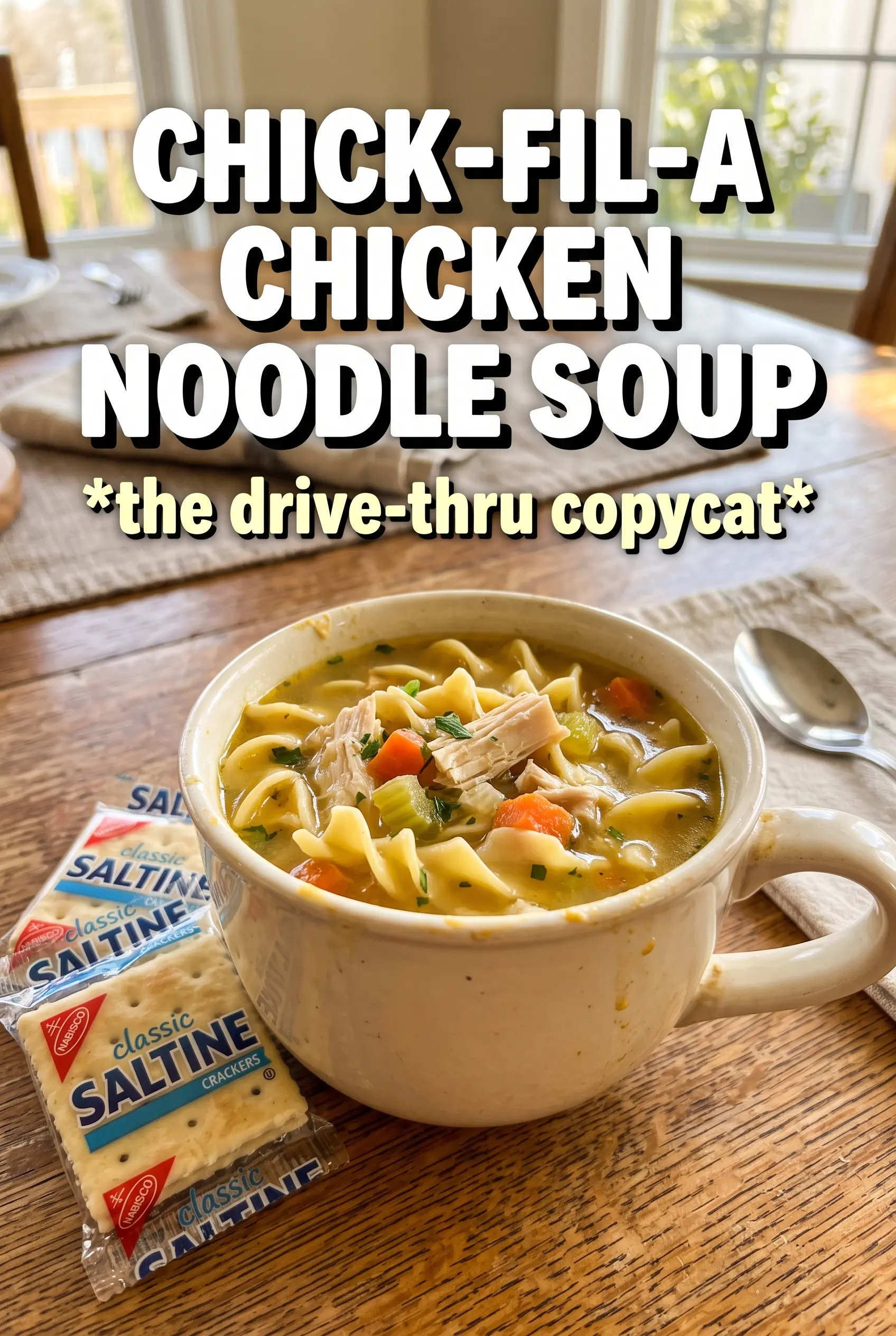
Chick-Fil-A Chicken Noodle Soup
Ingredients
Equipment
Method
- Bring the chicken broth and water to a boil in a large pot.
- Keep the boil steady, so you can add the vegetables right away without cooling the liquid.
- Add carrots, celery, onion, garlic, dried parsley, dried thyme, and garlic powder, then simmer for 10 minutes until the vegetables are just tender.
- Keep the heat at a gentle simmer, so the broth stays clear rather than cloudy from aggressive boiling.
- Add the finely diced chicken and corn kernels, then simmer for 5 minutes.
- Add egg noodles and cook for 6-8 minutes until tender, stirring occasionally to prevent sticking.
- Season with salt and pepper to taste.
- Finish by confirming the chicken is finely diced (not shredded) so each spoonful has bits of chicken in the broth.