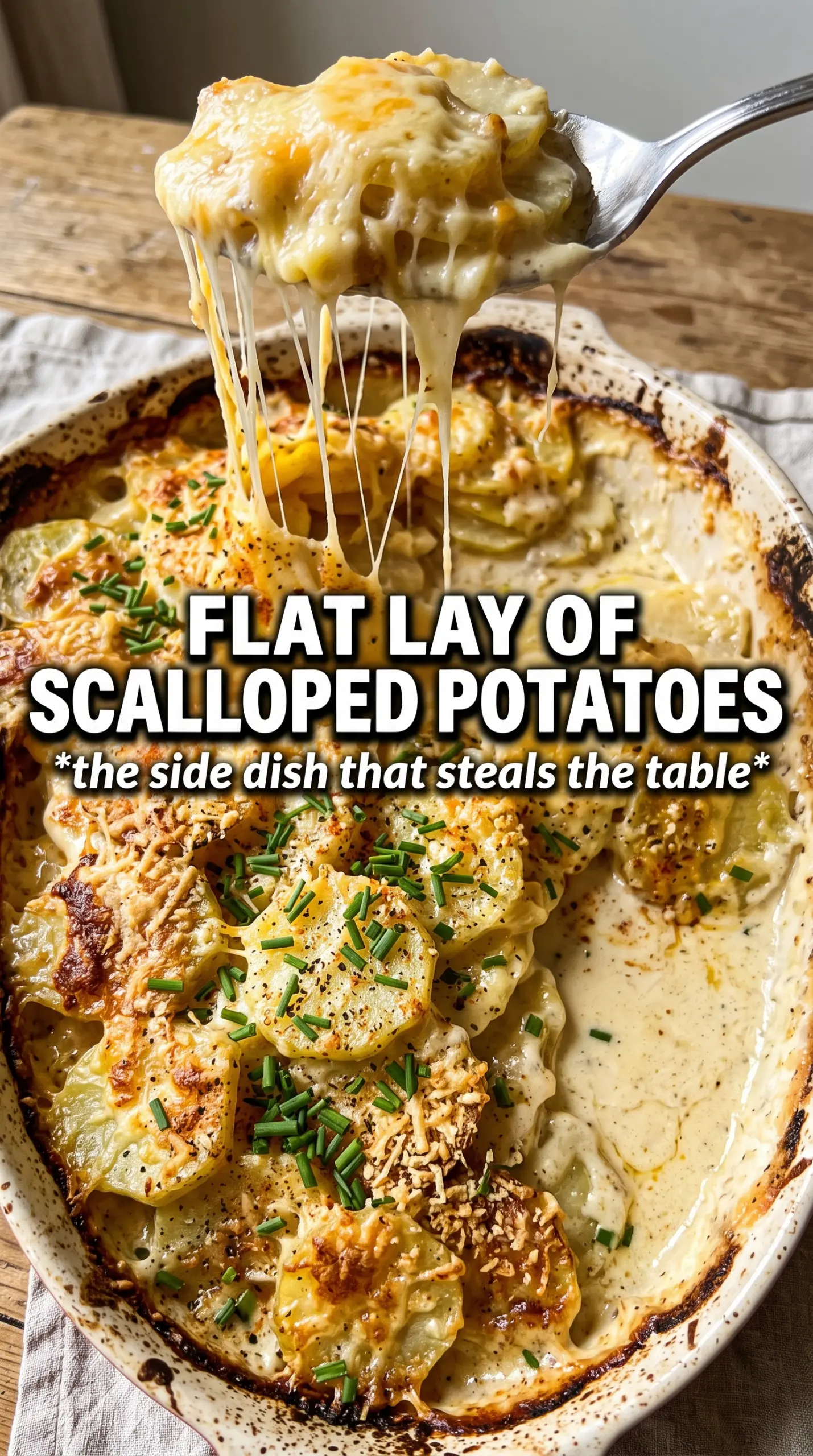
Cheesy scalloped potatoes come out silky, bubbling, and stacked with tender layers that hold their shape when you spoon them onto a plate. The top turns deeply golden while the cream underneath thickens into a rich sauce that clings to every slice of potato. It’s the kind of side dish that disappears fast because it tastes like the best part of a holiday table, only easier to pull off on a regular night.
Yukon golds are the right potato here because they stay creamy instead of turning mealy, and their thin slices soften into distinct layers rather than collapsing into a mash. The cream-and-milk mixture does the heavy lifting, but the Dijon, thyme, nutmeg, and garlic keep it from tasting flat. Gruyere brings nutty depth, while sharp cheddar gives the top a more familiar, extra-savory finish.
Below, I’ll show you how to keep the sauce from breaking, how thin the potatoes really need to be, and what to do if you need to make the dish a little lighter or prep it ahead.
The potatoes baked up tender all the way through and the cream thickened into a real sauce instead of staying watery. The Gruyere on top browned beautifully, and even the leftovers reheated without getting greasy.
Save these cheesy scalloped potatoes for the nights when you want a bubbling Gruyere-and-cheddar top with tender layers underneath.
The Cream Needs Heat Control, Not More Time
The most common failure with scalloped potatoes is a pan that looks done on top but still has firm layers in the middle, or a sauce that turns oily because the cheese went in too early. This version avoids both problems by baking the potatoes covered first, in seasoned cream, before any cheese touches the surface. That gives the potatoes time to soften in the liquid without scorching the top.
Once the foil comes off, the cheese only has to melt and brown, not cook the potatoes from scratch. That’s the difference between a sauce that stays smooth and one that splits under high heat. The rest time at the end matters too; the sauce thickens as it settles, and the layers hold together better when you cut in.
- Covered baking first — this traps steam and lets the potatoes turn tender without drying out the edges.
- Cheese added at the end — Gruyere and cheddar melt into a crust instead of leaking oil into the cream.
- Thin, even slices — uneven potatoes bake at different speeds, which is how you end up with soft tops and crunchy centers.
What Each Ingredient Is Actually Doing in the Dish
- Yukon gold potatoes — these hold their shape and cook into tender, buttery layers. Russets can work, but they break down more and give you a softer, less defined casserole.
- Heavy cream and whole milk — the cream gives richness, while the milk keeps the sauce from feeling overly heavy. Using all cream makes the dish thicker, but it can also feel a little dense once it cools.
- Gruyere — this is the cheese that gives the top its nutty, savory depth. If you swap it out, choose another good melter like Fontina or Emmental; pre-shredded versions work in a pinch, but freshly shredded melts smoother.
- Sharp cheddar — this adds the familiar tang and a stronger browned top. Mild cheddar melts fine, but you lose that punch that keeps the dish from tasting one-note.
- Dijon, thyme, and nutmeg — these don’t make the potatoes taste fancy; they keep the cream sauce from going bland. The nutmeg should stay in the background.
Building the Layers So the Potatoes Turn Tender, Not Soupy
Start With a Thin, Even Slice
Peel the potatoes and slice them as thinly and evenly as you can, about 1/8-inch if you’re doing it by hand. A mandoline makes this faster and more consistent, which matters because thick slices stay firm while thinner ones go soft. If the slices vary too much, the finished dish will have random tough spots no matter how long it bakes.
Season the Cream Before It Hits the Pan
Whisk the cream, milk, garlic, Dijon, thyme, nutmeg, salt, and pepper together before layering anything. That way every bite gets seasoned from the inside out, not just from the top. Pour it over the potatoes until they’re mostly submerged, then press the layers down so the liquid works into the gaps between slices.
Cover the Pan for the First Bake
Tight foil is nonnegotiable here. You want steam trapped in the dish so the potatoes soften before the cheese goes on, and loose foil lets too much moisture escape. After about 50 minutes, the potatoes should be starting to yield when pierced with a knife, even if the top still looks pale.
Finish With Cheese and a Hot Top
Once the foil comes off, scatter the Gruyere and cheddar over the surface and return the pan to the oven until the top is bubbling and deeply golden. If the top browns before the center is tender, the slices were too thick or the dish was too shallow; next time, check the potato size before you blame the oven. Let it rest for 10 minutes before serving so the sauce settles and doesn’t flood the plate.
How to Adapt This for Different Tables and Schedules
Dairy-Free Version With a Rich Finish
Use unsweetened oat milk or a good dairy-free cream substitute, then replace the butter with olive oil or vegan butter and skip the cheese topping. You’ll lose the classic browned crust, but the potatoes will still bake up tender if you keep the seasoning bold and cover the dish tightly for the first part of baking.
Make It Ahead Without Losing the Texture
You can assemble the dish a few hours ahead, cover it, and refrigerate it before baking. Add about 10 to 15 minutes to the covered bake time since the pan will be cold, and don’t add the cheese until the potatoes are almost tender or it can overbrown before the center is cooked through.
A Lighter Version That Still Feels Special
Swap the heavy cream for half-and-half if you want a less rich sauce, but keep the whole milk in the mix so the texture doesn’t turn thin. The result won’t be quite as lush, but it still tastes balanced and slices neatly after resting.
Storage and Reheating
- Refrigerator: Store leftovers in an airtight container for up to 4 days. The sauce will thicken as it chills, and the layers will hold together more firmly.
- Freezer: It freezes, but the cream sauce can turn a little grainy after thawing. If you do freeze it, wrap it well, thaw in the fridge, and expect a softer texture.
- Reheating: Reheat covered at 325F until hot in the center, then uncover for a few minutes if you want to bring back some top browning. Microwaving works for a single serving, but use short bursts so the sauce doesn’t separate.
Answers to the Questions Worth Asking
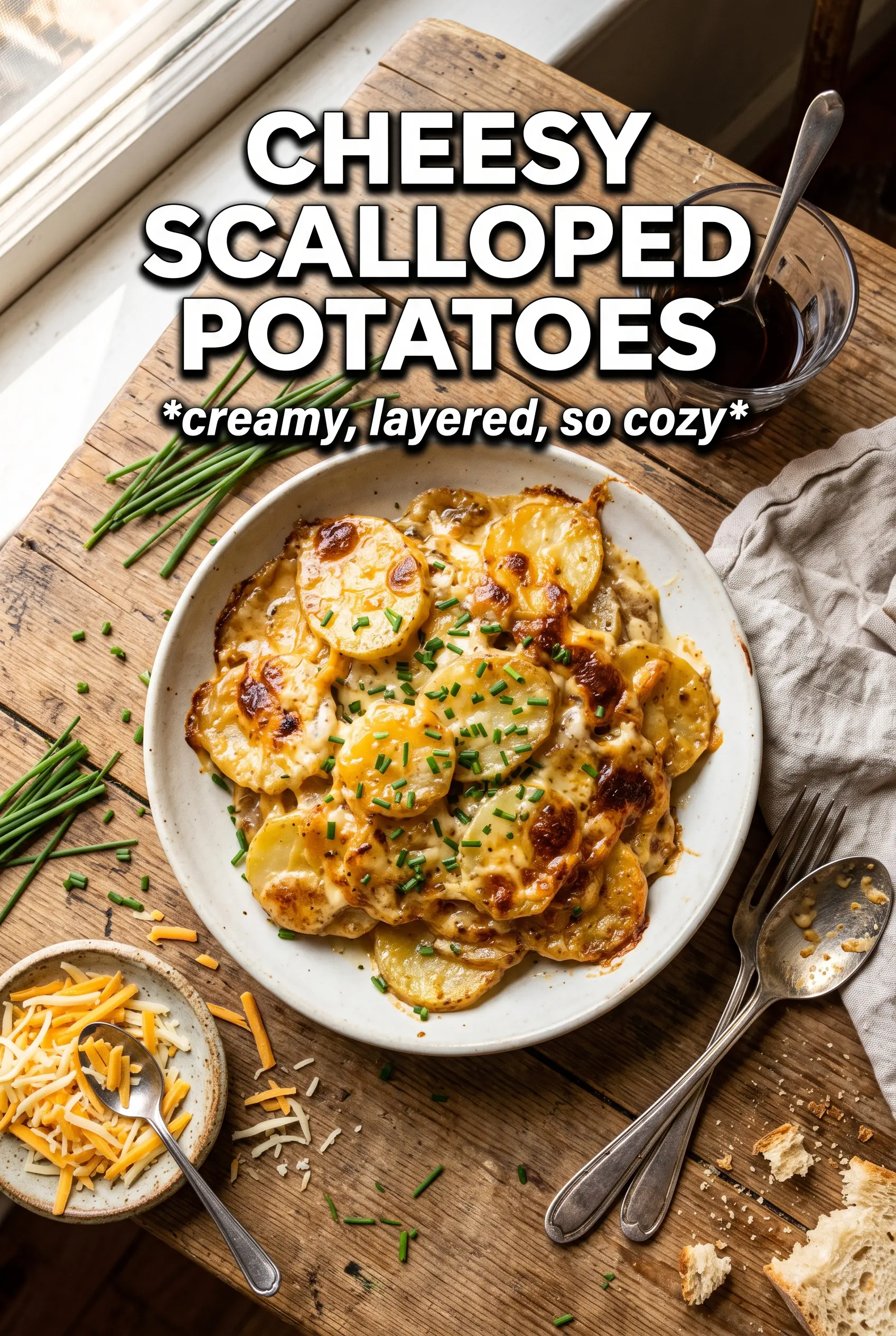
Cheesy Scalloped Potatoes
Ingredients
Equipment
Method
- Preheat the oven to 375°F, then butter a 9x13 baking dish.
- In a bowl, whisk together heavy cream, whole milk, minced garlic, Dijon mustard, fresh thyme, nutmeg, 1-1/2 teaspoons salt, and pepper until smooth.
- Layer the very thinly sliced Yukon gold potatoes in overlapping rows in the baking dish.
- Pour the cream mixture over the potatoes, making sure most slices are covered.
- Press the potatoes down to submerge, then cover tightly with foil.
- Bake for 50 minutes at 375°F.
- Uncover the dish, then scatter the Gruyère and cheddar over the top.
- Bake 18 to 22 more minutes at 375°F until the top is golden, bubbling, and the potatoes are completely tender.
- Rest the scalloped potatoes for 10 minutes before serving.