Cheesy chicken broccoli orzo lands in that sweet spot between comfort food and one-pan practicality: tender bites of chicken, small broccoli florets that stay bright and just crisp enough, and orzo that cooks right in the sauce until it turns creamy without needing a separate pot of its own. The cheddar melts into the broth and cream and wraps everything in a thick, spoonable sauce that clings instead of pooling at the bottom of the skillet.
What makes this version work is the order. The chicken gets browned first, which gives the pan the savory base that carries through the whole dish, then the orzo toasts for a minute before the liquid goes in, which adds a little nutty depth. Broccoli goes in near the end so it stays green and tender instead of collapsing into the sauce.
Below you’ll find the timing that keeps the orzo from turning gummy, plus a few smart swaps for making this with what you already have in the fridge.
The orzo stayed creamy instead of turning into a clump, and the broccoli still had a little bite. I kept sneaking spoonfuls straight from the skillet before dinner was even on the table.
Save this cheesy chicken broccoli orzo for a creamy one-pan dinner with tender chicken, bright broccoli, and a cheddar sauce that clings to every bite.
The Trick to Keeping the Orzo Creamy Instead of Gluey
Orzo is small enough to go from tender to mushy fast, and the biggest mistake is treating it like plain pasta. Here, it cooks in the skillet with the broth and cream, which means the starch stays in the pan and helps thicken the sauce instead of getting rinsed away. The key is to stir often and keep the simmer gentle; a hard boil makes the liquid evaporate too quickly before the orzo softens evenly.
The broccoli timing matters just as much. If it goes in at the start, you’ll end up with dull, overcooked florets that disappear into the sauce. Add it near the end so it turns bright green and tender while still holding a little structure, which keeps the whole dish from tasting flat.
What Each Ingredient Is Actually Doing in the Skillet

- Chicken breasts — Bite-sized pieces cook quickly and stay tender if you pull them as soon as they lose their pink color. Chicken thighs also work if you want a little more richness, but breasts keep the dish lighter and let the sauce lead.
- Orzo — This is the backbone of the dish. It thickens the sauce as it cooks, so there isn’t a perfect substitute that gives the same creamy texture, though small pasta shapes like ditalini can work in a pinch with a little extra broth and a longer simmer.
- Heavy cream — This gives the sauce body and keeps the cheese from turning grainy. Half-and-half will work, but the sauce will be a little looser and you’ll need to keep the heat lower when the cheese goes in.
- Sharp cheddar and Parmesan — Sharp cheddar brings the flavor, Parmesan sharpens it and helps the sauce taste fuller. Pre-shredded cheese melts fine here, but block cheese grated fresh melts smoother because it doesn’t have anti-caking starch coating it.
- Broccoli florets — Cut them small so they cook in the same window as the orzo. If the florets are too large, the pasta will be done before the broccoli softens, and you’ll be tempted to overcook the whole pan.
- Garlic and smoked paprika — Garlic builds the savory base, and smoked paprika gives the chicken a little depth without making the dish taste smoky in a loud way. If you want more warmth, add a pinch of onion powder with the seasoning on the chicken.
Building the Sauce So the Cheese Stays Smooth
Browning the Chicken First
Season the chicken pieces before they hit the skillet, then let them sit undisturbed long enough to pick up color. You want golden edges, not steamed pale chicken, because that color becomes the backbone of the sauce. Once the pieces are cooked through, take them out of the pan so they don’t overcook while the orzo simmers.
Toasting the Orzo and Starting the Simmer
Cook the garlic just until it smells fragrant, then stir in the orzo for about a minute. That short toast adds a little nuttiness and keeps the pasta from tasting flat. Pour in the broth and cream and bring the pan to a gentle simmer, not a rolling boil; too much heat here is what causes the liquid to reduce before the orzo has time to soften.
Adding the Broccoli at the Right Moment
Stir the broccoli in during the last few minutes of cooking, when the orzo is almost tender but still has a little bite. The florets should turn bright green and soften at the stems while still staying intact. If the pan looks dry before the orzo is done, add a splash of broth rather than turning up the heat.
Melting in the Cheese
Pull the skillet off the heat before adding the cheddar and Parmesan. That lowers the chance of grainy cheese and gives you a smoother finish, because cheese needs residual heat more than direct heat to melt cleanly. Stir until the sauce looks glossy and the orzo is coated, then fold the chicken back in so the whole pan comes together without breaking the sauce.
How to Adapt This for Different Eaters and Different Fridges
Make It Gluten-Free
Use a gluten-free orzo or another small gluten-free pasta shape that cooks in about the same time. Watch the liquid closely, because some gluten-free pastas drink up more broth and can go soft fast if the pan runs dry.
Dairy-Free Version
Swap the cream for unsweetened oat cream or a thick, plain dairy-free cooking cream, and use a meltable dairy-free cheddar-style shreds. The sauce won’t taste exactly the same, but keeping the heat low and adding the cheese off the burner still gives you a creamy finish instead of a split one.
Use Chicken Thighs Instead
Boneless skinless thighs bring a richer, juicier bite and handle a little extra simmering better than breasts. They add more flavor to the pan, though the finished dish will feel a bit heavier.
Storage and Reheating
- Refrigerator: Store in an airtight container for up to 4 days. The sauce will thicken as it sits, so the pasta will look less glossy the next day.
- Freezer: It freezes, but the texture softens a bit after thawing because of the cream and cheese. Freeze in portions for up to 2 months if you don’t mind a slightly looser sauce when reheated.
- Reheating: Warm gently on the stove or in the microwave with a splash of broth or milk. Low heat matters here; high heat tightens the sauce and can make the cheese separate.
Questions I Get Asked About This Recipe
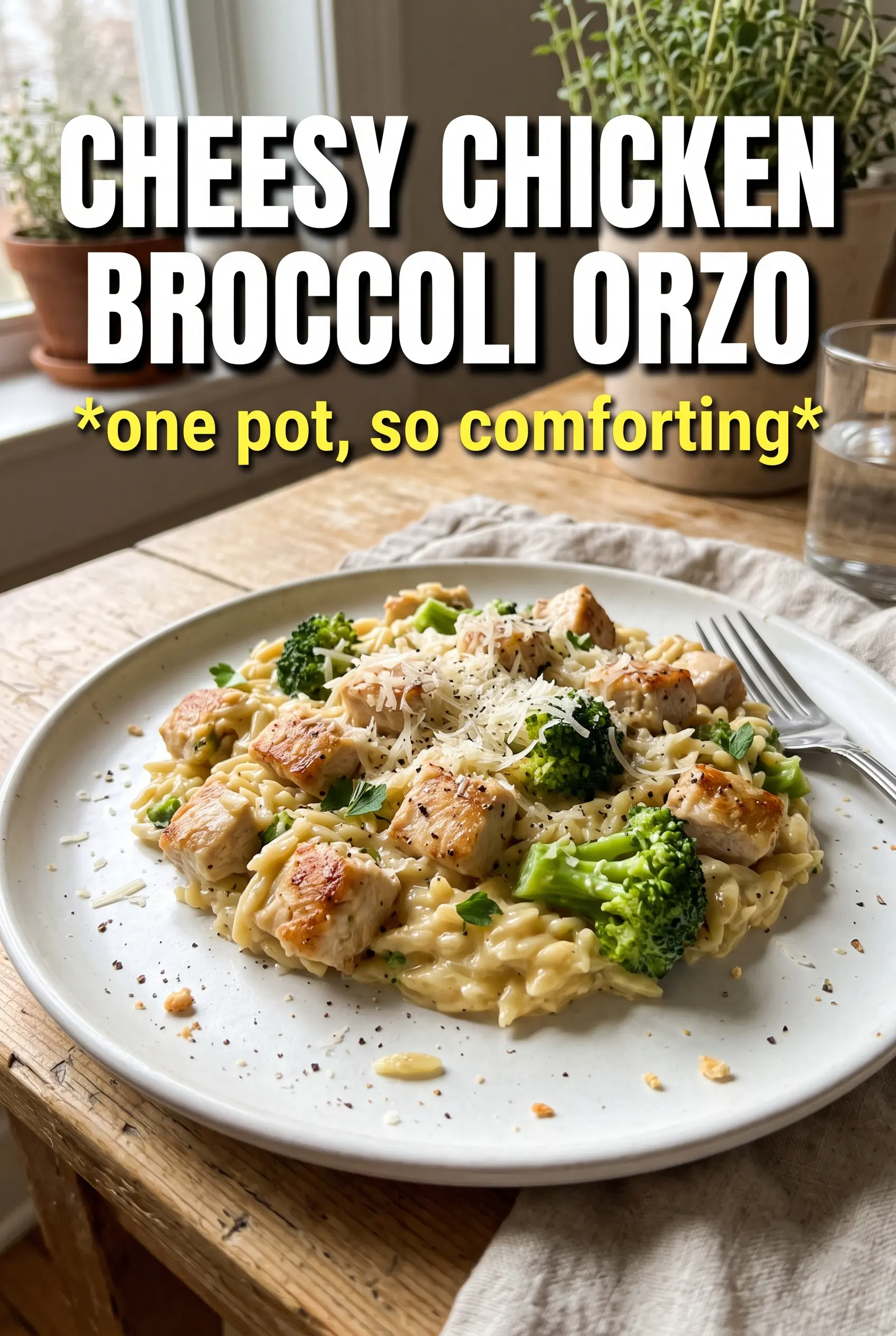
Cheesy Chicken Broccoli Orzo
Ingredients
Equipment
Method
- Season the chicken pieces with salt, pepper, garlic powder, and smoked paprika. Heat olive oil in a large skillet over medium-high heat, then cook the chicken for 5-6 minutes until golden and cooked through; remove to a plate.
- In the same skillet, cook the minced garlic for 30 seconds. Add the orzo and toast for 1 minute, then pour in the chicken broth and heavy cream and bring to a simmer with bubbling at the edges.
- Cook the orzo uncovered for 8-10 minutes, stirring often until tender and the liquid is visibly thickened. Add the broccoli florets for the last 4 minutes, stirring so they turn bright green and become just tender.
- Stir in the shredded cheddar and Parmesan until fully melted and the orzo looks creamy and glossy. Return the chicken to the pan and stir to combine, then taste and adjust seasoning for a balanced flavor.
- Garnish with fresh parsley and serve hot, with extra cheese melted on top if you like.