Cheesy beef and potato soup lands in that sweet spot between hearty and spoonable. The broth turns rich and savory from the browned beef, then the potatoes break down just enough to make the base feel thick and comforting without turning into straight-up mash. Every bowl has tender chunks of potato, bits of beef, and that sharp cheddar finish that makes people go back for a second ladle before they’ve even finished the first.
What makes this version work is the order. The beef gets browned first, which leaves flavor in the pot for the vegetables, and the potatoes simmer in broth until they’re soft enough to mash a little right in the pot. That’s what gives the soup body without needing flour or a separate roux. The condensed cheddar soup and heavy cream go in after the potatoes are tender, so the dairy stays smooth and the cheddar melts in cleanly instead of turning grainy.
Below, I’ve included the little texture cues that matter, plus a few ways to adapt this if you want it a little lighter, a little thicker, or easier to reheat later in the week.
The potatoes softened right on schedule and mashing a few of them made the soup thick and creamy without needing anything extra. My husband said it tasted like the best part of a cheeseburger in soup form.
Save this cheesy beef and potato soup for nights when you want a thick, comforting dinner with browned beef, tender potatoes, and melted cheddar in one bowl.
The Trick to Keeping the Cheese Soup Smooth Instead of Grainy
The biggest mistake with a soup like this is rushing the dairy. If the broth is still at a hard boil when the cheddar soup, cream, or shredded cheese goes in, the texture can turn sandy or separate at the edges. Pull the pot down to a gentle simmer before the dairy hits the pan, then stir steadily until everything looks glossy and even.
Mashing a portion of the potatoes is doing more than thickening the soup. It gives the base enough starch to hold the cheese without needing a flour slurry, and it keeps the broth from tasting thin or watery. If you skip that step, the soup still tastes good, but it loses the dense, chowder-like body that makes this one so satisfying.
- Browned ground beef — This is the backbone of the soup’s flavor. Drain off the excess fat, but keep the browned bits in the pot; that’s where a lot of the savory depth comes from.
- Russet potatoes — Russets break down more readily than waxy potatoes, which is exactly why they work here. They help thicken the soup naturally when you mash a few pieces into the broth.
- Condensed cheddar soup — This gives the soup a head start on creaminess and helps stabilize the dairy. A homemade substitute won’t bring quite the same texture, so it’s one ingredient I’d keep as written if you want the classic result.
- Sharp cheddar — Use the sharpest cheddar you like eating on its own. Mild cheddar melts fine, but it won’t give the same bold, salty finish.
- Heavy cream — This rounds out the soup and makes the texture lush. Half-and-half can work in a pinch, but the soup will be lighter and a little less silky.
What Each Ingredient Is Actually Doing in This Recipe
- Primary ingredient (the star) — Quality matters most. Choose the best you can find.
- Cooking medium (oil, butter, or broth) — This carries flavors and prevents dryness.
- Seasonings (salt, pepper, spices, herbs) — Layer flavors so nothing overpowers. Build depth gradually.
- Aromatics (garlic, onion, herbs) — Cook with fat to bloom flavors. Become the foundation.
- Supporting ingredients — Complement the main ingredient without overpowering it.
- Sauce or liquid (if applicable) — Brings flavors together. Balance richness with acid.
- Acid (lemon, vinegar, wine, or other) — Brightens and prevents flat-tasting results.
- Final finish (garnish, glaze, or sauce) — Prevents one-dimensional taste and adds visual appeal.
Building the Potatoes, Broth, and Cheese in the Right Order
Brown the beef first
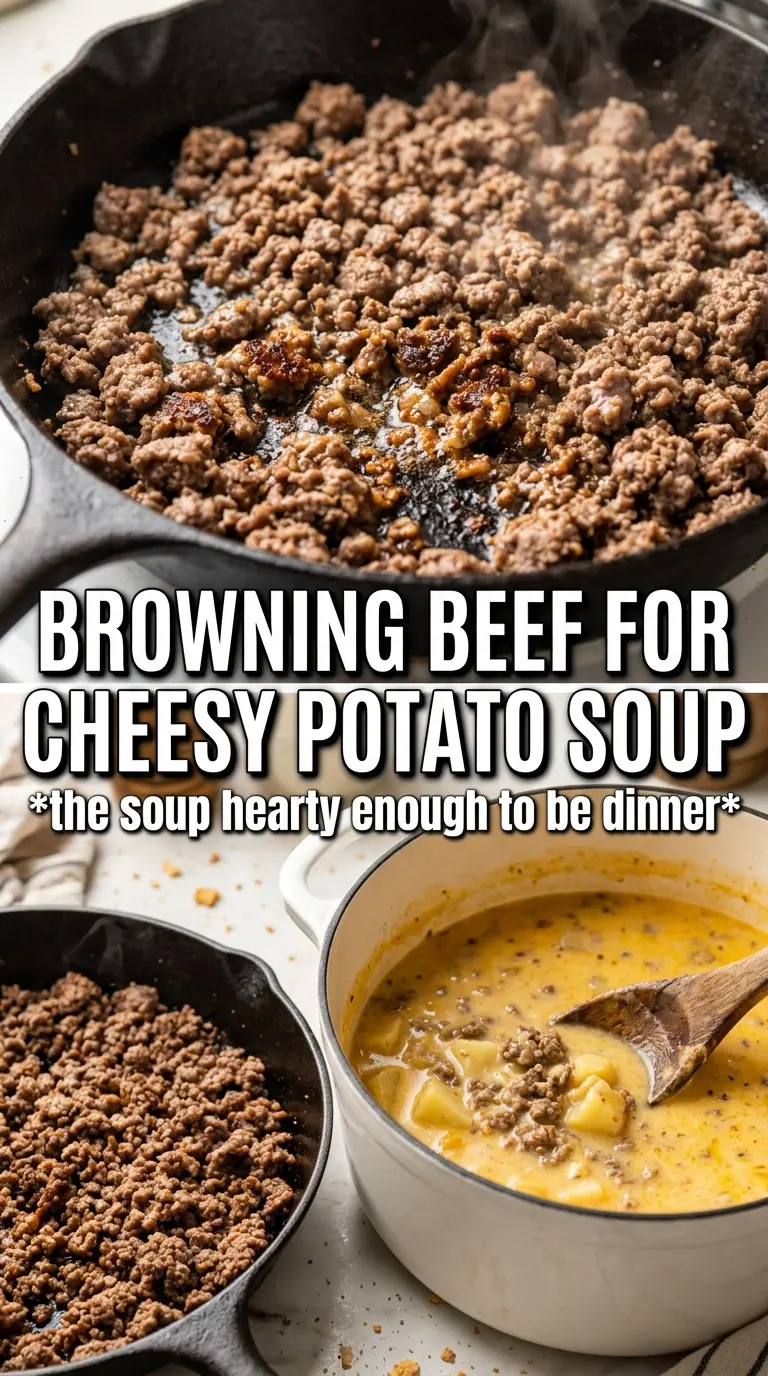
Cook the ground beef in a large pot until it’s no longer pink and you see some browned bits sticking to the bottom. That fond is flavor, so don’t wash the pot out after draining. If your beef steams instead of browns, the pot is overcrowded or the heat is too low, and the soup will taste flatter from the start.
Soften the vegetables before the broth goes in
Onion, carrots, and celery need those five minutes in the fat left behind by the beef. You want the onion translucent and the carrots starting to give a little at the edges, not fully soft. Garlic goes in only for the last minute so it perfumes the pot without turning bitter.
Simmer until the potatoes collapse at the edges
Once the broth and potatoes are in, bring everything to a boil, then drop it to a steady simmer. The potatoes are ready when a fork slides in without resistance and the edges start to look a little rough. If you cook them hard the whole time, they can fall apart before the rest of the soup has a chance to develop flavor.
Finish with cream and cheese off the hardest heat
Mash a few potatoes against the side of the pot, then stir in the condensed cheddar soup and heavy cream. Add the shredded cheddar last and keep stirring until it disappears into the broth. If the soup starts bubbling aggressively at this stage, lower the heat right away so the cheese melts smoothly instead of tightening up.
Three Ways to Make This Soup Fit Your Table
Make it lighter with milk instead of cream
You can swap the heavy cream for whole milk, but the soup will be thinner and less rich. To keep some body, mash a few extra potatoes before adding the cheese. It still tastes good, just a little less plush in the bowl.
Use ground turkey for a leaner version
Ground turkey works well if you want a lighter main dish, but you’ll lose some of the deep beefy flavor. Add an extra pinch of smoked paprika and taste carefully at the end, because turkey needs a little more help to taste full and savory.
Make it gluten-free with one label check
This recipe can be gluten-free if your condensed cheddar soup and beef broth are certified gluten-free. The rest of the ingredients are naturally gluten-free, so the main job is reading labels carefully. That’s the difference between a soup that looks gluten-free and one that actually is.
Stretch it for a bigger crowd
You can add another pound of potatoes and an extra cup of broth if you need to feed more people, but don’t double the cheese all at once. Add it gradually and stop when the soup tastes balanced, not just heavier. Too much cheese can make the soup pasty instead of creamy.
Storage and Reheating
- Refrigerator: Store covered for up to 4 days. The soup will thicken as it chills, especially because of the potatoes and cheese.
- Freezer: It can be frozen, but the dairy may separate a little when thawed. For the best texture, freeze it before adding the cream and cheddar, then finish those ingredients after reheating.
- Reheating: Warm it low and slow on the stove, stirring often. High heat can scorch the cheese and make the dairy look split, so keep the pot at a gentle steam rather than a full boil.
Answers to the Questions Worth Asking

Cheesy Beef and Potato Soup
Ingredients
Equipment
Method
- Heat a large pot over medium-high heat and brown the ground beef until no pink remains. Drain excess fat and set the beef aside.
- In the same pot, sauté the onion, carrots, and celery for 5 minutes until softened. Add the minced garlic and cook for 1 minute, stirring constantly.
- Add the beef broth, cubed russet potatoes, garlic powder, smoked paprika, and Worcestershire, then bring the mixture to a boil. Once boiling, reduce to a simmer and cook for 20 minutes until the potatoes are tender.
- Mash some of the potatoes directly in the pot to thicken the soup, leaving chunks for texture. Stir in the condensed cheddar soup and heavy cream until smooth.
- Return the browned ground beef to the pot and stir to combine. Add the shredded sharp cheddar and stir until melted and creamy.
- Season with salt and black pepper to taste, then serve hot.