
Cheddar garlic herb potato soup lands in the bowl thick, velvety, and full of the kind of comfort that makes a second ladle look inevitable. The potatoes give it body, the roasted garlic turns sweet and mellow instead of sharp, and the cheddar melts into a rich finish without tasting heavy when it’s handled the right way. It’s the sort of soup that eats like a full meal but still feels simple enough for an ordinary weeknight.
What makes this version work is the order. Roasting the garlic first takes the edge off and gives the whole pot a deeper, rounder base. Blending the potatoes before the cheese goes in keeps the texture smooth, and adding the cheddar over low heat keeps it from turning grainy. Fresh thyme, chives, and rosemary lift the soup at the end so it tastes layered instead of flat.
Below you’ll find the small details that matter here: how to keep the cheese silky, which potatoes give the best texture, and a few smart swaps if you need to work around what’s in the kitchen.
The roasted garlic made the whole pot taste mellow and rich, and the cheddar stayed smooth when I kept the heat low. My soup thickened beautifully without needing flour.
Like this creamy cheddar garlic herb potato soup? Save it to Pinterest for the nights when you want a rich, from-scratch bowl with roasted garlic and fresh herbs.
The Step That Keeps Cheddar From Turning Grainy
The biggest mistake in cheese soups is rushing the finish. If the broth is boiling when the cheddar goes in, the fat can separate and the soup turns sandy instead of smooth. This version avoids that by blending the potatoes first, then dropping the heat all the way down before the cheese is stirred in.
Potatoes do a lot of the thickening here, which means you don’t need to force the cheddar to do the job of a roux. That matters because cheddar behaves better when it only has to melt and enrich the soup. Keep the pot at a bare simmer, or even off the heat for a minute, while the cheese goes in. The texture should look glossy and creamy, not oily on top.
What Each Ingredient Is Actually Doing in This Bowl
- Yukon gold potatoes — These are the backbone of the soup. They break down into a naturally creamy texture without turning gluey, which is why they work better here than starchy russets if you want a smooth, spoonable result.
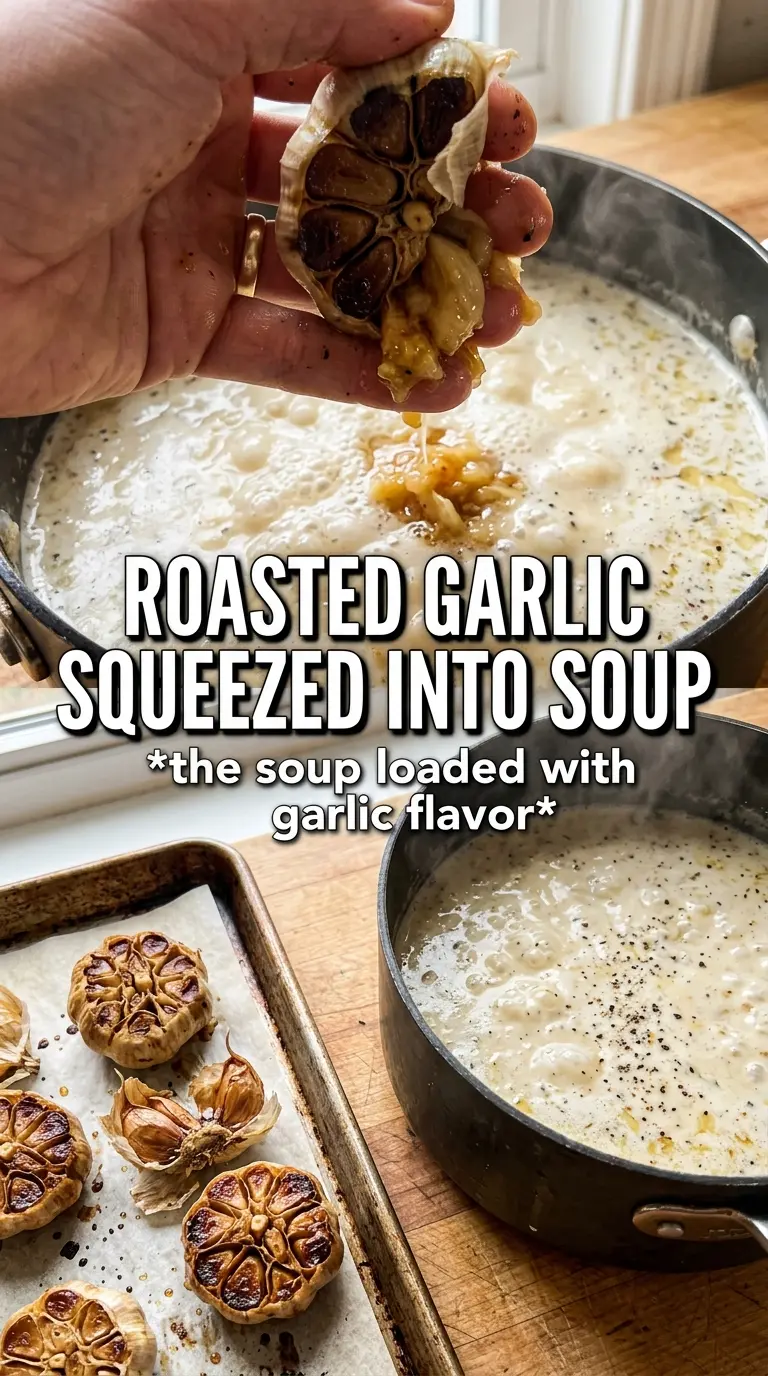
- Roasted garlic — Raw garlic would taste harsh in a soup this rich. Roasting turns it soft, sweet, and spreadable, and mashing it into a paste helps it disappear evenly into the base instead of leaving little sharp pockets.
- Sharp cheddar — Use a good sharp cheddar with flavor you’d happily eat on its own. Pre-shredded cheese works in a pinch, but freshly shredded melts more smoothly because it doesn’t carry the anti-caking coating that can make a soup feel a little chalky.
- Heavy cream — This finishes the soup with body and a round, rich mouthfeel. Half-and-half will work if you want it lighter, but the soup won’t feel as plush, and you’ll lose some of that silky finish.
- Fresh thyme, chives, and rosemary — These herbs keep the soup from tasting one-note. Thyme and rosemary bring a savory backbone, while chives add a mild onion note at the end that wakes everything up.
Building the Soup So It Stays Smooth
Roasting the Garlic Until It Turns Sweet
Roast the peeled garlic cloves in olive oil until they’re golden at the edges and soft enough to mash with a fork. That sweetness is what gives this soup depth without any bite. If the garlic browns too fast, the flavor turns bitter, so pull it as soon as it looks tender and lightly caramelized.
Cooking the Potatoes Until They Collapse
Once the broth and potatoes go in, simmer them until the potatoes are completely tender and starting to fall apart at the edges. That’s what gives you a naturally thick soup after blending. If the centers are still firm, the blender will leave tiny bits behind and the soup won’t feel as smooth.
Blending Before the Cheese Goes In
Blend the soup until it’s fully silky before adding the cream and cheddar. An immersion blender makes this easy, but stop once the texture is smooth; overblending potatoes can make them a little sticky. The cheese goes in after the soup is blended so it melts into an already even base instead of getting trapped in chunks.
Finishing on Low Heat
Stir in the cream first, then the cheddar a handful at a time over low heat. The soup should be hot enough to melt the cheese but never bubbling hard. Add the herbs at the end so they stay bright, and season only after the cheese is in, since cheddar adds salt of its own.
How to Adjust This Soup Without Losing the Texture
Make it gluten-free without changing the method
This soup is naturally gluten-free as written, as long as your broth is certified gluten-free. The potatoes do the thickening, so there’s no flour to replace and no extra step to worry about.
Swap the cream for a lighter finish
Half-and-half works if you want a slightly lighter soup, but it won’t have the same lush texture. If you use it, keep the heat low and don’t boil after adding it, or the soup can taste thin instead of rich.
Use extra herbs for a brighter bowl
If you want the soup a little fresher, increase the chives and thyme at the end rather than adding more salt. Fresh herbs cut through the richness better than extra seasoning and keep the cheddar from dominating everything.
Stretch it into a heartier meal
Add crispy bacon, diced ham, or sautéed mushrooms if you want more heft. Stir them in at the end so they keep their texture. Bacon adds salt and smoke, while mushrooms lean earthier and keep the soup vegetarian if you use oil instead of butter and vegetable broth.
Storage and Reheating
- Refrigerator: Store in an airtight container for up to 4 days. It thickens as it chills, so expect a denser texture the next day.
- Freezer: It can be frozen, but the dairy may separate a little on thawing. For the best result, freeze before adding the cheddar and cream, then stir those in after reheating.
- Reheating: Warm it gently over low heat, stirring often. Don’t let it boil, or the cheese can split and the soup can turn greasy around the edges.