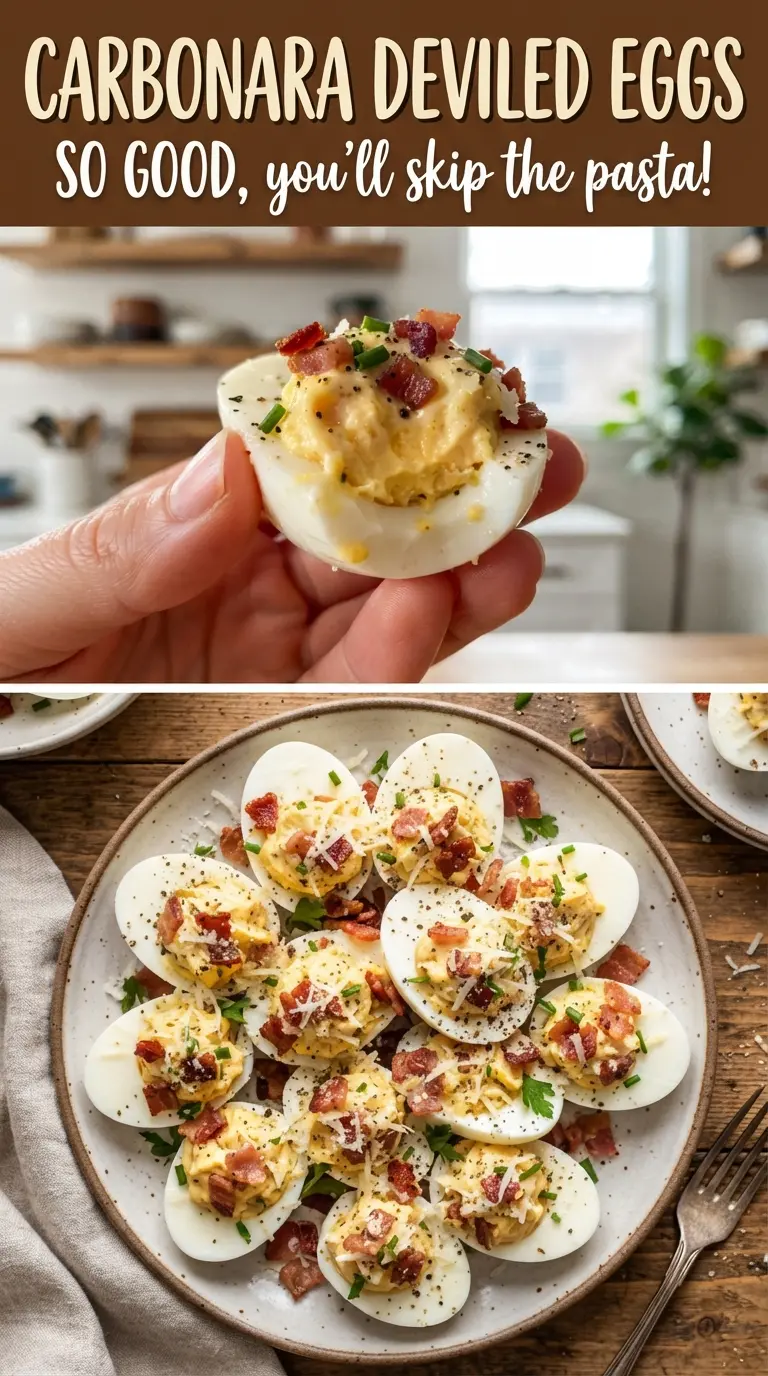
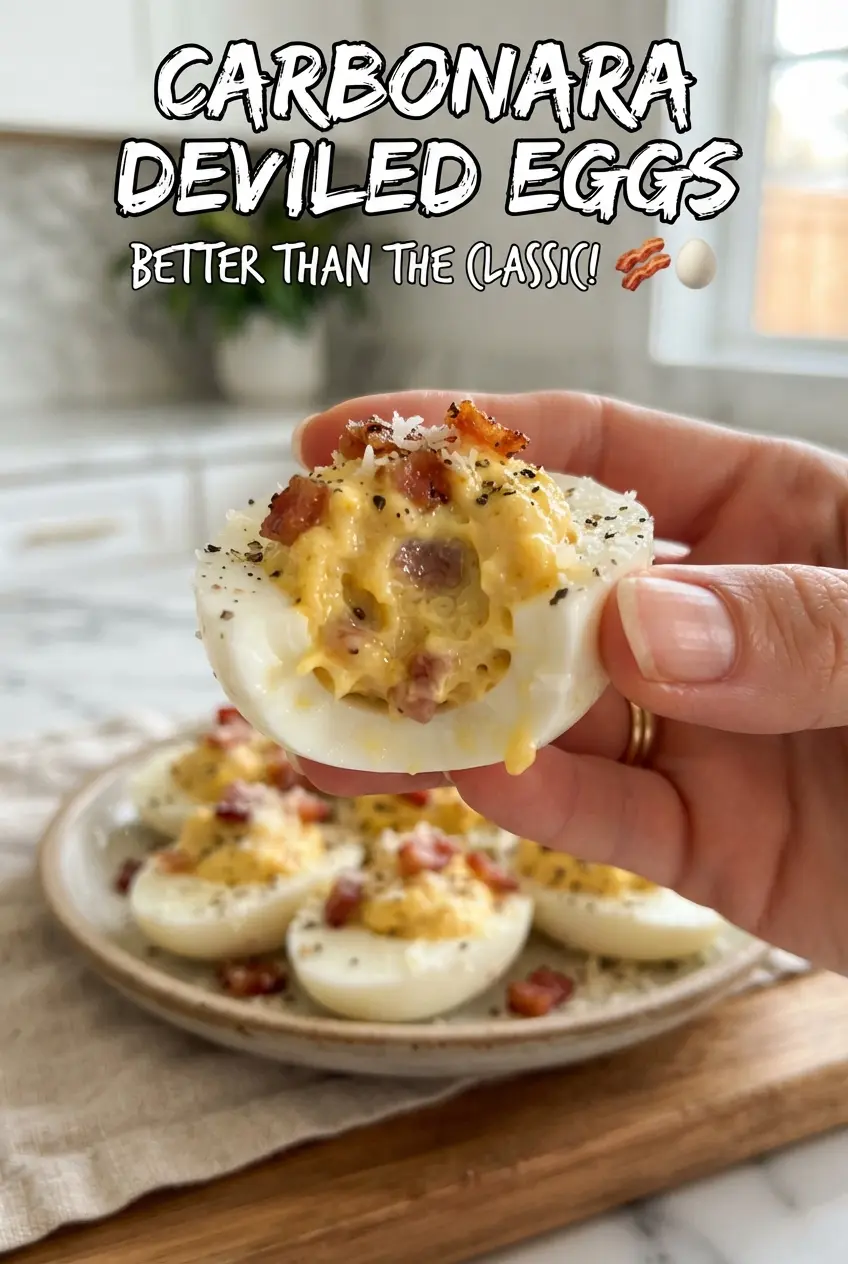
Carbonara deviled eggs bring the best parts of classic carbonara into one bite: creamy, salty, peppery filling with a crisp pancetta finish that keeps each half from tasting flat. The yolks turn rich and silky, the Pecorino adds sharpness, and the cracked pepper wakes everything up.
What makes this version work is restraint. The filling stays close to the carbonara template without becoming heavy, so the mayonnaise supports the yolks instead of hiding them. A little reserved pancetta fat goes a long way here too. It gives the filling that savory depth you’d normally get from pasta, while grated garlic and Dijon keep the flavor sharp and focused.
Below, I’ve included the small details that matter most: how to keep the yolks creamy instead of pasty, how to cook the pancetta so it stays crisp, and the one garnish that makes these look as good as they taste.
The filling was unbelievably smooth, and the little bit of pancetta fat made the eggs taste like actual carbonara instead of just deviled eggs with bacon on top.
Save these carbonara deviled eggs for the next appetizer spread when you want creamy filling, crispy pancetta, and plenty of black pepper in every bite.
The Part Most Deviled Eggs Miss: Building Carbonara Flavor Without a Grainy Filling
Deviled eggs go wrong when the yolks get overloaded and the filling turns pasty. Carbonara-style eggs are even easier to overdo because the ingredients are bold, especially the Pecorino and pancetta fat. The trick is to mash the yolks until they’re fully broken down, then stop as soon as the mixture turns smooth and pipeable. If you keep stirring after that, the filling can tighten up and lose the soft, creamy texture that makes these work.
The other thing that matters is temperature. Cold yolks won’t blend as smoothly, so let the peeled eggs sit long enough to lose their chill before mixing if they’re still icy from the bath. And when you add the reserved pancetta fat, use just enough to deepen the flavor, not enough to make the filling slick or greasy.
- Eggs — Older eggs peel more cleanly than very fresh ones, which matters here because clean halves make the presentation. The texture of the filling depends on fully cooked yolks, so don’t undercook them in an effort to keep them softer.
- Pancetta or guanciale — Pancetta gives you salty, crisp bites with easy supermarket access, while guanciale brings a deeper pork flavor and a little more richness. If you swap in bacon, use a thinner slice and keep the salt in the filling a little lighter because bacon runs smokier and often saltier.
- Pecorino Romano — This is the ingredient that makes the eggs taste like carbonara instead of generic savory deviled eggs. Parmesan will work in a pinch, but it’s milder and less bracing, so the final flavor leans softer.
- Reserved pancetta fat — This tiny addition carries the pork flavor through the filling and helps the yolks feel less dry. Use it sparingly; too much makes the mixture heavy and can separate the mayonnaise.
What Each Ingredient Is Actually Doing in This Recipe
- Primary ingredient (the star) — Quality matters most. Choose the best you can find.
- Cooking medium (oil, butter, or broth) — This carries flavors and prevents dryness.
- Seasonings (salt, pepper, spices, herbs) — Layer flavors so nothing overpowers. Build depth gradually.
- Aromatics (garlic, onion, herbs) — Cook with fat to bloom flavors. Become the foundation.
- Supporting ingredients — Complement the main ingredient without overpowering it.
- Sauce or liquid (if applicable) — Brings flavors together. Balance richness with acid.
- Acid (lemon, vinegar, wine, or other) — Brightens and prevents flat-tasting results.
- Final finish (garnish, glaze, or sauce) — Prevents one-dimensional taste and adds visual appeal.
Getting the Filling Smooth, the Pancetta Crisp, and the Garnish Sharp
Boiling and Peeling the Eggs
Start the eggs in cold water, then bring them just to a boil before covering and turning off the heat. That steady, off-heat rest gives you cooked yolks without the chalky ring that shows up when eggs boil too hard. After 12 minutes, move them straight into an ice bath so the shells loosen and the yolks stop cooking. If the eggs crack during the boil, the water was moving too violently or the pot was too crowded.
Cooking the Pancetta
Cook the pancetta over medium heat until the fat renders and the pieces turn deeply golden and crisp. You’re listening for the sizzle to quiet down a little as the moisture cooks off. Drain most of the fat, but keep one teaspoon for the filling; that’s enough to add depth without turning the mixture oily. If the pancetta browns too fast, the heat is too high and the outside will toughen before the center crisps.
Mashing the Yolk Base
Break the yolks down first with a fork before adding the mayonnaise, Pecorino, mustard, garlic, pepper, and reserved fat. The mixture should turn thick, glossy, and smooth, not fluffy like whipped salad dressing. If it looks dry or crumbly, add a small spoonful more mayonnaise, not more fat. That keeps the texture creamy and prevents the filling from splitting later.
Piping and Finishing
Pipe or spoon the filling into the egg whites, then top immediately with pancetta, shaved Pecorino, cracked black pepper, and parsley. The toppings should sit on the surface and stay distinct, not disappear into the filling. Use a generous hand with the pepper; carbonara needs that bite. If you want the prettiest finish, shave the cheese right before serving so it doesn’t dry out.
How to Adapt These Eggs When You Need a Different Finish
Make Them Ahead for a Party Tray
You can boil, peel, and halve the eggs a day ahead, then store the whites and filling separately. Pipe and garnish just before serving so the pancetta stays crisp and the tops don’t dry out. If you assemble them too early, the cheese softens and the pepper loses its sharp edge.
Bacon Swap for a More Familiar Pantry Version
Bacon works well if pancetta or guanciale isn’t available, but it brings a smokier finish and often more salt. Use the same amount, cook it until crisp, and taste the filling before adding extra salt anywhere else. The result is a little less traditional, but still rich and savory.
Dairy-Free Isn’t the Right Swap Here
This version depends on Pecorino for its carbonara character, so a dairy-free swap changes the recipe into something else entirely. If you need a dairy-free appetizer, it’s better to choose a different filling than to replace the cheese with a neutral substitute, which leaves the eggs tasting flat. The mayonnaise and egg yolks alone won’t carry the same salty depth.
Storage and Reheating
- Refrigerator: Store the egg whites and filling separately for up to 2 days. Fully assembled eggs are best the day they’re made because the toppings soften.
- Freezer: Don’t freeze these. The whites turn watery and the filling breaks after thawing.
- Reheating: These are served cold or cool, not reheated. If they’ve been refrigerated, let them sit out for 10 to 15 minutes before serving so the filling tastes less dull and the pepper comes through.
Answers to the Questions Worth Asking
Carbonara Deviled Eggs
Ingredients
Equipment
Method
- Place the eggs in a pot, cover with cold water, and bring to a boil; once boiling, cover the pot and remove it from the heat. Let the eggs stand 12 minutes, until the yolks are set.
- Chill the eggs in an ice bath for 10 minutes, then peel and halve them lengthwise. Keep the yolks for filling and arrange the halved whites cut-side up.
- Cook the pancetta (or guanciale) in a hot cast iron skillet for 6-8 minutes, stirring until crispy. Drain and reserve 1 teaspoon of the fat for the filling.
- Mash the yolks with mayonnaise, Pecorino Romano, Dijon mustard, grated garlic, coarsely cracked black pepper, and the reserved pancetta fat until smooth. Aim for a thick, pipeable texture.
- Pipe the filling into the egg white halves. Press gently so the tops are mounded and even.
- Top with crispy pancetta, shaved Pecorino, cracked pepper, and parsley garnish. Serve as soon as the filling is assembled.