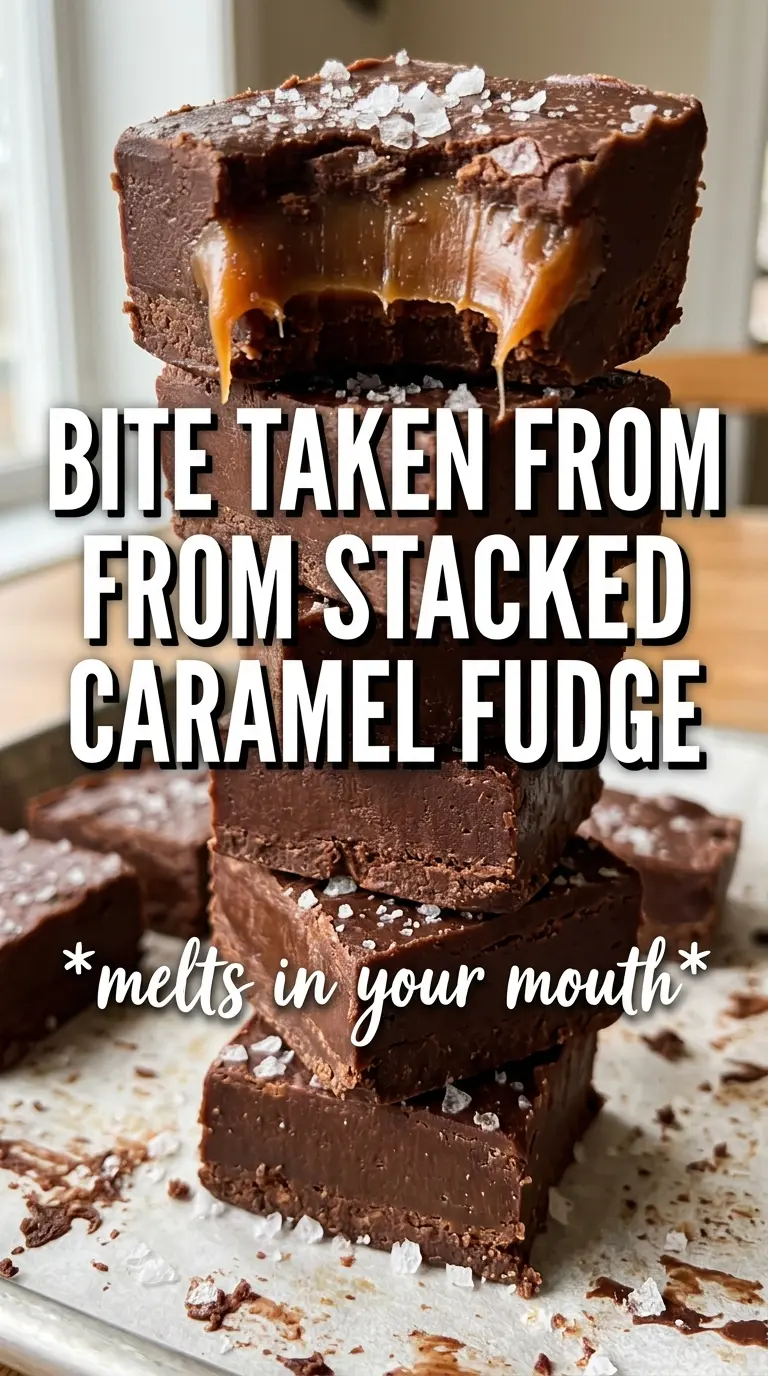
Caramel fudge sets up with a glossy, sliceable finish that sits somewhere between old-fashioned fudge and soft caramel candy. The texture should be dense and creamy, not grainy, with clean edges that hold their shape once cut. A little flaky salt on top keeps every square from tasting one-note, and that contrast is what makes people reach for a second piece before they realize it.
The part that matters most here is the temperature. This mixture needs to reach the soft-ball stage, 238-240°F, so the sugar cooks enough to set properly without turning dry or sandy. Constant stirring at the start keeps the sugar from scorching on the bottom, and a heavy saucepan helps the whole batch heat evenly instead of grabbing in hot spots. Once it comes off the heat, vanilla and salt go in at the end so the flavor stays round and the texture stays smooth.
Below, I’ve included the small details that keep this fudge silky, along with a few swaps and storage notes that make it easier to get right the first time.
The caramel flavor came through beautifully and the fudge set perfectly at the two-hour mark. I used the thermometer like you suggested, and the squares cut cleanly without crumbling.
Save this caramel fudge for the days when you want glossy squares with a soft-center chew and a crackle of sea salt on top.
The One Temperature That Keeps Caramel Fudge Smooth
The biggest mistake with fudge is guessing. Too low, and the batch stays soft and sticky. Too high, and it turns dry or grainy once it cools. Soft-ball stage is the line between creamy squares and a pan of disappointment, which is why a candy thermometer earns its spot here.
This recipe also relies on steady heat, not a hard rolling boil from the start. The sugar, butter, cream, corn syrup, and condensed milk need enough time to cook together evenly so the mixture thickens without separating. If the heat is too aggressive, the bottom can scorch before the center reaches temperature. Keep the boil controlled and watch for a thick, glossy bubble that moves across the surface in lazy bursts.
- Heavy-bottomed saucepan — This matters more than most people think. A thin pan creates hot spots that can scorch the sugar before the mixture reaches 238-240°F.
- Light corn syrup — This is what helps keep the sugar from crystallizing. There isn’t a true one-to-one substitute that behaves the same way, so if you swap it out, expect a greater risk of grainy fudge.
- Sweetened condensed milk — It adds body and keeps the finished fudge creamy. Evaporated milk won’t give the same result because it lacks the sugar and thickness.
- Flaky sea salt — Add it at the end, after pouring, so it stays on the surface. If you stir it in, you lose that sharp salty finish against the caramel.
What Each Ingredient Is Actually Doing in This Recipe
- Primary ingredient (the star) — Quality matters most. Choose the best you can find.
- Cooking medium (oil, butter, or broth) — This carries flavors and prevents dryness.
- Seasonings (salt, pepper, spices, herbs) — Layer flavors so nothing overpowers. Build depth gradually.
- Aromatics (garlic, onion, herbs) — Cook with fat to bloom flavors. Become the foundation.
- Supporting ingredients — Complement the main ingredient without overpowering it.
- Sauce or liquid (if applicable) — Brings flavors together. Balance richness with acid.
- Acid (lemon, vinegar, wine, or other) — Brightens and prevents flat-tasting results.
- Final finish (garnish, glaze, or sauce) — Prevents one-dimensional taste and adds visual appeal.
Getting the Candy Stage Right Without Scraping the Pan
Building the Base
Combine everything except the vanilla and flaky salt in the saucepan and stir constantly as it warms. The mixture will look loose at first, then smoother and more unified as the butter melts and the sugar dissolves. Scrape the bottom and corners as you stir so nothing catches. If you see a gritty layer sticking to the pan early on, the heat is already too high.
Cooking to Soft-Ball Stage
Once the mixture boils, keep stirring frequently and watch the thermometer instead of the clock. You’re looking for 238-240°F, not a darker color or a particular smell, because those cues come too late. The mixture should bubble thickly and cling to the spoon in a heavy sheet. Pull it off the heat as soon as it lands in range; a few extra degrees can turn the fudge dry once it sets.
Finishing and Setting
Stir in the vanilla and salt right after removing the pan from the burner. The vanilla goes in at the end so it doesn’t cook off, and the salt lands with a little more brightness. Pour the fudge into a parchment-lined, buttered 8×8 pan and smooth the top fast before it starts to thicken. Sprinkle with flaky salt while the surface is still warm so it sticks instead of sliding around.
Cutting Clean Squares
Let the pan sit at room temperature for about an hour, then refrigerate it for another hour until firm. If you try to cut it too soon, the edges drag and the center smears. Use a sharp knife and wipe it clean between cuts for neat squares. If the fudge feels a little tacky after chilling, let it rest a few minutes on the counter before slicing.
How to Change Caramel Fudge Without Losing the Texture
Add toasted pecans for a praline-style finish
Fold in chopped toasted pecans after the vanilla goes in, just before pouring. The nuts add crunch and a deeper caramel note, but add them too early and they sink or get coated unevenly as the mixture cools.
Make it dairy-free with a caveat
A full dairy-free swap changes the candy more than most people expect, since both butter and condensed milk do a lot of the work here. If you try it, use plant-based butter and a coconut condensed milk, but expect a softer set and a slightly different caramel flavor.
Use vanilla bean paste for a deeper finish
Vanilla extract works fine, but vanilla bean paste gives the fudge a rounder aroma and little flecks through the squares. Use the same amount and stir it in off the heat so the flavor stays clean.
Storage and Reheating
- Refrigerator: Store in an airtight container for up to 2 weeks. The texture firms up in the fridge, so let pieces sit at room temperature for a few minutes before serving.
- Freezer: Fudge freezes well. Wrap the block or individual squares tightly in parchment and then in a freezer bag for up to 3 months.
- Reheating: You don’t reheat fudge to serve it, but frozen pieces should thaw in the refrigerator or at room temperature. Don’t microwave it, or the surface can get greasy and the texture turns uneven.
Answers to the Questions Worth Asking

Caramel Fudge
Ingredients
Equipment
Method
- Line an 8x8 pan with parchment and butter generously so the fudge releases cleanly after chilling.
- Combine granulated sugar, unsalted butter, heavy cream, light corn syrup, and sweetened condensed milk in a heavy-bottomed saucepan and stir to mix evenly.
- Bring the mixture to a boil over medium heat while stirring constantly so it doesn’t scorch.
- Continue cooking, stirring frequently, until the candy thermometer reads 238-240F (soft ball stage) for a smooth caramel set.
- Remove from heat and stir in vanilla and salt until fully incorporated.
- Pour the hot fudge into the prepared pan and immediately sprinkle flaky sea salt over the top.
- Cool at room temperature for 1 hour to begin setting before refrigeration.
- Refrigerate for 1 more hour until firm and set, then cut into squares with a sharp knife.