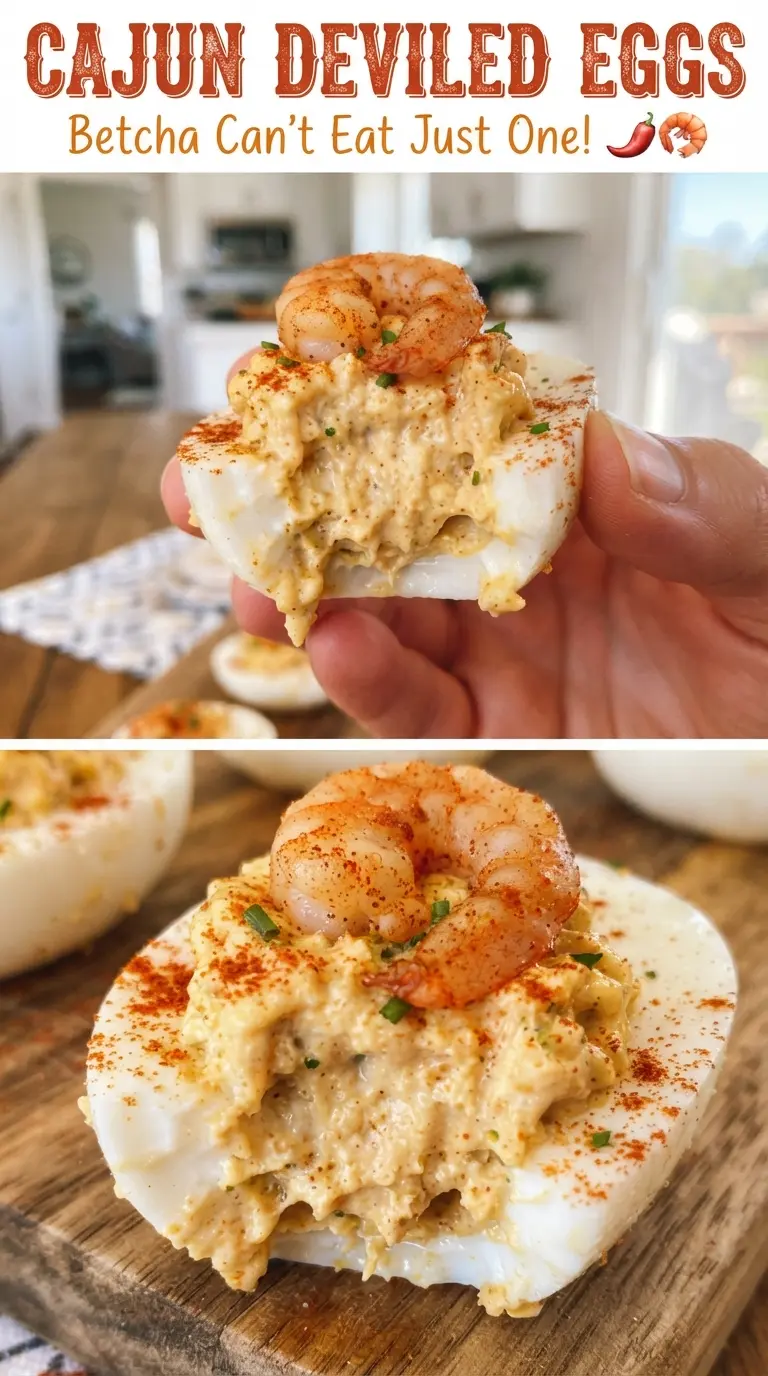
Cajun deviled eggs disappear fast because they hit every note people want in an appetizer: creamy filling, a little heat, a touch of tang, and that salty, buttery shrimp on top that makes each bite feel finished. The eggs stay rich and smooth, but the Cajun seasoning keeps the filling from tasting flat. That shrimp garnish isn’t just for looks; it adds a warm, seared bite that turns a familiar party tray into something people hover over.
The trick is balance. The yolks get mashed with mayonnaise, Creole mustard, hot sauce, and a little sweet pickle relish, which gives the filling body, bite, and just enough sweetness to round out the spice. The shrimp are seasoned separately and cooked quickly in butter so they stay tender instead of rubbery. If you’ve ever had deviled eggs that tasted one-note, this version fixes that with layers of flavor and a clean finish.
You’ll find the exact timing for perfect hard-boiled eggs, the one step that keeps the filling silky, and a few smart swaps if you want to make them a little milder or a little spicier.
The filling was perfectly creamy and the shrimp stayed tender after a quick sear. I made them an hour ahead and they held up great on the platter.
Save these Cajun deviled eggs for a party tray with creamy yolks, seared shrimp, and just enough heat to keep people coming back.
The Secret Is in the Shrimp and the Yolks Working at Different Speeds
Deviled eggs can go bland fast when everything in the filling tastes the same. Here, the yolks get seasoned all the way through, while the shrimp brings a separate layer of heat, butter, and a little bite on top. That contrast is what keeps these from feeling heavy after the second egg.
The other thing that matters is texture. A smooth filling pipes cleanly and holds its shape, but it still needs enough fat to stay creamy after chilling. If your mixture feels stiff, the mayonnaise is too low or the yolks weren’t mashed enough; if it feels loose, the relish brought in more liquid than expected and you need to chill it briefly before piping.
- Eggs — Older eggs peel more cleanly than ultra-fresh ones, which matters here because the whites need to stay neat for a clean presentation. The boil-and-rest method keeps the yolks tender instead of chalky.
- Mayonnaise — This is what gives the filling its body. Use a full-fat mayo for the smoothest result; reduced-fat versions can taste thin and make the filling less stable.
- Creole mustard — It adds sharpness and grainy texture that plain yellow mustard can’t fully replace. Dijon works in a pinch, but the flavor shifts a little cleaner and less Southern.
- Sweet pickle relish — Just enough sweetness balances the heat and keeps the filling from tasting one-dimensional. If you swap in chopped dill pickles, drain them well or the filling can turn watery and overly briny.
- Cajun seasoning — This does the heavy lifting for the signature heat and savory backbone. Different blends vary a lot in salt, so taste before adding extra salt anywhere else.
What Each Ingredient Is Actually Doing in This Recipe
- Primary ingredient (the star) — Quality matters most. Choose the best you can find.
- Cooking medium (oil, butter, or broth) — This carries flavors and prevents dryness.
- Seasonings (salt, pepper, spices, herbs) — Layer flavors so nothing overpowers. Build depth gradually.
- Aromatics (garlic, onion, herbs) — Cook with fat to bloom flavors. Become the foundation.
- Supporting ingredients — Complement the main ingredient without overpowering it.
- Sauce or liquid (if applicable) — Brings flavors together. Balance richness with acid.
- Acid (lemon, vinegar, wine, or other) — Brightens and prevents flat-tasting results.
- Final finish (garnish, glaze, or sauce) — Prevents one-dimensional taste and adds visual appeal.
Building the Filling So It Pipes Smoothly and Stays Balanced
Boiling the Eggs Without Overcooking the Yolks
Start the eggs in cold water, bring the pot to a boil, then cover it and pull it off the heat for the full 12 minutes. That off-heat rest cooks the yolks through without giving them that dry, gray ring around the edges. The ice bath matters just as much because it stops the carryover cooking and helps the shells release more cleanly. If the eggs crack, the water was probably boiling too hard; a gentler boil keeps them intact.
Mashing the Filling Until It’s Creamy, Not Grainy
Press the yolks down thoroughly before adding the mayo and seasonings. You want a paste that looks glossy and smooth, with no dry yellow bits hiding in the corners of the bowl. Add the relish last and mix just until combined so the filling stays thick enough to pipe. If it seems loose, don’t add more mayo right away; chill it for a few minutes and see how it tightens up first.
Searing the Shrimp Fast Enough to Keep Them Tender
Toss the shrimp with the remaining Cajun seasoning and get them into a hot pan with butter. They only need 1 to 2 minutes per side, just until pink and lightly curled. If they turn tight and C-shaped, they’ve gone too far and will be chewy on top of the eggs. Pull them as soon as the center turns opaque, then let them cool before topping the eggs so they don’t melt the filling.
Filling and Finishing the Platter
Pipe or spoon the filling into the egg whites, then set one shrimp half on each egg and finish with sliced green onions. The green onion gives a fresh edge that cuts through the richness. If you’re making them ahead, hold the shrimp separately and add them close to serving so the garnish stays glossy and the eggs stay tidy.
How to Adjust These Eggs for a Milder Crowd or a Bigger Party
Milder Cajun Deviled Eggs
Cut the hot sauce in half and use a mild Cajun seasoning blend if yours runs spicy. You’ll still get the smoky, savory backbone, but the heat will sit in the background instead of leading the bite.
No-Shrimp Version
Skip the shrimp and finish with extra green onions and a light dusting of Cajun seasoning. You lose the buttery seafood bite, but the filling still stands on its own as a strong Cajun-style deviled egg.
Dairy-Free Version
This recipe is already naturally dairy-free in the filling, as long as your Cajun seasoning doesn’t contain butter powder or dairy additives. If you need the shrimp garnish too, sear it in a neutral oil instead of butter and finish with a tiny pinch of salt.
Storage and Reheating
- Refrigerator: Store the filled egg whites and shrimp separately for up to 2 days. The whites stay best when covered tightly, and the filling may need a quick stir before piping.
- Freezer: Don’t freeze assembled deviled eggs. The whites turn rubbery and the filling separates once thawed.
- Reheating: These are meant to be served cold or cool. If the shrimp were made ahead, let them come to room temperature for 10 to 15 minutes before topping the eggs so they don’t taste stiff.
Answers to the Questions Worth Asking
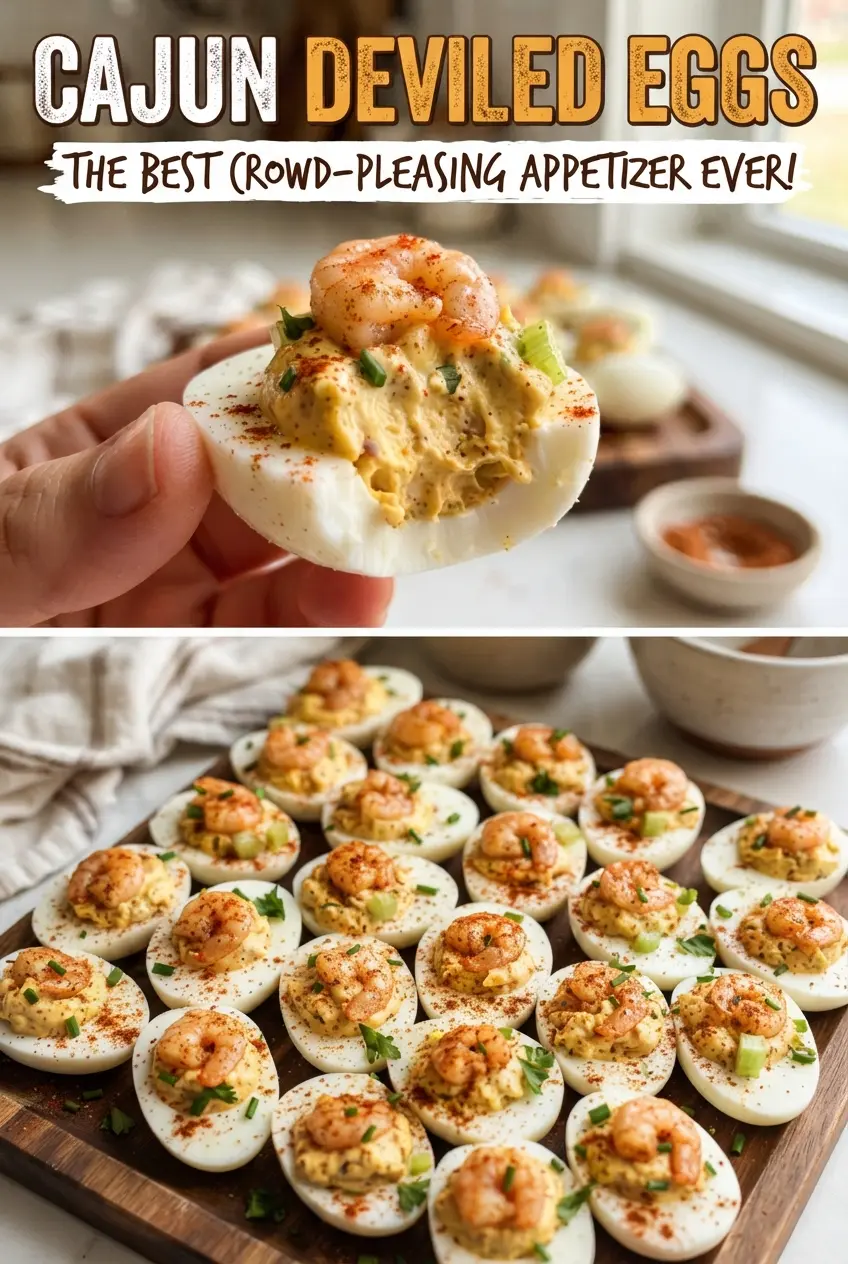
Cajun Deviled Eggs
Ingredients
Equipment
Method
- Place 12 large eggs in a pot, cover with cold water, and bring to a boil; cover, remove from heat, and let stand 12 minutes. Visual cue: the water should be actively boiling before you remove the pot.
- Chill the eggs in an ice bath for 10 minutes, then peel and halve lengthwise. Visual cue: the yolks will look set and the whites will be firm.
- Mash the yolks with mayonnaise, Creole mustard, hot sauce, sweet pickle relish, and 1 teaspoon Cajun seasoning until smooth. Visual cue: mixture should be creamy and uniform without lumps.
- Toss halved shrimp with the remaining Cajun seasoning. Visual cue: shrimp should look evenly coated.
- Sear shrimp in butter for 1-2 minutes per side until pink. Visual cue: shrimp turn opaque and pink as they cook.
- Pipe the yolk filling into the egg whites. Visual cue: the filling should mound neatly in each half.
- Top each with a shrimp half and sliced green onions. Visual cue: a shrimp piece sits centered on top with green onion scattered around.