Butternut squash casserole hits that sweet spot between cozy side dish and dessert-adjacent comfort food, with a silky, almost spoonable filling under a buttery pecan streusel. The squash turns mellow and creamy after boiling, then bakes up with just enough structure to hold a clean scoop without losing that soft, velvety center. The topping gives every bite a little crunch, which is what keeps this from tasting flat or overly soft.
What makes this version work is balance. The squash gets fully drained before mashing, so the casserole doesn’t turn loose or watery in the oven. Brown sugar goes into both the filling and the topping, but not in the same amount or the same way, which keeps the casserole sweet without becoming cloying. A little vanilla and cinnamon round out the squash instead of making it taste like pie filling.
Below, I’ve included the small details that matter most: how to keep the filling smooth, how to get a topping that actually crumbles instead of melting into paste, and a few swaps if you need to adjust for what’s in the pantry.
The squash was creamy and smooth, and the pecan topping stayed crisp even after it sat on the table for a while. I followed the draining tip and it baked up perfectly, not watery at all.
Save this butternut squash casserole for the silky filling and crunchy pecan streusel that bake up beautifully together.
The Part Most Squash Casseroles Get Wrong
Butternut squash holds a lot of water, and that’s the difference between a casserole that slices cleanly and one that slumps on the plate. If the squash goes into the bowl even a little wet, the filling loosens in the oven and the topping starts sinking instead of sitting proudly on top. Draining the squash until it looks dry in the colander is not optional here; it’s what keeps the texture rich instead of soupy.
The other place people get tripped up is overmixing. Once the squash is soft, it only needs to be mashed until smooth enough to spread. If you keep working it, the filling can turn gluey, especially after the eggs go in. Aim for a soft, creamy mash with no large chunks, then stop.
What Each Ingredient Is Actually Doing In This Dish

- Butternut squash — This is the backbone of the dish, and a mature, full-flavored squash makes a difference. You can use pre-cut squash to save time, but the pieces need to be uniform so they cook evenly. If the squash tastes bland before baking, the casserole will taste bland after baking.
- Butter — Melted butter gives the filling richness and helps the streusel brown. You can use salted or unsalted butter; just keep the salt in the filling steady. The topping depends on butter to bind into crumbs, so don’t swap in oil here.
- Brown sugar — This adds caramel notes that match the squash better than white sugar. Dark brown sugar gives a deeper molasses flavor, while light brown sugar keeps it a little cleaner. Use the full amount in the topping if you want a more dessert-like finish.
- Eggs — They set the filling so it bakes into a soft custard instead of mashed squash. Beat them in well, but don’t add them to piping hot squash or they can scramble. Let the squash cool for a few minutes after mashing if needed.
- Pecans — These give the casserole its contrast and Southern feel. Chop them fairly small so the topping stays even and doesn’t fall off in big clumps. If your pecans are stale, toast them briefly before mixing for a better flavor.
- Flour — This is what gives the topping its crumbly structure. All-purpose flour works best here; almond flour won’t behave the same way and will make the streusel softer. Mix just until the butter coats the flour and pecans and the mixture looks sandy.
Building The Casserole So The Topping Stays Crisp
Cooking The Squash Until It Is Truly Tender
Boil the cubed squash until a fork slides through with no resistance and the edges start to look a little ragged. If it still feels firm in the center, it won’t mash smoothly and you’ll end up with little hard bits in the finished casserole. Drain it well, then let it sit in the colander for a few minutes so excess moisture can steam off. That one pause makes a big difference.
Mashing The Filling Without Making It Heavy
Stir the squash with the butter, brown sugar, eggs, milk, vanilla, cinnamon, and salt until the mixture looks smooth and spreadable. A potato masher gives you a softer texture; an electric mixer makes it extra smooth, but stop as soon as everything comes together. If the filling seems loose, it’s usually because the squash wasn’t drained enough, not because it needs more flour. Spread it into the dish in an even layer so the topping bakes at the same rate across the pan.
Mixing The Streusel Until It Crumbles
Work the flour, pecans, remaining butter, and remaining brown sugar together until you get irregular crumbs, not a paste. If the butter is too warm, the topping turns greasy and bakes into a flat sheet instead of a crumbly layer. Sprinkle it evenly over the squash and don’t press it down. The loose crumbs are what brown into a crisp top.
Baking Until The Edges Bubble
Bake until the topping is golden and the edges are actively bubbling, which tells you the filling has heated through and set. If you pull it out before you see those bubbles, the center can still taste underdone and soft. Let it rest for about 10 minutes before serving so the casserole settles and scoops neatly. It will still be warm, but the texture will hold together much better.
How To Adapt This For A Bigger Table Or A Lighter Hand
Make it less sweet
Cut the brown sugar in the filling by 2 tablespoons and keep the topping as written. You’ll get a more squash-forward casserole with a little less dessert energy, while the pecans still bring enough richness to make it feel complete.
Dairy-free version
Use a good plant-based butter and an unsweetened non-dairy milk with some body, like oat milk. The casserole will still set, but the flavor will be a little less rich and the topping may brown a touch faster, so keep an eye on it near the end of baking.
Gluten-free swap
Replace the flour in the topping with a 1:1 gluten-free baking blend. The streusel may brown a little faster and the crumb will be slightly more delicate, but it still gives you the same crunchy top if you don’t overwork it.
Storage and Reheating
- Refrigerator: Store covered for up to 4 days. The filling firms up a bit as it chills, and the topping softens slightly.
- Freezer: It freezes fairly well after baking. Wrap tightly and freeze for up to 2 months; thaw overnight in the fridge before reheating.
- Reheating: Warm in a 325F oven, covered loosely with foil at first, until heated through. Microwaving works in a pinch, but it softens the topping fast, so the oven gives you the best texture.
Questions I Get Asked About This Recipe
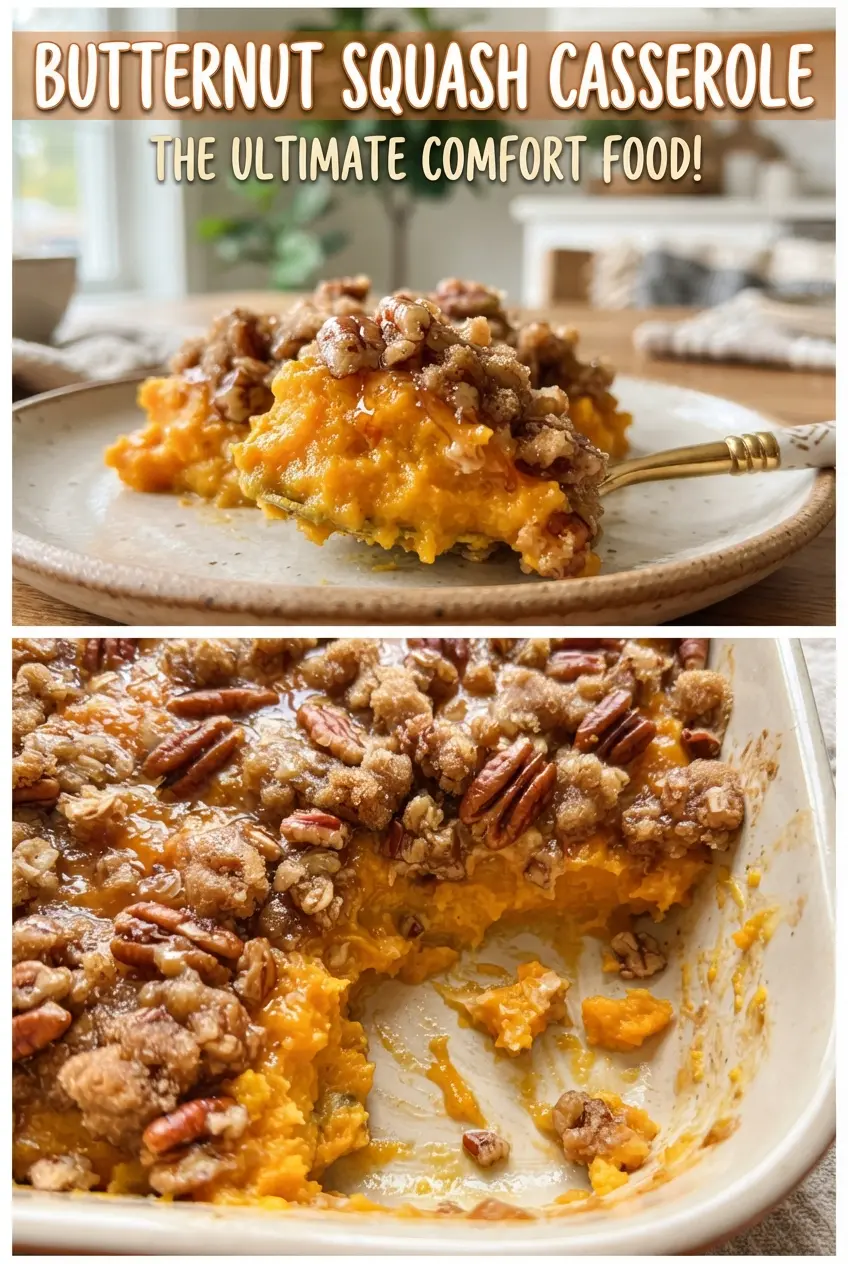
Butternut Squash Casserole
Ingredients
Equipment
Method
- Bring a pot of water to a boil and cook the cubed butternut squash for 15 minutes until very tender. Drain well so the casserole stays creamy instead of watery.
- Preheat the oven to 350F and grease a 9x13-inch baking dish. This sets up the dish for immediate baking.
- Mash the drained squash with 1/4 cup melted butter, 1/4 cup brown sugar, eggs, milk, vanilla, cinnamon, and salt until smooth. Mix until no lumps remain for a silky texture.
- Spread the mashed squash mixture into the greased baking dish. Spread evenly so the topping bakes uniformly.
- Mix flour, chopped pecans, the remaining butter, and the remaining brown sugar into a crumbly topping. Sprinkle it over the squash to cover the surface.
- Bake for 35-40 minutes at 350F until the topping is golden and the edges bubble. Let it cool slightly before serving so the filling sets.