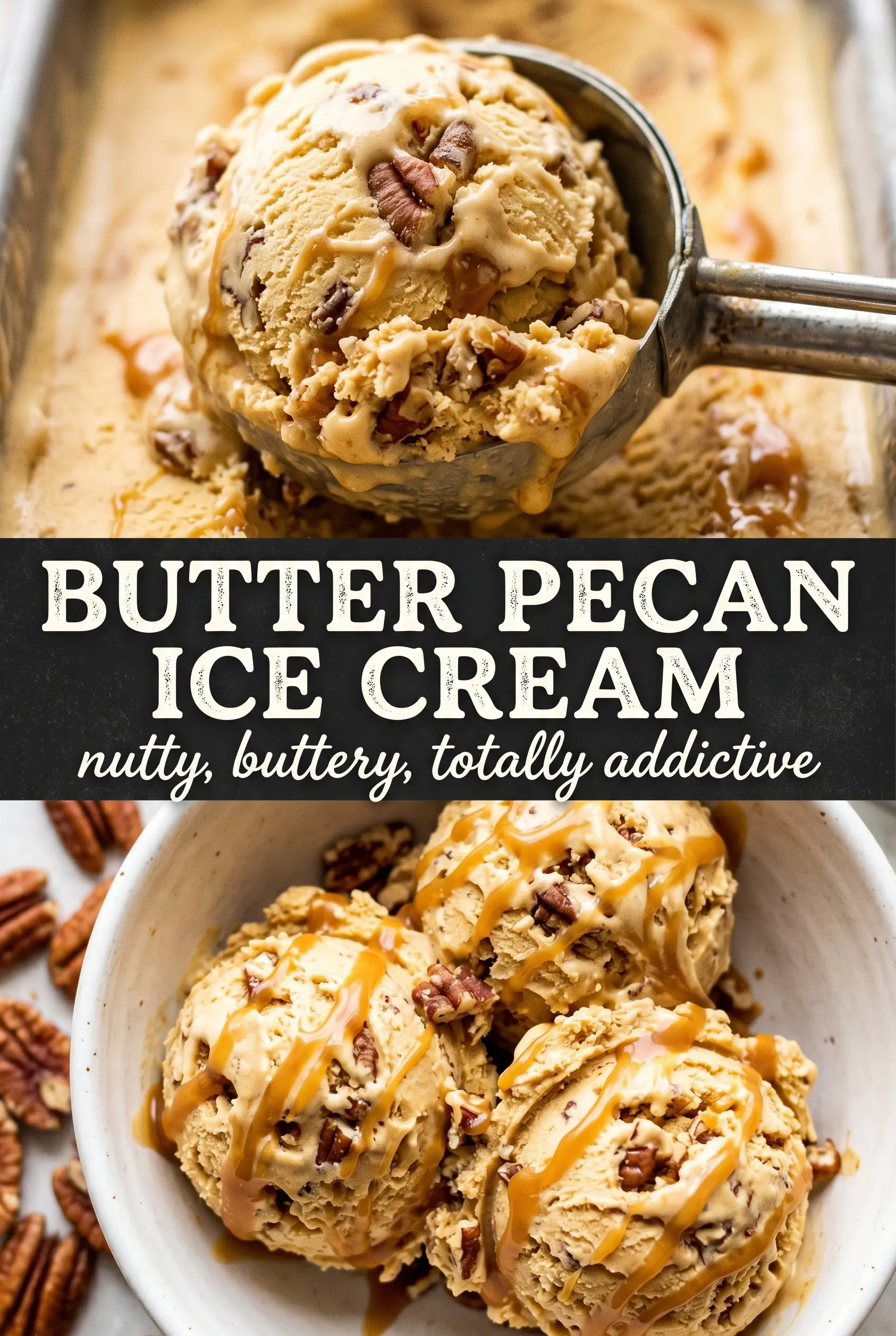
Butter pecan ice cream lands with that old-fashioned, caramelized richness that makes a second scoop feel inevitable. The base is creamy and custard-soft, but what you remember is the contrast: buttery toasted pecans folded through cold ice cream so every bite gives you crunch, salt, and a deep nutty finish. It tastes indulgent without being heavy, which is exactly why it earns a place in the freezer all year long.
The key is treating the pecans like part of the recipe, not just a mix-in. Toasting them in butter and salt builds flavor before they ever hit the churn, and it also keeps them from tasting flat against the sweet custard. The custard itself matters too. Cooking it to 175°F gives you enough body for a smooth, scoopable texture without crossing into scrambled-egg territory.
Below you’ll find the small timing details that keep the custard silky, plus a few smart swaps if you want to make it dairy-free or adjust the sweetness. The pecans deserve a little extra attention here, and once you see how the butter coating changes the final flavor, it’s hard to go back.
The pecans stayed crisp after churning, and the custard set up beautifully after an overnight chill. The brown sugar flavor came through in the best way.
Save this butter pecan ice cream for the moment you want a custard base with buttery pecans in every spoonful.
The Custard Needs Gentle Heat, Not Guesswork
The mistake that ruins a lot of homemade ice cream is pushing the custard too hard. Egg yolks thicken at a narrow range, and once you cross it, you get graininess instead of silk. This base wants steady stirring and a thermometer reading of 175°F, where it’s thick enough to coat a spoon but still smooth.
Brown sugar helps here because it gives the base a deeper caramel note and a softer sweetness than white sugar. If the mixture looks slightly foamy before chilling, that’s normal. What you don’t want is any visible curdling or little flecks of cooked egg. If that happens, the heat was too high and the pan should come off the burner sooner next time.
What Each Ingredient Is Actually Doing in This Ice Cream
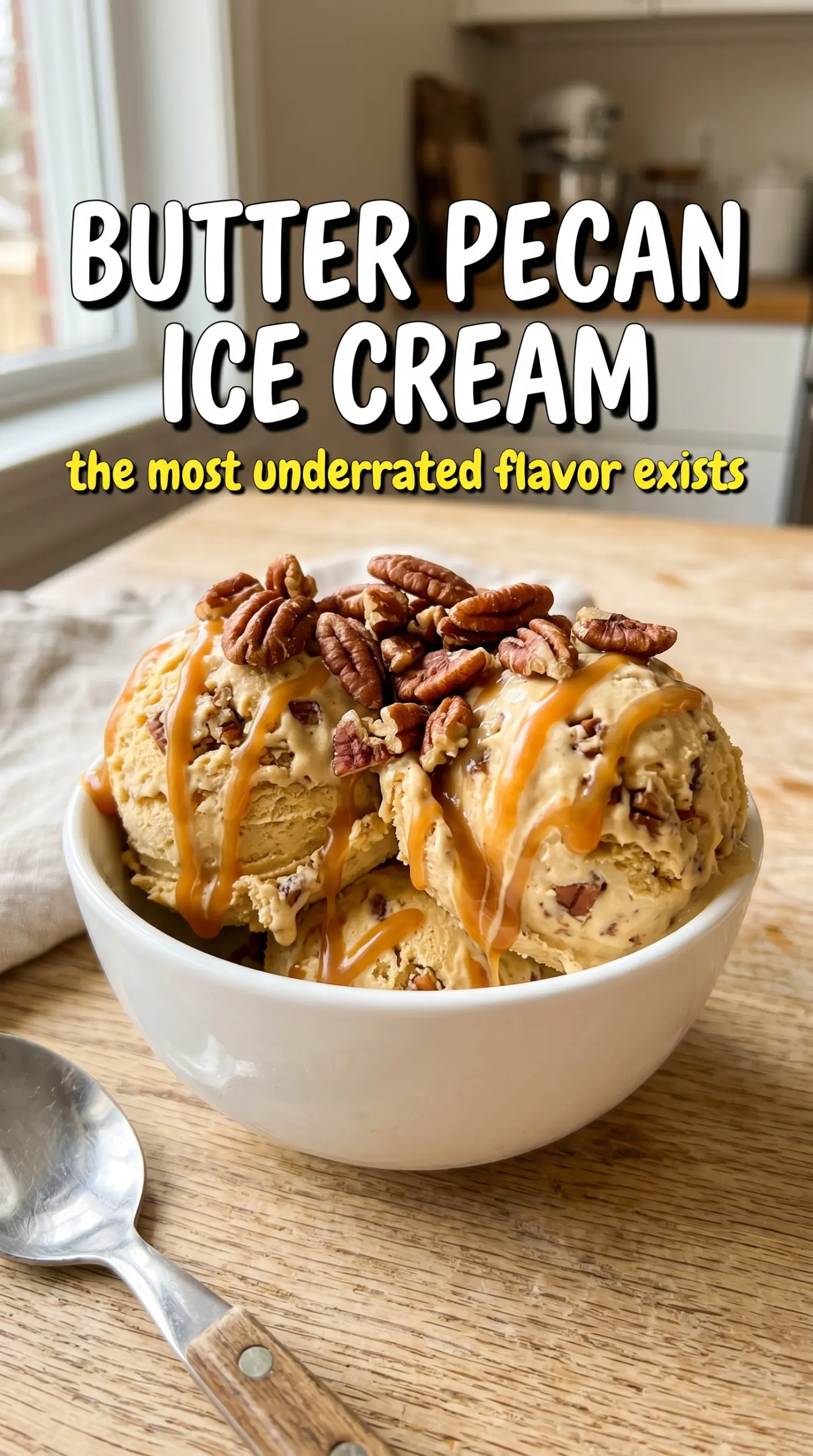
- Pecan halves — Use halves instead of chopped pieces if you want clear crunch in every bite. Chopped pecans disappear into the base faster and lose some of that buttery toasted character.
- Unsalted butter — This coats the pecans and carries the toasted flavor. Salted butter can work in a pinch, but the salt level becomes harder to control once the custard is finished.
- Brown sugar — This is the flavor backbone. White sugar will sweeten the custard, but it won’t give you the same caramel depth that makes butter pecan taste like butter pecan.
- Egg yolks — They build the custard body and give the ice cream that dense, scoopable texture. Whole eggs won’t give you the same richness.
- Heavy cream and whole milk — The cream brings richness; the milk keeps the base from turning heavy and buttery in a way that hides the pecans. Skimping on the cream changes the mouthfeel fast.
- Vanilla — It rounds out the browned sugar and toasted nuts. Add it after straining so the aroma stays clean and bright.
The Pecans, the Chill, and the Churn: The Parts That Decide the Texture
Toasting the Pecans in Butter
Set the pecans in a skillet with the butter and salt and cook them over medium heat until they smell deeply nutty and look glossy, about 4 to 5 minutes. Stir often so the butter browns the nuts evenly instead of scorching one side. The goal is a warm, toasted aroma and a deeper color, not dark burned edges. Let them cool completely on parchment before they go into the churn, or they’ll melt the base too early and soften the texture.
Building the Custard Base
Warm the cream, milk, and brown sugar until the sugar dissolves and the mixture is steaming. Whisk the yolks in a bowl until smooth, then pour the hot dairy in slowly while whisking so the eggs warm up gradually. Return everything to the saucepan and cook, stirring constantly, until the custard reaches 175°F and lightly coats a spoon. If you stop too soon, it stays thin; if you rush the heat, the yolks tighten and turn grainy.
Chilling Before Churning
Strain the custard, stir in the vanilla, and chill it until it’s completely cold. This is not an optional waiting period. A warm base churns slowly, traps less air, and makes softer ice cream that takes longer to freeze properly. Four hours is the minimum, but overnight gives you the cleanest churn and the best scoop.
Adding the Pecans at the End
Churn the ice cream until it looks like soft-serve, then add the cooled pecans in the last few minutes so they distribute without breaking down. If you add them too early, the freezer blade can turn them muddy and the butter coating gets lost in the churn. Freeze the finished ice cream until firm, then let it sit on the counter for a few minutes before scooping so the custard opens up cleanly.
How to Adapt Butter Pecan Ice Cream Without Losing the Point
Dairy-Free Version
Use full-fat coconut milk in place of the cream and milk, and swap in a plant-based butter with a neutral taste for the pecans. You’ll lose a little of the classic dairy richness, but the custard still freezes with a creamy body if you keep the yolks and chill it well before churning.
Extra-Salty Southern Style
Add a small pinch more salt to the pecans and finish the churned ice cream with a few flakes on top. That sharper salt edge makes the brown sugar taste deeper and keeps the flavor from leaning candy-sweet.
No-Churn Shortcut
Fold the cooled toasted pecans into a whipped cream-and-condensed-milk base instead of making custard. It’s faster and still tasty, but it won’t have the same custardy depth or the same clean scoop after freezing.
Storage and Reheating
- Refrigerator: Ice cream isn’t a fridge dessert. Keep the base chilled before churning, but once it’s frozen, store it in the freezer only.
- Freezer: It keeps well for about 2 weeks in a sealed container with parchment pressed on the surface. After that, the pecans can start to soften and the texture may get a little icy.
- Reheating: Not applicable. For best scooping, let the container sit at room temperature for 5 to 10 minutes before serving. If you try to dig in straight from a deep freeze, the custard can feel hard and brittle.
Questions I Get Asked About This Recipe
Butter Pecan Ice Cream
Ingredients
Equipment
Method
- Melt unsalted butter with pecan halves and 1/2 teaspoon salt in a saucepan over medium heat for 4-5 minutes, stirring until deeply golden and fragrant. Spread on a parchment-lined sheet to cool completely.
- Add heavy cream, whole milk, and packed brown sugar to a saucepan and heat until the mixture steams and the sugar dissolves. Reduce heat as needed to maintain steady simmering.
- Whisk egg yolks in a bowl until smooth, then slowly whisk in the hot cream mixture. Return everything to the saucepan.
- Cook the custard over medium-low heat, stirring constantly, until it reaches 175F. Scrape the bottom and sides to prevent scorching.
- Strain the custard into a clean container, then stir in vanilla extract and the remaining 1/4 teaspoon salt. Cool completely and refrigerate at least 4 hours.
- Churn the cold custard in an ice cream maker until it thickens to soft-serve texture. Add butter-toasted pecans during the last 5 minutes of churning.
- Transfer the churned ice cream to a freezer-safe container and freeze until firm. Serve directly from the freezer for clean, scoopable texture.