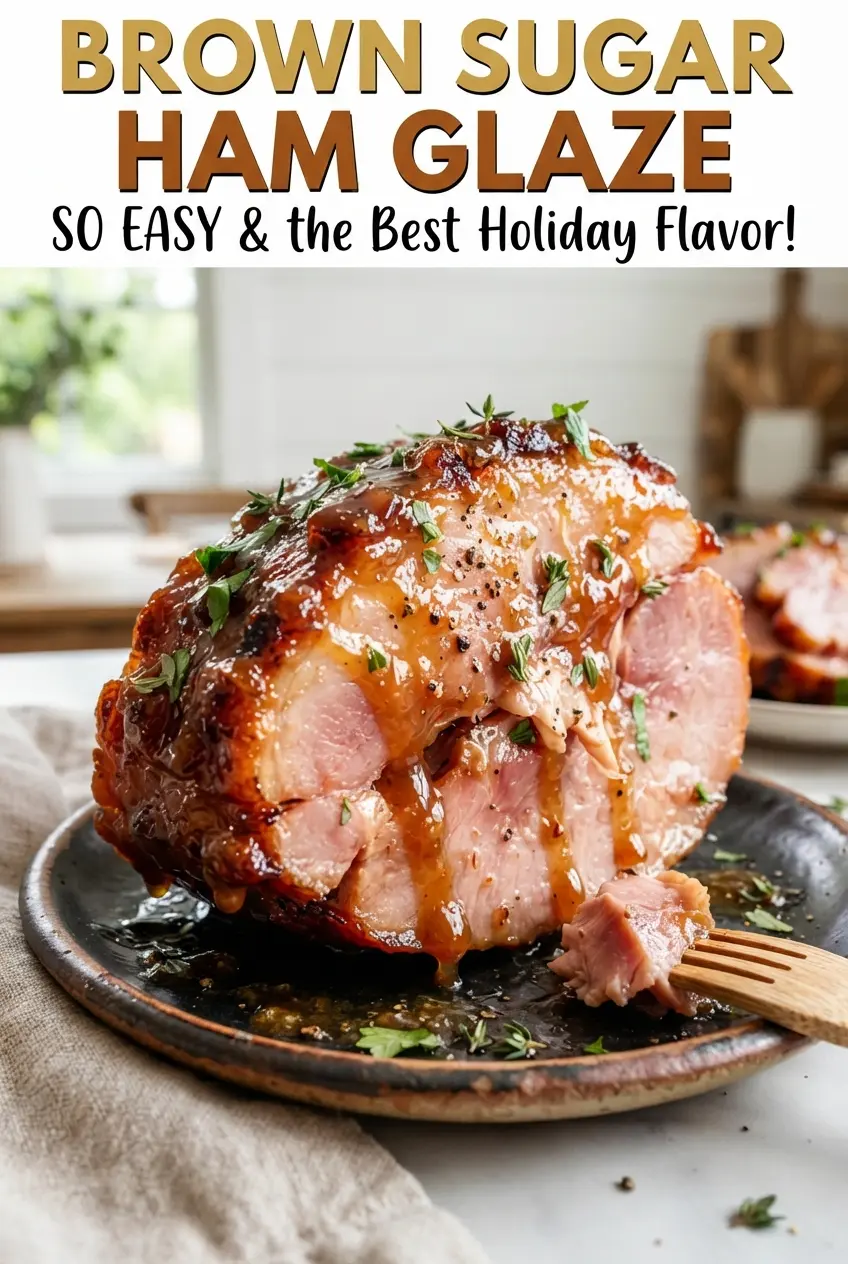
Brown sugar ham glaze turns a plain baked ham into the kind of centerpiece people actually remember. It sets into a shiny amber coating with caramel edges, a little tang from Dijon, and just enough spice to keep the sweetness from tasting flat. Brushed on during the last stretch of baking, it clings to the scored cuts and drips into the diamond pattern instead of sliding right off.
The trick is keeping the glaze balanced and lightly thickened before it ever hits the ham. Brown sugar and honey bring body and shine, the vinegar and mustard cut through the richness, and a quick simmer dissolves everything into one smooth sauce. If it cooks down too far, it turns sticky and hard to brush; if it stays thin, it runs off before it can lacquer the surface.
Below, I’ll walk you through the small details that make this glaze coat cleanly, how to adjust the flavor if you want it a little more citrusy or spicier, and what to do with the extra warm glaze at the table.
The glaze thickened just enough in the saucepan and brushed on like silk. I used orange juice, and the ham came out shiny with those caramelized edges everyone kept picking at.
Like this brown sugar ham glaze? Save it to Pinterest for the ham that needs a glossy, sweet-tangy finish with almost no prep.
The Part That Keeps Brown Sugar Glaze From Running Off the Ham
The biggest mistake with ham glaze is treating it like a sauce instead of a coating. If it’s too thin, it beads up and slides into the pan before it has a chance to cling to the scored surface. If it’s boiled hard until very thick, it turns sticky in the saucepan and starts setting before you can brush it on evenly.
This version lands in the middle: simmered just long enough to dissolve the sugar and give it a glossy, brushable body. The honey helps it stay shiny, while the butter smooths out the edges so the glaze spreads instead of grabbing in clumps. The vinegar matters more than people think; it keeps the sweetness from turning one-note and helps the glaze taste brighter against a salty ham.
What Each Ingredient Is Actually Doing in This Glaze

- Brown sugar — This is the base of the glaze and the main source of that lacquered, caramel finish. Packed brown sugar gives the glaze body as it melts, so don’t swap it for granulated sugar unless you want a thinner, less rich coating.
- Honey — Honey adds shine and a round sweetness that brown sugar alone can’t match. If you need to substitute maple syrup, use the same amount; the glaze will taste a little deeper and less floral, but it still brushes on well.
- Pineapple or orange juice — This loosens the mixture just enough to simmer into a smooth glaze and adds fruit acidity that wakes up the sweetness. Pineapple tastes a little brighter and more tropical; orange is softer and a little more classic with ham.
- Dijon mustard — Dijon gives the glaze its savory edge and keeps it from tasting candy-sweet. Regular yellow mustard works in a pinch, but the flavor will be sharper and less refined.
- Butter — Butter rounds everything out and gives the glaze that silky finish when you brush it on warm. Use real butter here; a substitute won’t give you the same sheen or mouthfeel.
- Apple cider vinegar — This is the balancing ingredient that keeps the glaze from collapsing into pure sugar. If you’re out, white wine vinegar is the closest swap, but use a little less because it tastes cleaner and less fruity.
- Cinnamon and cloves — These spices add warmth and the old-school holiday aroma people expect from a baked ham. Cloves are strong, so measure carefully; too much turns the glaze medicinal fast.
Building the Glaze So It Bakes On Instead of Burning
Melting Everything Together
Combine the brown sugar, honey, juice, Dijon, butter, vinegar, cinnamon, and cloves in a saucepan and set it over medium heat. Stir as the butter melts and the sugar dissolves, scraping the bottom so nothing sits there long enough to scorch. The mixture should look grainy at first, then smooth out into a unified syrup. If you rush this over high heat, the sugar can catch before the glaze ever turns glossy.
Getting the Right Thickness
Once the mixture comes to a simmer, let it bubble gently for 3 to 4 minutes. You’re looking for a glaze that coats a spoon and leaves a clean line when you drag a finger through it, not a hard candy stage. Pull it off the heat as soon as it looks slightly thickened and shiny; it thickens more as it cools. If it starts getting pasty in the pan, add a splash of juice and stir it back down.
Brushing It on the Ham
Brush the glaze over a fully cooked ham during the last 30 minutes of baking, then repeat every 10 minutes. That timing lets the glaze build layers instead of sliding off all at once, and the repeated brushing creates that deep amber finish on the scored ridges. Keep the ham uncovered so the glaze can dry and cling. If you cover it too soon, the steam softens the coating and you lose the shine.
Serving the Extra Glaze
Spoon the remaining warm glaze over sliced ham at the table. Warm glaze pours better and clings to the slices instead of setting in the bowl, so keep it on low heat or rewarm it briefly before serving. If it thickens too much while sitting, stir in a teaspoon or two of juice until it loosens again.
How to Adapt This Glaze When You Need a Different Finish
Orange-Forward Ham Glaze
Use orange juice instead of pineapple for a softer, more traditional citrus finish. The glaze will taste a little less sharp and a little more rounded, which works well if your ham is already heavily seasoned or smoked.
Dairy-Free Version
Swap the butter for an equal amount of plant-based butter or skip it entirely for a slightly leaner glaze. You’ll lose a little silkiness without the butter, but the flavor still works because the honey and sugar carry most of the body.
Spicier Holiday Glaze
Add a pinch of cayenne or a few grinds of black pepper if you want the sweetness to finish with a little heat. Keep it light; this glaze should still taste polished, not hot. The pepper makes the cloves read warmer and gives the ham a more savory edge.
Make-Ahead Storage
Store the cooled glaze in an airtight container in the refrigerator for up to 5 days. It will thicken as it chills, so warm it gently in a saucepan before brushing it on. If it looks separated, whisk in a teaspoon of juice and it will come back together.
Questions I Get Asked About This Recipe
Brown Sugar Ham Glaze
Ingredients
Equipment
Method
- In a saucepan, combine brown sugar, honey, pineapple or orange juice, Dijon mustard, butter, and apple cider vinegar.
- Stir in ground cinnamon and ground cloves, then place the saucepan over medium heat.
- Bring the mixture to a simmer, stirring until the sugar dissolves, about 1-2 minutes.
- Simmer 3-4 minutes, stirring, until slightly thickened and glossy.
- Brush the warm glaze over a fully cooked ham during the last 30 minutes of baking.
- Every 10 minutes during those last 30 minutes, brush on more glaze so it stays glossy and tacky.
- Spoon the remaining warm glaze over sliced ham at the table.