Brown sugar cinnamon ice cream lands with the kind of deep, cooked sugar flavor that plain vanilla ice cream can’t touch. It’s rich and dense, with a custard base that freezes into something scoopable and smooth instead of icy, and the cinnamon gives it that snickerdoodle warmth that keeps pulling you back for another spoonful.
The trick here is treating the brown sugar like part of the custard, not just a sweetener. Dissolving it fully in the cream and milk gives the base a round, caramel-like flavor before the eggs ever go in, and cooking the custard gently keeps the yolks from scrambling or turning grainy. I also strain the base before chilling so the finished ice cream tastes polished, not dusty or heavy.
Below, I’ve included the little details that matter most: when to add the spices, what temperature the custard should hit, and how to keep the texture creamy after freezing. If you’ve ever had homemade ice cream turn out too hard or too icy, this version will show you where that usually goes wrong.
The custard thickened up beautifully and the cinnamon stayed balanced instead of getting muddy. It froze into the creamiest homemade ice cream I’ve made, and the brown sugar gives it that snickerdoodle taste my kids kept asking for.
Save this brown sugar cinnamon ice cream for the nights when you want a snickerdoodle-style dessert in a scoopable, custard-rich form.
The Custard Temperature That Keeps This Ice Cream Smooth
The part that decides the texture is the custard stage, not the churn. Brown sugar brings moisture and depth, but it also makes the base feel softer than a plain vanilla custard, which is why gentle heat matters here. Cook it until it reaches 175°F and coats the back of a spoon; go much hotter and the yolks start to tighten into tiny bits instead of making a silky base.
Another common mistake is dumping the spices in too early. Cinnamon and nutmeg can taste flat if they cook too long, and the vanilla loses some of its lift. Straining the custard before chilling gives you a cleaner finish and catches any little egg threads before they turn into a gritty scoop.
What the Brown Sugar, Cream, and Spices Are Each Doing Here

- Brown sugar — This is the backbone of the flavor. Packed brown sugar melts into the dairy and gives the base that deep caramel note that reads like a snickerdoodle, not just sweet ice cream. Light or dark brown sugar both work; dark brown sugar gives you a little more molasses depth.
- Heavy cream — Cream gives the ice cream its lush body and keeps the finished churn from freezing hard. You need the fat here; swapping in more milk makes the texture lean and icier.
- Whole milk — Milk loosens the base just enough so it churns cleanly and doesn’t turn into butter. Lower-fat milk works in a pinch, but the ice cream won’t feel as round or rich.
- Egg yolks — These turn the mix into a true custard and help it freeze with a dense, scoopable texture. There isn’t a clean substitute for the yolks if you want that classic French-style ice cream body.
- Cinnamon and nutmeg — Add them after straining so the spice stays fragrant and bright. Cinnamon carries the main flavor, and nutmeg quietly rounds it out with that bakery-cookie finish.
Churning the Base Without Losing That Custard Texture
Dissolving the Sugar First
Heat the cream, milk, and brown sugar together until the sugar disappears completely and the mixture just starts to steam. If you still feel grains on the spoon, keep stirring a little longer; undissolved sugar can leave the finished ice cream slightly gritty. You’re not trying to boil it. You’re just waking up the sugar and blending it into the dairy.
Tempering the Yolks Slowly
Whisk the hot dairy into the egg yolks in a thin stream so the yolks warm up gradually. If you pour too fast, you’ll scramble them and end up with little cooked bits instead of a custard. Once everything’s combined, return it to the saucepan and cook over medium-low heat, stirring constantly, until it thickens enough to coat the spoon and reaches 175°F.
Finishing, Cooling, and Churning
Take the pan off the heat and strain the custard right away, then stir in the cinnamon, vanilla, nutmeg, and salt. Cool it over an ice bath until the steam is gone, then refrigerate it for at least 4 hours so the base gets fully cold before it goes into the machine. A warm base churns slower and makes softer ice cream, so don’t rush this part if you want a clean, creamy scoop.
Make It Darker and More Caramel-Like
Use dark brown sugar instead of light brown sugar if you want a deeper molasses note. The result tastes a little closer to caramelized cookie dough and feels slightly richer, though the cinnamon still stays in front. This is the swap to make when you want the ice cream to taste more bakery-style.
Dairy-Free Version
Use full-fat canned coconut milk in place of the cream and milk, then keep the yolks for structure. The flavor shifts a little toward coconut, but the texture stays rich enough to churn properly. Don’t use a thin plant milk here; it won’t give you the body this custard needs.
Extra Snickerdoodle Energy
Fold in a handful of crushed snickerdoodle cookies during the last minute of churning, or layer them into the container before freezing. You’ll get pockets of cookie crunch against the smooth custard, which makes the cinnamon flavor read even more like the classic cookie.
Storage and Reheating
- Refrigerator: The churned ice cream keeps well in the freezer for about 2 weeks with the best texture in the first 5 to 7 days. After that, it can pick up a few ice crystals around the edges.
- Freezer: Freeze in a shallow, airtight container with parchment pressed onto the surface if you want the smoothest result. It does freeze firm, so that little bit of protection helps keep the top from drying out.
- Reheating: Let it sit at room temperature for 5 to 10 minutes before scooping. If you try to dig in the second it comes out of the freezer, you’ll crush the texture instead of getting clean scoops.
Questions I Get Asked About This Recipe
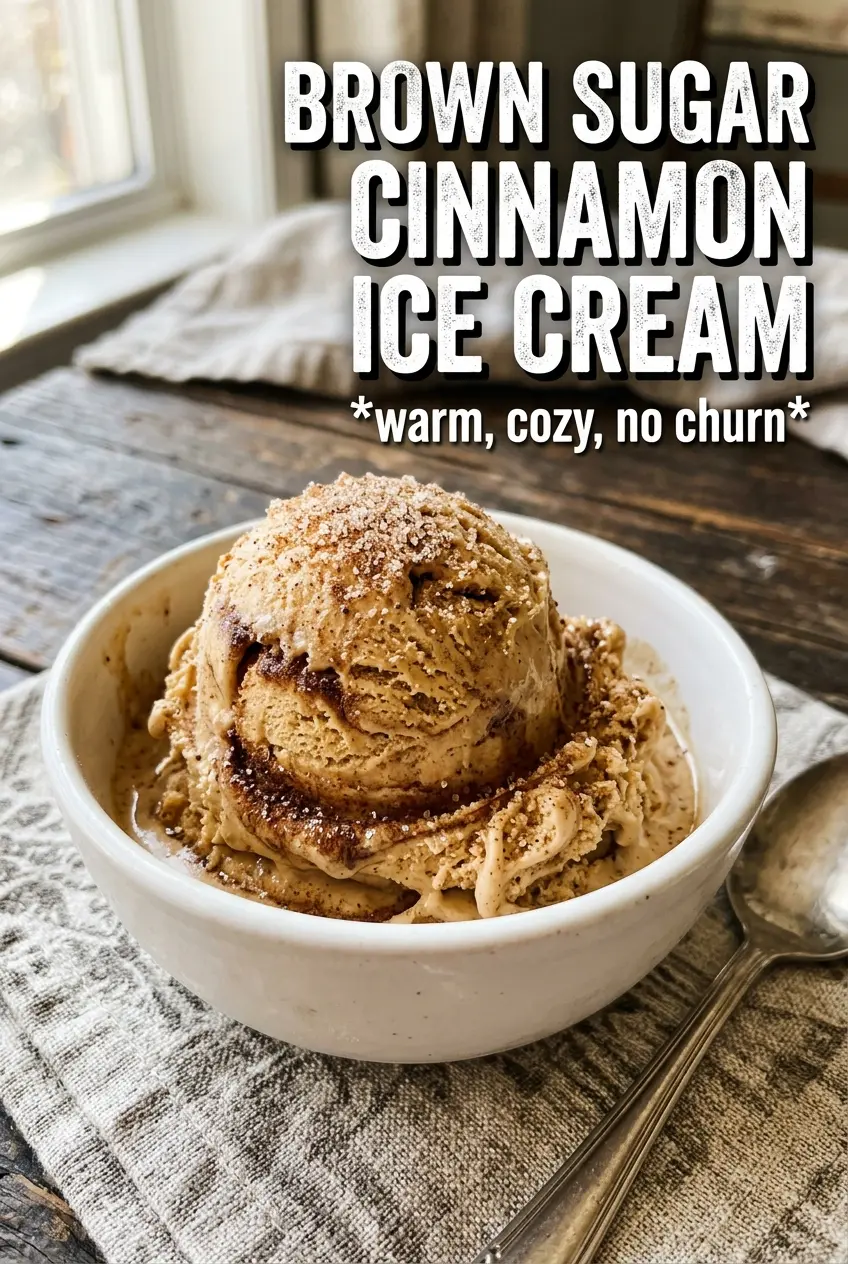
Brown Sugar Cinnamon Ice Cream
Ingredients
Equipment
Method
- Heat the heavy cream, whole milk, and packed brown sugar together in a Dutch oven until the sugar dissolves completely and the mixture steams.
- Slowly whisk the hot cream mixture into the egg yolks, then return everything to the saucepan.
- Cook over medium-low heat, stirring constantly, until the custard reaches 175F (about 10–15 minutes), and it should coat the back of a spoon.
- Strain the custard through a fine mesh sieve, then stir in the cinnamon, vanilla extract, nutmeg, and salt until smooth.
- Cool completely over an ice bath, then refrigerate at least 4 hours so the custard is thoroughly chilled.
- Churn the chilled custard in an ice cream maker until thickened, about 20–30 minutes.
- Transfer to a container and freeze until firm, about 2–4 hours, so it scoops cleanly.