Brown butter dirty chai cupcakes land with the kind of depth that keeps people hovering near the dessert plate. The cupcakes are soft and tender, but the flavor is what makes them memorable: toasted butter, warm chai spice, and a clean espresso note that keeps the sweetness from running away. The frosting carries the same idea, so every bite tastes balanced instead of just sugary and spiced.
The key is cooling the browned butter before it goes into the batter. If it’s even a little warm, it can melt the brown sugar too early and throw off the texture. Brewing the espresso strong and letting it cool matters too, because that liquid needs to bring flavor without thinning the batter into a loose cake base. The result is a cupcake with a fine crumb, a little lift, and a frosting that pipes with enough structure to hold its swirl.
Below, I’ll walk through the browning step, the spice balance, and the one frosting trick that keeps it fluffy instead of heavy. There’s also a few smart swaps if you want to make these without buttermilk or with decaf espresso.
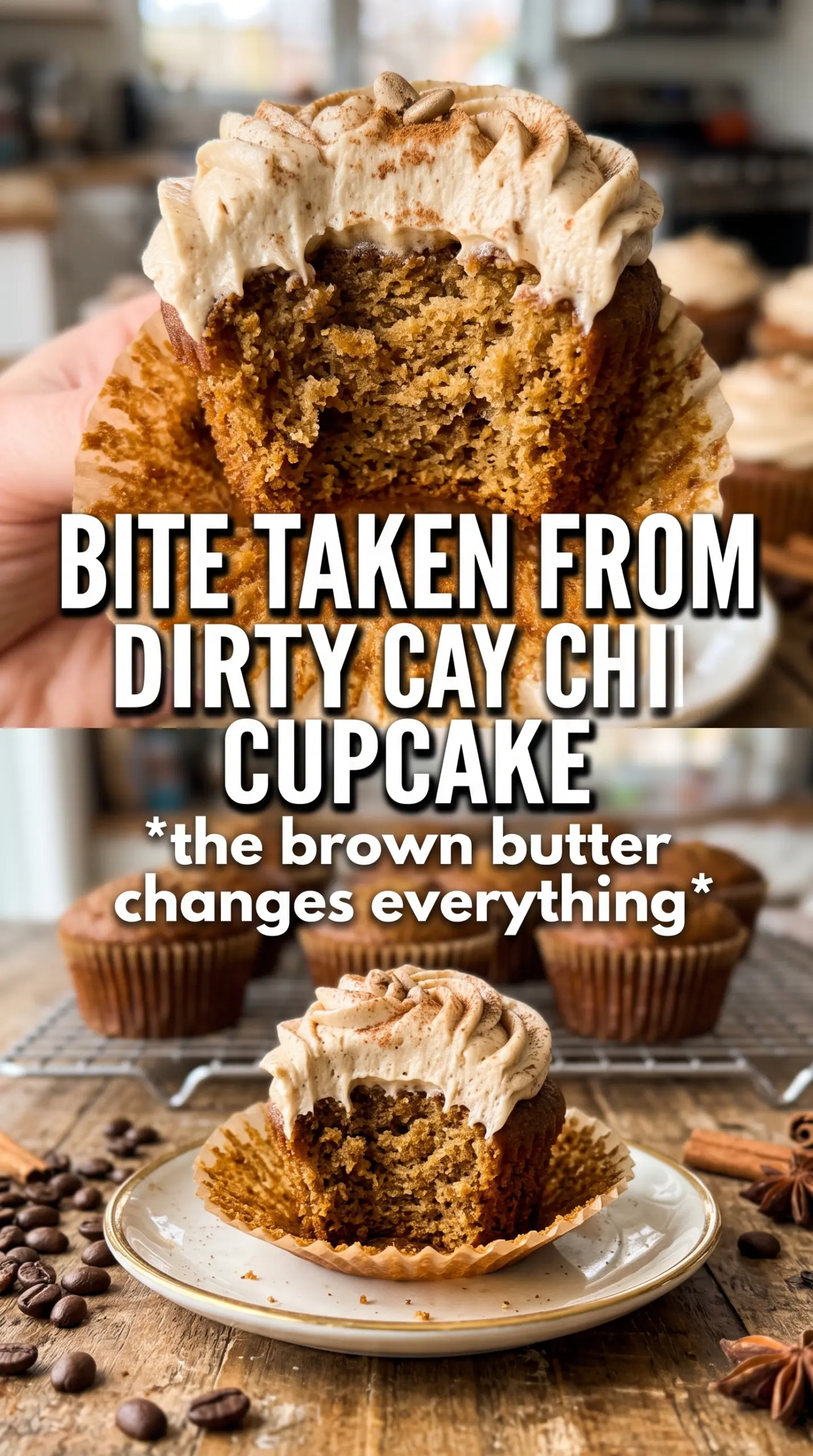
The brown butter made the cupcakes taste nutty and rich, and the frosting held its shape beautifully. Mine baked in 19 minutes and came out with that soft, springy crumb that doesn’t dry out the next day.
Save these brown butter dirty chai cupcakes for when you want espresso-kissed spice cake with a fluffy chai frosting.
The Brown Butter Needs to Cool Before It Tells the Batter What to Do
The biggest mistake in cupcakes like these is rushing the browned butter straight into the mixing bowl. Hot butter softens the sugar too fast, and that can give you a greasy batter with less lift. Once the butter has cooled to room temperature, it still brings all that toasted, nutty flavor without changing the structure of the cake.
The espresso powder does a different job than the brewed espresso. Powder deepens the chocolate-brown color and sharpens the chai, while the cooled coffee adds a gentle roasted edge without making the batter watery. That balance is why these cupcakes taste grown-up without becoming bitter.
- Browned butter — This is the backbone of the recipe. The browned milk solids bring a toasted, almost caramel note that regular melted butter can’t match.
- Espresso powder — Use a fine instant-style powder here, not coarse grounds. It dissolves cleanly and boosts the coffee flavor without grit.
- Buttermilk — The acidity keeps the crumb soft and works with the baking soda. Plain milk will work in a pinch, but the cupcakes lose some tenderness.
- Chai spice blend — A balanced blend with cinnamon, cardamom, ginger, and cloves is what gives these cupcakes their identity. If yours is heavy on cinnamon, add a little extra cardamom so the spice reads more like chai than generic spice cake.
Building the Batter and Frosting So They Stay Light
Browning the butter for both the cupcakes and the frosting is worth the extra pan wash. In the batter, the cooled butter gets beaten with brown sugar first, which helps trap air and gives the cupcakes better rise. Add the eggs one at a time if they’re large and cold from the fridge, then stop mixing as soon as the flour disappears. Overmixing tightens the crumb and makes these bake up dense instead of tender.
- All-purpose flour — This gives the cupcakes enough structure to hold the espresso and brown butter without turning heavy. Cake flour makes them softer, but it can also make them fragile with this much liquid.
- Brown sugar — The molasses in brown sugar plays beautifully with the browned butter. White sugar won’t give the same depth or moistness.
- Milk in the frosting — Start with the smaller amount and add only if needed. Too much liquid turns the frosting slack, and then it won’t pipe cleanly.
- Powdered sugar — Sift it if it’s lumpy. Lumps are what make the frosting look grainy even when the flavor is right.
The Mixing, Baking, and Frosting Moments That Matter Most
Whisk the Dry Ingredients First
Whisk the flour, baking powder, baking soda, chai spice, espresso powder, and salt until the mixture looks evenly speckled. That even distribution matters because you don’t want pockets of spice or espresso in a single bite. If your chai blend is clumpy, break it up with your fingers before it goes into the bowl. Dry ingredients only need enough mixing to look uniform.
Beat the Butter and Sugar Until It Looks Fluffy
The cooled browned butter and brown sugar should lighten a little and look thick, almost creamy, before the eggs go in. That’s where the structure starts. Add the eggs one at a time, then the espresso, buttermilk, and vanilla. If the mixture looks a little separated after the liquid goes in, don’t panic; it comes back together once the flour is folded through.
Stop Folding the Second the Flour Disappears
Add the dry ingredients in one or two additions and fold just until no streaks of flour remain. The batter should look smooth and spoonable, not whipped. Overmixing here is what creates tunnels and a tougher crumb. Divide the batter into the cups about two-thirds full so the tops rise without spilling over.
Watch for Springy Tops, Not a Dry Toothpick
Bake at 350°F for 18 to 20 minutes, but start checking at the 18-minute mark. The tops should spring back when touched lightly, and a toothpick should come out with a few moist crumbs, not wet batter. Pull them too late and the espresso flavor gets flatter while the crumb dries out. Cool them completely before frosting, or the buttercream will slide right off.
Whip the Frosting Until It Holds a Soft Peak
Beat the browned butter, powdered sugar, milk, espresso powder, and chai spice until the frosting turns pale and fluffy. If it feels stiff, add a teaspoon more milk; if it feels loose, keep beating for another minute before changing anything. The texture should pipe in a smooth swirl and keep its shape without looking greasy. A light dusting of espresso powder and chai spice on top gives a clean finish and hints at what’s inside.
Three Smart Ways to Adjust These Cupcakes Without Losing the Point
Make Them Decaf Without Changing the Flavor
Use decaf espresso for the brewed coffee and keep the espresso powder in both the cupcakes and frosting. The coffee note stays strong, but the caffeine drops way down. If you skip the powder entirely, the cupcakes taste more like chai cake with a light roast background instead of true dirty chai.
How to Make Them Dairy-Free
Swap in a good plant butter for both the browned butter and the frosting, then use unsweetened dairy-free yogurt thinned with a tablespoon of plant milk in place of the buttermilk. The cupcakes will still be soft, but you’ll lose a little of the rich browned-butter flavor since most plant butters don’t brown the same way. The frosting will work, but it may need a touch more powdered sugar to pipe cleanly.
When You Don’t Have Buttermilk
Stir 1/2 cup milk with 1/2 teaspoon lemon juice or vinegar and let it sit for 5 minutes. That acidic edge helps the baking soda do its job and keeps the crumb tender. It’s not identical to buttermilk, but it gets close enough that the cupcakes still bake up light instead of tight.
Storage and Reheating
- Refrigerator: Store frosted cupcakes in an airtight container for up to 4 days. The frosting firms up in the fridge, but the cake stays moist.
- Freezer: Freeze the unfrosted cupcakes for up to 2 months. Wrap them tightly and thaw at room temperature before frosting; the buttercream texture is better when made fresh.
- Reheating: Bring cupcakes to room temperature before serving. If they’re chilled, the butter in the frosting will taste dull and the crumb will seem firmer than it really is.
Answers to the Questions Worth Asking
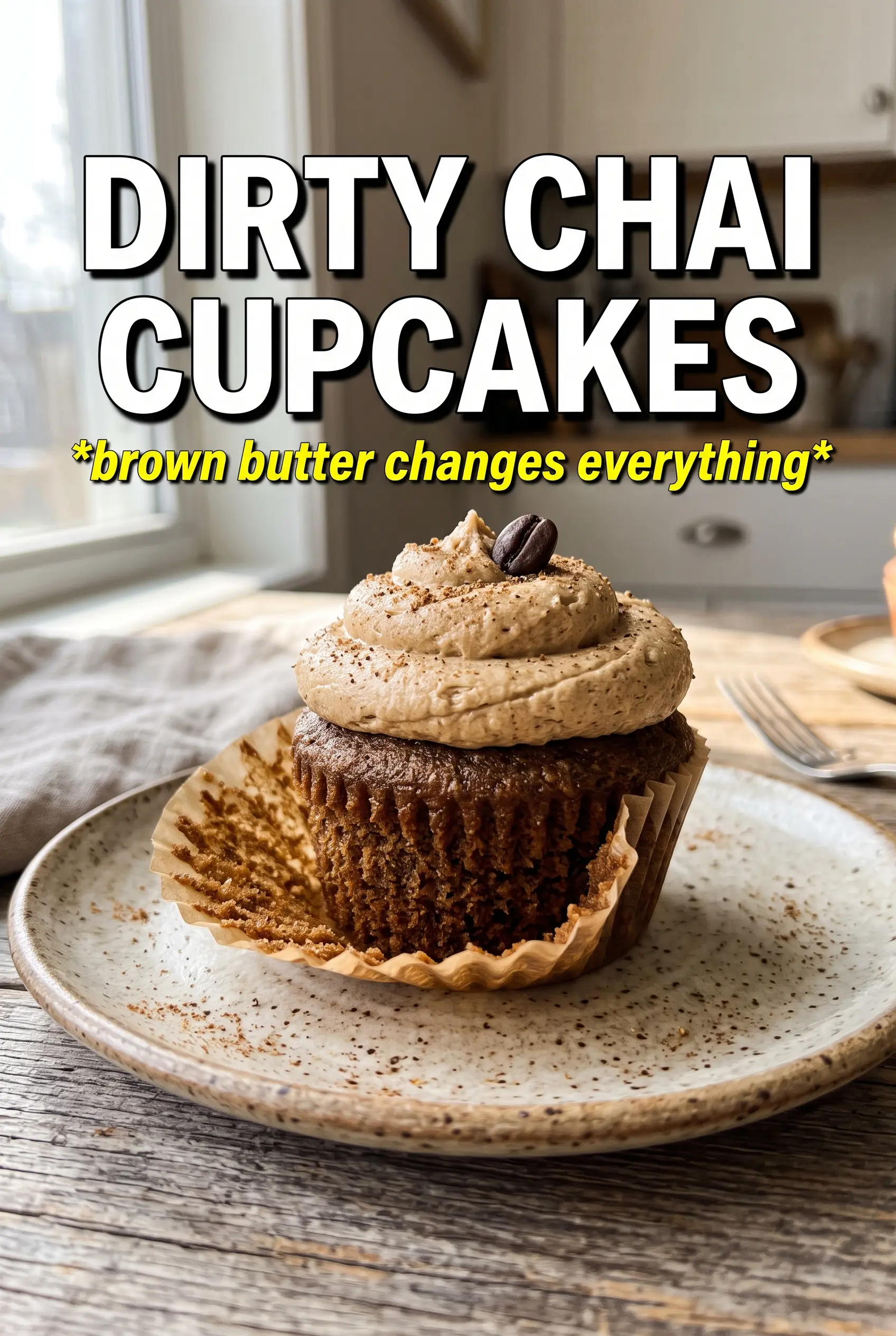
Brown Butter Dirty Chai Cupcakes
Ingredients
Equipment
Method
- Brown 3/4 cup butter and cool, until it turns golden-brown with a nutty aroma. Set aside to cool so it won’t cook the batter.
- Brown the remaining butter for the frosting and cool it completely. Keep the texture pourable so it creams smoothly.
- Preheat the oven to 350°F and line cupcake tins with liners. Place the pan on a sheet pan for easy handling.
- Whisk together all-purpose flour, baking powder, baking soda, chai spice blend, espresso powder, and salt in a bowl. Whisk until evenly speckled.
- Beat the cooled browned butter and packed brown sugar until thick and glossy. Beat in the eggs one at a time.
- Mix in strongly brewed espresso, buttermilk, and vanilla until smooth and cohesive. Stop mixing as soon as the batter looks uniform.
- Fold the flour mixture into the wet ingredients just until no dry streaks remain. Scrape the bottom to avoid hidden flour.
- Divide batter into liners, filling each about 2/3 full. Tap the pan once to settle the batter.
- Bake at 350°F for 18-20 minutes, until the tops spring back and a toothpick comes out mostly clean. Let the cupcakes rest in the pan briefly before moving.
- Cool cupcakes completely before frosting. This prevents the frosting from melting and sliding.
- Beat browned butter for the frosting until creamy, then gradually add powdered sugar. Continue until the frosting looks fluffy.
- Mix in milk, espresso powder, and chai spice blend until smooth and pipeable. Adjust consistency with a tiny extra splash of milk if needed.
- Pipe frosting onto cooled cupcakes in swirls. Aim for a thick layer that covers the dome.
- Dust the tops with espresso powder and chai spice blend. Finish with a light, even sprinkle so the speckled look shows.