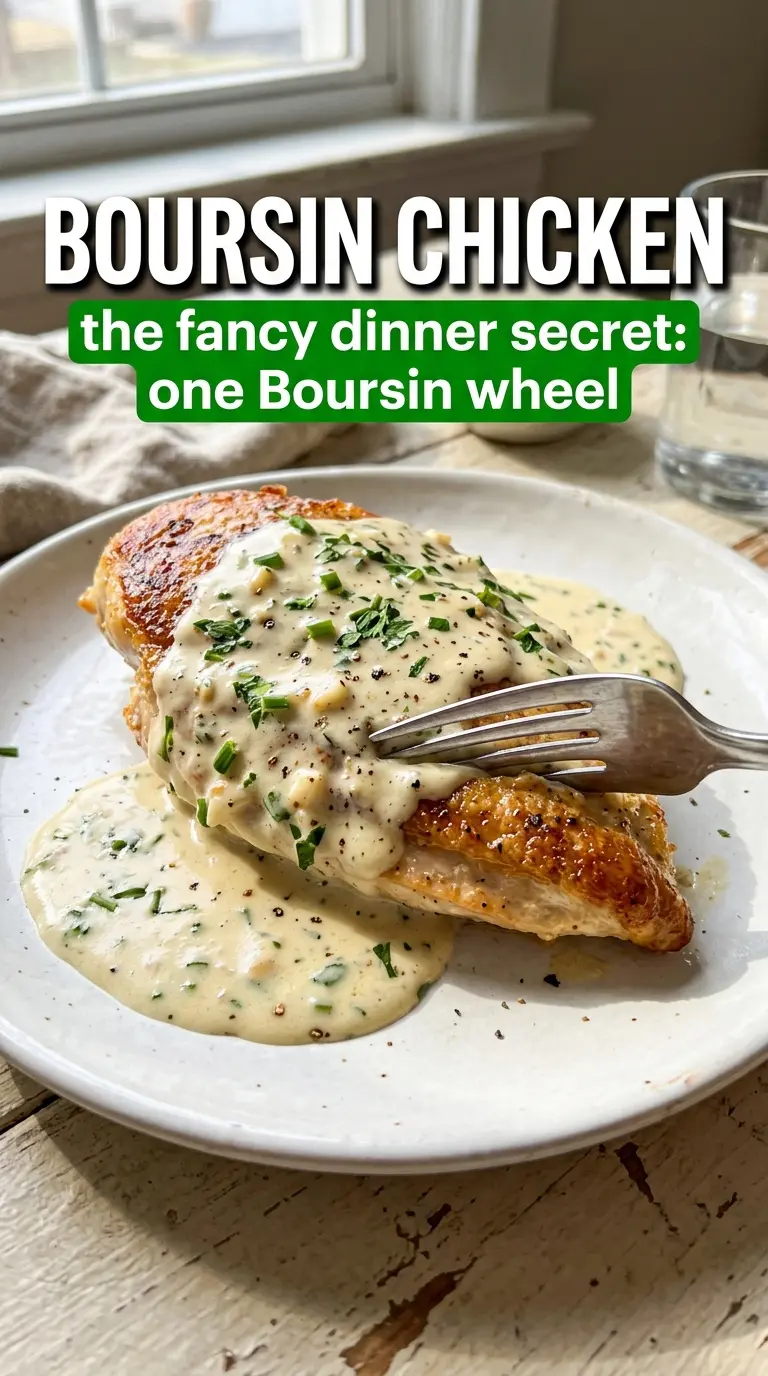
Golden-seared chicken breasts tucked into a glossy Boursin herb sauce are the kind of dinner that tastes like you spent a lot more time on it than you did. The sauce clings to the chicken instead of running off the plate, and the garlic-herb cheese melts into the broth and cream into something silky, fragrant, and rich without feeling heavy.
The trick is building the sauce in the same skillet you used for the chicken. Those browned bits at the bottom carry the flavor, and a quick deglaze loosens them before the Boursin goes in. I also keep the heat modest once the cheese is added, because high heat is the fastest way to make a cream sauce look grainy instead of smooth.
Below, I’ve broken down the one detail that keeps the sauce glossy, the ingredient choices that matter, and the exact point where the chicken goes back in so it stays juicy. There’s also a good storage note if you want to make this ahead or save leftovers for tomorrow’s lunch.
The sauce turned out velvety and thick enough to coat the chicken without separating. I used broth instead of wine, and it still tasted like something from a nice restaurant.
Love that silky Boursin chicken sauce? Save it to Pinterest for the nights when you want a fast skillet dinner that still feels elegant.
The Secret to Keeping the Boursin Sauce Smooth Instead of Grainy
The sauce for this dish is forgiving, but only if you treat the cheese gently. Boursin melts best when it goes into hot broth, not a raging boil, because the moisture in the cheese needs time to loosen into the liquid. If the pan is too hot when the cream goes in, the dairy can split and the sauce loses that glossy finish that makes the dish special.
The other thing that matters is not skipping the deglaze. After the chicken comes out, the browned bits left in the skillet are concentrated flavor, and the wine or broth pulls them up before the sauce starts building. That’s what gives the sauce depth instead of tasting like melted cheese stirred into plain cream.
- Boursin garlic and herb cheese — This is the backbone of the sauce. You can use a different soft herb cheese in a pinch, but Boursin has a specific garlic-herb balance and a texture that melts into a smoother sauce than most substitutes.
- Dry white wine or chicken broth — Wine adds a little sharpness and lifts the richness; broth keeps the dish weeknight-friendly. If you skip the wine, use broth and add a small splash of lemon juice at the end if the sauce needs brightness.
- Heavy cream — This gives the sauce body and helps it stay silky. Half-and-half can work, but the sauce will be thinner and a little less stable when reheated.
- Fresh thyme — Dried thyme can work, but fresh thyme keeps the herb flavor cleaner and lighter. Add it near the end so it stays fragrant instead of fading into the background.
What Each Ingredient Is Actually Doing in This Recipe
- Primary ingredient (the star) — Quality matters most. Choose the best you can find.
- Cooking medium (oil, butter, or broth) — This carries flavors and prevents dryness.
- Seasonings (salt, pepper, spices, herbs) — Layer flavors so nothing overpowers. Build depth gradually.
- Aromatics (garlic, onion, herbs) — Cook with fat to bloom flavors. Become the foundation.
- Supporting ingredients — Complement the main ingredient without overpowering it.
- Sauce or liquid (if applicable) — Brings flavors together. Balance richness with acid.
- Acid (lemon, vinegar, wine, or other) — Brightens and prevents flat-tasting results.
- Final finish (garnish, glaze, or sauce) — Prevents one-dimensional taste and adds visual appeal.
Getting the Chicken Golden Before the Sauce Ever Starts
Season and Sear
Pat the chicken dry before it hits the pan, then season it well with salt, pepper, and garlic powder. A dry surface browns faster, and that first sear is where you get the savory crust that makes the whole dish taste restaurant-worthy. Cook the chicken over medium-high heat until it releases easily and turns a deep golden color; if it sticks, it needs another minute. Pull it once it reaches 165°F so it stays juicy instead of tightening up later in the sauce.
Build the Base in the Same Skillet
Use the same pan for the garlic and the deglaze. Garlic only needs about 30 seconds before the liquid goes in, because it burns fast and goes bitter once the pan is hot. Add the wine or broth and stir while it bubbles, scraping the browned bits from the bottom. That quick step is what turns a plain pan sauce into something with real depth.
Let the Cheese Melt Before You Rush the Cream
Pour in the chicken broth and bring it to a gentle simmer before adding the Boursin. Stir until the cheese disappears into the liquid and the sauce looks smooth, then add the cream and thyme. If you dump the cream in before the cheese has melted, the sauce can take longer to come together and may look a little lumpy. Keep the heat low enough that the sauce barely simmers; you want it to thicken slowly, not boil hard.
Finish the Chicken in the Sauce
Return the chicken to the skillet and spoon the sauce over the top so the breasts warm through without overcooking. Let them sit in the sauce for a few minutes until everything is hot and the sauce lightly coats the back of a spoon. Finish with fresh thyme and cracked pepper. If the sauce thickens too much, loosen it with a splash of broth instead of turning up the heat.
How to Adapt This Boursin Chicken for Different Nights
Make It Dairy-Light, Not Dairy-Free
Use half-and-half instead of heavy cream if you want a lighter sauce, but keep the heat low or the sauce can break more easily. The result will be a little less plush, but it still coats the chicken well. I wouldn’t swap out the Boursin itself here, because that cheese is the main flavor driver.
Use Broth Instead of Wine
Chicken broth works perfectly if you don’t cook with wine. The sauce will be a little rounder and less sharp, so a tiny squeeze of lemon at the end helps wake it up without making it taste acidic.
Make It Gluten-Free
This recipe is naturally gluten-free as long as your broth is certified gluten-free. Serve it over mashed potatoes, rice, or gluten-free pasta and you won’t need to change the method at all.
Stretch It for Four Hearty Servings
If you want the dish to feed a bigger appetite, slice the chicken after it rests and spoon the sauce over pasta, rice, or mashed potatoes. That gives you more surface area for the sauce, which makes the meal feel fuller without changing the flavor.
Storage and Reheating
- Refrigerator: Store leftovers for up to 3 days. The sauce will thicken as it chills.
- Freezer: It’s not my first choice for freezing because cream sauces can separate after thawing, but it can be frozen in a pinch for up to 1 month if you’re willing to whisk it back together.
- Reheating: Rewarm gently on the stove over low heat with a splash of broth or cream. The common mistake is blasting it in the microwave or on high heat, which can make the sauce split before the chicken is hot.
Questions I Get Asked About This Recipe

Boursin Chicken
Ingredients
Equipment
Method
- Season the boneless skinless chicken breasts with salt, pepper, and garlic powder to taste. Heat olive oil in a large skillet over medium-high heat until shimmering, then sear for 5-6 minutes per side until golden and the internal temperature reaches 165°F; remove to a plate.
- In the same pan, add minced garlic and cook for 30 seconds until fragrant. Deglaze with dry white wine or chicken broth and cook for 2 minutes, scraping up the browned bits.
- Pour in chicken broth, bring to a simmer, and add Boursin garlic and herb cheese. Stir until completely melted and smooth.
- Stir in heavy cream and fresh thyme leaves, then simmer for 3-4 minutes until the sauce thickens slightly.
- Return the chicken to the pan and spoon the Boursin sauce over each breast until coated. Garnish with fresh thyme and serve over mashed potatoes or pasta.