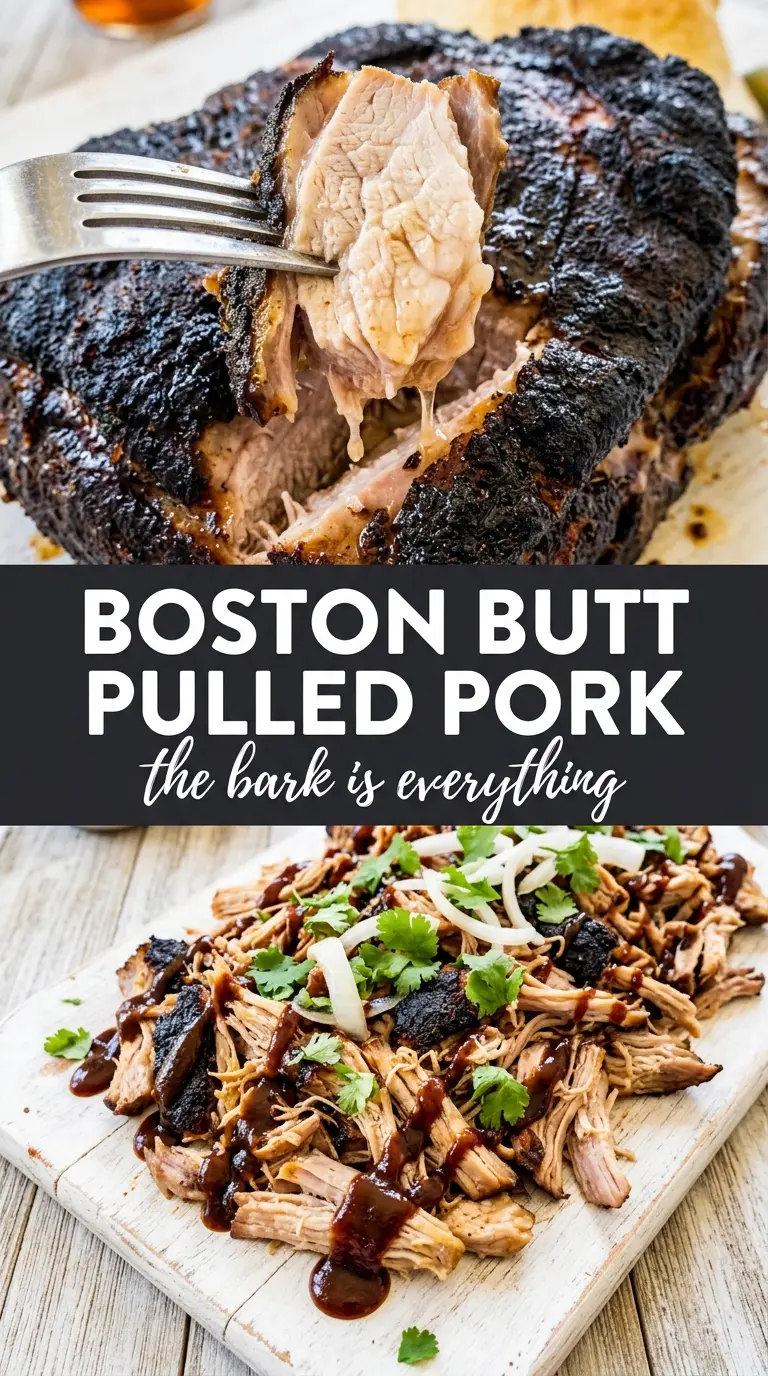
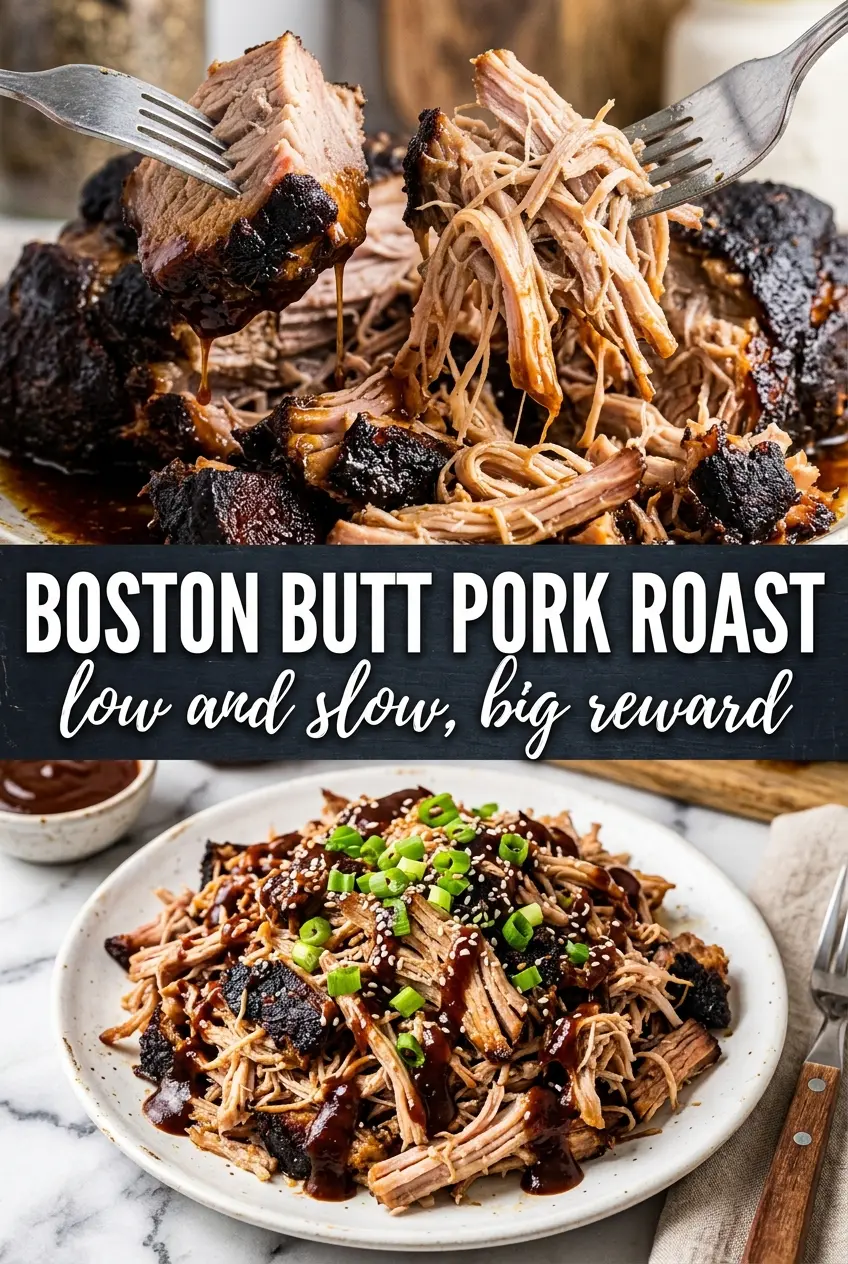
Boston butt pork roast earns its place in the rotation because it gives you that deep, caramelized bark on the outside and tender, juicy shreds underneath without needing a smoker. The long, slow roast turns a tough cut into something that pulls apart with almost no resistance, and the pan juices give the meat back the richness it needs after hours in the oven.
The rub here does the heavy lifting. Brown sugar helps the crust darken, smoked paprika brings that barbecue-style depth, and a little cayenne keeps the flavor from tasting flat. The vinegar in the pan adds moisture and a slight tang, but it doesn’t braise the pork; it just keeps the bottom of the pan from drying out while the fat renders and the exterior slowly builds flavor.
Below you’ll find the details that matter most: how to get a proper bark in the oven, why the internal temperature matters more than the clock, and how to shred the pork so it stays juicy instead of turning stringy.
The bark turned out dark and crusty, and the pork shredded beautifully at 200 degrees without drying out. I tossed it with the pan juices and served it on buns, and there were no leftovers.
Save this Boston butt pork roast for the night you want barky, fall-apart pulled pork with almost no hands-on work.
The Secret to Bark Without a Smoker
The biggest mistake with Boston butt in the oven is wrapping it too tightly in the wrong way for too long and ending up with soft, steamed outer layers. You want the roast covered during the long cook so the interior turns tender, but the final texture still depends on a thick rub and enough time at the end for the surface to set. That dark crust doesn’t happen because of heat alone. It happens because the sugar, paprika, and rendered fat have time to concentrate and brown together.
Another detail that matters is the temperature target. Pork butt doesn’t shred cleanly at 160 or even 180 degrees. It needs to get into that 195 to 205 degree range so the connective tissue breaks down and the meat loosens into strands instead of slices. If the fork meets resistance, it isn’t done yet, even if the roast looks finished on the outside.
What the Rub and Vinegar Are Actually Doing
- Brown sugar — This helps the bark darken and gives the roast that sticky, savory-sweet edge. It doesn’t make the pork taste sugary; it helps the crust form. If you skip it, the exterior tastes flatter and the bark won’t color as deeply.
- Smoked paprika — This is the ingredient that gives the roast its barbecue character in an oven-only cook. Regular paprika works in a pinch, but you lose a lot of depth. Use smoked paprika if you want the finished pork to taste like it spent time over wood.
- Apple cider vinegar — The vinegar goes in the pan, not on the rub, so it can add a little moisture and acidity without washing off the seasoning. It keeps the bottom of the pan from scorching during the long roast. White vinegar can work, but the flavor is sharper and less rounded.
- Bone-in pork butt — Bone-in usually cooks a little more evenly and gives you better flavor in the drippings. A boneless roast still works, but it can cook a bit faster, so start checking early. The fat cap on top matters because it bastes the roast as it cooks.
Getting the Roast Tender All the Way Through
Seasoning and Resting Overnight
Coat the pork generously on every side, pressing the rub into the surface so it clings instead of dusting off. Overnight in the fridge is worth it because the salt starts working into the meat and the sugar draws out a little moisture that helps the crust set later. If you only have the morning, an hour at room temperature still helps the seasoning stick, but the flavor won’t penetrate as deeply.
The Slow Roast in a Covered Pan
Set the pork fat-side up in the roasting pan and pour the vinegar around the bottom, not over the top. Cover the pan tightly with foil so the heat stays steady and the roast doesn’t dry out before the collagen has time to melt. The oven should stay at 275°F the whole time; turning the heat up won’t speed tenderness, it just tightens the meat before it softens.
Knowing When It’s Ready to Shred
Start checking around the 7-hour mark, but trust the texture more than the clock. The roast is ready when an instant-read thermometer slides into the thickest part and reads 195 to 205°F, and a fork twists easily through the center. If it still feels firm, give it another 20 to 30 minutes. Pulling it early gives you dry, stubborn shreds instead of the soft strands you want.
Resting and Pulling the Meat
Let the pork rest uncovered for 30 minutes before shredding. That pause lets the juices settle so they don’t run all over the board the second you cut in. Shred with two forks, and remove any large pockets of fat as you go. Toss the meat with the pan juices before serving so the outside stays seasoned and glossy.
How to Change the Flavor Without Losing the Texture
Make It Smokier
Add 1 to 2 teaspoons of chipotle powder or a little ground ancho to the rub. That gives the pork a deeper barbecue edge without changing the cooking method. Go lightly if you still want the brown sugar and paprika to lead.
Lower-Sugar Version
Cut the brown sugar in half and lean more on smoked paprika and black pepper. The bark will still form, just a little less glossy and sweet. This is the swap I use when I want the pork to taste more savory than barbecue-sauce-forward.
Gluten-Free Serving Ideas
The pork itself is naturally gluten-free, so the main thing to check is the BBQ sauce and the buns. Serve it over rice, baked potatoes, or gluten-free rolls if you want the same pulled-pork experience without changing the roast at all. The meat holds up beautifully either way.
Make It Ahead for a Crowd
Cook the pork a day early, shred it, and store it with the pan juices. The flavor gets even better after a night in the fridge, and reheating it covered in a low oven keeps the meat from drying out. This is the smartest way to feed a big group without rushing the roast on serving day.
Storage and Reheating
- Refrigerator: Store the shredded pork in an airtight container with some of the pan juices for up to 4 days. It stays moist better when the liquid goes in with it.
- Freezer: Freezes well for up to 3 months. Portion it into freezer bags with a little juice, press out the air, and thaw overnight in the fridge.
- Reheating: Reheat covered in a 300°F oven with a splash of juice or broth until hot. The common mistake is blasting it in the microwave until the edges dry out before the center warms.
Answers to the Questions Worth Asking
Boston Butt Pork Roast (Oven Pulled Pork)
Ingredients
Equipment
Method
- Mix brown sugar, smoked paprika, garlic powder, onion powder, cumin, cayenne, salt, and black pepper until evenly combined, then coat the pork butt thoroughly on all sides. Cover and refrigerate overnight if possible.
- Preheat the oven to 275°F.
- Place the pork fat-side up in a roasting pan and pour apple cider vinegar around the bottom.
- Cover tightly with foil and roast for 7–8 hours, until the internal temperature reaches 195–205°F and the meat shreds easily.
- Rest the roast uncovered for 30 minutes.
- Shred the pork with two forks, discarding excess fat.
- Toss the shredded pork with pan juices, then serve with BBQ sauce for serving.