Deep ruby cranberry sauce with a glossy finish earns its place on the table fast, especially when it tastes bright, grown-up, and just a little bit luxe. The cranberries burst into a thick, spoonable sauce that cuts through rich holiday food, and the port gives it a round, winey depth that plain sugar-and-orange versions miss.
The trick here is cooking the sugar, port, orange juice, and cinnamon together before the cranberries go in. That gives the liquid a head start on flavor, so the berries simmer in something that already tastes balanced instead of flat. The Grand Marnier goes in off the heat, which keeps the orange aroma fresh and keeps the alcohol from cooking away completely.
You’ll also find a few notes below on how to swap the booze, how to make it thicker or looser, and how far ahead you can make it without losing that glossy, jewel-like finish.
The sauce thickened up exactly as it cooled, and the port gave it this rich, almost jammy finish that tasted way better than the usual cranberry sauce.
Keep this boozy cranberry sauce handy for turkey, roast chicken, and cheese boards when you want a glossy, tart-sweet side with a little port warmth.
The Part Most Cranberry Sauces Miss: Building Flavor Before the Berries Go In
Plain cranberry sauce often tastes sharp in one-note way because the berries are doing all the work. Here, the port or red wine, orange juice, sugar, cinnamon, and salt form a cooked base first, so the sauce has depth before the cranberries even hit the pan. That matters because cranberries bring acid and pectin, but not much sweetness or body on their own.
The other place people go wrong is boiling it too aggressively after the berries burst. You want a lively simmer, not a hard, splattering boil, or the sauce can reduce too far and taste stiff once chilled. It should look loose in the pan, then settle into a thick, glossy spoonful after it cools.
What Each Ingredient Is Doing in This Cranberry Sauce
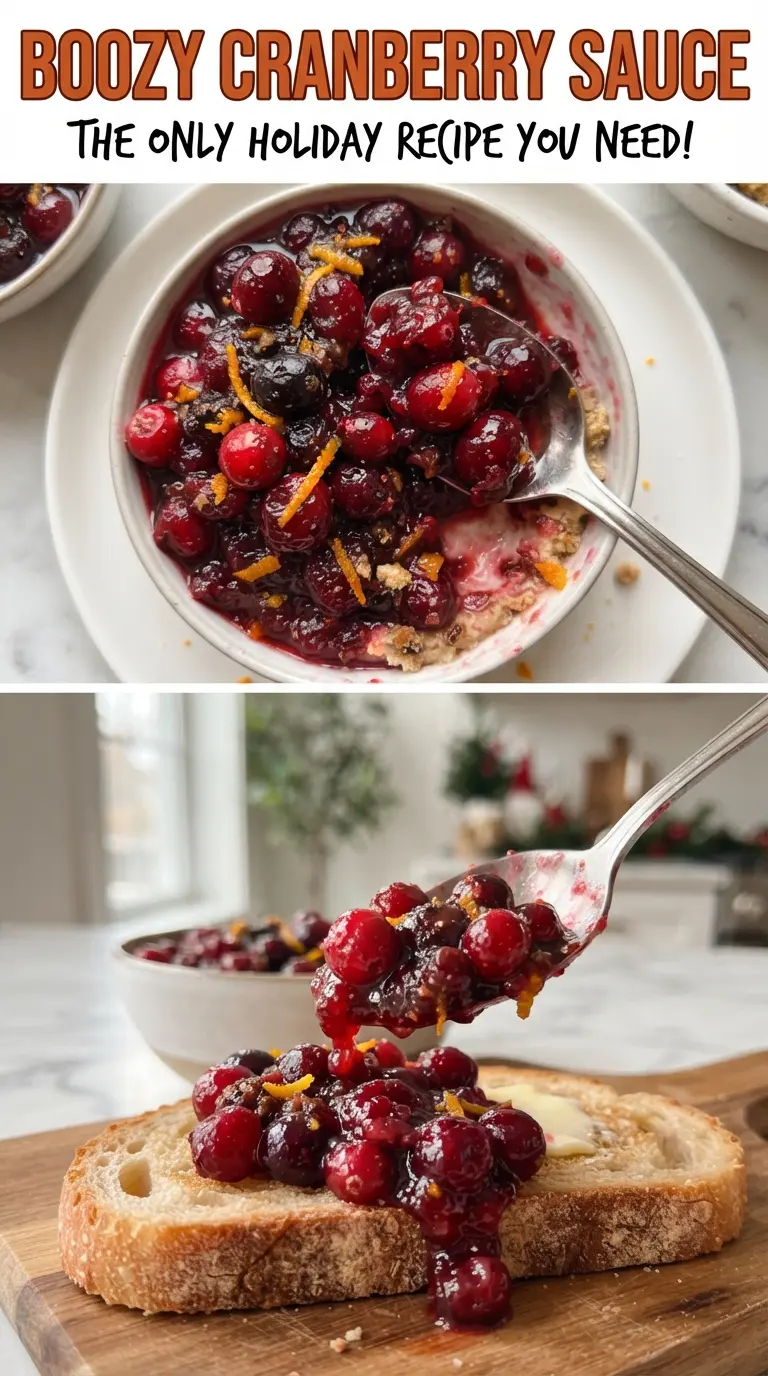
- Fresh cranberries — These are the backbone of the sauce. Fresh berries hold their shape for a bit before bursting, which gives you that nice mix of whole berries and jammy sauce. Frozen cranberries work too; don’t thaw them first.
- Ruby port or red wine — This is where the grown-up depth comes from. Port makes the sauce rounder and a little richer, while red wine reads drier and lighter. Use what you have, but avoid anything overly tannic or harsh, since the sauce won’t cook long enough to smooth that out.
- Orange juice and zest — Juice goes in early to soften the sharpness of the berries, while zest goes in at the end for a brighter citrus lift. If you only use juice, the orange note fades; the zest is what keeps it lively.
- Grand Marnier or orange liqueur — Stirring this in off the heat keeps the orange aroma intact. If you cook it hard, you lose the top-note flavor that makes the sauce taste polished.
- Cinnamon stick — A stick infuses warmth without muddying the sauce the way ground cinnamon can. If you only have ground cinnamon, use a small pinch and whisk it into the sugar mixture before it boils.
How to Cook It Until Glossy, Not Jammy
Start With the Syrup Base
Combine the sugar, port, orange juice, cinnamon stick, and salt in the saucepan and bring it to a boil. You’re dissolving the sugar and concentrating the liquid at the same time, which gives the cranberries a balanced bath instead of a harsh, raw one. Once it boils, keep it moving just enough that the sugar doesn’t sit on the bottom and scorch.
Let the Berries Burst on Their Own
Add the cranberries and drop the heat to a steady simmer. After a few minutes, you’ll hear the berries pop, and the sauce will start to look cloudy, then glossy as it thickens. Stir occasionally, but don’t mash it unless you want a smoother, less chunky texture. If the pan looks dry before the berries break down, the heat is too high.
Finish Off the Heat
Take the pan off the burner, then stir in the Grand Marnier and orange zest. This protects the bright orange aroma and keeps the sauce tasting fresh instead of cooked-out. Pull out the cinnamon stick, then let the sauce cool in the pan before chilling it. It will look thinner while warm; that’s normal and exactly why you should judge the final texture after it chills.
Three Ways to Adapt This Recipe Without Losing What Makes It Good
Alcohol-Free Version
Replace the port with more orange juice or cranberry juice, and swap the Grand Marnier for 1 to 2 teaspoons of orange extract added off the heat. You’ll lose some of the winey depth, but the sauce still comes out bright, tart, and festive.
Less Sweet, More Tart
Cut the sugar back to 1/2 cup if you like a sharper sauce. The result will be brighter and less jammy, but it also won’t set quite as thick, so give it time to chill before deciding whether it needs more sweetener.
Gluten-Free, Dairy-Free, Naturally
This recipe already fits both diets as written. Just check your orange liqueur label if you’re serving someone with a strict allergy, since a few flavored liqueurs use additives you may want to avoid.
Make It Smoother
For a more sauce-like finish, press the cooked cranberries through a fine mesh sieve or give them a few quick pulses with an immersion blender. Blending makes it silkier, but it also removes some of the rustic texture from the burst berries.
Storage and Reheating
- Refrigerator: Keeps well for 1 week in a covered container. It thickens as it chills, so don’t panic if it looks loose right after cooking.
- Freezer: Freezes well for up to 2 months. Cool it completely first, then store in a freezer-safe container with a little headspace for expansion.
- Reheating: Warm gently over low heat or serve it cold. If you reheat it too hard, the sauce can tighten up too much and lose some of that glossy finish.
Answers to the Questions Worth Asking
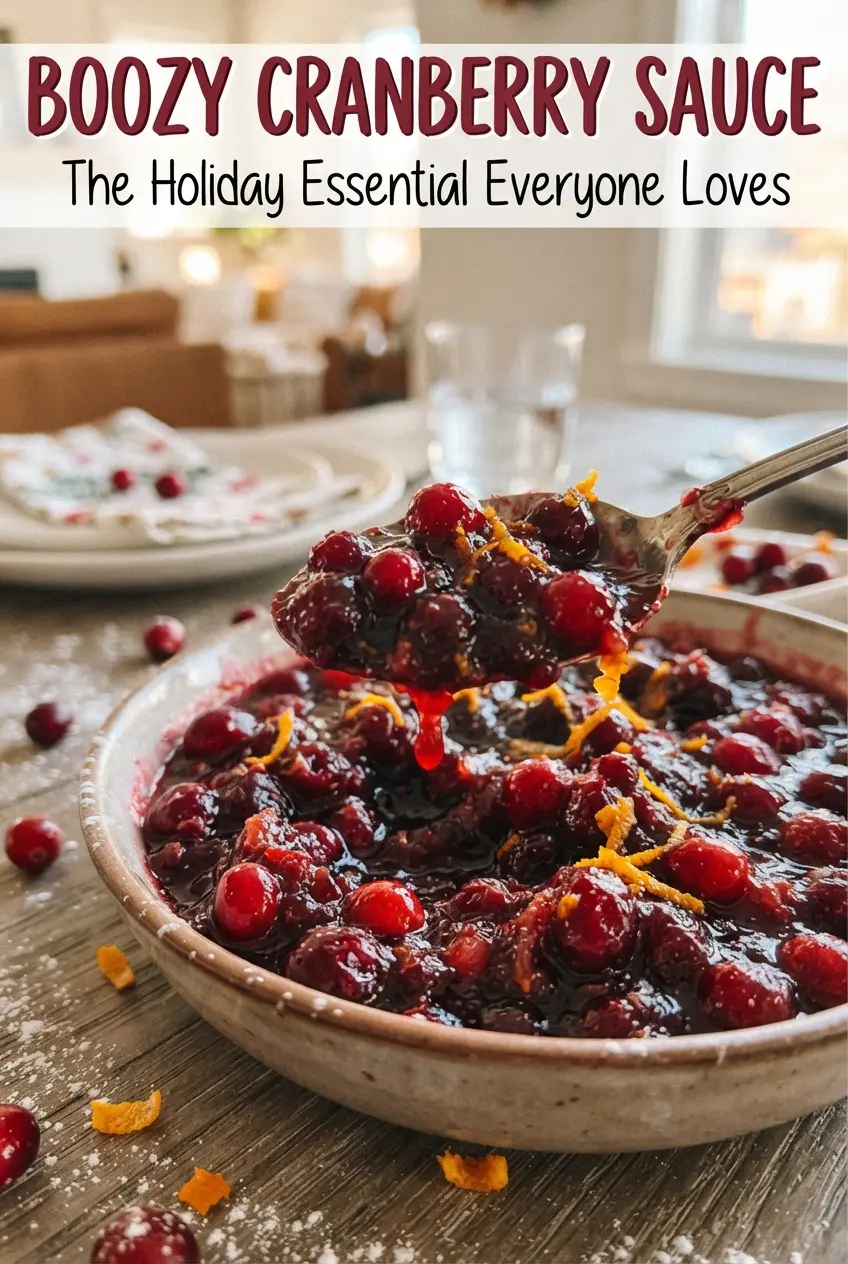
Boozy Cranberry Sauce
Ingredients
Equipment
Method
- Combine sugar, ruby port or red wine, orange juice, cinnamon stick, and salt in a saucepan, then set it over medium-high heat until boiling. You should see active bubbling across the surface as the sugar dissolves.
- Add fresh cranberries to the boiling mixture and simmer for 10-12 minutes, stirring occasionally, until the berries burst and the sauce thickens. The sauce should look glossy and slightly jammy with visible berry skins bursting open.
- Remove the saucepan from the heat and stir in Grand Marnier or orange liqueur and orange zest. The color should deepen and the surface should look shiny.
- Discard the cinnamon stick. Make sure no pieces remain in the sauce before cooling.
- Cool the sauce to room temperature, then chill before serving. The texture will thicken further as it cools.