Juicy chicken breasts, a glossy balsamic reduction, and melted mozzarella make this one of those dinners that looks like it took far more effort than it did. The chicken stays tender because it gets a short marinade, a quick sear, and then a finish in the oven instead of baking from raw all the way through. That combination gives you browned edges, a savory-sweet glaze, and chicken that still has some bite to it instead of turning dry.
The balsamic, honey, garlic, and Dijon work together in a way that tastes layered, not just sweet. The vinegar brings tang and depth, the honey helps the glaze cling, and the Dijon keeps the sauce from tasting flat. Fresh mozzarella and cherry tomatoes go on at the end so they soften and melt without watering everything down.
Below, I’ve included the little details that matter most here: how long to marinate without muddying the flavor, how to keep the chicken from overcooking, and the easiest swaps if you need to work with what’s already in your kitchen.
The balsamic glaze thickened beautifully in the pan, and the mozzarella melted right over the tomatoes without turning watery. I served it with rice and everyone went back for seconds.
Like the sound of balsamic chicken breast with mozzarella? Save this caprese-style bake for the nights when you want a glossy skillet sauce and melted cheese without a pile of dishes.
The Seared Edge Is What Keeps This Chicken from Tasting Flat
With baked chicken breasts, the biggest mistake is putting them straight into the oven and hoping the sauce will carry everything. It won’t. You need that fast sear first because it gives the chicken color, starts the glaze on the surface, and keeps the finished dish tasting like it has layers instead of one note. The oven finishes the center gently, which is what keeps the meat juicy.
The other detail that matters is the short marination. Twenty minutes is enough to season the meat and start the balsamic working, but not so long that the acid starts making the surface soft or oddly tight. If you marinate much longer than that, the texture can go a little strange, especially with thinner chicken breasts.
- Preheating the pan — The skillet needs to be hot enough that the chicken sizzles the moment it touches down. That’s how you get a browned crust instead of pale, steamed chicken.
- Reserved marinade — A little of the sauce goes in with the chicken in the oven, but only if you keep it separate from the raw chicken. That’s what gives you extra glaze without making the dish muddy.
- Checking temperature early — Pull the chicken as soon as it hits 165°F. Go much past that and the mozzarella can’t save the texture.
What Each Ingredient Is Doing in This Caprese Chicken Bake
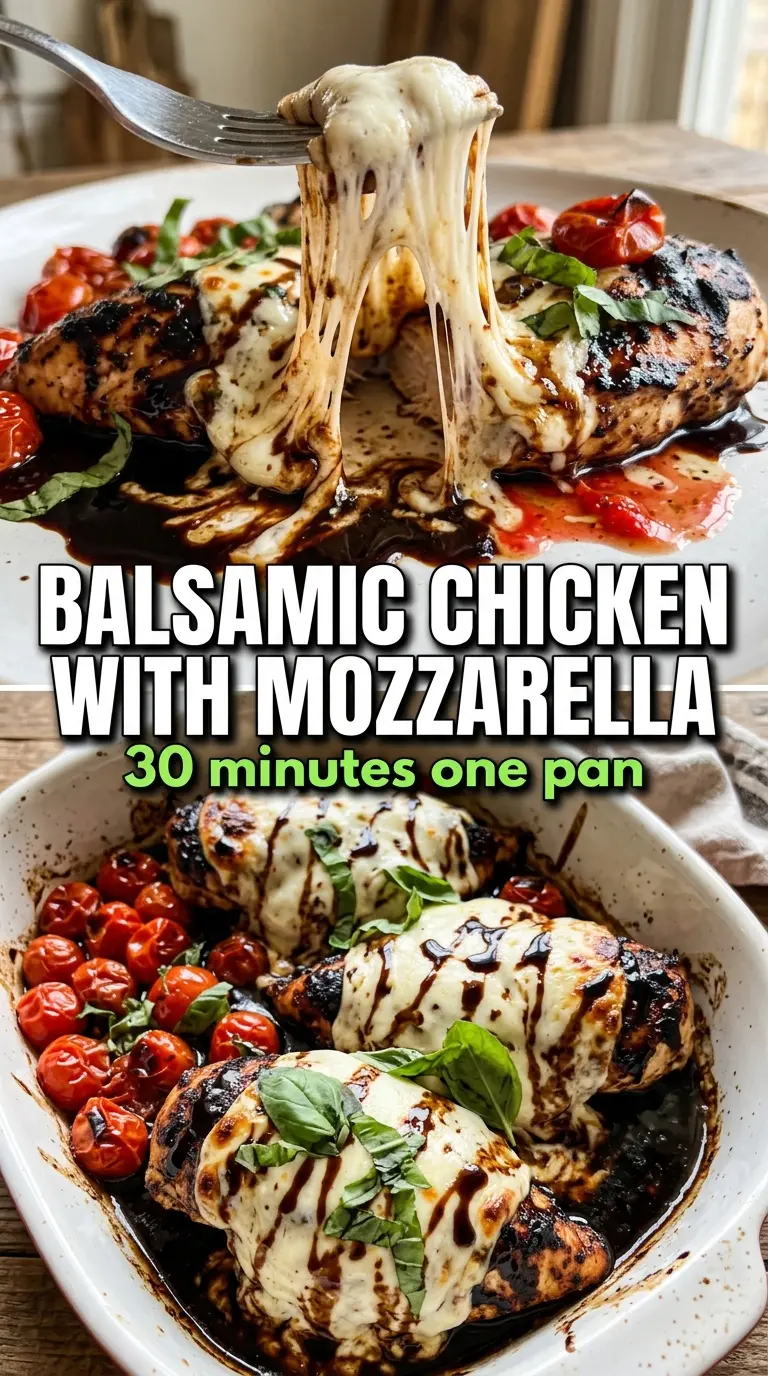
The ingredient list is short, which means each part has a job. There isn’t much hiding here, so quality matters in a few places and less so in others.
- Chicken breasts — Use boneless, skinless breasts that are close to the same size so they finish at the same time. If one is much thicker, pound it lightly or slice it horizontally so you don’t end up with one piece dry while the others are still catching up.
- Balsamic vinegar — This is the backbone of the dish, so use one that tastes good on its own. A harsh vinegar will stay harsh after baking, while a decent balsamic turns glossy and sweet-tart.
- Honey — This helps the marinade cling and gives the chicken that lacquered finish. Maple syrup works in a pinch, but it tastes rounder and less bright.
- Dijon mustard — You won’t taste it like mustard, but it keeps the sauce from tasting one-dimensional. Yellow mustard won’t give the same depth.
- Fresh mozzarella — This is where the caprese feeling comes from, and fresh matters. Low-moisture mozzarella melts too, but it won’t give you the soft, milky finish this recipe is built around.
- Cherry tomatoes and basil — They go on at the end so they stay fresh and punchy. If you cook them too long, the tomatoes collapse and the basil loses its clean finish.
How to Layer the Flavor Without Overcooking the Chicken
Mix the Marinade First
Whisk the balsamic vinegar, olive oil, honey, garlic, and Dijon until the mixture looks smooth and slightly thickened. Season the chicken directly, then coat it in the marinade and let it sit for 20 minutes. That short soak is enough to season the meat without pushing it into mushy territory, which is the point where acidic marinades start working against you.
Sear for Color, Not for Doneness
Lay the chicken in a hot oven-safe skillet and leave it alone for the full 3 minutes per side. You’re looking for a browned surface that releases easily from the pan, not cooked-through chicken. If it sticks, it needs another moment; if it goes pale, the pan wasn’t hot enough and you’ll miss the flavor that makes the sauce taste deep instead of thin.
Finish Gently in the Oven
Move the skillet to the oven and bake until the thickest part of the chicken reaches 165°F. The reserved marinade will bubble around the edges and start reducing as the chicken finishes cooking. If the breasts are especially large, check them a few minutes early so the glaze doesn’t reduce past the point of balance while the meat catches up.
Top and Melt at the End
Once the chicken comes out, layer on the mozzarella and tomatoes, then return it to the oven just long enough for the cheese to soften and slump. This is a short step, not a second bake. Overdo it and the tomatoes release too much juice, which dilutes the glaze right when everything should be glossy and concentrated.
Ways to Tweak It Without Losing the Point
Make It Dairy-Free
Skip the mozzarella and finish the chicken with the tomatoes and basil only, then drizzle with a little extra balsamic glaze. You lose the creamy melt, but the chicken still eats like a bright, caprese-style main dish instead of a heavy sauced entrée.
Use Chicken Thighs Instead
Boneless, skinless thighs work if you want more forgiveness and a richer bite. They’ll usually need a few extra minutes in the oven, and the final texture is juicier, though the dish loses the clean sliced look of chicken breast.
Make It Gluten-Free
This recipe is naturally gluten-free as written, as long as your Dijon and balsamic glaze are gluten-free brands. That’s one of the nice things about this dish: the sauce gets its body from reduction, not flour.
Swap the Finish for Burrata
If you want something even softer, add torn burrata after the chicken bakes instead of mozzarella slices. You’ll get a creamier finish, but it won’t melt into the same neat caprese topping, so serve it right away while the cheese is still cool and luscious.
Storage and Reheating
- Refrigerator: Store leftovers in an airtight container for up to 3 days. The mozzarella will firm up, and the tomatoes will soften a bit more, but the flavor holds well.
- Freezer: The chicken can be frozen, though the mozzarella and tomatoes won’t come back with the same texture. Freeze without the fresh basil if you plan ahead, then add fresh toppings after reheating.
- Reheating: Reheat covered in a 325°F oven until warmed through, or use short bursts in the microwave at medium power. High heat dries the chicken fast and turns the cheese rubbery before the center is hot.
Answers to the Questions Worth Asking

Balsamic Baked Chicken Breast with Mozzarella
Ingredients
Equipment
Method
- Whisk balsamic vinegar, olive oil, honey, minced garlic, and Dijon mustard in a bowl until smooth. Season the chicken with salt, pepper, garlic powder, and Italian seasoning, then marinate for 20 minutes, reserving some marinade for baking.
- Preheat the oven to 400°F. Heat an oven-safe skillet over medium-high heat and sear the marinated chicken for 3 minutes per side until golden.
- Transfer the skillet to the oven and bake for 18-20 minutes, using the remaining reserved marinade. Bake until the internal temperature reaches 165°F.
- Remove the skillet from the oven and top each chicken breast with sliced mozzarella and halved cherry tomatoes. Return to the oven for 4-5 minutes until the cheese is fully melted.
- Drizzle with balsamic glaze and garnish with fresh basil leaves. Let it rest briefly before serving so the glaze clings to the chicken.