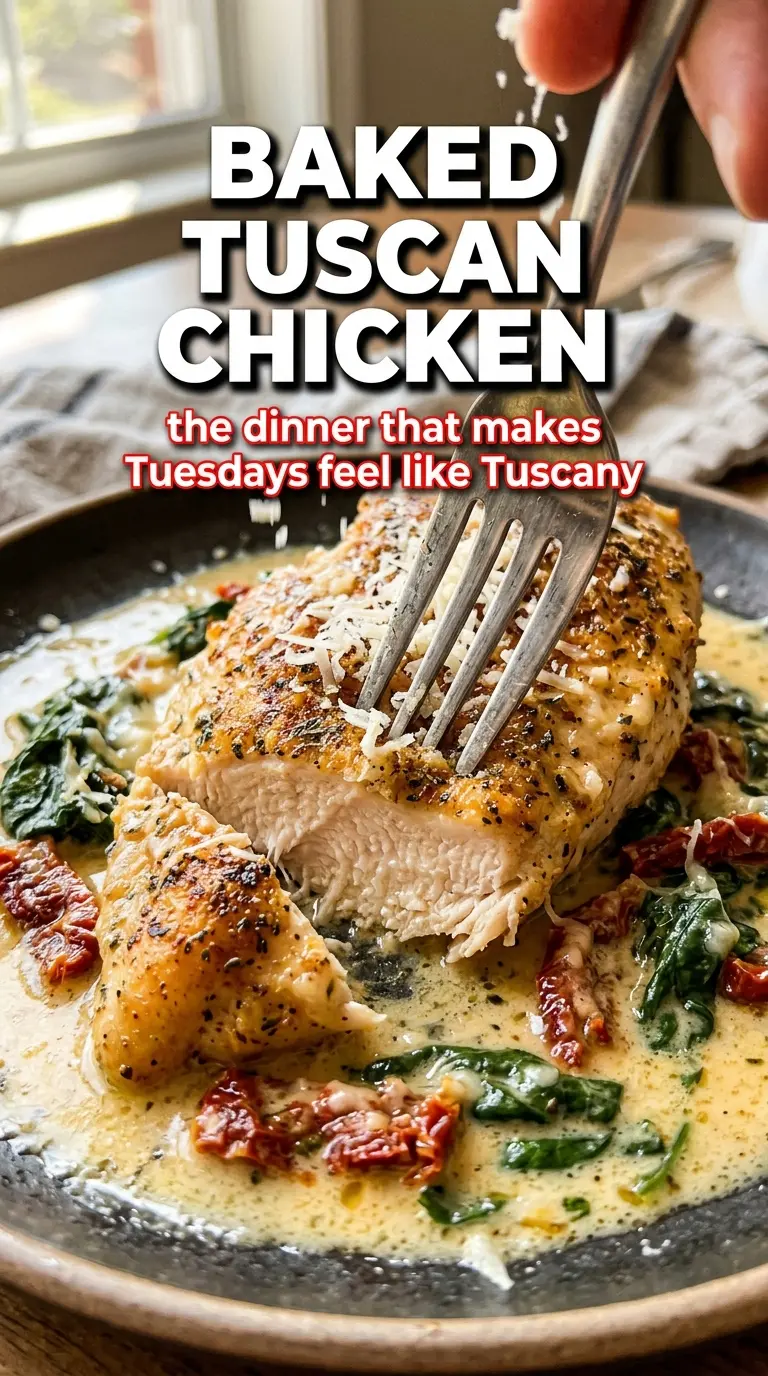
Golden-roasted chicken thighs tucked into a creamy sun-dried tomato sauce are the kind of dinner that looks like you spent all afternoon on it, even though the real work is a good sear and a short bake. The skin stays crisp enough to hold its own against the sauce, while the Parmesan cream pulls everything into one rich, savory pan that feels restaurant-worthy without being fussy.
What makes this version work is the order. The chicken gets browned first so the skillet builds flavor before anything creamy goes in, and the sauce is kept at a gentle simmer so the Parmesan melts smoothly instead of turning grainy. Spinach goes in at the end for color and just enough body, not long enough to lose its brightness.
Below, I’ve laid out the part that matters most: how to keep the chicken skin from softening too early, which ingredients are doing the heavy lifting, and how to adapt the dish if you need a different dairy or a lighter finish.
The skin stayed crisp even under the sauce, and the Parmesan melted into a silky pan gravy instead of getting clumpy. I made it on a Tuesday and my husband kept sneaking bites straight from the skillet.
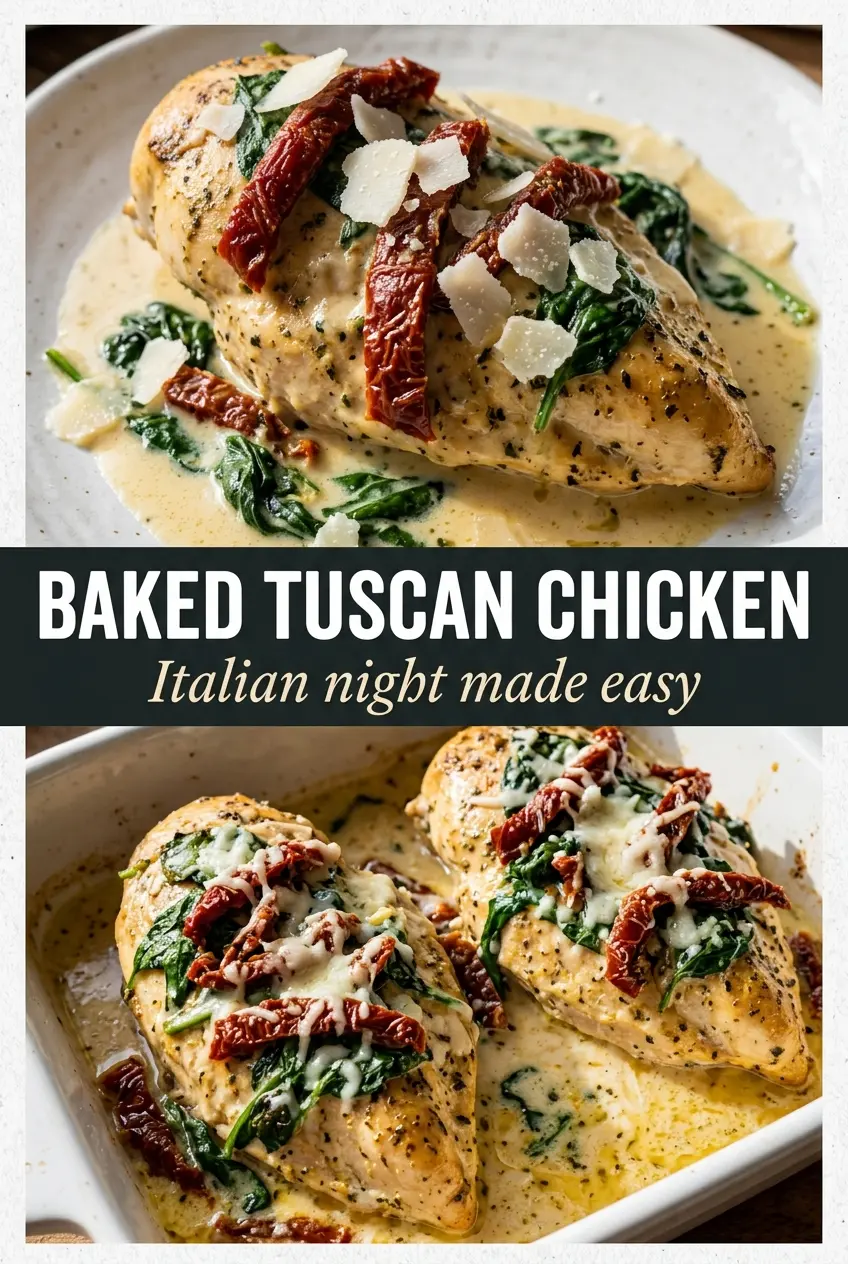
Baked Tuscan Chicken with crisp skin and creamy sun-dried tomato sauce is the one to pin for an easy dinner that still feels special.
The Trick to Keeping the Sauce Creamy After the Chicken Bakes
The sauce in this dish only stays silky if you respect the heat. Once the cream and Parmesan go in, the pan should stay at a gentle simmer, not a hard boil, because high heat can cause the dairy to separate and the cheese to turn gritty. The oven finishes the chicken, but it also gives the sauce a last bit of time to thicken around the thighs without reducing it into something heavy.
Another small thing matters here: the chicken goes back into the skillet skin-side up. That keeps the crust above the sauce instead of soaking in it, which is the difference between crisp-topped chicken and soft, stewed chicken. If your skillet feels crowded, use a larger one so the sauce can bubble around the meat instead of steaming it.
What Each Ingredient Is Doing in This Skillet
- Chicken thighs — Bone-in, skin-on thighs stay juicy in the oven and give you the best contrast against the creamy sauce. Breasts can work, but they dry out faster and don’t bring the same richness.
- Sun-dried tomatoes in oil — These add concentrated sweetness and a little tang that cuts through the cream. Drain them first, then slice them so they disperse through the sauce instead of clumping in one spot.
- Heavy cream — This is the base that turns the pan juices into a proper sauce. Half-and-half can work in a pinch, but it won’t thicken as well and is more likely to break if boiled.
- Parmesan — Freshly grated Parmesan melts more smoothly than the pre-shredded stuff. If you use the packaged kind, expect a slightly less polished sauce because anti-caking agents can make it behave differently.
- Baby spinach — It wilts quickly and adds color without stealing attention from the chicken. Add it at the end so it softens into the sauce instead of turning dull and stringy.
- Chicken broth — This loosens the skillet bits and gives the sauce enough base flavor to keep the cream from tasting flat. Stock works too, but broth is usually a little cleaner here.
Building the Skillet in the Right Order
Seasoning and Searing the Chicken
Coat the thighs generously with salt, pepper, garlic powder, Italian seasoning, and smoked paprika before they ever hit the pan. The skin needs time in the hot oil, skin-side down, until it turns deep gold and releases easily from the skillet; if it sticks, it isn’t ready yet. Pull the chicken out after the sear so it can finish in the oven later, which keeps the skin from overcooking while the sauce comes together.
Starting the Sauce in the Fond
After the chicken comes out, garlic goes in for just a short sizzle, followed by the sun-dried tomatoes. You want the garlic fragrant, not browned, because burnt garlic turns bitter fast in a cream sauce. When you pour in the broth, scrape up the browned bits from the pan; that’s the flavor the sauce is built on.
Finishing With Cream, Cheese, and Spinach
Stir the cream in gently, then add the Parmesan a little at a time while the heat stays low. If the sauce looks thin, give it a few minutes to simmer before you judge it, because it thickens as the liquid reduces and the cheese melts in. Spinach goes in last, just until wilted, and then the chicken gets nestled back into the skillet skin-side up so it bakes without losing its texture.
How to Adapt This for a Lighter Dinner or a Different Dairy Plan
Use chicken breasts instead of thighs
Chicken breasts work if that’s what you have, but they need a shorter oven time and a closer eye because they dry out faster than thighs. Sear them the same way, then start checking for doneness a few minutes early so they stay juicy.
Make it gluten-free without changing the method
This recipe is naturally gluten-free as written, so the main job is checking your broth and Parmesan for any added fillers. That keeps the sauce structure the same and avoids the grainy, overly thin texture that can happen when substitutions creep in unnecessarily.
Swap in half-and-half for a lighter finish
Half-and-half gives you a lighter sauce, but it won’t be as rich or as stable as cream. Keep the heat low and don’t let it boil, or it can split before the chicken finishes baking.
Turn up the heat with extra red pepper flakes
A little more red pepper flakes gives the sauce a sharper edge without changing the structure of the dish. Add them with the cream so the heat blooms evenly instead of landing in one hot pocket.
Storage and Reheating
- Refrigerator: Store leftovers for up to 3 days. The sauce will thicken in the fridge, and the chicken skin will soften, but the flavor stays solid.
- Freezer: It freezes, but the cream sauce may separate a bit when thawed. Freeze in airtight containers for up to 2 months if needed, then whisk the sauce well after reheating.
- Reheating: Rewarm gently in a covered skillet over low heat with a splash of broth or cream. High heat is the mistake here; it tightens the chicken and can make the sauce break.
Questions I Get Asked About This Recipe
Baked Tuscan Chicken
Ingredients
Equipment
Method
- Preheat the oven to 400°F and season the chicken thighs generously with salt, pepper, garlic powder, Italian seasoning, and smoked paprika.
- Pat the seasoning lightly into the skin so it adheres and browns during searing.
- Heat the olive oil in an oven-safe skillet over medium-high heat and sear the chicken skin-side down for 6-7 minutes until deeply golden.
- Flip the thighs and sear for 3 more minutes, then remove to a plate.
- Cook the minced garlic for 30 seconds until fragrant.
- Add the sun-dried tomatoes and cook for 1 minute, then deglaze with the chicken broth, scraping up any browned bits.
- Stir in the heavy cream, Parmesan, Italian seasoning, and red pepper flakes, then simmer briefly until the sauce looks slightly thickened and glossy.
- Stir in the baby spinach until wilted, keeping it vibrant and green.
- Nestle the chicken thighs skin-side up into the sauce.
- Bake uncovered for 18-20 minutes, until the internal temperature reaches 165°F and the Parmesan sauce is bubbling at the edges.
- Garnish with fresh basil before serving.