Golden chicken thighs tucked into a creamy sun-dried tomato sauce are the kind of dinner that disappears fast because every bite has something going on: crisped skin, mellow garlic, tangy tomatoes, and spinach folded into a Parmesan cream sauce that clings instead of pooling thinly. This baked Tuscan chicken casserole lands in that sweet spot between comforting and elegant without asking for extra pans or fussy timing.
The key is building the sauce in the same skillet you use for searing. Those browned bits on the bottom carry most of the depth, and the chicken thighs stay juicier than breasts because they can handle the oven heat without drying out. A quick deglaze keeps the sauce from tasting heavy, and the Parmesan goes in after the broth has loosened the pan so it melts into a silky finish instead of turning grainy.
Below you’ll find the searing cue that gives you crisp skin, the point where the cream should go in, and a couple of smart swaps if you need to adjust the dish for what’s in your kitchen.
The chicken skin stayed crisp even after baking, and the sauce thickened into that silky, spoon-coating texture I was hoping for. The sun-dried tomatoes and spinach made it taste restaurant-style without a lot of effort.
Save this baked Tuscan chicken casserole for the nights when you want crispy chicken, a silky Parmesan sauce, and one pan that does the whole job.
The Sear That Keeps the Chicken Juicy Under a Cream Sauce
The biggest mistake with a casserole like this is rushing the chicken into the sauce before the skin has a chance to brown. Once the thighs hit the oven, they keep releasing fat, and that’s what helps flavor the sauce without making it greasy. Sear skin-side down long enough to get a deep golden crust; pale skin turns soft and a little rubbery under cream sauce.
Chicken thighs are the right cut here because bone-in, skin-on pieces stay tender through a 20-minute bake. If you use boneless thighs, shorten the oven time a bit and check early. Breasts will work in a pinch, but they need a closer eye because they dry out faster and won’t give you the same forgiving texture.
What the Tomatoes, Cream, and Parmesan Are Each Doing Here
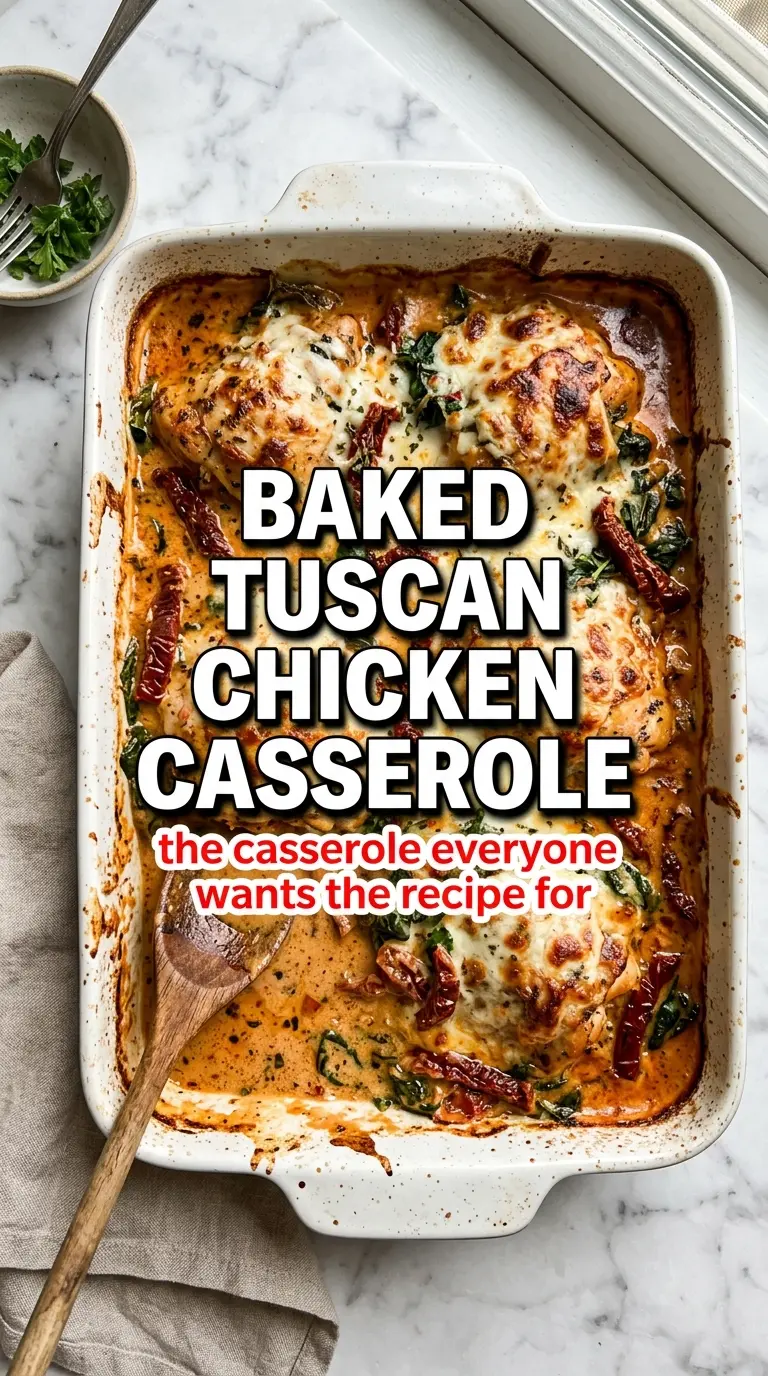
- Bone-in, skin-on chicken thighs — These hold up to the oven and give you enough rendered fat to flavor the sauce. Skinless thighs work, but you lose that crisp top and some of the richness in the pan.
- Sun-dried tomatoes in oil — They bring concentrated sweetness and tang in a way fresh tomatoes can’t match. Drain them, but don’t rinse them; a little oil clinging to the tomatoes helps them bloom in the pan.
- Heavy cream — This is what makes the sauce lush and stable. Half-and-half will work, but the sauce will be thinner and a little less forgiving once it goes into the oven.
- Parmesan cheese — Grate it finely so it melts smoothly. Pre-grated Parmesan often contains anti-caking agents that can make the sauce slightly gritty.
- Baby spinach — It wilts in seconds and keeps its shape better than mature spinach. Chop it only if the leaves are huge; otherwise, let the heat do the work.
- Chicken broth — This loosens the browned bits and keeps the cream from becoming too heavy. Use a good broth here, because it’s the backbone of the sauce after the cream settles down.
Building the Sauce in the Same Pan Without Breaking It
Get the Chicken Browned First
Start with a hot oven-safe skillet and enough olive oil to coat the bottom. Season the chicken well, then place it skin-side down and leave it alone until the skin is deeply golden and releases easily. If it sticks, it isn’t ready yet. That first sear is what gives you the final texture you want after baking.
Wake Up the Garlic and Tomatoes
Once the chicken comes out, the garlic and sun-dried tomatoes go into the same pan for just a minute. The heat should smell fragrant, not sharp or burnt. Garlic goes bitter fast, so keep it moving and move on as soon as it softens.
Loosen the Pan Before the Cream Goes In
Pour in the chicken broth and scrape the bottom until the pan looks clean and the browned bits are dissolved into the liquid. That step matters because those dark spots are concentrated flavor, and the broth keeps them from scorching once the cream is added. Stir in the cream, Parmesan, Italian seasoning, and red pepper flakes over moderate heat, not a hard boil, or the sauce can separate and turn oily at the edges.
Bake Until the Sauce Clings
Return the chicken skin-side up and bake uncovered until the thighs hit 165°F and the sauce bubbles around the edges. The sauce should thicken enough to coat the back of a spoon, not turn into paste. Stir the spinach in at the end so it wilts without overcooking into dull, swampy leaves.
How to Adapt This Casserole Without Losing the Good Part
Make it dairy-free
Use full-fat coconut cream in place of heavy cream and skip the Parmesan, or add a dairy-free Parmesan-style alternative at the end. The sauce won’t taste exactly the same, but it will still be rich and spoonable if you keep the heat low and let it reduce gently.
Use boneless chicken thighs instead
Boneless thighs cook faster and are easier to serve, but they won’t give you the same crispy skin or drippings. Pull the casserole a few minutes earlier and check for doneness at the thickest part so they stay juicy.
Make it gluten-free
The recipe is naturally gluten-free as written as long as your broth is certified gluten-free. That’s one reason this dish works so well for a mixed table without changing a thing.
Turn it into a fuller one-pan dinner
Stir in cooked pasta, or spoon the finished casserole over polenta, mashed potatoes, or rice. Add the starch at serving time rather than baking it in, since absorbed liquid can make the sauce thicker than you want.
Storage and Reheating
- Refrigerator: Store leftovers covered for up to 4 days. The sauce thickens as it chills, and the chicken skin will soften, but the flavor gets even better overnight.
- Freezer: Freeze in a tightly sealed container for up to 2 months, though the cream sauce may separate a little when thawed. It still works well for a make-ahead dinner if you don’t mind a less silky finish.
- Reheating: Reheat gently in a covered skillet over low heat with a splash of broth or cream. The common mistake is blasting it in the microwave until the sauce breaks and the chicken turns dry.
Questions I Get Asked About This Recipe
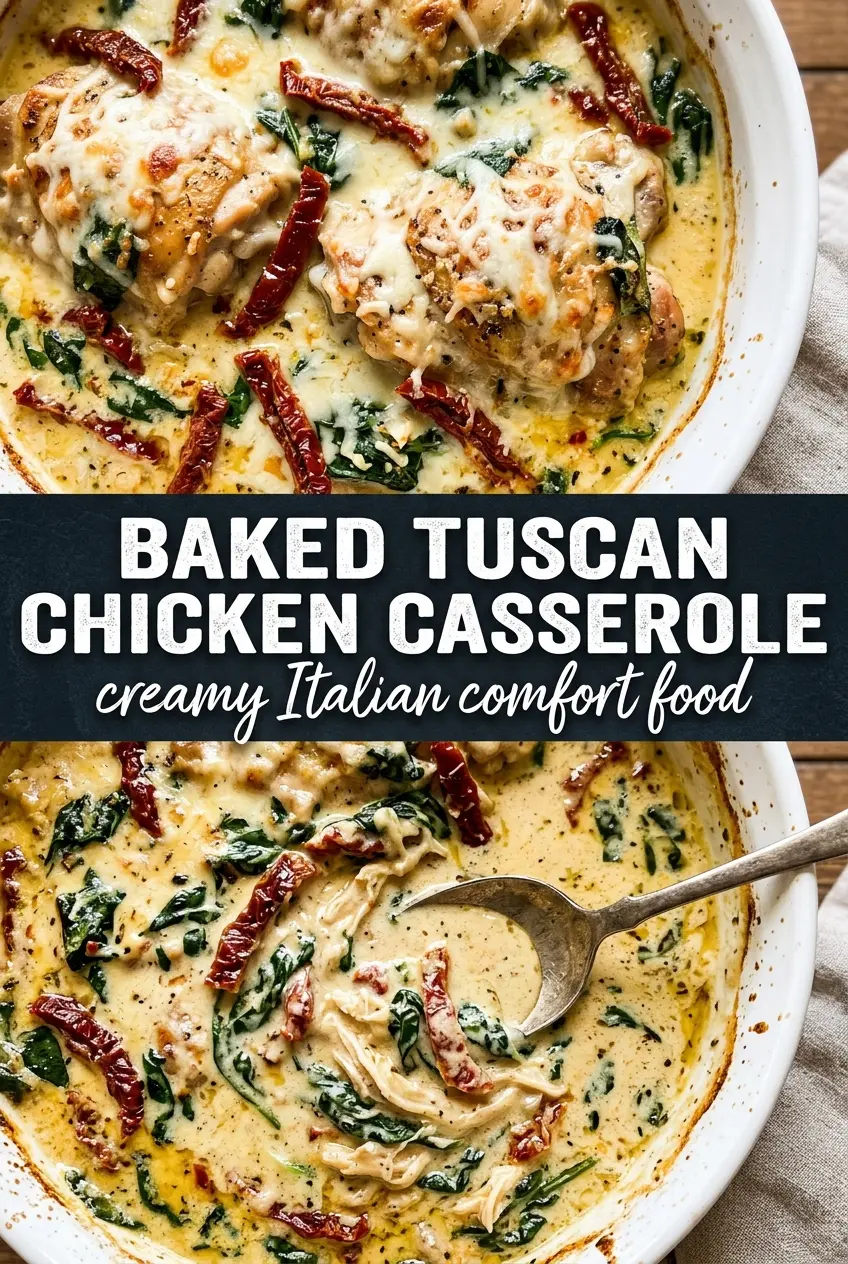
Baked Tuscan Chicken Casserole
Ingredients
Equipment
Method
- Preheat the oven to 400°F, then season the chicken thighs with salt, pepper, garlic powder, Italian seasoning, and smoked paprika.
- Set a large oven-safe skillet or braiser ready for searing so the chicken can go straight from stovetop to oven.
- Heat the olive oil in the oven-safe skillet over medium-high heat and place the chicken skin-side down in the pan.
- Sear for 6-7 minutes until deeply golden, then flip and sear for 3 more minutes, and remove the chicken to a plate.
- In the same pan, cook the minced garlic and sliced sun-dried tomatoes for 1 minute until fragrant and glossy.
- Pour in the chicken broth and deglaze, scraping up browned bits from the bottom of the pan.
- Stir in the heavy cream, Parmesan, Italian seasoning, and red pepper flakes until the sauce looks smooth and starts to thicken slightly.
- Return the chicken to the pan skin-side up and transfer to the oven, baking uncovered for 20-22 minutes until the chicken reaches 165°F with visible browning on top.
- Stir the baby spinach into the sauce until wilted and the sauce looks like a cohesive pool around the chicken.
- Garnish with fresh basil and serve while the sauce is bubbling.