Golden, crackly paprika Parmesan chicken earns its spot fast because the crust does the work that plain baked chicken usually can’t. The top turns deeply colored and crisp at the edges while the chicken underneath stays juicy, and the whole pan smells smoky, savory, and just a little garlicky the second it comes out of the oven.
The key is building two layers of flavor before the breading goes on. The chicken gets brushed with paprika oil first, which keeps the seasoning from tasting dusty and helps the Parmesan-panko topping cling in an even blanket. Baking hot at 425°F gives the crust enough heat to brown before the chicken dries out, so you end up with a proper crust instead of a pale, soft coating.
Below, I’ll show you the small details that matter most: how to get the topping to stick, what to watch for in the oven, and the one adjustment that keeps thicker chicken breasts from overcooking while the crust finishes.
The paprika oil and Parmesan crust baked up with such a great crunch, and the chicken stayed juicy even at the thickest part. I used panko like you said and the topping browned perfectly in 25 minutes.
Like this paprika Parmesan chicken? Save it to Pinterest for an easy baked dinner with a crisp, golden crust and smoky color.
The Crust Needs Heat Before the Chicken Can Dry Out
The biggest mistake with breaded baked chicken is starting in an oven that’s too low. The coating sits there absorbing heat slowly, which gives the chicken time to lose moisture before the Parmesan has a chance to brown. At 425°F, the panko and cheese crisp up fast enough to protect the meat underneath.
Boneless chicken breasts vary a lot in thickness, so the other thing that matters is even sizing. If one end is much thicker, pound it lightly or slice it into cutlets so the whole piece finishes at the same time. That’s what keeps the crust from burning before the center reaches 165°F.
- High heat: This is what drives the browning and gives the coating its crackly edges.
- Even thickness: This keeps the chicken juicy instead of leaving you with one dry end and one underdone end.
- Parchment-lined pan: It helps the crust release cleanly and keeps the bottom from sticking before it has a chance to crisp.
What the Paprika Oil and Parmesan Are Each Doing Here
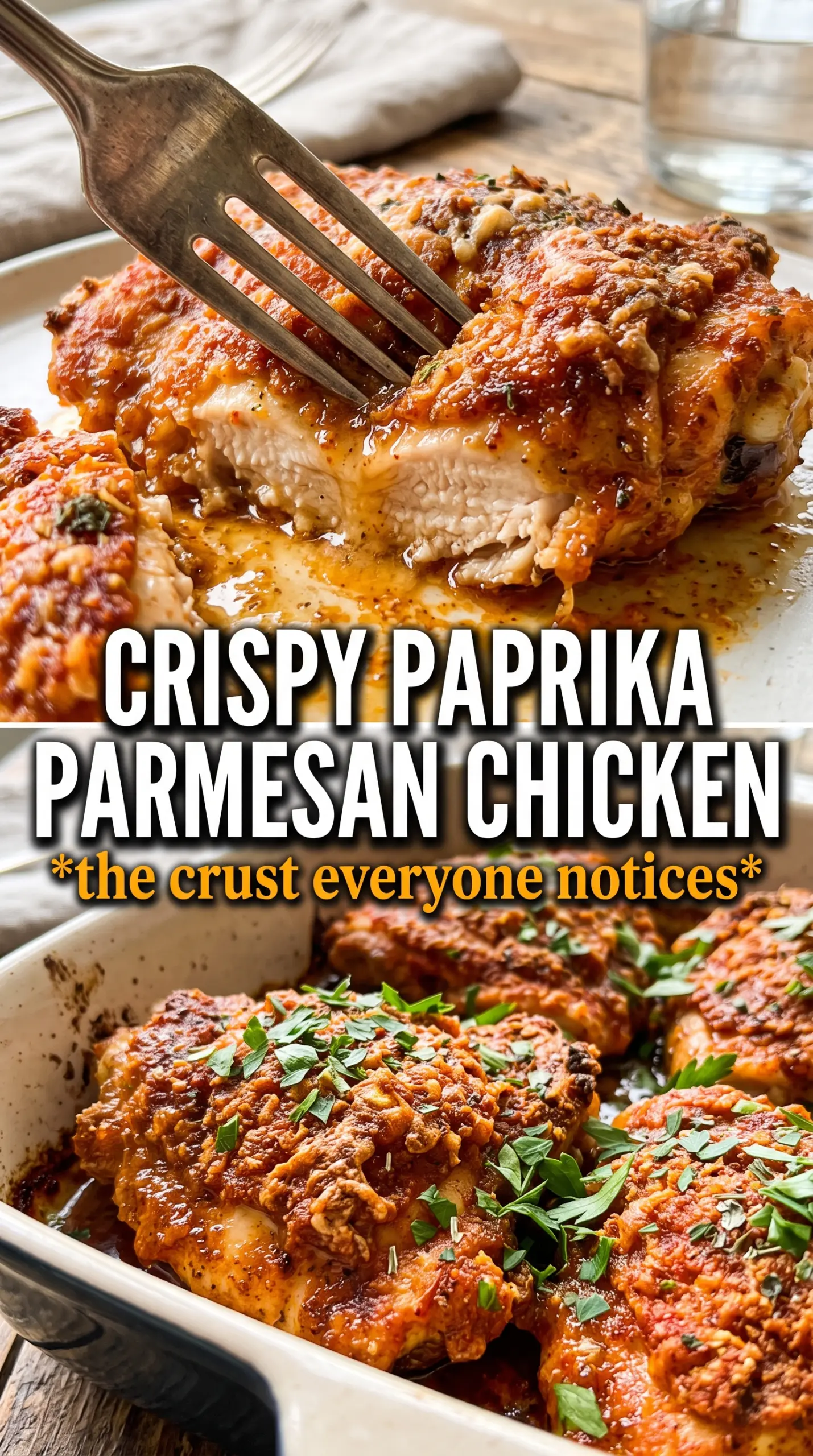
- Smoked paprika: This gives the chicken its deep orange-red color and that warm, smoky note that makes the crust taste more complex than plain seasoned bread crumbs. There isn’t a true substitute for the smoke, but regular paprika will still give you color if that’s all you have.
- Freshly grated Parmesan: The fresh stuff melts and browns better than the shelf-stable kind, and it gives the crust a sharper, nuttier finish. Pre-grated Parmesan can work, but it usually makes a drier, less cohesive topping.
- Panko breadcrumbs: Panko keeps the crust light and crisp instead of dense. If you only have regular breadcrumbs, the coating will be finer and a little less shattery, but it still works.
- Olive oil: This is what carries the spices and helps the topping adhere. Brush it on generously; if the chicken looks dry before the breading goes on, the crust will patch and fall off in spots.
Building the Coat So It Bakes Up Crisp, Not Patchy
Mix the paprika oil first
Stir the olive oil with both paprikas, garlic powder, onion powder, salt, and pepper until the mixture looks evenly rusty red. You want the spices fully dispersed before they hit the chicken, or you’ll get pockets of bitter powder and uneven color. Brush it on both sides, but be generous on the top side where the crust will sit.
Press the topping, don’t scatter it
Combine the Parmesan and panko in a shallow bowl, then press each chicken breast firmly into the mixture. A light sprinkle leaves bare spots and doesn’t brown evenly. Pressing helps the cheese melt into the crumbs so the topping forms a tight layer instead of sliding off halfway through baking.
Watch the color, then check the temperature
The chicken is ready when the crust is golden-red, the edges look deeply toasted, and the center of the thickest breast reaches 165°F. If the topping is browning too fast before the chicken is cooked through, lay a loose piece of foil over the pan for the last few minutes. Don’t cover it tightly or you’ll trap steam and soften the crust.
Make it gluten-free
Swap the panko for a gluten-free panko-style breadcrumb. You still get that light, crisp top, and the rest of the recipe stays the same. Regular gluten-free crumbs work too, but they usually brown a little less dramatically.
Use chicken thighs instead of breasts
Boneless skinless thighs bring more richness and stay juicy even if they cook a minute longer. The crust won’t look quite as tall because the pieces are flatter, but the flavor is excellent. Start checking them a little earlier if they’re on the smaller side.
Go dairy-free
Use a dairy-free Parmesan-style shred or a finely ground dairy-free crumb topping. You’ll lose some of the sharp, salty bite that real Parmesan brings, so season the topping more assertively with salt and garlic powder. The crust will still brown well if the topping is fine enough to cling.
Make it a little lighter
Use only enough olive oil to coat the chicken in a thin, even layer and reduce the Parmesan slightly if you want a less rich finish. The crust will still crisp, though it won’t have the same deeply savory edge. Serve it with extra lemon to brighten the whole plate.
Storage and Reheating
- Refrigerator: Store leftovers in an airtight container for up to 3 days. The crust will soften a bit in the fridge, which is normal.
- Freezer: You can freeze it, but the coating loses some crunch. Wrap the cooled chicken tightly and freeze for up to 2 months for best quality.
- Reheating: Reheat on a wire rack set over a baking sheet at 375°F until hot, about 10-15 minutes. The oven brings the crust back better than the microwave, which turns the topping soggy.
Answers to the Questions Worth Asking
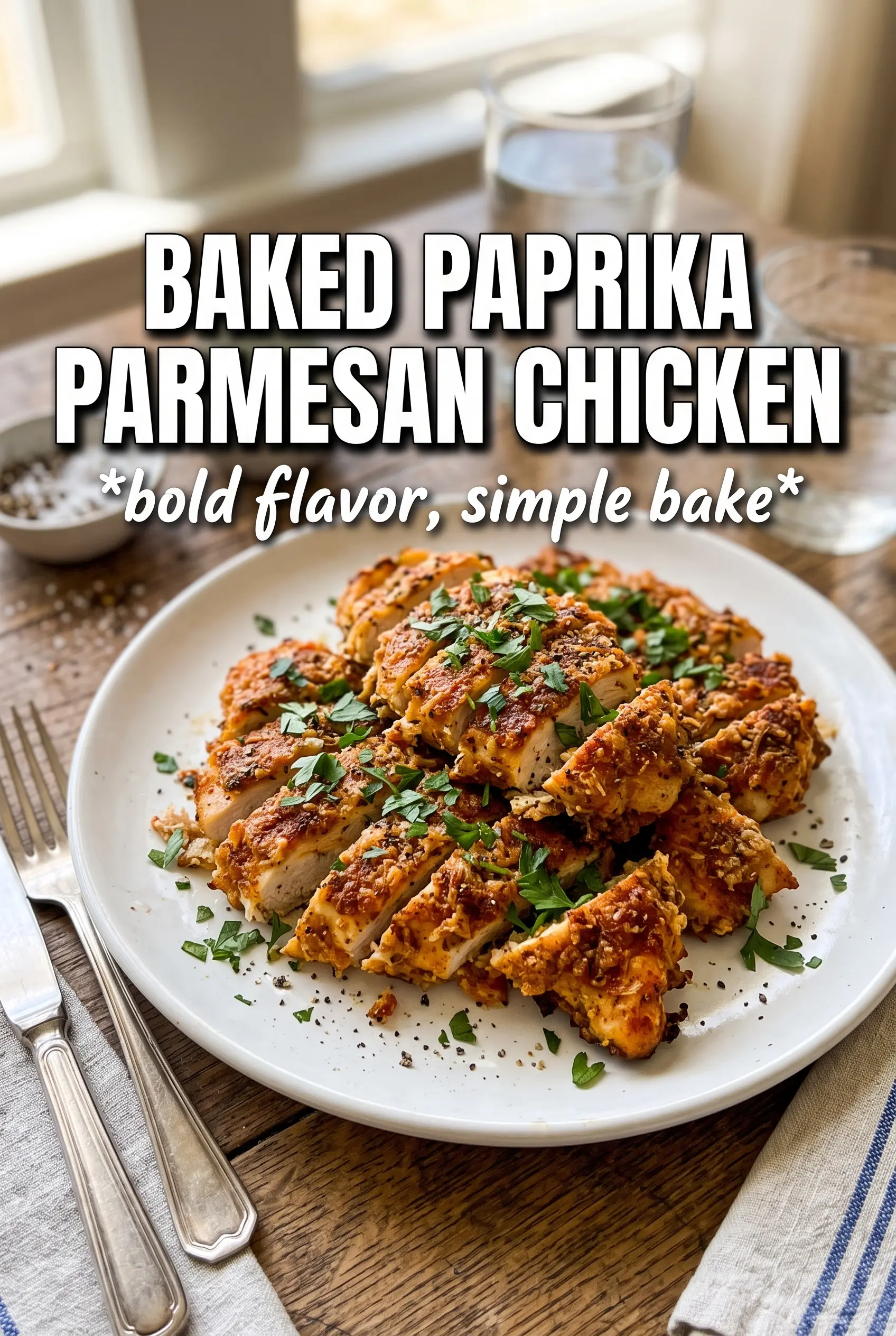
Baked Paprika Parmesan Chicken
Ingredients
Equipment
Method
- Preheat the oven to 425°F and line a sheet pan with parchment for easy cleanup.
- Mix the olive oil with smoked paprika, sweet paprika, garlic powder, onion powder, salt, and pepper until evenly colored.
- Brush the paprika oil generously over both sides of each chicken breast so the surface is glossy.
- Combine the Parmesan and panko, then press firmly onto the oiled chicken to create an even crust over the tops.
- Bake for 22-25 minutes at 425°F until the crust is golden-red and crackled, and the internal temperature reaches 165°F.
- Garnish with fresh parsley and serve with lemon wedges for bright, citrus contrast.