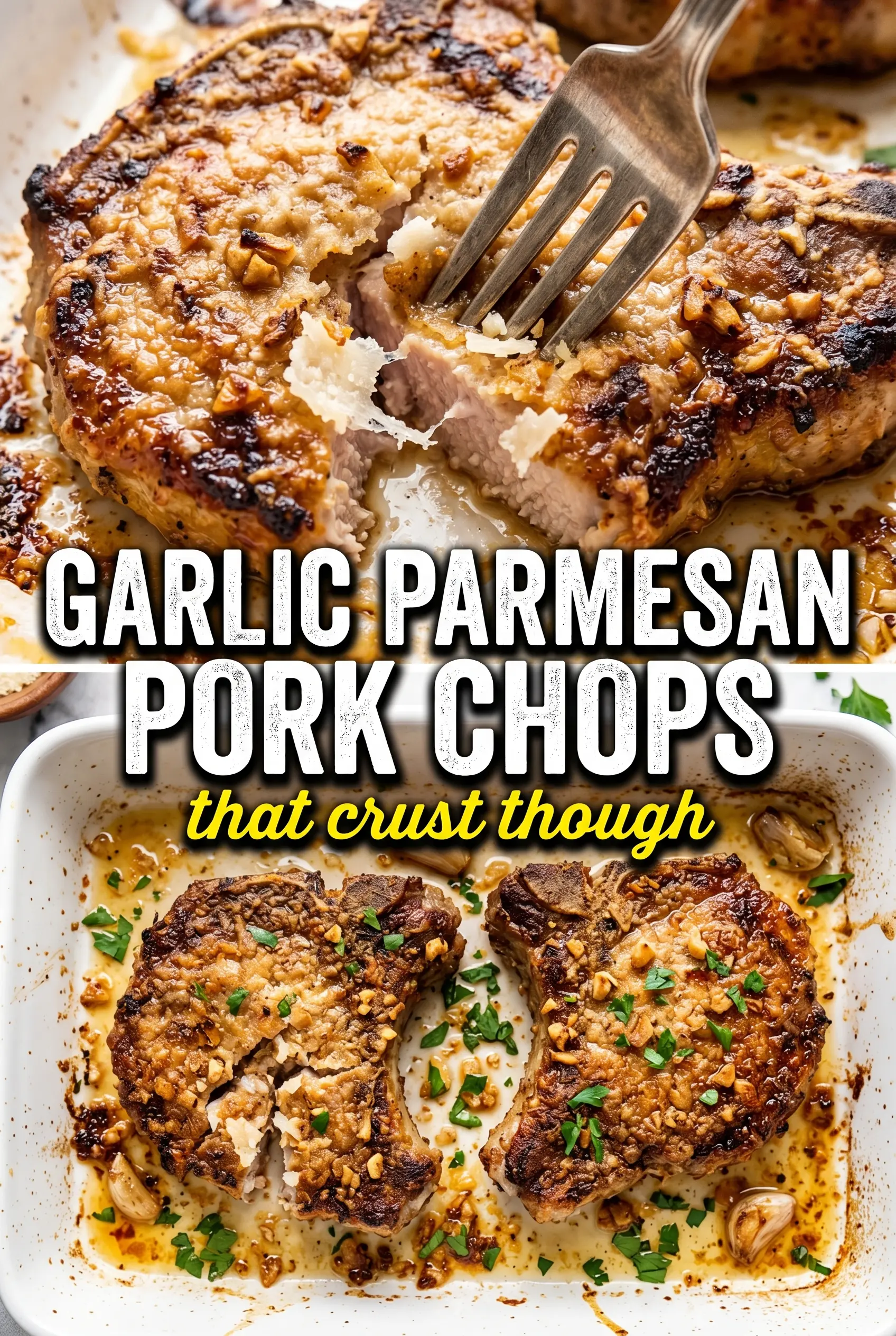
Pork chops baked under a thick garlic parmesan crust come out with the kind of contrast that keeps this dinner in regular rotation: crisp and deeply browned on the outside, juicy in the center, and savory enough that you don’t need much else on the plate. The crust turns into a golden shell instead of a pale breading, and the parmesan brings a nutty, salty edge that tastes a lot more intentional than a standard baked chop.
The trick is starting with a thin layer of mayonnaise and Dijon mustard. That base helps the coating stick, keeps the pork from drying out in the oven, and gives the crust a little extra richness without tasting like mayo once it bakes. Panko matters here too because it stays lighter and crisper than regular breadcrumbs, especially at a hot oven temperature.
Below, I’ll walk through the part that matters most: getting the crust to cling well enough to turn deeply golden instead of sliding off the meat. I’ve also included a few swaps and storage notes, because this is one of those recipes that’s easy to make your own once you know the structure.
The crust browned up beautifully and stayed on the pork chops instead of falling off when I sliced them. My husband kept saying they tasted like something from a restaurant.
Like this baked garlic parmesan pork chop crust? Save it to Pinterest for the nights when you want a fast oven dinner with a browned, savory topping.
The Reason This Crust Stays Put Instead of Sliding Off
The common mistake with baked pork chops is piling on a dry breadcrumb mixture and hoping it behaves like a coating. It usually doesn’t. The surface dries out before the crust has a chance to brown, and you end up with loose crumbs in the pan instead of a real crust on the meat.
This version uses a thin mayo-Dijon layer as the adhesive and flavor base. That matters because parmesan and panko need something tacky to hold them in place, and the fat in the mayonnaise helps the topping brown without burning at 425°F. Press the mixture on firmly with your hands so it actually bonds to the chop, especially around the edges where coatings love to lift first.
- Boneless pork chops cook evenly and make it easier to get a crisp crust on both sides.
- Mayonnaise keeps the meat moist and helps the coating brown instead of drying into a dusty layer.
- Dijon adds a little sharpness that cuts through the richness of the parmesan.
- Panko gives you a lighter crunch than standard breadcrumbs, which matters in a short high-heat bake.
What Each Ingredient Is Actually Doing in These Pork Chops

- Pork chops — A 1-inch boneless chop is thick enough to stay juicy through the bake but thin enough to cook before the crust overbrowns. Thinner chops can dry out fast, and much thicker ones need a longer oven time that risks scorching the topping.
- Mayonnaise — This is the moisture barrier and the glue. You can swap in plain Greek yogurt if you want a tangier, lighter coating, but it won’t brown quite as evenly and it can look a little less rich.
- Dijon mustard — Dijon disappears into the background once baked, but it keeps the crust from tasting flat. Yellow mustard works in a pinch, though the flavor is sharper and less rounded.
- Parmesan — Use finely grated parmesan so it melts into the panko and forms a cohesive crust. Pre-shredded parmesan usually has anti-caking agents and doesn’t fuse as well.
- Panko breadcrumbs — These bring the crispness. Regular breadcrumbs will work, but the crust will be denser and less airy.
- Garlic and Italian seasoning — Fresh garlic gives the crust its bite, while Italian seasoning fills in the herb note. If your garlic is very wet, pat it dry first so the coating doesn’t get gummy.
Pressing, Baking, and Knowing When the Pork Is Done
Building the Mayo Base
Stir the mayonnaise and Dijon together until they’re smooth, then spread a thin layer over both sides of each pork chop. You want coverage, not a thick coating that drips or puddles. If the layer is too heavy, the crust can slide during baking and the edges will bake up greasy instead of crisp.
Making the Crust Mixture
Mix the parmesan, panko, garlic, Italian seasoning, garlic powder, salt, and pepper in a bowl until the garlic is spread evenly through the crumbs. The parmesan should look well distributed, not clumped in one corner. Press the mixture onto the chops firmly, using your palm to help it stick, and don’t be shy about pressing the edges too.
Baking at High Heat
Place the chops on a parchment-lined baking sheet and bake at 425°F until the crust is deep golden and the pork reaches 145°F in the center. The high heat is what gives you the browned top in a short window, but it also means the line between golden and too dark is narrow. Start checking near the 18-minute mark if your chops are on the thinner side.
Resting Before You Slice
Let the pork rest for 3 minutes before serving. That short rest keeps the juices from spilling out the second you cut in. If you slice too early, the meat will look drier than it really is, even if you nailed the cooking time.
How to Adjust These Pork Chops Without Losing the Crunch
Dairy-Free Version
Use a dairy-free parmesan-style topping or nutritional yeast mixed with extra panko and a little more garlic powder. You won’t get the same salty, nutty melt from real parmesan, but you’ll still get a crisp, savory crust that holds together in the oven.
Gluten-Free Crunch
Swap the panko for gluten-free breadcrumbs or crushed gluten-free crackers. The crust will still brown well, though it may set a little tighter than panko and won’t have quite the same airy crunch.
Using Bone-In Pork Chops
Bone-in chops bring a little more flavor, but they take longer and cook less evenly. If you use them, keep the crust thin and watch the internal temperature closely so the topping doesn’t overdarken before the center is done.
Storage and Reheating
- Refrigerator: Store leftovers in an airtight container for up to 3 days. The crust softens, but the flavor holds well.
- Freezer: Freezing works, though the crust won’t stay as crisp. Wrap tightly and freeze for up to 2 months, then thaw in the refrigerator before reheating.
- Reheating: Warm in a 350°F oven until heated through, about 10 to 15 minutes. Skip the microwave if you can, because it softens the topping and can dry out the pork edges at the same time.
Questions I Get Asked About This Recipe
Baked Garlic Parmesan Pork Chops
Ingredients
Equipment
Method
- Preheat the oven to 425°F and line a sheet pan with parchment to prevent sticking.
- Spread mayonnaise and Dijon over both sides of each pork chop.
- Combine parmesan, panko, minced garlic, Italian seasoning, garlic powder, salt, and pepper until evenly mixed.
- Press the parmesan mixture firmly onto both sides of each pork chop so the crust clings.
- Bake for 18–22 minutes at 425°F until the crust is deep golden and the pork reaches 145°F internally.
- Rest the pork chops for 3 minutes, then garnish with fresh parsley and serve with lemon wedges.