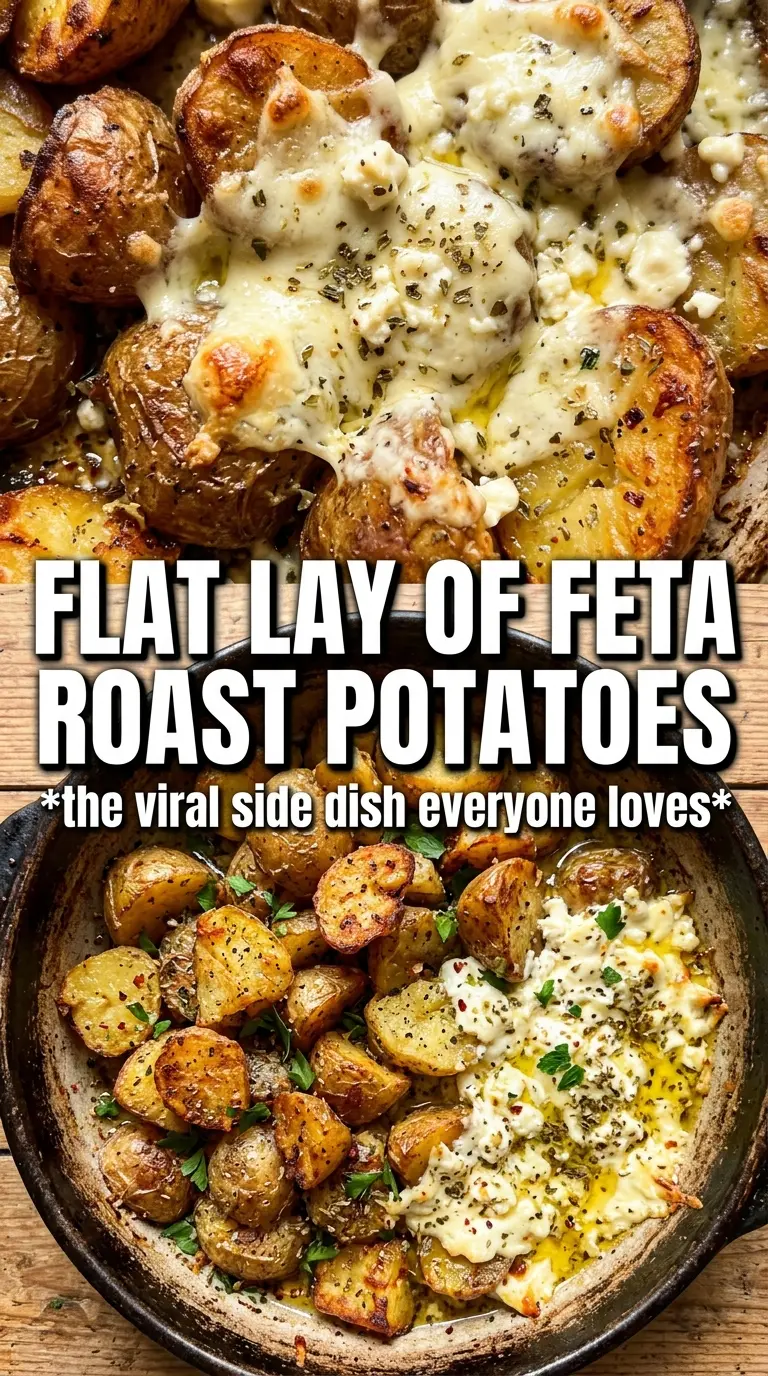
Golden potatoes with a creamy, salty feta center are the kind of side dish that disappears fast once it hits the table. The potatoes roast until the edges turn crisp and bronzed, the tomatoes slump into little bursts of sweetness, and the feta softens just enough to coat everything without turning into a heavy sauce. It’s simple food, but the contrast of textures makes every bite feel complete.
What makes this version work is the order of the roast. The feta goes right in the middle of the dish so it warms slowly while the potatoes get direct heat and color around the edges. The olive oil, oregano, thyme, and garlic build flavor in the pan as they roast, and the lemon at the end keeps the whole dish from tasting flat or overly rich. If you’ve ever had roasted feta turn dry or potatoes that stayed pale, this method fixes both problems.
Below, I’ve included the small details that matter most here: how to keep the potatoes from steaming, when the feta is soft enough to break apart, and the swaps that still give you a good result when you’re working with what’s already in the kitchen.
The potatoes got those crisp little edges I was hoping for, and the feta melted into the tomatoes just enough to coat everything without getting greasy. The lemon at the end made it taste bright instead of heavy.
Like these baked feta roast potatoes? Save them to Pinterest for the nights when you want a crisp, lemony side dish with almost no cleanup.
The Trick That Keeps the Potatoes Crisp Instead of Soggy
The biggest mistake with roast potatoes is crowding them into a pan that’s too tight. When the potatoes sit on top of one another, they steam before they brown, and you end up with soft edges instead of those deep golden corners that make this dish worth repeating. A roomy baking dish matters here because the hot air needs space to move around the potatoes and the moisture from the tomatoes has somewhere to escape.
The feta changes the game too. It softens in the center and picks up flavor from the oil, garlic, and herbs, but it doesn’t need to fully melt. If it goes in a low-sided pan with the potatoes spread around it, it warms without disappearing into the dish. That gives you creamy pockets of feta instead of a loose, oily sauce.
What Each Ingredient Is Actually Doing in This Dish
- Baby potatoes — These roast evenly and give you crisp edges without a long parboil. Halving them exposes more surface area, which is what helps them brown. If you only have larger potatoes, cut them into 1-inch chunks so they finish in the same window as the feta.
- Block feta — Use a block, not crumbled feta. The block holds together long enough to soften properly, then breaks into creamy pieces when you toss it at the end. Crumbled feta dries out faster and disappears into the pan.
- Cherry tomatoes — They bring sweetness and juiciness, and their juices mingle with the feta and oil to make the pan feel cohesive. Grape tomatoes work too, but choose the ripest ones you can find because bland tomatoes make the dish taste flat.
- Olive oil — This is part seasoning, part roasting medium. It helps the potatoes color, carries the herbs, and keeps the feta from drying out. A good olive oil matters here because you taste it in the finished dish.
- Lemon zest and juice — The juice cuts through the salt and richness, and the zest gives the dish a fresh top note right before serving. Don’t skip the zest if you can help it; it’s what makes the flavor taste lifted instead of just tangy.
Roasting the Pan So Everything Finishes at the Same Time
Building the Pan
Set the feta in the center of the baking dish first, then scatter the potatoes, tomatoes, and smashed garlic around it. Keep the potatoes in a single layer as much as you can, with most cut sides facing down. That contact with the pan is what gives you browning. If the dish looks overloaded, move to a larger one rather than packing everything tighter.
Seasoning Before the Heat Hits
Drizzle the olive oil over everything, then add the oregano, thyme, red pepper flakes, salt, and pepper. The herbs need the oil to bloom a little as they roast, and the salt pulls a bit of moisture from the tomatoes so they soften into the pan. If the potatoes seem under-seasoned before they go in, they’ll taste bland after roasting too, because the feta only seasons the parts it touches.
Watching for the Right Roast
Roast at 400°F until the potatoes are golden and tender and the feta has softened on top, usually 40 to 45 minutes. The potatoes should give easily when pierced, and the cut sides should look deeply browned, not just pale gold. If the tomatoes are shrinking and blistering while the potatoes still need time, that’s fine; their juices help the whole dish finish with a little sauce in the bottom of the pan.
Finishing While It’s Hot
Squeeze the lemon juice over the dish as soon as it comes out of the oven, then add the zest and herbs. Break the feta into the potatoes and tomatoes while everything is still hot so the cheese coats the edges instead of staying in one block. If you wait too long, the potatoes cool down and the feta won’t spread as easily.
Three Small Changes That Still Give You a Good Pan
Make It Dairy-Free
Use a dairy-free feta-style block that can hold its shape in the oven. The result won’t be quite as salty or creamy as traditional feta, so add a little extra lemon and a pinch more salt at the end to wake it up. Soft vegan cheeses that melt too quickly won’t give you the same finish.
Swap in Other Potatoes
Yukon Golds work well if you cut them into small chunks, and they turn a little more buttery than baby potatoes. Waxy potatoes keep their shape best, while russets can go fluffy and a bit dry at the edges if they roast too long. Keep the pieces similar in size so the pan finishes evenly.
Add More Vegetables
Red onion wedges, zucchini, or bell pepper chunks can join the pan, but add watery vegetables with care because they’ll soften the roast faster. Keep the total amount of vegetables modest so the potatoes still get direct heat. If the dish gets crowded, it turns juicy instead of crisp.
Storage and Reheating
- Refrigerator: Store leftovers in an airtight container for up to 4 days. The potatoes soften a bit, but the flavor holds well.
- Freezer: I don’t recommend freezing this dish. The potatoes turn grainy and the feta loses its creamy texture after thawing.
- Reheating: Spread leftovers on a sheet pan and warm at 400°F until the potatoes are hot and the edges start to crisp again. The microwave works in a pinch, but it softens everything and mutes the roasted flavor.
Answers to the Questions Worth Asking

Baked Feta Roast Potatoes
Ingredients
Equipment
Method
- Preheat your oven to 400°F and place the feta block in the center of a baking dish. Keep the dish ready so everything can roast at once.
- Arrange the halved baby potatoes, cherry tomatoes, and smashed garlic around the feta. Distribute them evenly so the potatoes brown on the edges.
- Drizzle the potatoes, tomatoes, garlic, and feta with olive oil. Sprinkle oregano, thyme, red pepper flakes, salt, and pepper over the top.
- Roast for 40-45 minutes at 400°F, until the potatoes are golden and tender and the feta is softened and golden. Look for deep browning on the potato cut sides.
- Squeeze the lemon juice over the hot roasted potatoes and feta. The juices should sizzle slightly upon contact.
- Scatter the lemon zest and fresh basil or parsley over everything. Use the herbs as a bright final layer.
- Break the feta into the potatoes and toss everything together. Mix until the feta turns creamy and coats the potatoes.