Baked Caesar chicken lands in that sweet spot between weeknight simple and dinner-party worthy. The chicken comes out juicy, but the part people remember is the top: a golden Parmesan crust with just enough crunch to crack under your fork, plus that familiar Caesar tang underneath. It tastes like the best part of a chicken Caesar salad turned into a proper main dish.
What makes this version work is the short marinade. Caesar dressing brings salt, fat, acid, and seasoning in one move, and a 20-minute rest is enough to season the chicken without turning the texture soft or slippery. The panko and Parmesan topping gives the bake its structure, so you get a crisp lid instead of a soggy blanket of cheese.
Below, I’ve included the small details that keep the crust from going pale and the chicken from drying out, plus a few easy ways to adapt it if you need a gluten-free version or want to change up the serving style.
The marinade kept the chicken tender and the Parmesan-panko top turned crisp and golden instead of soggy. I served it with romaine and my husband went back for seconds before I even sat down.
Love the golden Parmesan crust on this baked Caesar chicken? Save it to Pinterest for the nights when you want a fast chicken dinner that still feels special.
The Reason the Chicken Stays Juicy Under That Caesar Crust
The biggest mistake with baked chicken like this is piling on a thick topping and leaving the chicken to cook past the point where it’s still tender. This recipe avoids that by using a short marinade and a hot oven. The dressing seasons the meat fast, and the panko-Parmesan layer protects the top while the chicken finishes underneath.
Another thing that matters here is the thickness of the breasts. If one side is much thicker than the other, the thin end dries out before the center is done. Pounding them to an even thickness or buying evenly sized pieces gives you a better chance at a juicy middle and a properly browned crust.
- Marinade time — Twenty minutes is enough. Much longer and the acid in the dressing starts to work against the texture instead of helping it.
- Oven temperature — 400°F gives the topping enough heat to turn golden before the chicken overcooks.
- Resting after baking — Let the chicken sit for a few minutes before slicing so the juices stay in the meat instead of running onto the pan.
What the Caesar Dressing and Parmesan Are Each Doing Here
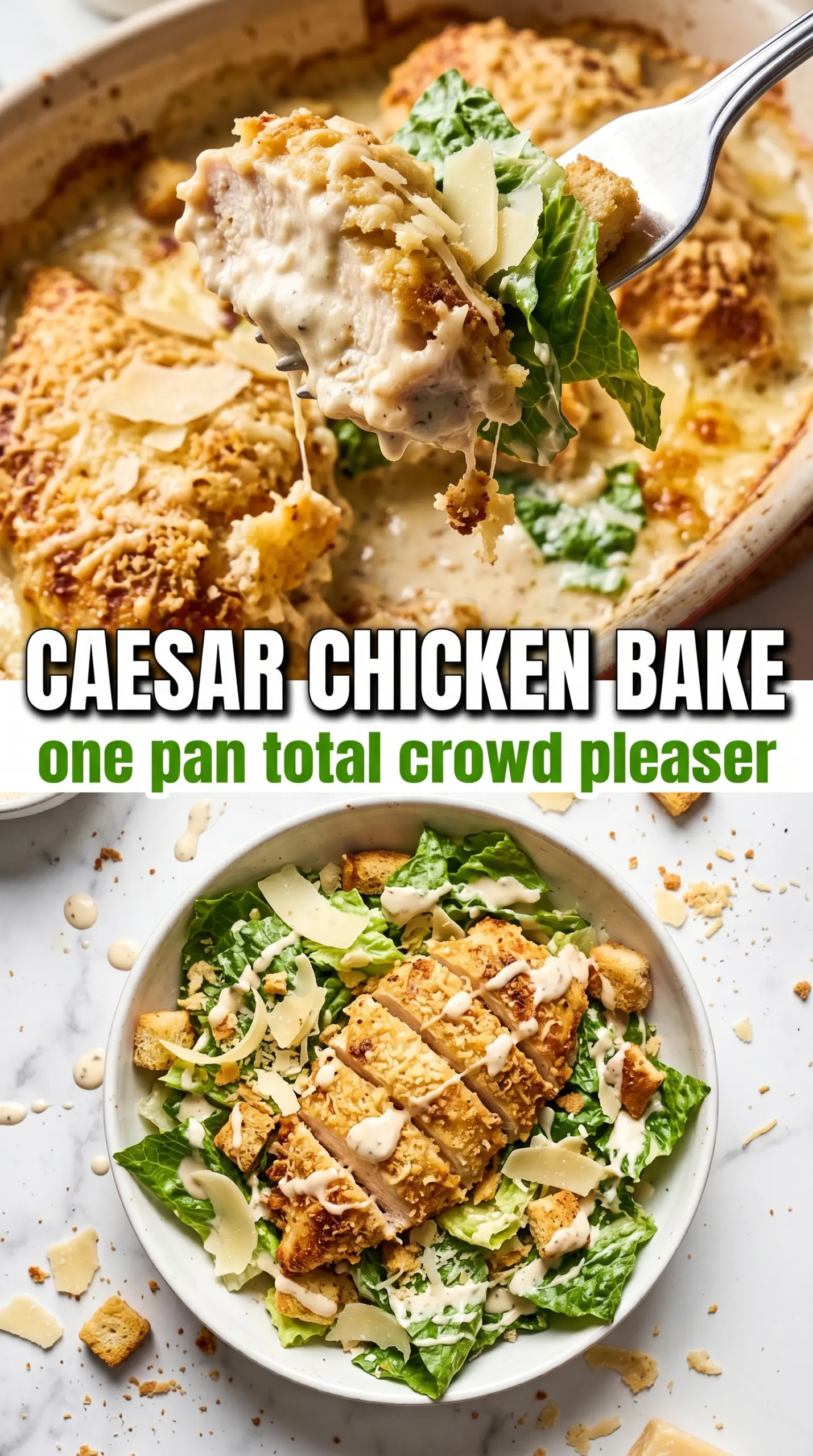
- Caesar dressing — This is the backbone of the marinade. It already carries garlic, anchovy, lemon, oil, and seasoning, so it does more work than plain oil and spices ever could. Store-bought dressing is fine here; just pick one you like the taste of, because its flavor comes through clearly.
- Freshly grated Parmesan — Fresh is worth using. Pre-shredded cheese can stay drier and less cohesive, while freshly grated Parmesan melts into the dressing and browns more cleanly on top.
- Panko breadcrumbs — Panko keeps the crust light and crisp. Regular breadcrumbs work in a pinch, but they bake up denser and less crackly.
- Lemon zest — This doesn’t make the dish taste lemony. It sharpens the Caesar flavor and keeps the baked chicken from tasting flat.
- Romaine and croutons for serving — They turn this from a baked chicken breast into a Caesar plate. The cool crunch against the warm chicken is part of what makes the dish feel finished.
Building the Crust Before the Chicken Goes Into the Oven
Mixing the Marinade
Stir the Caesar dressing, half of the Parmesan, garlic powder, and lemon zest together until the mixture looks thick and smooth. Coat the chicken in a shallow dish so every side gets covered, then let it sit for 20 minutes. If you leave it much longer, the surface can start to soften too much and the chicken won’t brown as well.
Pressing On the Topping
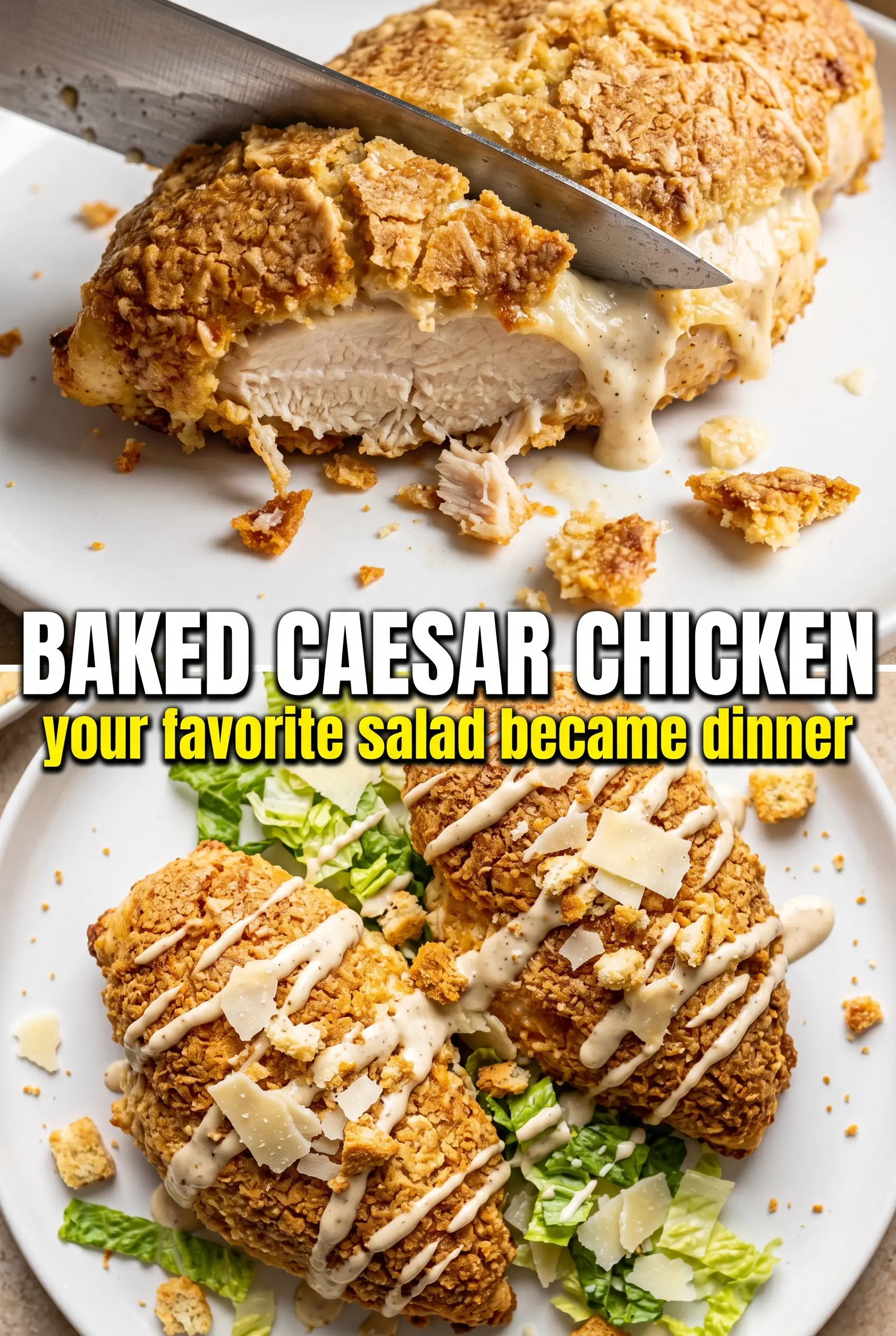
Mix the remaining Parmesan with the panko until the crumbs look lightly moistened, then press that mixture firmly over the top of each breast. You want a real layer, not a dusting. If the topping feels dry and loose, it won’t turn into a crust; it will just slide off in the pan.
Baking Until the Top Turns Deep Gold
Slide the dish into a fully preheated 400°F oven and bake until the top is golden and the chicken reaches 165°F in the thickest part. The crust should look crisp at the edges and a little deeper brown in spots, not pale and sandy. If the topping browns too fast before the chicken is done, lay a loose piece of foil over the top for the last few minutes.
Finishing With the Salad Elements
Serve the chicken with chopped romaine, croutons, a little extra dressing, and shaved Parmesan on top. The cool lettuce and crunchy croutons give you the Caesar salad feel without making the crust soggy. Slice the chicken only after it has rested briefly so the juices stay put.
Three Smart Ways to Change Up Baked Caesar Chicken Without Losing the Point
Gluten-Free Version
Swap the panko for gluten-free breadcrumbs or crushed gluten-free crackers. You still get a crisp top, but the texture may be a little finer and less airy than classic panko.
Dairy-Free Version
Use a dairy-free Caesar dressing and swap the Parmesan for a dairy-free hard cheese alternative that grates well. The flavor will be a little less sharp and nutty, but the chicken will still bake up savory and well seasoned.
Make It More Like a Salad Plate
Serve the chicken over chopped romaine with extra croutons and a lighter drizzle of dressing instead of plating it with a heavier side. This keeps the Caesar theme front and center and stretches the meal without changing the recipe.
Storage and Reheating
- Refrigerator: Store leftovers in an airtight container for up to 3 days. The crust softens a bit, but the chicken stays flavorful.
- Freezer: It freezes well, but the topping loses some crunch. Wrap portions tightly and freeze for up to 2 months.
- Reheating: Reheat in a 350°F oven until warmed through. The microwave will make the crust rubbery, so use it only if you don’t mind losing the crisp top.
Answers to the Questions Worth Asking
Baked Caesar Chicken
Ingredients
Equipment
Method
- Mix Caesar dressing with 1/2 cup Parmesan, garlic powder, and lemon zest until evenly combined. Add salt and pepper to taste and whisk until fragrant.
- Place chicken breasts in the bowl and coat them in the Caesar mixture. Cover and marinate for 20 minutes, letting the surface look glossy and lightly thickened.
- Preheat the oven to 400°F and grease a baking dish. The oven should be fully hot before the chicken goes in.
- Transfer the marinated chicken to the baking dish, spacing pieces evenly. Use a gentle shake to let excess marinade drip back into the bowl.
- Stir the remaining 1/4 cup Parmesan into the panko breadcrumbs. Press the panko-Parmesan mixture firmly over the top of each breast so it adheres.
- Bake at 400°F for 22-25 minutes until the crust turns golden and crackled. Cook until the internal temperature reaches 165°F.
- Top the baked chicken with chopped romaine and sprinkle with croutons. Finish with a drizzle of extra Caesar dressing so everything looks lightly coated.
- Finish with shaved Parmesan. Serve immediately for the best crust texture and aroma.