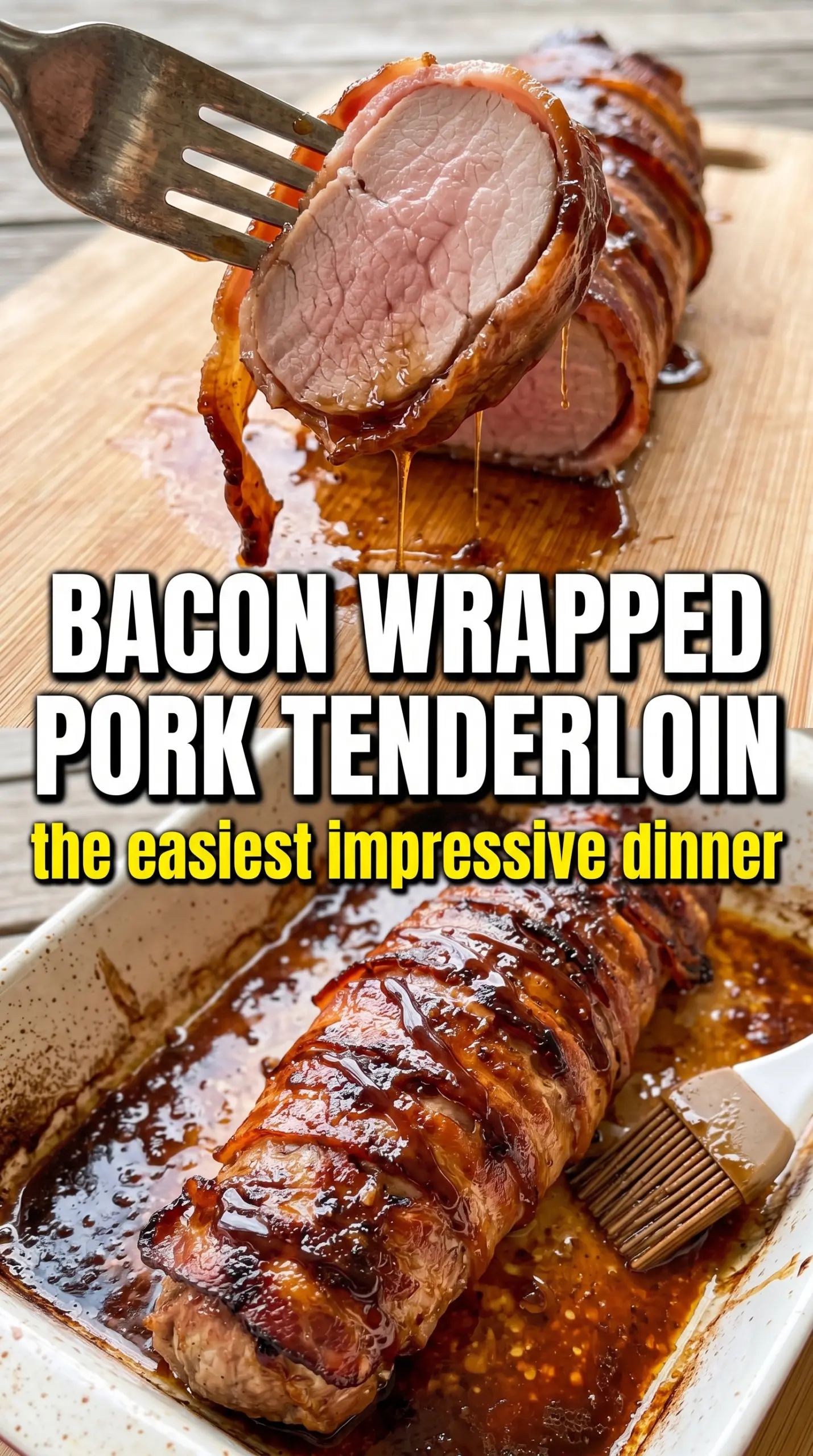
Pork tenderloin with crisp bacon and a caramelized brown sugar glaze earns its spot fast because it gives you that special-occasion look without needing a long list of steps or a fussy sauce on the side. The outside bakes up savory, sticky, and deeply browned, while the tenderloin underneath stays juicy and pink if you pull it at the right moment. Slice into it and you get that clean cross-section: crunchy bacon, glossy glaze, and meat that still has a little give.
The balance matters here. Dijon keeps the brown sugar from tasting flat, soy sauce brings salt and depth, and smoked paprika adds a subtle warmth that makes the glaze taste cooked, not just sweet. Wrapping the tenderloins tightly in bacon does more than add flavor; it helps protect the lean pork from drying out while the fat renders and crisps. The one thing I watch closely is the oven temperature. Too low and the bacon stays pale. Too high and the sugar can scorch before the pork is done.
Below you’ll find the timing that keeps the bacon crisp without overcooking the pork, plus a few smart swaps and storage notes for the leftovers.
The glaze turned sticky and the bacon got crisp all the way around without the pork drying out. I used the thermometer at 145°F and the slices came out juicy and picture-perfect.
Like this bacon-wrapped pork tenderloin with brown sugar glaze? Save it to Pinterest for the nights when you want crispy bacon, juicy pork, and an easy oven-roasted main dish.
The Trick to Crispy Bacon Without Dry Pork
The biggest mistake with bacon-wrapped tenderloin is treating the bacon and the pork like they finish on the same timeline without any thought. Bacon needs enough heat and time to render, but pork tenderloin dries out fast if it goes much past 145°F. That’s why this recipe works best at a hot oven temperature and with a tight wrap: the bacon gets a head start on crisping while the glaze caramelizes instead of puddling.
Another thing worth knowing is that the brown sugar goes on in two layers. The first coat helps the seasonings cling and starts building a glossy surface under the bacon. The second coat on top of the wrapped roast creates that lacquered finish, but it also means you need to watch for scorching in the last few minutes. If the bacon is browning too quickly before the pork is done, tent it loosely with foil rather than lowering the heat.
- Pork tenderloin — Use the real tenderloin here, not pork loin. Tenderloin is lean and cooks fast, which is what keeps the slices soft and juicy after the bacon finishes.
- Bacon — Standard-cut bacon works best. Thick-cut bacon often stays chewy by the time the pork reaches temperature, which is the opposite of what you want.
- Brown sugar — This does the caramelizing and gives you the sticky finish. Light or dark brown sugar both work; dark brown sugar brings a deeper molasses note.
- Dijon mustard — It adds tang and helps the glaze taste balanced instead of candy-sweet. Yellow mustard won’t give the same sharp edge.
- Soy sauce — A small amount adds salt and depth, and it helps the glaze read savory. If you need a gluten-free version, use tamari in the same amount.
- Smoked paprika — This is the quiet ingredient that makes the glaze taste like it belongs with bacon. Regular paprika will work, but you’ll lose that gentle smoky note.
What Each Ingredient Is Actually Doing in This Recipe
- Primary ingredient (the star) — Quality matters most. Choose the best you can find.
- Cooking medium (oil, butter, or broth) — This carries flavors and prevents dryness.
- Seasonings (salt, pepper, spices, herbs) — Layer flavors so nothing overpowers. Build depth gradually.
- Aromatics (garlic, onion, herbs) — Cook with fat to bloom flavors. Become the foundation.
- Supporting ingredients — Complement the main ingredient without overpowering it.
- Sauce or liquid (if applicable) — Brings flavors together. Balance richness with acid.
- Acid (lemon, vinegar, wine, or other) — Brightens and prevents flat-tasting results.
- Final finish (garnish, glaze, or sauce) — Prevents one-dimensional taste and adds visual appeal.
How to Build the Glaze and Finish the Roast Cleanly
Mixing the Glaze
Stir the brown sugar, Dijon, soy sauce, garlic powder, and smoked paprika together until the sugar starts to dissolve and the mixture looks glossy. It doesn’t need to be perfectly smooth, but the garlic powder should disappear into the glaze so it brushes on evenly. If it seems grainy, keep stirring for another 20 to 30 seconds. A smooth glaze clings better and doesn’t fall off the bacon in the pan.
Wrapping the Tenderloins
Season the pork first, then brush on half the glaze before the bacon goes on. That first layer gives the meat seasoning underneath the wrap, where you won’t get another chance to add flavor later. Wrap the bacon snugly and overlap the strips slightly so there aren’t gaps. If the bacon loosens while it bakes, the ends were probably placed too flat or the wrap wasn’t tight enough.
Roasting to the Right Temperature
Roast the tenderloins until the bacon looks crisp at the edges and the center of the pork hits 145°F on an instant-read thermometer. Pull them as soon as they reach temperature and let them rest for 5 minutes before slicing. That rest matters because the juices settle back into the meat instead of spilling onto the cutting board. If you wait for the pork to look fully firm in the oven, it’s already overcooked.
Slicing for the Best Presentation
Remove the toothpicks before slicing, then cut on a slight diagonal into thick pieces. You’ll get cleaner slices if you use a sharp knife and let the roast rest long enough for the bacon to set up. If the glaze seems a little sticky on the knife, wipe the blade between cuts. That keeps the slices neat and shows off the pink center.
What to Change When You Want a Different Finish
Gluten-Free Version
Swap the soy sauce for tamari or coconut aminos. Tamari gives the closest flavor match and keeps the glaze just as savory and sticky. Coconut aminos work too, but the glaze will taste a little sweeter and less salty, so you may want a pinch more salt on the pork.
Bacon-Wrapped Pork Loin Instead of Tenderloin
You can use pork loin, but it needs a longer roast and a more careful thermometer check because it’s thicker and less forgiving. The bacon will still crisp, but the pork won’t slice as softly, and the center can dry out if you cook it like tenderloin. Start checking well before the suggested time and pull it as soon as the center reaches 145°F.
Spicier Brown Sugar Glaze
Add a pinch of cayenne or a little crushed red pepper to the glaze if you want heat with the sweetness. It changes the finish from mellow and smoky to more pronounced and bold, which works well with the bacon. Keep the amount small; too much heat can drown out the caramelized brown sugar.
Storage and Reheating
- Refrigerator: Store leftovers in an airtight container for up to 3 days. The bacon softens a little, but the pork stays tender if it wasn’t overcooked.
- Freezer: It freezes better sliced than whole. Wrap tightly and freeze for up to 2 months; the bacon won’t be as crisp after thawing, but the flavor holds up.
- Reheating: Warm slices in a 300°F oven, covered loosely with foil, just until heated through. The common mistake is blasting it in the microwave, which toughens the pork and turns the bacon leathery.
Answers to the Questions Worth Asking
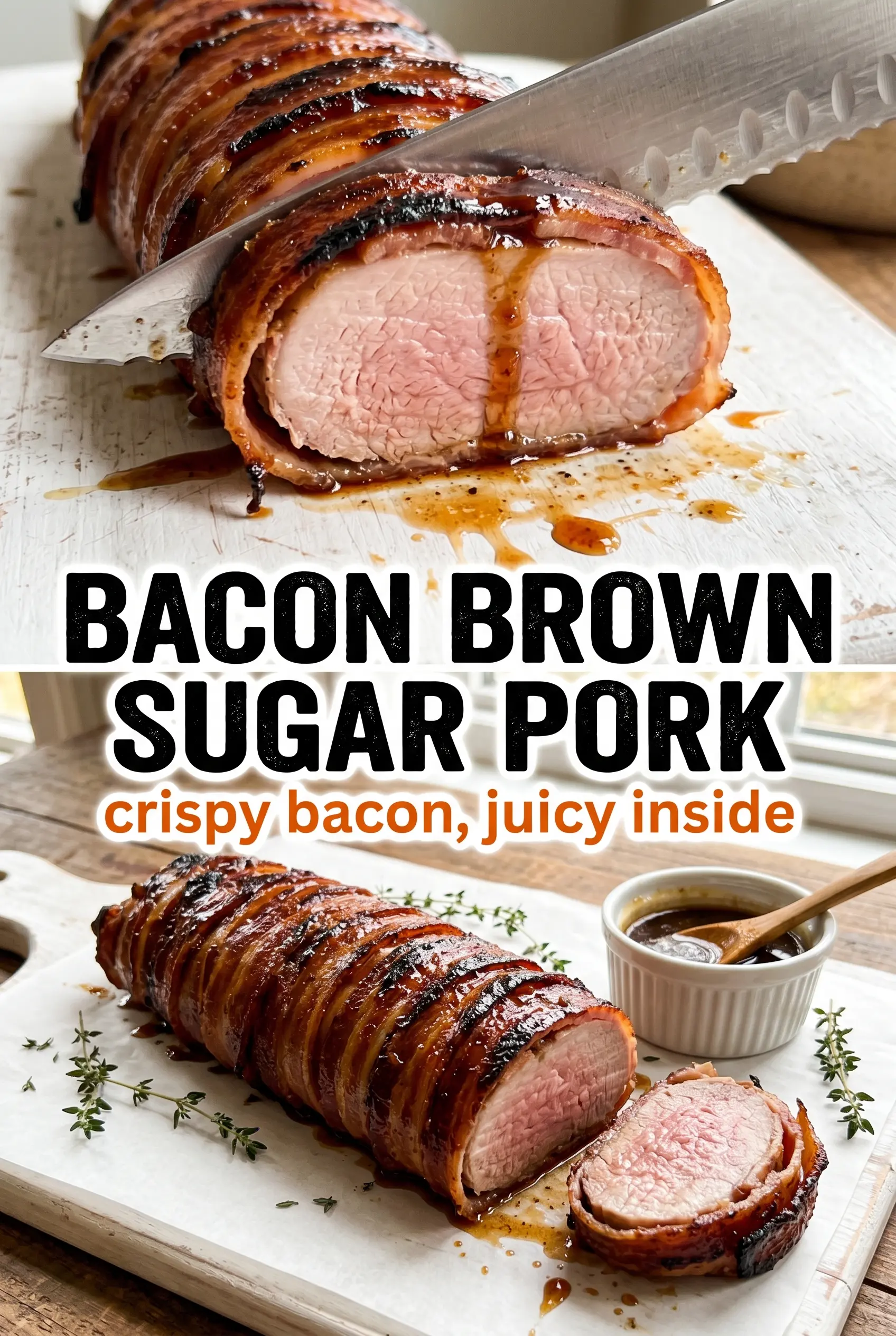
Bacon-Brown Sugar Pork Tenderloin
Ingredients
Equipment
Method
- Preheat the oven to 400°F. Set a roasting pan nearby so you can move the tenderloins in quickly.
- Season the pork tenderloins with salt and pepper. Pat lightly so the seasoning adheres to the surface.
- In a bowl, mix the brown sugar glaze ingredients and brush half over the pork. Use a light, even coat so it caramelizes during roasting.
- Wrap each tenderloin tightly in bacon strips, overlapping slightly, and secure the ends with toothpicks. Press gently to help the bacon adhere as it crisps.
- Place the tenderloins in the roasting pan and brush the remaining glaze over the bacon. Make sure glaze touches the top of the bacon for a sticky, caramelized finish.
- Roast for 25–30 minutes at 400°F until the bacon is crispy and the internal temperature reaches 145°F. The bacon should look browned and crisp around the edges.
- Rest the tenderloins for 5 minutes after roasting. This keeps the center juicy before slicing.
- Remove the toothpicks and slice the pork tenderloin. Serve hot with the caramelized glaze visible along the bacon.