Autumn chopped salad gets its appeal from contrast: crisp apple, juicy pear, salty feta, crunchy pecans, and sturdy greens that hold onto the dressing without collapsing. When it’s chopped small enough, every forkful lands with a little bit of everything, which is exactly why this salad disappears fast at the table.
The trick is starting with kale and Brussels sprouts that are cut finely enough to soften in the dressing, not sit there chewing like raw shrubbery. A quick massage with just a spoonful of the vinaigrette takes the edge off the kale and helps the leaves turn glossy and tender. The maple-Dijon dressing ties the whole bowl together without drowning the fruit or turning the nuts soggy.
Below, I’ve included the ingredient swaps that work best, plus the one storage detail that keeps this salad tasting fresh instead of limp. If you like salads that eat like a full meal, this one earns a permanent spot.
The kale softened just enough after the quick massage, and the maple dressing coated everything without making the apples watery. I brought it to a potluck and came home with an empty bowl.
Save this autumn chopped salad for a crisp, colorful side with maple-Dijon dressing and plenty of crunch.
The Real Trick to Keeping Kale Tender, Not Tough
Most chopped salads fail because the greens are left raw and dry, which means every bite feels aggressively leafy instead of balanced. Kale needs a little coaxing. That one-minute massage with a spoonful of dressing starts breaking down the fibers just enough to make the salad pleasant to eat, and it also helps the leaves hold flavor from the very first toss.
The Brussels sprouts matter for the same reason. Shredded thin, they blend into the salad instead of reading as bulky brassica chunks. If you skip the fine chop, the bowl turns awkward fast: the fruit and nuts are ready for a neat bite, but the greens lag behind.
What Each Ingredient Is Doing in the Bowl
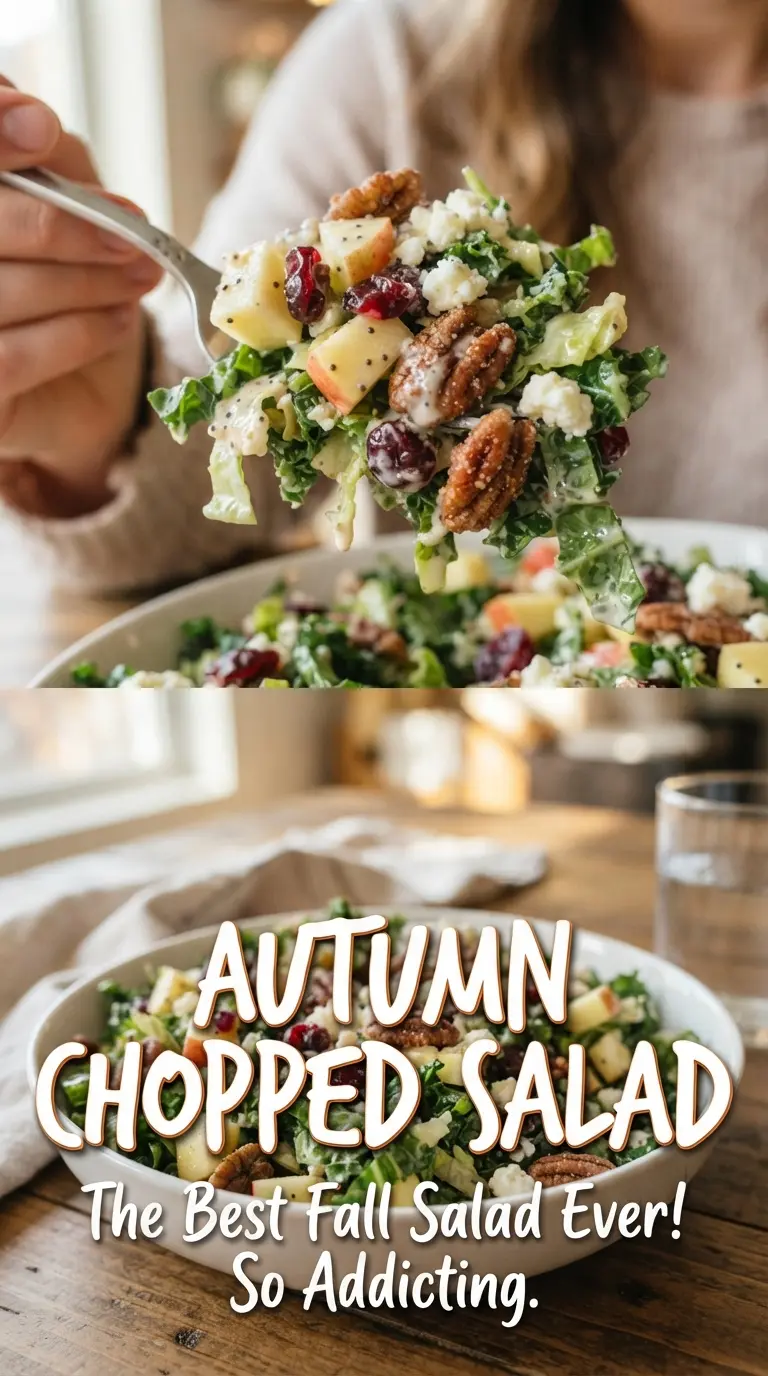
- Kale — This is the sturdy base that stays crisp after dressing. Curly or lacinato both work, but chop it finely and strip out the tough stems so the texture stays tender instead of chewy.
- Shredded Brussels sprouts — They add crunch and a mild cabbage-like sweetness. Bagged shredded sprouts save time here and work well, as long as they’re fresh and not browning at the edges.
- Apple and pear — These bring juiciness and a fresh, sweet snap. Use a firm apple like Honeycrisp or Fuji and a ripe-but-not-mushy pear so the fruit holds its shape after tossing.
- Candied pecans and pepitas — The pecans add sweetness and the pepitas bring a toasty, savory crunch. If you only have raw pepitas, toast them in a dry skillet first so they don’t taste flat.
- Feta — This gives the salad its salty edge and keeps the fruit from making the bowl taste one-note. Goat cheese works in a pinch, but feta holds its shape better and gives sharper contrast.
- Maple, Dijon, and apple cider vinegar — This dressing is doing the balancing work. Maple softens the vinegar, Dijon helps the dressing emulsify, and the vinegar cuts through the sweetness of the fruit and nuts.
Building the Salad So Nothing Turns Watery
Whisk the Dressing Until It Looks Unified
Start by whisking the olive oil, vinegar, maple syrup, Dijon, salt, and pepper until the mixture looks smooth and slightly thickened. If it separates immediately, keep whisking; Dijon is what pulls the oil and vinegar together here. A broken dressing won’t ruin the salad, but it will cling unevenly and leave the kale tasting bare in spots.
Massage the Kale Before Anything Else
Toss the chopped kale with just 1 tablespoon of dressing and work it with your hands for about a minute. You’re looking for leaves that darken, soften, and take on a lightly glossy look. If the kale still feels stiff and squeaky, keep going another 15 to 20 seconds rather than dumping on more dressing too early.
Layer the Crunchy, Sweet, and Salty Pieces Last
Add the Brussels sprouts, apple, pear, cranberries, pecans, feta, and pepitas after the kale has already relaxed. This keeps the fruit from releasing too much juice while you’re working the greens. Pour on the remaining dressing and toss just until everything looks coated; overmixing bruises the fruit and breaks up the feta.
Make it dairy-free
Leave out the feta and add a few extra pepitas or a handful of roasted sunflower seeds. You’ll lose the salty creaminess, so add a pinch more salt to the dressing to keep the salad from tasting too sweet.
Make it vegetarian and gluten-free without changing a thing
This salad already lands naturally in both camps, so the only real job is checking your Dijon and candied pecans if they came from the store. Some candied nut blends use honey or spice coatings that can throw off the balance, so keep the mix simple if you want the cleanest flavor.
Swap the fruit for what’s firm and in season
Pomegranate seeds, sliced grapes, or diced persimmons can stand in for the apple and pear. The key is using fruit that stays crisp after tossing; anything soft or overly juicy will sink into the greens and make the bowl look soggy fast.
Storage and Reheating
- Refrigerator: Store dressed salad for up to 2 hours if you want the best texture. After that, the apples start softening and the feta can bleed into the greens.
- Freezer: Don’t freeze this salad. The greens and fruit lose their structure completely once thawed.
- Reheating: No reheating needed. If you want to serve it later, keep the dressing separate and toss everything together right before serving so the kale stays crisp.
Questions I Get Asked About This Salad
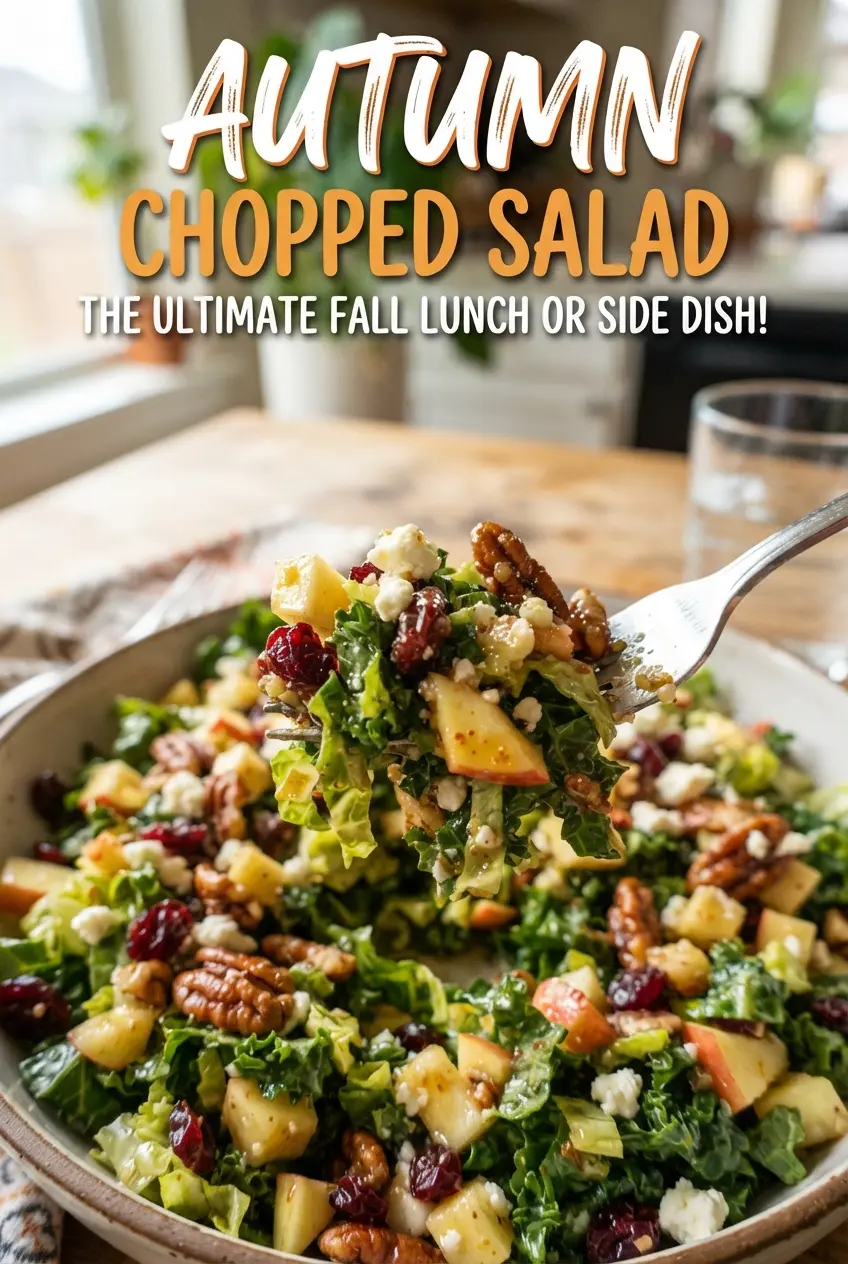
Autumn Chopped Salad
Ingredients
Method
- Whisk olive oil, apple cider vinegar, maple syrup, Dijon mustard, salt, and pepper until smooth and lightly emulsified. Visual cue: the mixture looks uniform with a slightly glossy sheen.
- Massage the kale with 1 tablespoon of the dressing for 1 minute until tender. Visual cue: the kale softens and turns deeper green and more flexible.
- Add shredded Brussels sprouts, diced apple, diced pear, dried cranberries, candied pecans, crumbled feta, and roasted pepitas to the bowl. Visual cue: toppings are evenly distributed over the kale.
- Pour the remaining dressing over the salad. Visual cue: the surface looks evenly coated without pooling.
- Toss well to combine and ensure every bite is coated, then serve right away or chill up to 2 hours. Visual cue: the salad looks glossy and cohesive; chilling firms it slightly before serving.