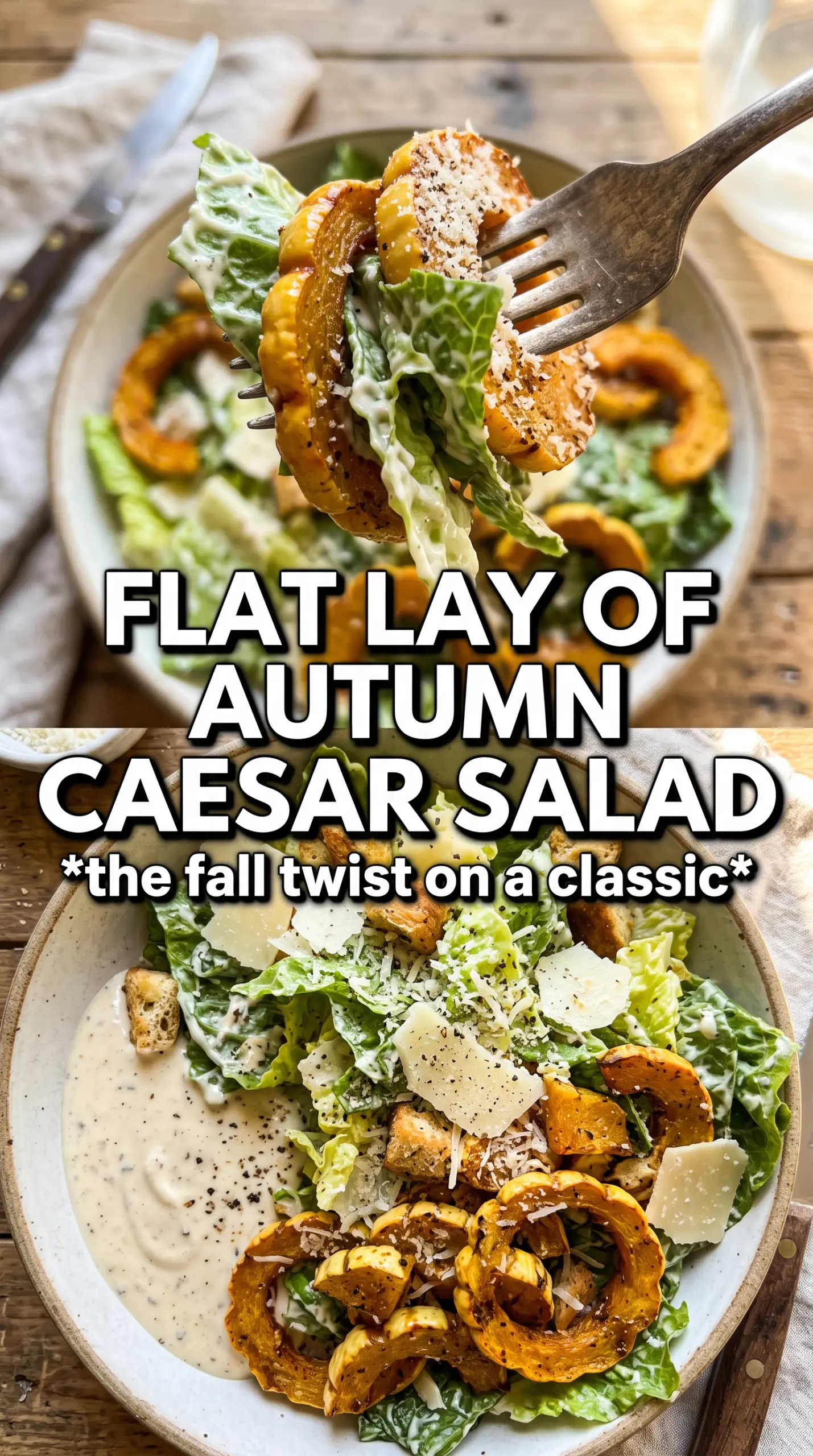
Delicata squash brings a sweet, caramelized edge to Caesar salad that regular croutons never quite manage. The squash softens in the center, browns at the cut sides, and gives each bite a little more substance, so the salad eats like a proper side instead of just a pile of greens. Toasted pepitas add the crunch you’d normally miss when you skip bread, and the shaved parmesan keeps everything sharp and savory.
The trick here is roasting the delicata hot enough to get color before it turns mushy. Because the squash is sliced into rings, the cut sides have plenty of contact with the pan, which means you get those browned edges fast. The dressing stays classic and punchy, built from mayo, lemon, Worcestershire, Dijon, garlic, and parmesan, so the squash can bring the autumn note without the whole salad drifting away from Caesar territory.
Below, I’ve included the small details that matter most: how to keep the romaine crisp, when the squash is done, and what to change if you want to make this dairy-free or turn it into a meal.
The roasted delicata stayed caramelized and the rings held their shape like little croutons. I loved that the dressing clung to the romaine without making it soggy, and the pepitas added the extra crunch I was missing.
Love the caramelized delicata squash and crisp Caesar crunch? Save this autumn salad for the nights when you want a side that feels fresh, hearty, and a little unexpected.
The Part Most Caesar Salads Miss: A Better Crunch
Classic Caesar usually leans on croutons for texture, but croutons can get stale, greasy, or lost once they hit the dressing. Delicata squash solves that in a different way. It roasts into tender, caramelized rings that still hold their shape, so every bite gives you contrast without turning the salad bread-heavy.
The biggest mistake here is crowding the pan. If the squash overlaps too much, it steams instead of browns, and you lose the sweet edge that makes it worth using in the first place. Give the rings space, flip them once, and let the oven do the work. You want deep gold on the cut sides and just enough softness in the center to bite through cleanly.
- Delicata squash — This is the ingredient that changes the whole salad. The skin is thin enough to eat, so you don’t have to peel it, and the rings naturally read like croutons once roasted. If you swap in butternut, you’ll need to cube it and the texture will be softer and less elegant.
- Romaine — Use crisp, cold romaine. Limp leaves can’t stand up to the dressing or the warm squash. If the lettuce has been sitting in the fridge, soak it in ice water for a few minutes, then dry it well before tossing.
- Mayo in the dressing — It gives the Caesar its body without raw egg or anchovy fuss. Greek yogurt will work in a pinch, but the dressing will turn tangier and a little lighter. Mayo keeps it glossy and clingy.
- Pepitas — These replace the usual bread crunch with a nutty, toasted snap. Toast them until fragrant, not dark, or they’ll taste bitter against the dressing.
What Each Ingredient Is Actually Doing in This Recipe
- Primary ingredient (the star) — Quality matters most. Choose the best you can find.
- Cooking medium (oil, butter, or broth) — This carries flavors and prevents dryness.
- Seasonings (salt, pepper, spices, herbs) — Layer flavors so nothing overpowers. Build depth gradually.
- Aromatics (garlic, onion, herbs) — Cook with fat to bloom flavors. Become the foundation.
- Supporting ingredients — Complement the main ingredient without overpowering it.
- Sauce or liquid (if applicable) — Brings flavors together. Balance richness with acid.
- Acid (lemon, vinegar, wine, or other) — Brightens and prevents flat-tasting results.
- Final finish (garnish, glaze, or sauce) — Prevents one-dimensional taste and adds visual appeal.
Roast the Squash First, Then Build the Salad Fast
Getting Color on the Delicata
Heat the oven to 425F before the squash goes anywhere near the pan. Toss the rings with olive oil, salt, and pepper, then spread them in a single layer so the cut sides can brown properly. After about 20 minutes, flip them once; they should look deeply golden at the edges and fork-tender in the middle. If they’re pale and watery, they need more time, not more oil.
Whisking a Caesar That Clings
Stir the dressing until it looks completely smooth and thick enough to coat a spoon. The garlic should disappear into the mayo instead of floating in little sharp bits, and the parmesan should give the dressing a faint graininess, not clumps. If it tastes flat, it usually needs more lemon or salt, not more Worcestershire. Whisk it before tossing the greens so the flavor is balanced from the start.
Tossing Without Bruising the Lettuce
Add the dressing to the romaine gradually and toss with a light hand. The goal is coated leaves, not drenched ones. If you dump it all in at once, the bottom of the bowl turns heavy while the top stays bare. Stop as soon as the leaves look glossy and evenly dressed, then add the parmesan.
Finishing With the Warm Squash
Arrange the roasted delicata over the salad instead of mixing it through. That keeps the rings intact and lets them stand in for croutons visually and texturally. Scatter the toasted pepitas over the top, finish with extra parmesan, and serve right away while the squash is still slightly warm. If you wait too long, the contrast between cold greens and warm squash disappears.
How to Adapt This Salad for Different Tables
Make It Dairy-Free
Use a dairy-free mayo and skip the parmesan in the dressing. You’ll lose some of the salty depth, so add a little extra salt and a tiny splash more lemon to keep the dressing sharp. For the topping, use toasted breadcrumbs only if you want extra crunch; otherwise the pepitas carry the texture on their own.
Turn It Into a Main Dish
Add grilled chicken, sliced steak, or chickpeas if you want this to eat like lunch or dinner. The salad has enough structure to handle a protein, but keep the dressing amount modest so the bowl doesn’t get heavy. Chickpeas work best if you roast them briefly so they stay crisp against the squash.
Swap the Pepitas
Sunflower seeds or chopped toasted walnuts work if that’s what you have. Walnuts bring a deeper, richer crunch, while sunflower seeds stay lighter and closer to the pepita texture. Keep the amount the same and toast them first so the flavor stands up to the dressing.
Storage and Reheating
- Refrigerator: Store the dressed greens and roasted squash separately for up to 2 days. Once dressed, the romaine softens quickly, so this salad is best assembled right before serving.
- Freezer: Don’t freeze the finished salad or the dressing. The lettuce collapses and the squash turns watery after thawing.
- Reheating: Warm the roasted delicata in a 375F oven for a few minutes if you want to revive it. Don’t microwave it, or the rings will lose the caramelized edges that make them work here.
Questions I Get Asked About This Recipe
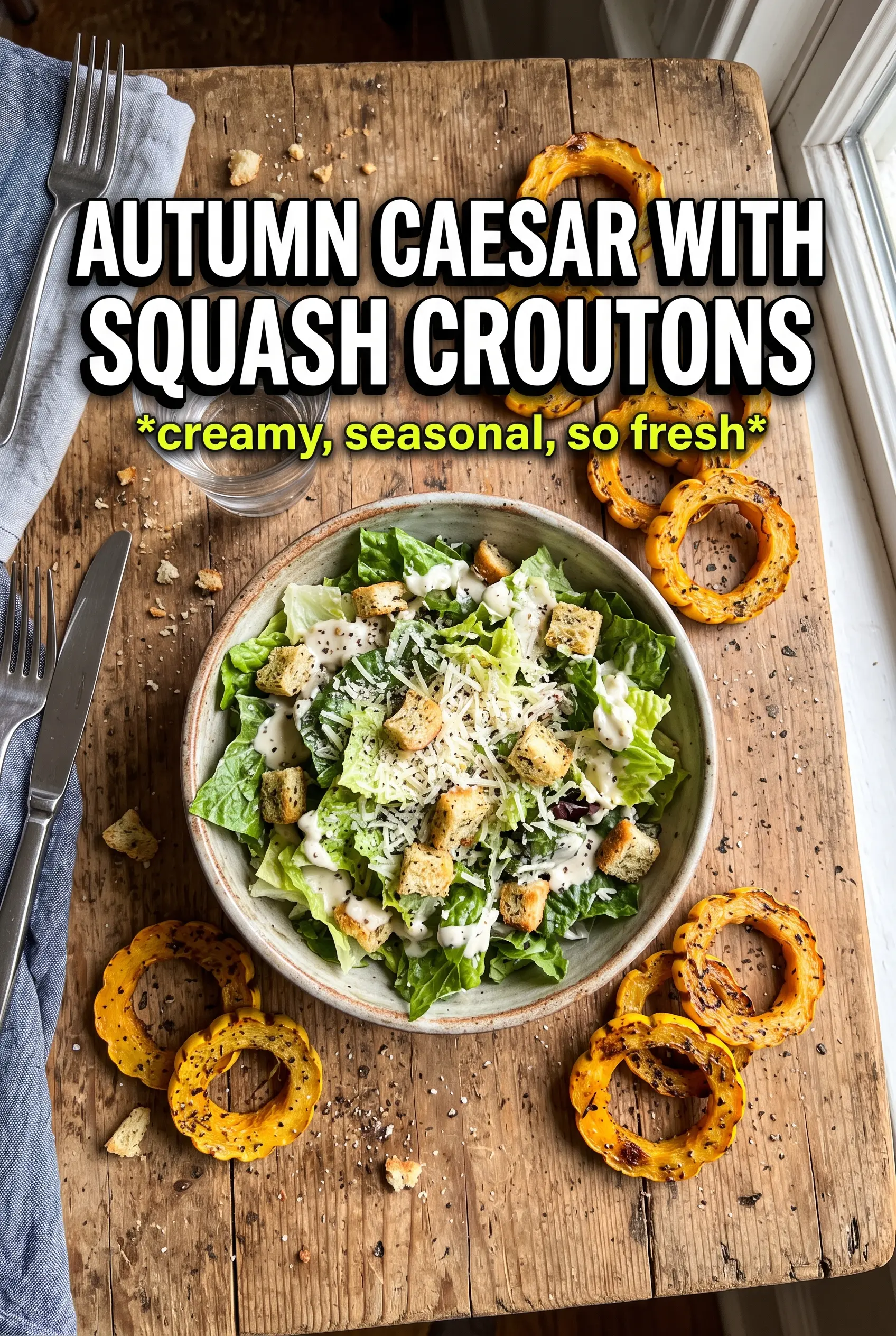
Autumn Caesar Salad With Delicata Squash Croutons
Ingredients
Equipment
Method
- Preheat oven to 425F. Toss the delicata squash rings with olive oil, salt, and pepper, and spread them on a sheet pan.
- Roast for 20-25 minutes, flipping halfway. Cook until caramelized with browned edges.
- Whisk the Caesar dressing ingredients until smooth. Stir mayo, parmesan, lemon juice, Worcestershire, minced garlic, Dijon, and salt and pepper together.
- Toss the romaine with Caesar dressing and shaved parmesan. Coat the chopped greens evenly so every bite is dressed.
- Arrange the salad on plates and top with the roasted delicata rings as croutons. Distribute them across the top for a croissant-like crunch effect.
- Scatter toasted pepitas over the salad, then finish with extra parmesan. Serve immediately while the squash is hot.