
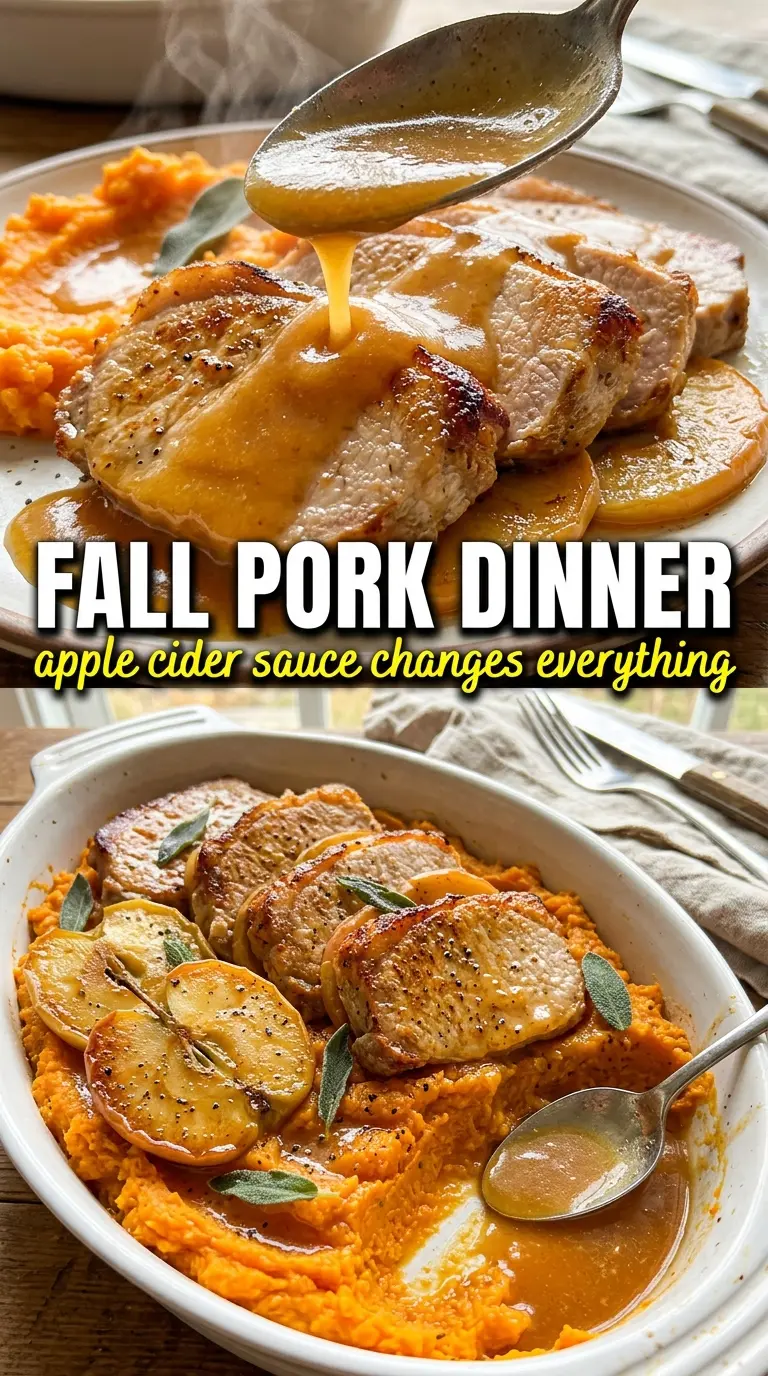
Pork chops turn into something special when they’re seared hard, then finished in a bright apple cider pan sauce that clings to every bite. Paired with silky mashed sweet potatoes, this dinner lands in that sweet spot between cozy and practical: enough depth to feel like you cooked, but fast enough to get on the table without a long braise or a sink full of dishes.
The trick is keeping the pork juicy while the sauce reduces enough to taste like apples and thyme instead of thin cider. A quick pan sear builds the browned bits that carry the whole dish, and the Dijon helps the sauce emulsify just enough to coat the chops. The sweet potatoes balance the acidity of the cider without needing a lot of extra sugar or fuss.
Below, I’ve included the one timing detail that keeps the pork from drying out, plus a couple of smart swaps if you need to work with what’s already in your kitchen.
The pork stayed juicy and the cider sauce thickened just enough to spoon over the sweet potatoes. My husband kept going back for more of the apples and thyme sauce.
Save this apple cider pork with mashed sweet potatoes for a fast skillet dinner with a glossy cider-thyme sauce and creamy sweet potato mash.
The Reason Pork Chops Stay Juicy in a Fast Cider Sauce
Thin pork chops dry out when they spend too long in liquid. The fix here is simple: sear first, then only simmer them long enough to finish through in the cider sauce. That gives you browned edges, a little fond in the pan, and meat that still has some give when you cut into it.
The other thing that matters is the reduction. Apple cider starts out sharp and thin, but after a few minutes with broth, mustard, and thyme, it turns into a sauce that tastes rounded instead of sugary. If the pan is boiling hard, the pork tightens up and the sauce gets muddy. Keep it at a gentle simmer, and the skillet does the work for you.
- Bone-in pork chops — They hold onto moisture better than boneless chops and give you a little more margin during the final simmer. If you only have boneless, cut the simmer time down and pull them as soon as they hit temperature.
- Apple cider — Use actual cider, not apple cider vinegar and not sweet apple juice. You want the tart, fresh apple flavor that reduces into sauce instead of turning syrupy.
- Dijon mustard — This sharpens the sauce and helps it look glossy instead of broken. Plain yellow mustard won’t taste the same, but in a pinch it will still give the sauce some body.
- Sweet potatoes — Their natural sweetness balances the cider and thyme without needing extra sugar. Mash them until just smooth; overworking them can make them gluey.
What Each Ingredient Is Actually Doing in This Recipe
- Primary ingredient (the star) — Quality matters most. Choose the best you can find.
- Cooking medium (oil, butter, or broth) — This carries flavors and prevents dryness.
- Seasonings (salt, pepper, spices, herbs) — Layer flavors so nothing overpowers. Build depth gradually.
- Aromatics (garlic, onion, herbs) — Cook with fat to bloom flavors. Become the foundation.
- Supporting ingredients — Complement the main ingredient without overpowering it.
- Sauce or liquid (if applicable) — Brings flavors together. Balance richness with acid.
- Acid (lemon, vinegar, wine, or other) — Brightens and prevents flat-tasting results.
- Final finish (garnish, glaze, or sauce) — Prevents one-dimensional taste and adds visual appeal.
Getting the Sear, Sauce, and Mash to Finish at the Same Time
Start the sweet potatoes first
Boil the sweet potatoes in salted water until a knife slides in with no resistance, then drain them well before mashing. Wet potatoes make the mash loose and dull the flavor, so let them steam off in the colander for a minute. Stir in the butter, cream, salt, and cinnamon while they’re still hot so everything melts in evenly. Keep them covered over very low heat or tucked under foil while you finish the pork.
Build color on the pork chops
Season the chops generously with salt and pepper, then sear them in hot olive oil until the surface is deeply golden and they release easily from the pan. If they stick, they aren’t ready to turn yet. Don’t crowd the skillet or the meat will steam instead of browning. That browned crust is what gives the sauce its depth, so leave it alone long enough to develop.
Reduce the cider before the pork goes back in
After the onion and garlic soften, pour in the cider and broth and let the liquid simmer for a few minutes before adding the mustard and thyme. You’re looking for the raw sharpness to fade and the sauce to pick up a little body. If you return the pork too early, the cider stays thin and the chops won’t have time to pick up the sauce’s flavor.
Finish with apples and serve right away
Cook the apple slices in butter until the edges turn golden and the centers are just tender, not mushy. They should still hold their shape on the plate. Spoon the pork and sauce over the sweet potatoes, then tuck the apples alongside so each bite gets a little sweet, savory, and tangy all at once. This dish is at its best the minute it comes together, while the sauce is glossy and the apples still have a little bite.
How to Adapt This Without Losing the Balance of Sweet, Tangy, and Savory
Use boneless pork chops for a faster cook
Boneless chops work here, but they dry out faster, so shorten the final simmer and check them early. You’ll lose a little of the juicy cushion that bone-in chops give you, but the cider sauce still keeps the dish from feeling dry.
Make it dairy-free
Swap the butter in both the sauce and the mash for olive oil or a plant-based butter, and use unsweetened oat milk or another neutral dairy-free cream in the potatoes. The sauce will still be glossy, though it won’t have quite the same round finish as butter gives it.
Swap in applesauce only if you need a softer apple note
You can use a few spoonfuls of unsweetened applesauce in the sauce if you’re out of fresh cider, but the result will be milder and less sharp. Thin it with a little extra broth and add a splash of lemon juice so the sauce doesn’t turn flat.
Storage and Reheating
- Refrigerator: Store the pork, sauce, and sweet potatoes separately if you can for up to 3 days. The sauce may thicken as it chills.
- Freezer: The pork and sauce freeze well for up to 2 months, but the sweet potato mash is best fresh. Freeze the mash only if you don’t mind a slightly grainier texture after thawing.
- Reheating: Warm the pork gently in a covered skillet over low heat with a splash of broth or cider. Avoid high heat, which tightens the meat and makes the sauce separate before the center is warm.