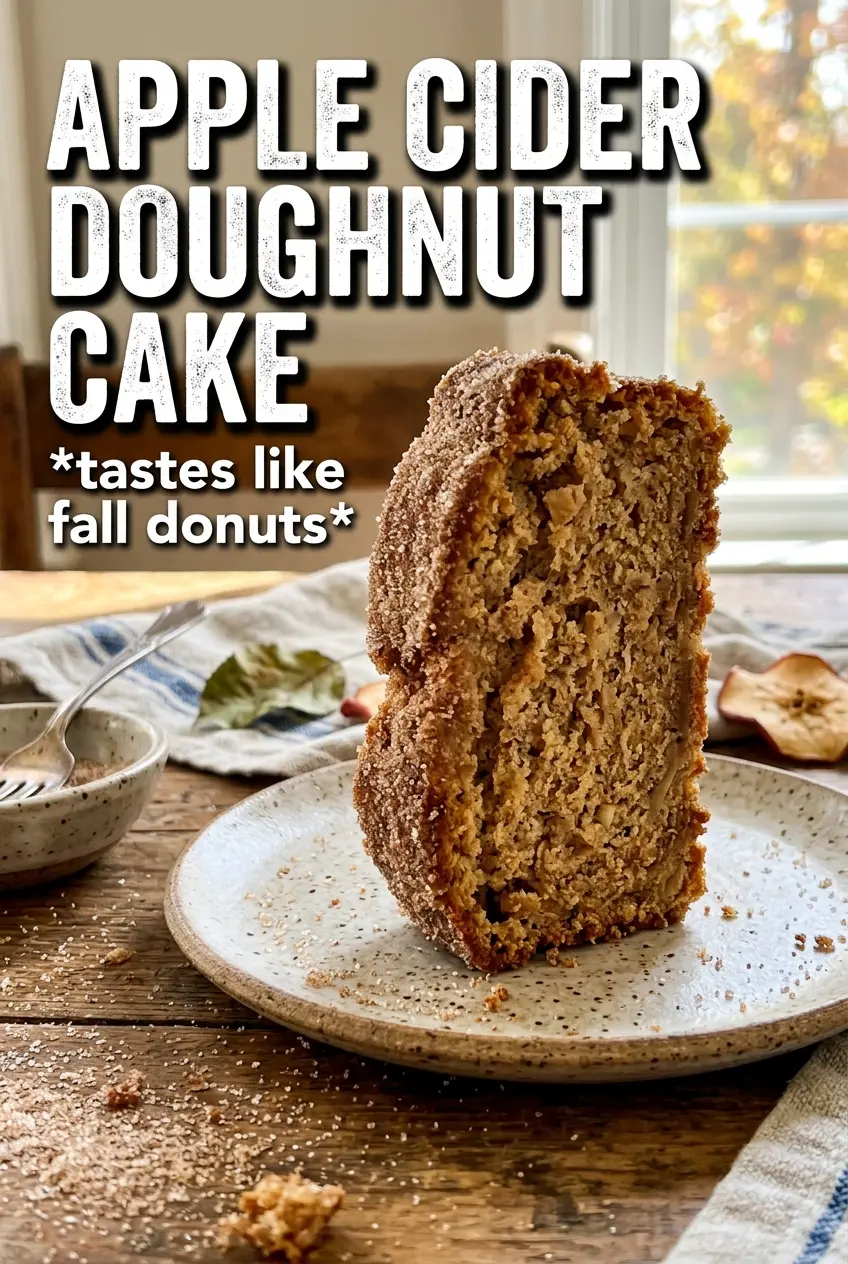
Apple Cider Doughnut Loaf Cake delivers everything people love about the classic bakery doughnut without the fryer. The crust bakes up deep golden and a little crisp, then gets brushed with butter and coated in cinnamon sugar so every slice tastes like the top of a fresh apple cider doughnut. Inside, the crumb stays tender and moist with a soft spice finish that makes this loaf hard to stop slicing.
What gives this version its real doughnut-shop character is the reduced cider. Cooking the cider down concentrates the apple flavor instead of watering the batter down, and it keeps the loaf from tasting flat. Sour cream adds the kind of richness and structure that oil alone can’t manage, while the blend of cinnamon, nutmeg, allspice, and cardamom gives the cake that warm, bakery-style spice without turning it into pumpkin bread in disguise.
Below, I’m breaking down the step that matters most for keeping the crumb tender and the coating clinging properly. If you’ve ever had a cinnamon-sugar loaf cake that looked right but tasted a little dull, this version fixes that.
The cider reduction made all the difference, and the cinnamon sugar stuck to the warm loaf beautifully. My slices came out soft in the middle with that bakery-style crust on the outside.
Save this Apple Cider Doughnut Loaf Cake for the days when you want that cinnamon-sugar bakery crust without frying anything.
The Cider Has to Be Reduced or the Loaf Turns Flat
The biggest mistake with apple cider loaf cake is using cider straight from the bottle and expecting it to taste bold. It won’t. The extra water dilutes both the flavor and the texture, and that’s how you end up with a cake that eats more like sweet bread than a doughnut loaf. Reducing the cider to 1/4 cup concentrates the apple flavor enough that you can taste it after baking, even under the cinnamon sugar coating.
The other thing that matters here is mixing. You want the wet ingredients smooth, but not whipped. Too much air can make the loaf rise fast and then collapse in the center. Fold the dry ingredients in just until the flour disappears, and stop there. A dense-looking batter is better than an overmixed one.
What Each Ingredient Is Actually Doing in This Loaf
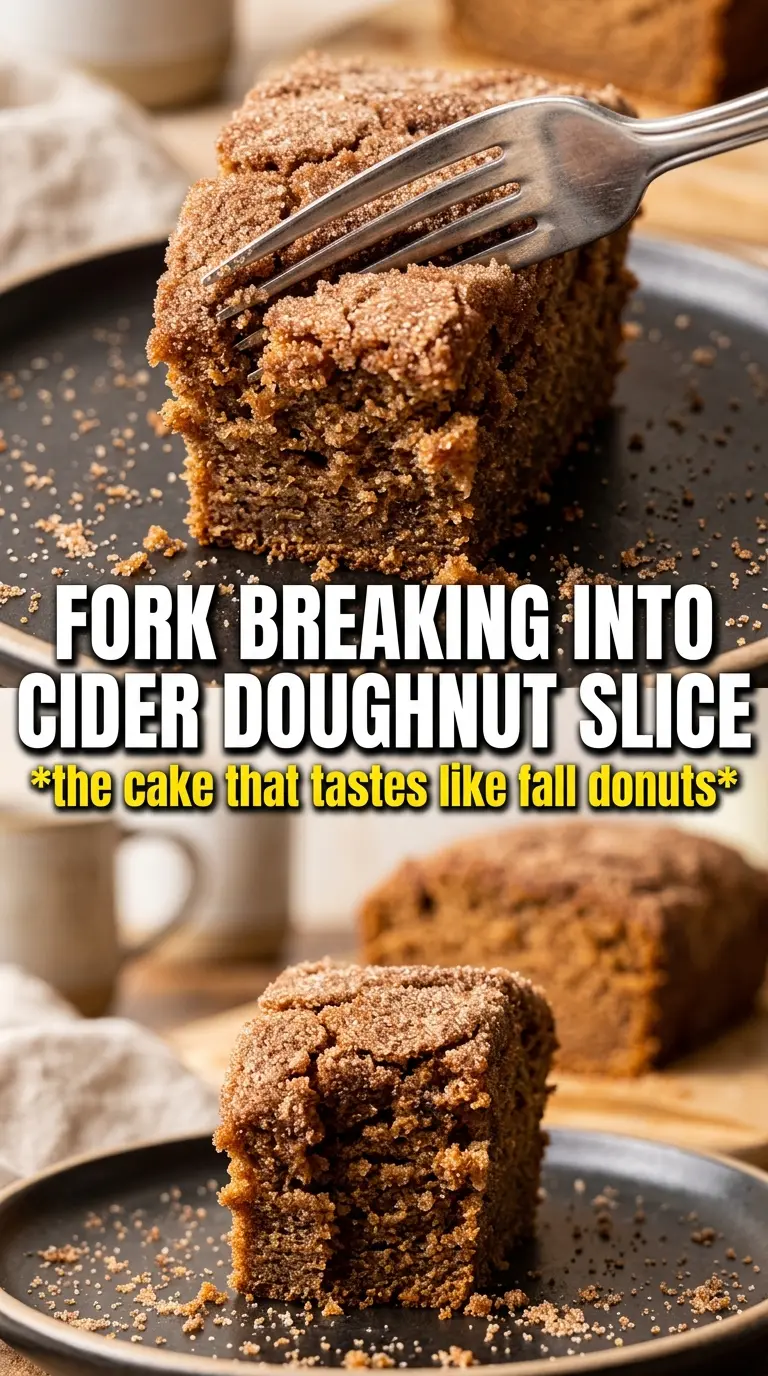
- Reduced apple cider — This is the flavor backbone. The reduction concentrates apple flavor and adds a little tang that keeps the loaf from tasting one-note. Skip the reduction and the cake loses the whole doughnut-shop effect.
- Sour cream — This keeps the crumb tender and gives the loaf enough richness to stay moist for days. Plain Greek yogurt works in a pinch, but it brings a slightly tighter crumb and a bit more tang.
- Vegetable oil — Oil keeps the crumb soft at room temperature, which is exactly what you want in a loaf cake that gets coated in sugar. Butter would taste nice, but it firms up as it cools and gives a drier bite.
- The spice blend — Cinnamon leads, but nutmeg, allspice, and cardamom make the flavor read like a real cider doughnut instead of just spiced cake. Cardamom is subtle here; don’t skip it if you want that bakery-style depth.
- Cinnamon sugar coating — The warm loaf grabs the butter and sugar coating best. If you wait until the cake is cold, the coating slides around instead of clinging in that sandy, doughnut-like layer.
Getting the Crust Right Without Overbaking the Center
Reduce the Cider First
Start by simmering the cider until you have 1/4 cup left, then let it cool before mixing it into the batter. If you add hot cider, it can warm the eggs and sour cream enough to make the mixture a little weird and loose. You want the cider concentrated but not piping hot.
Mix the Batter Until It Just Comes Together
Whisk the wet ingredients until they look smooth and glossy, then add the dry ingredients and fold gently. A few streaks of flour are better than overworking the batter. Overmixing develops too much gluten and gives you a tough loaf instead of a soft one.
Bake for the Center, Not the Clock
Use the 60 to 65 minute window as a guide, but trust the toothpick and the look of the top. The loaf is ready when the center is set and a tester comes out clean or with a few moist crumbs, not wet batter. If the top is browning too fast before the middle is done, tent it loosely with foil for the last stretch.
Brush and Coat While the Loaf Is Warm
Let the loaf sit just long enough to come out of the pan cleanly, then brush on the melted butter while the surface is still warm. That’s what helps the cinnamon sugar stick in an even layer. If the loaf cools too much first, the coating won’t cling and you’ll lose that classic doughnut finish.
Three Ways to Make This Loaf Fit Your Kitchen
Dairy-Free Version
Swap the sour cream for an unsweetened dairy-free yogurt with some body, and use a plant-based butter for the coating. The loaf will still be moist and spice-forward, though the crumb may be a touch lighter and less rich than the original.
Gluten-Free Adaptation
Use a good 1:1 gluten-free flour blend with xanthan gum already included. The loaf should still rise well, but don’t overmix after the flour goes in or the texture can turn gummy around the edges.
Extra Cinnamon-Sugar Crust
If you want a more doughnut-like finish, brush the loaf with butter in two thin coats and roll it in the cinnamon sugar while it’s still warm. You’ll get a thicker, crunchier exterior, but the coating will shed a little more when sliced.
Make It a Little Less Sweet
Cut the granulated sugar in the batter by 2 tablespoons if you prefer a less dessert-like loaf. The crumb will be a touch less plush, but the cinnamon sugar coating still carries enough sweetness to keep the loaf tasting complete.
Storage and Reheating
- Refrigerator: Keep covered for up to 4 days. The coating will soften a bit, but the loaf stays moist.
- Freezer: Freeze the unsugared loaf tightly wrapped for up to 2 months. Add the butter and cinnamon sugar after thawing so the coating stays fresh.
- Reheating: Warm slices in a low oven for a few minutes or microwave briefly. Too much heat melts the sugar coating and makes the crumb feel dry at the edges.
Questions I Get Asked About This Recipe
Apple Cider Doughnut Loaf Cake
Ingredients
Equipment
Method
- Reduce apple cider to 1/4 cup over medium heat, then cool completely.
- Preheat oven to 350F, then grease a 9x5 loaf pan.
- Whisk flour, baking powder, baking soda, cinnamon, nutmeg, allspice, cardamom, and salt until evenly combined.
- Whisk vegetable oil, granulated sugar, brown sugar, eggs, vanilla extract, reduced cider, and sour cream until smooth.
- Fold in the flour mixture just until no dry streaks remain, then bake 60-65 minutes at 350F until a toothpick comes out clean.
- Remove the loaf from the pan while warm, then brush all sides with melted butter.
- Roll or sprinkle the loaf generously with cinnamon sugar so the butter sets in a lightly crisp coating.