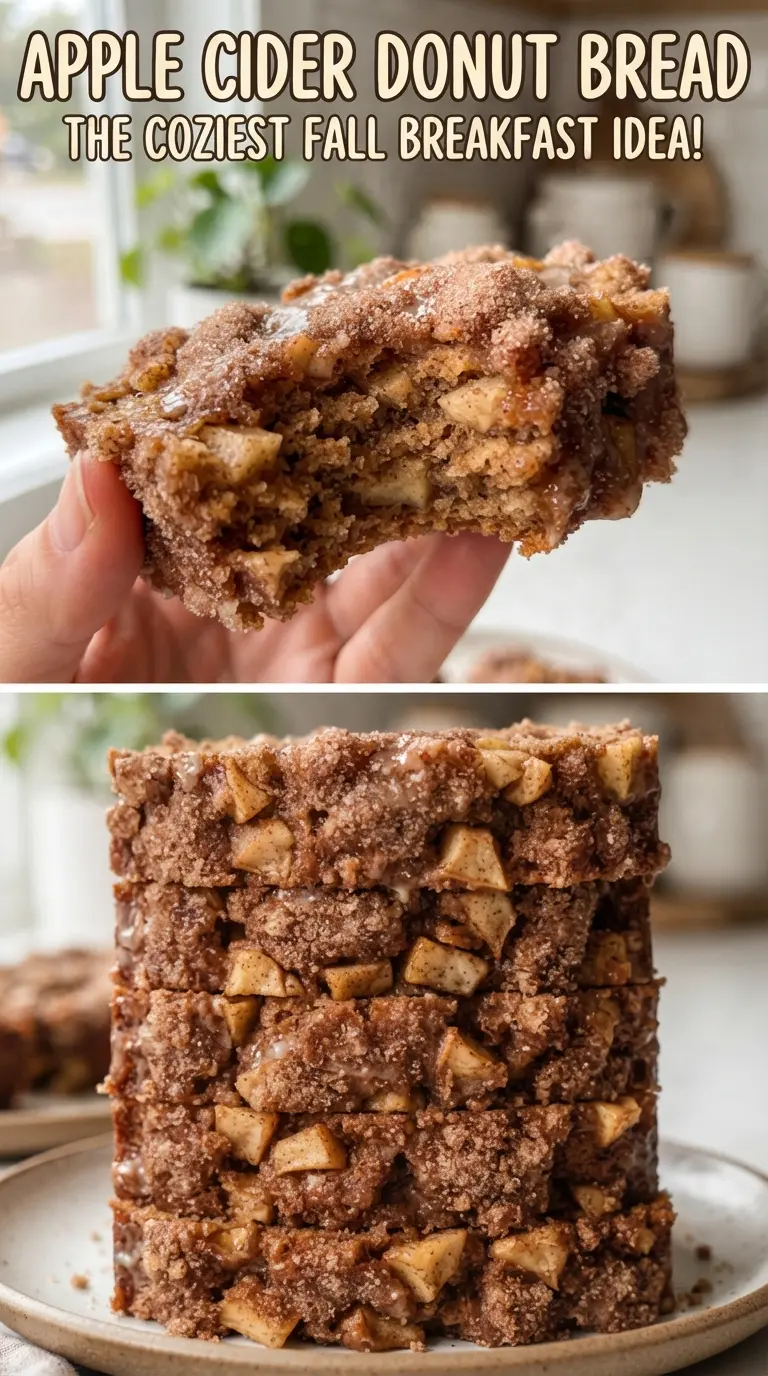
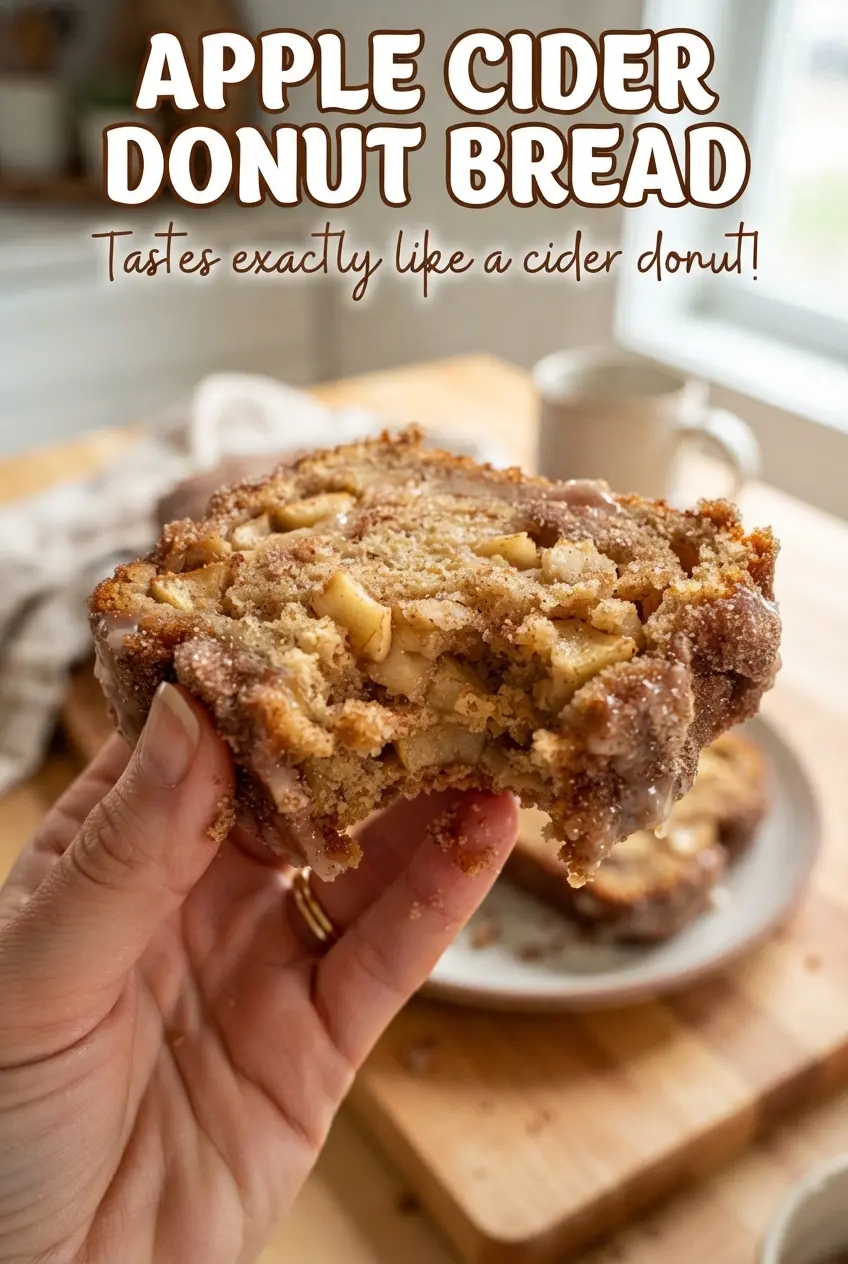
Apple cider donut bread bakes up with the same cozy, cinnamon-sugar crust people love from a bakery donut, but in a sliceable loaf that stays tender for days. The outside gets that crackly, buttery coating, while the crumb underneath stays soft, moist, and full of reduced cider flavor instead of tasting flat or overly sweet.
The part that makes this version work is the cider reduction. Boiling the cider down concentrates the apple flavor and keeps the batter from getting watered down, which is what usually happens when cider is added straight from the bottle. Sour cream gives the loaf a plush texture and enough acidity to help the baking soda do its job, so the crumb rises well without turning dry.
If you’ve ever wanted a quick bread that eats like something from a fall bakery case, this one is worth keeping close. The topping goes on while the loaf is still warm, which helps the cinnamon sugar cling in that thick, sandy layer people always hope for.
The cider flavor came through beautifully, and brushing the loaf with butter before the cinnamon sugar gave it that real donut-shop crunch on top.
Love the thick cinnamon-sugar crust and spiced apple cider crumb? Save this apple cider donut bread for your next baking day.
The Reason the Crust Stays Bakery-Thick Instead of Melting Away
The crust on this loaf holds because it’s built in two stages: butter first, then cinnamon sugar. If you skip the butter brush or wait until the bread is cold, the sugar won’t grab in that textured layer that makes each slice feel like a donut. Warm bread gives you the best cling without turning the topping into a wet glaze.
Another thing that matters here is restraint when mixing the batter. Once the flour goes in, stop as soon as the last streaks disappear. Overmixing tightens the crumb and steals the soft, tender texture that makes this loaf worth making in the first place.
- Apple cider — Reducing the cider is nonnegotiable if you want real apple flavor. It turns from thin and sharp into something concentrated and rounded. If you’re tempted to skip the reduction, the loaf will taste more like spiced quick bread than apple cider donut bread.
- Sour cream — This keeps the crumb moist and gives the loaf enough acidity to lift properly with baking soda. Plain Greek yogurt works in a pinch, but it brings a slightly tangier flavor and a firmer texture.
- Brown sugar — This adds moisture and a deeper caramel note that plays well with cinnamon and nutmeg. Granulated sugar won’t give the same softness or the same warm flavor in the loaf itself.
- Butter for topping — Use it while the loaf is still warm so the cinnamon sugar sticks in a thick crust. Melted butter on a cool loaf just slides off instead of setting the sugar into place.
What Each Ingredient Is Actually Doing in This Recipe
- Primary ingredient (the star) — Quality matters most. Choose the best you can find.
- Cooking medium (oil, butter, or broth) — This carries flavors and prevents dryness.
- Seasonings (salt, pepper, spices, herbs) — Layer flavors so nothing overpowers. Build depth gradually.
- Aromatics (garlic, onion, herbs) — Cook with fat to bloom flavors. Become the foundation.
- Supporting ingredients — Complement the main ingredient without overpowering it.
- Sauce or liquid (if applicable) — Brings flavors together. Balance richness with acid.
- Acid (lemon, vinegar, wine, or other) — Brightens and prevents flat-tasting results.
- Final finish (garnish, glaze, or sauce) — Prevents one-dimensional taste and adds visual appeal.
Reducing the Cider, Mixing the Batter, and Getting the Sugar to Stick
Cooking Down the Cider
Pour the apple cider into a small saucepan and simmer it until it reduces to about 1/2 cup. The goal is a stronger apple smell and a slightly syrupy texture, not a hard boil that scorches the edges. Cool it before adding it to the batter, or it can melt the butter and throw off the texture.
Building the Batter Without Toughening It
Beat the softened butter and brown sugar until the mixture looks fluffy and lighter in color, then add the eggs one at a time. Stir in the sour cream, vanilla, and cooled cider until the batter looks smooth. Once the dry ingredients go in, fold just until combined; a few small lumps are better than a tough loaf.
Baking for a Tender Center
Spread the batter into a greased and lined 9×5-inch loaf pan and bake until a toothpick comes out clean and the top springs back lightly when touched. If the top browns too fast before the center sets, lay a loose piece of foil over it for the last stretch of baking. Pull it from the oven when the middle is cooked through but still soft, because overbaking is what turns quick bread dry.
Finishing the Donut Coating
Let the loaf rest for about 10 minutes, then brush it all over with melted butter while it’s still warm. Press the cinnamon sugar onto the surface instead of sprinkling it from high above; that gives you the thick, even crust. Work gently so the topping stays on the loaf instead of ending up in a pile on the cutting board.
How to Adapt Apple Cider Donut Bread for Different Kitchens and Different Cravings
Dairy-Free Version
Swap the butter in the loaf for a neutral dairy-free baking stick and use a thick plain dairy-free yogurt in place of the sour cream. The texture stays moist, though the crumb will be a little less rich and the topping won’t taste quite as buttery.
Gluten-Free Loaf
Use a good 1:1 gluten-free baking blend that already includes xanthan gum. The loaf will still need the full cooling time before slicing, because gluten-free quick breads can seem set on the outside before the center firms up.
Extra-Spiced Bakery Style
Add a pinch of cloves or allspice if you want a deeper donut-shop spice note. Go light, though, because too much spice can cover the cider after you’ve taken the time to reduce it properly.
Storage and Reheating
- Refrigerator: Store in an airtight container for up to 4 days. The sugar crust softens a little in the fridge, but the loaf stays moist.
- Freezer: Freeze slices or the whole loaf, tightly wrapped, for up to 2 months. Freeze before adding the cinnamon sugar if you want the topping to stay crunchy.
- Reheating: Warm individual slices for a few seconds in the microwave or briefly in a low oven. If you heat it too long, the sugar topping can melt and the crumb turns dry around the edges.
Questions I Get Asked About This Recipe
Apple Cider Donut Bread
Ingredients
Equipment
Method
- Simmer apple cider for 15-20 minutes, until reduced to 1/2 cup, then cool.
- Keep the reduced cider ready to use so it doesn’t heat the batter further.
- Preheat the oven to 350°F, then grease and line a 9x5-inch loaf pan.
- Whisk all-purpose flour, baking powder, baking soda, salt, cinnamon, and nutmeg in a bowl until evenly combined.
- Beat softened butter and packed brown sugar until fluffy.
- Beat in eggs, then mix in sour cream, and vanilla extract, followed by the reduced cider.
- Fold the dry ingredients into the wet ingredients just until combined, then spread the batter into the prepared pan.
- Bake at 350°F for 50-55 minutes, until a toothpick comes out clean.
- Cool the loaf for 10 minutes in the pan.
- Brush the warm loaf all over with melted butter.
- Press the loaf into the cinnamon sugar topping so it adheres in an even, crunchy layer.