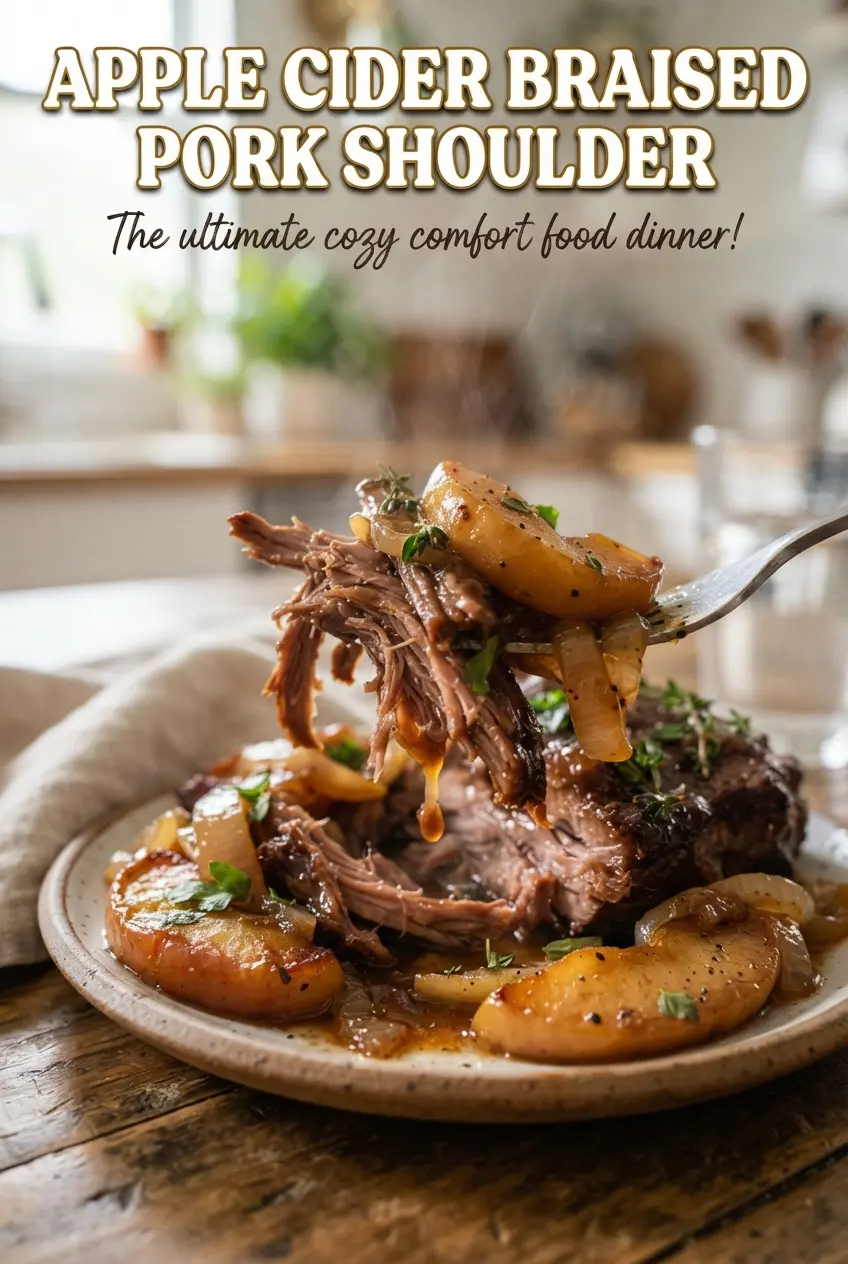
Apple cider braised pork shoulder turns into the kind of dinner people lean over the table for. The pork goes from firm and stubborn to spoon-tender, the onions melt into the sauce, and the apples soften just enough to hold their shape without turning mushy. What you end up with is rich, glossy braising liquid, deep pork flavor, and a little sweet-tart lift in every bite.
The sear matters here. Browning the pork before it goes into the oven gives the braise its backbone, and the cider mixture needs the scraped-up bits from the pot to taste full instead of flat. Apple cider vinegar keeps the sauce from leaning too sweet, while Dijon adds quiet sharpness and helps the liquid come together with a little more body. Fresh thyme and rosemary hold up through the long cook and give the dish a savory edge that keeps it grounded.
Below, I’m walking through the part that makes the biggest difference: how to keep the braising liquid balanced and how to know exactly when the pork is ready to shred. There’s also a note on when to add the apples so they stay intact and make the finished dish look as good as it tastes.
The pork shredded beautifully, and the sauce reduced into this glossy cider gravy that clung to every bite. I added the apples at the end like suggested, and they stayed soft without falling apart.
Save this apple cider braised pork shoulder for a slow-braised dinner with tender pork, soft apples, and a rich pan sauce.
The Sear and Simmer That Keep the Pork from Tasting Flat
A braise can taste dull if the pork goes straight into liquid without a deep brown crust first. That sear isn’t just for color; it creates the savory base that the cider and broth can’t build on their own. If the meat sticks a little while browning, leave it alone. It will release when the crust is ready.
The other place this dish can lose momentum is the braising liquid. You want enough simmering on the stovetop to dissolve the Dijon and sugar before the pork goes back in, but not such a hard boil that the liquid turns aggressive and dries out the edges of the meat. Gentle heat is the whole game here.
What the Cider, Dijon, and Apples Each Bring to the Pot

- Apple cider — Use real cider, not sparkling cider drink. It gives the braising liquid a rounded apple flavor that feels cooked in, not candy-sweet. Fresh cider works best here because the sauce reduces down to something richer and more concentrated.
- Dijon mustard — Dijon sharpens the sauce and helps it taste balanced after a long braise. It also smooths into the liquid better than yellow mustard. Grainy Dijon works too, but the finish will be a little more rustic.
- Chicken broth — This stretches the cider so the sauce doesn’t become syrupy before the pork is tender. Low-sodium broth is the safer choice because the pork is already seasoned heavily. If you only have stock, use it the same way.
- Apples — Add firm apples at the end so they soften without collapsing. Honeycrisp, Pink Lady, or Fuji hold up well. Softer apples can work, but they’ll melt into the sauce faster and change the texture of the dish.
- Fresh thyme and rosemary — These herbs carry the braise through the long cook and keep the cider from reading as dessert-like. Dried herbs can step in in a pinch, but use less and expect a quieter finish.
Building the Braise So the Sauce Stays Balanced
Season and Brown the Pork
Pat the pork shoulder dry before seasoning it with salt, pepper, and paprika. Moisture is the enemy of browning, and a wet surface will steam instead of sear. Get the oil hot before the pork goes in, then leave each side alone long enough to develop a deep brown crust. If the pan looks too crowded, brown the pieces in two batches so they color instead of pale-softening.
Cook the Onions Until They Turn Sweet
Once the pork comes out, the onions go into the same pot and pick up the browned bits left behind. Cook them until they soften and pick up a little color; that’s when they start tasting sweet instead of sharp. Add the garlic only for the last minute so it perfumes the pot without burning. Burnt garlic will make the whole braise taste bitter.
Start the Sauce Before the Pork Goes Back In
Stir in the cider, broth, vinegar, Dijon, and brown sugar, and scrape the bottom of the pot well. Those brown bits dissolve into the liquid and give the sauce its depth. Let the mixture come together before the pork returns so the mustard is fully dispersed and the sugar melts evenly. If you drop the pork into an unbalanced liquid, the braise tastes muddled instead of layered.
Braise Until It Shreds Without Resistance
Cover the pot and let the pork cook low and slow in the oven until a fork slips into it easily. At that point, the meat should pull apart in large pieces with almost no resistance. Add the apples for the last 45 minutes so they soften but keep their shape. When the pork is done, shred it back into the sauce and reduce the liquid on the stove until it lightly coats a spoon.
Three Ways to Adjust the Braise Without Losing What Makes It Good
Make it dairy-free and gluten-free as written
This recipe already fits both diets without adjustment, which is one reason it’s such a good braise to keep in rotation. Just check your broth and Dijon label if you’re cooking for someone with strict gluten concerns. The texture and flavor stay exactly where they should.
Swap in boneless pork butt if that’s what you can find
Pork butt and pork shoulder braise in almost the same way, and either one gives you that tender, shreddable result. If your cut is a little fattier, expect a richer sauce and skim any excess fat off the top before reducing. The cook time may shift by a small margin, but the fork-tender finish is the same goal.
Use hard cider for a deeper, less sweet finish
Hard cider gives the braise a drier, more adult flavor and trims some of the fruit sweetness. It works best if you like savory sauces with a sharper edge. Keep the brown sugar in place, but reduce it slightly if your cider is already fairly sweet.
Add carrots with the apples for a fuller one-pot meal
Chunked carrots can go in with the apples during the last stretch of braising and will pick up the cider sauce without falling apart. They bring a little sweetness and turn the pot into a more complete dinner. Cut them large enough to keep some structure after 45 minutes in the oven.
Storage and Reheating
- Refrigerator: Store the pork and sauce for up to 4 days. The flavor gets deeper overnight, and the sauce will thicken as it chills.
- Freezer: It freezes well. Cool completely, pack the pork with plenty of sauce, and freeze for up to 3 months. The apples will soften a bit more after thawing, but the dish still holds together well.
- Reheating: Warm it gently on the stovetop or covered in the oven with a splash of broth or cider. High heat dries out the pork and can make the sauce separate, so go low and slow until everything is hot through.
Answers to the Questions Worth Asking
Apple Cider Braised Pork Shoulder
Ingredients
Equipment
Method
- Preheat the oven to 325F, then season the pork with salt, black pepper, and smoked paprika. Visual cue: the pork should be evenly coated with the spices.
- Heat the olive oil in a Dutch oven over high heat and sear the pork until well browned, 4-5 minutes per side. Visual cue: a deep brown crust should form before removing the pork.
- Add the sliced onion to the Dutch oven and cook for 5 minutes. Visual cue: the onion should soften and start to turn translucent.
- Add the smashed garlic and cook for 1 minute. Visual cue: the garlic should become fragrant without burning.
- Stir in the apple cider, chicken broth, apple cider vinegar, Dijon mustard, and brown sugar, scraping up the browned bits. Visual cue: the sauce should look smooth and slightly glossy with browned fond incorporated.
- Return the pork to the Dutch oven and add the fresh thyme and rosemary, then cover and braise in the oven for 2 1/2 hours. Visual cue: the pork edges should be very tender and the liquid should be gently bubbling.
- Add the apple wedges, then re-cover and braise for 45 minutes more until the pork is fork-tender. Visual cue: a fork should slide into the pork with almost no resistance.
- Shred the pork into large pieces. Visual cue: the meat should pull apart easily into thick, juicy strands.
- Transfer the pork and simmer the braising liquid on the stove for 10 minutes to reduce. Visual cue: the sauce should thicken slightly and cling to a spoon.
- Serve the pork with the reduced sauce and the apples. Visual cue: the apples should be soft and coated in the cider-Dijon glaze.