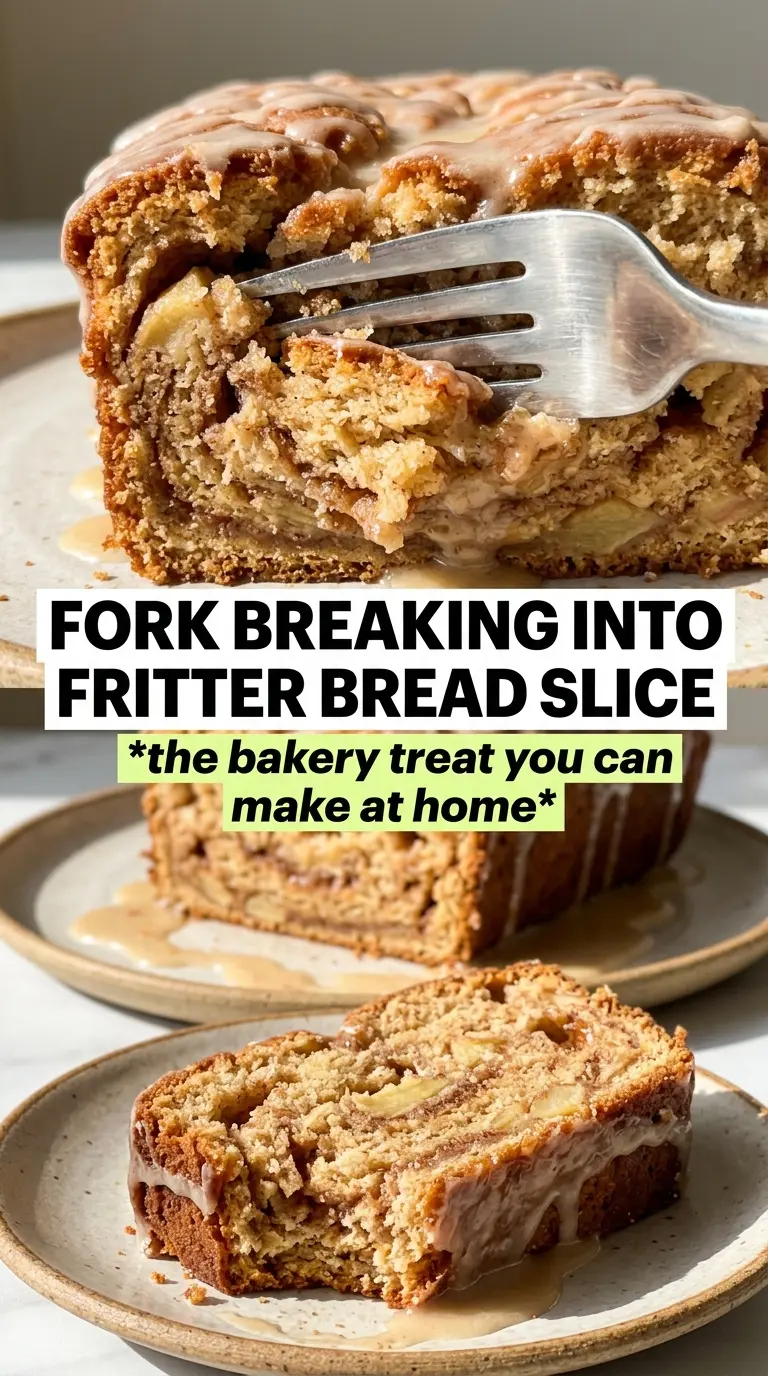
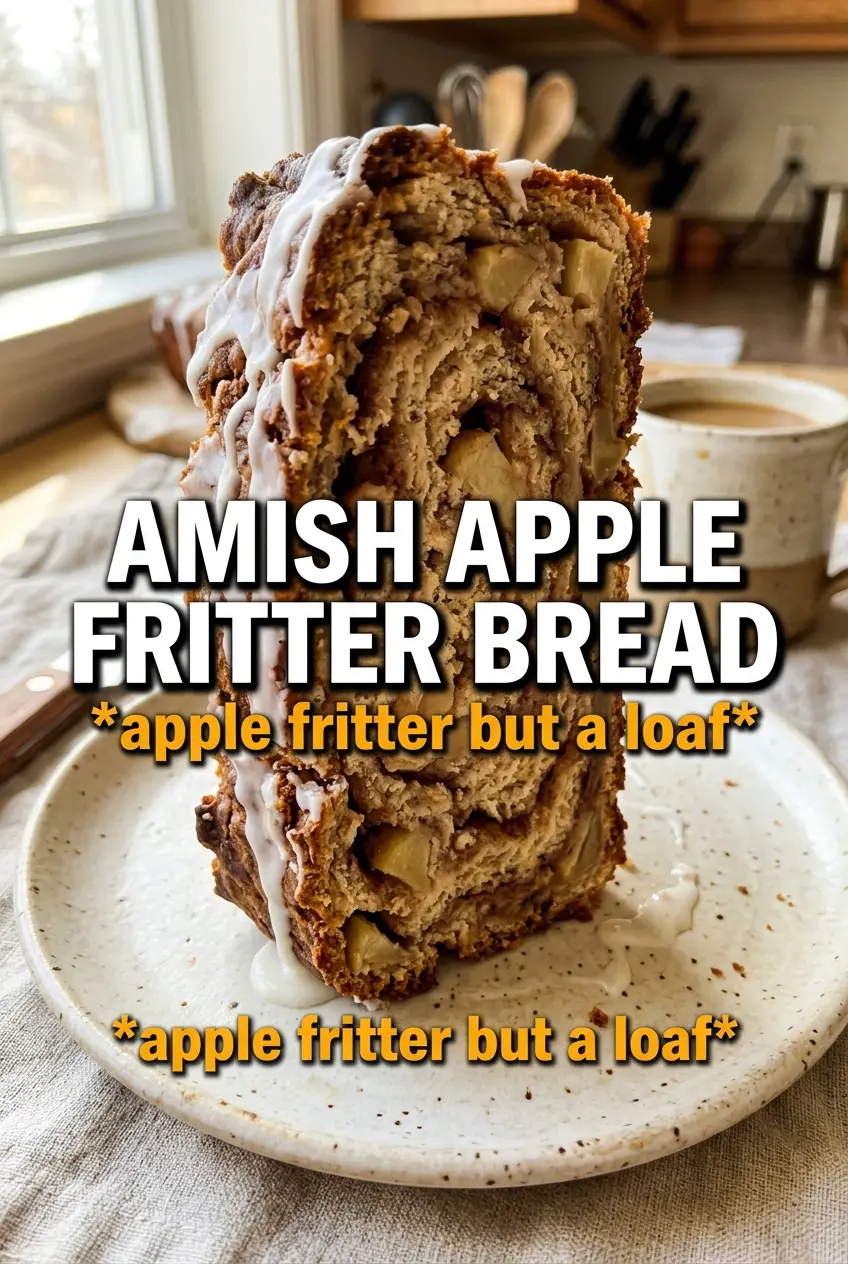
Amish apple fritter bread bakes up with the kind of crackly cinnamon-sugar top and tender apple-studded crumb that makes it disappear fast once it hits the board. The loaf slices cleanly, but it still has that soft, almost cake-like center that tastes like the best parts of an apple fritter without the frying. A warm glaze over the top finishes it with just enough sweetness to catch in the ridges and around the caramelized apple pieces.
What makes this version work is the layering. Some of the cinnamon sugar gets tossed with the diced apples, which keeps the fruit flavorful all the way through instead of leaving all the spice on top. The batter itself stays simple: butter, eggs, vanilla, and milk give it richness, while the baking powder and baking soda keep it from turning heavy under the weight of the apples.
Below, you’ll find the trick for building those layers so the loaf doesn’t sink in the middle, plus a few smart swaps if your apples are tart, soft, or extra juicy.
The cinnamon sugar on the apples made every slice taste like the center of a fritter, and the glaze set up just enough that it didn’t slide right off.
Save this Amish Apple Fritter Bread for the days when you want a cinnamon-swirled loaf with tender apples and a warm glaze.
The Layering Trick That Keeps the Loaf From Sinking
Apple fritter bread can turn dense in a hurry if all the fruit gets dumped into the batter at once. The apples release moisture as they bake, and if they’re buried unevenly, the middle gets gummy before the sides have a chance to set. Layering the batter and apples gives the loaf structure, so each slice holds together without losing that soft, rich crumb.
The other thing that matters is the cinnamon sugar. Tossing only half of it with the apples keeps some spice attached to the fruit, while the rest melts into the middle of the loaf and forms those sweet streaks people expect from an apple fritter. If the apples are cut too large, they’ll punch holes through the batter and make the slices fall apart, so dice them small and even.
What Each Ingredient Is Doing in the Loaf
- Brown sugar — This brings the deeper, almost caramel note that makes the apple filling taste baked-in instead of just sweet. Light or dark both work, but dark brown sugar gives a little more molasses flavor.
- Cinnamon — Cinnamon does the heavy lifting here, especially in the apple layer. Fresh cinnamon matters more than the brand name; stale spice will taste flat no matter how good the loaf is.
- Butter — Softened butter creams with the sugar to build air into the batter, which keeps the bread from turning heavy. Don’t melt it; melted butter changes the texture and makes the loaf denser.
- Apples — Use firm apples that hold their shape, like Granny Smith, Honeycrisp, or Fuji. Softer apples will break down too much and can make the center wet.
- Milk — Whole milk gives the richest crumb, but 2% works in a pinch. I wouldn’t use skim if you want the loaf to stay tender.
Building the Batter, Apples, and Glaze in the Right Order
Start with the Pan and the Apple Mix
Grease a 9×5 loaf pan well so the sugary edges release cleanly after baking. Mix the brown sugar and cinnamon first, then toss half with the diced apples until every piece is coated. That step keeps the fruit from clumping in one pocket and helps create those dark, sticky apple streaks through the loaf.
Creaming the Butter Until It Turns Fluffy
Beat the softened butter with the granulated sugar until it looks pale and fluffy, not gritty. This is where the loaf gets some lift, so don’t rush it. Add the eggs one at a time if you can, then mix in the vanilla. If the mixture looks slightly curdled after the eggs go in, it usually comes back together once the dry ingredients and milk are added.
Keeping the Batter Tender
Whisk the flour, baking powder, baking soda, and salt together before adding them. Alternate the dry ingredients with the milk, starting and ending with flour, and stop mixing as soon as the batter smooths out. Overmixing at this stage develops too much gluten and gives you a tougher loaf instead of a soft one.
Layering for Swirls, Not Sinkholes
Spread half the batter in the pan, then add half the apple mixture and a sprinkle of the remaining plain cinnamon sugar. Add the rest of the batter, then finish with the remaining apples on top. This method keeps the fruit suspended through the loaf instead of dropping to the bottom, and the top apples caramelize into the prettiest part of the bread.
Baking Until the Center Is Set
Bake at 350°F for 55 to 60 minutes, and start checking near the end with a toothpick in the center. You want a few moist crumbs, not wet batter. If the top browns too quickly before the middle is done, lay a loose piece of foil over the loaf for the last 15 minutes.
Glazing While the Loaf Is Warm
Stir the powdered sugar and milk until smooth, then drizzle it over the warm loaf. Warm bread helps the glaze sink in a little, which gives you that bakery-style finish instead of a hard sugar shell. If the glaze feels too thin, wait a minute before adding more milk; it should ribbon off the spoon, not run off like cream.
Ways to Adjust the Loaf Without Losing What Makes It Work
Make it dairy-free
Use plant-based butter and an unsweetened non-dairy milk with some body, like oat milk. The loaf will still bake up tender, though the flavor will lose a little of the buttery richness that makes the original so good.
Use apples with more tartness
Granny Smith apples give you a brighter, sharper bite that cuts through the sugar. If that’s what you have, keep the glaze as written so the loaf doesn’t taste lean or overly sharp.
Add walnuts for crunch
Fold in up to 1/2 cup chopped walnuts with the apples if you want a little crunch in each slice. The bread stays moist, but the texture shifts from fritter-like and soft to more rustic.
Storage and Reheating
- Refrigerator: Store covered for up to 4 days. The glaze will soften and the crumb gets a little denser after day one, which is normal.
- Freezer: Freeze the loaf tightly wrapped, without glaze if possible, for up to 2 months. Thaw at room temperature and glaze after thawing for the best texture.
- Reheating: Warm slices in the microwave for 10 to 15 seconds or in a 300°F oven for a few minutes. Too much heat dries the crumb fast, so stop as soon as the slice feels just warm.
Questions I Get Asked About This Recipe
Amish Apple Fritter Bread
Ingredients
Equipment
Method
- Preheat the oven to 350F and grease a 9x5 loaf pan to prevent sticking.
- Mix the brown sugar and 2 teaspoons cinnamon, then toss half of the mixture with the diced apples until coated.
- Beat the softened butter and granulated sugar until fluffy, then beat in the eggs and vanilla extract until smooth.
- Whisk the all-purpose flour, baking powder, baking soda, and salt together, then alternate adding the dry mix with the whole milk into the butter mixture until just combined.
- Pour half the batter into the prepared pan, then layer half the apple mixture over it.
- Sprinkle the remaining plain cinnamon sugar over the apples for a visible cinnamon-sugar layer.
- Pour the remaining batter on top, then spread the remaining apples over the surface.
- Bake for 55-60 minutes at 350F, until a toothpick comes out clean and the loaf looks golden.
- Stir powdered sugar with 2 tablespoons milk to make a smooth glaze, then drizzle it over the loaf while warm.