There’s a reason an American flag charcuterie board disappears fast at summer parties: it looks festive the second it hits the table, and it eats like a proper snack board instead of a decoration. The mix of salty meats, creamy cheeses, and fresh berries keeps every bite moving between rich and bright, which matters on a board this big. It feels polished without requiring any cooking at all.
The trick is treating the board like a graphic design project before it becomes a snack platter. Clear lines matter here. Tight blueberries make the canton read as blue, rolled salami gives you a star-like texture that stands up visually, and the red-and-white stripes only work if you keep the rows full and clean from edge to edge. I’ve found that using both sliced cheese and mozzarella balls helps the white stripes look intentional instead of patchy.
Below, I’ve included the layout cues that keep the flag shape sharp, plus a few smart swaps if you need to work with what’s already in the fridge. The board looks elaborate, but once you know where each ingredient belongs, it comes together in a calm, repeatable way.
The stripes stayed crisp for the whole party, and the mix of blueberries with the rolled salami made the top corner look exactly like a flag instead of just a snack tray.
Like this American Flag Charcuterie Board? Save it to Pinterest for easy patriotic entertaining with crisp red, white, and blue layers.
The Borderline That Keeps the Flag Looking Like a Flag
The biggest mistake with a themed board like this is letting the ingredients drift into each other. Once that happens, the image turns muddy and the flag shape disappears. Keep the canton square and the stripes long and parallel, even if that means leaving a few ingredients unused.
Blueberries need to be packed tightly enough that you don’t see much board beneath them. The meats and cheese should read in distinct rows, not scattered piles. If the lines wobble, the whole design looks accidental instead of deliberate, and that’s the difference between a cute snack tray and a board people stop to photograph.
What Each Ingredient Is Actually Doing in This Board
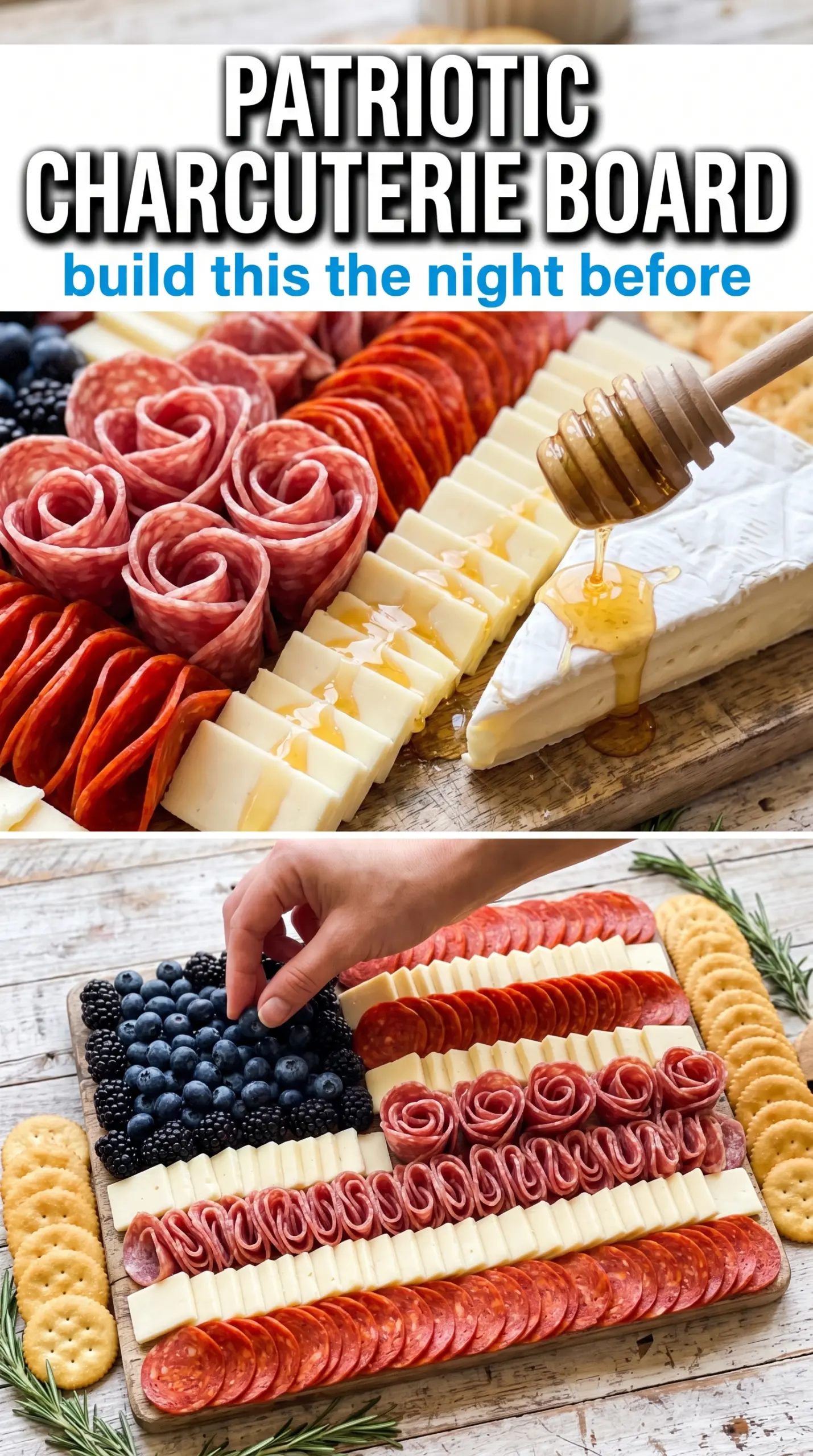
- Pepperoni slices — These are the fastest way to get a saturated red stripe with strong visual contrast. Stack them slightly overlapping so the rows look full, not sparse.
- Salami, rolled — Rolled salami adds height and a star-like texture in the blue canton. Thin slices work best because they hold the roll without cracking.
- Prosciutto — Prosciutto is softer and more irregular than pepperoni, which makes it useful for filling gaps in the red stripes. It also gives the board a more elegant, less processed look.
- Fresh mozzarella balls and white cheddar or provolone — The mozzarella brings round shapes and moisture, while sliced cheese gives you clean, stripe-like edges. Use both if you want the white sections to read clearly from across the table.
- Blueberries — These create the canton base and do the most visual work in the board. Use firm berries; soft ones collapse and leave the top corner looking patchy.
- Strawberries — Halved strawberries reinforce the red stripes and help cover any odd gaps between meats. If berries are juicy, pat the cut sides dry so they don’t bleed onto the cheese.
- Rosemary sprigs — This is the garnish that makes the board feel finished. Tuck them at the corners and edges, where they frame the design without stealing the pattern.
- Assorted crackers — Keep these around the perimeter, not inside the flag, so they don’t break the shape. They’re there for serving, not for filling space.
Building the Flag from the Top Left Down
Setting the Canton First
Start by mentally dividing the board before you place a single ingredient. The upper left rectangle is your canton, and it needs to stay proportionate so the stripes have enough room to run the full length of the board. Fill it with blueberries first, then tuck the rolled salami pieces into the center so the area reads as blue with texture. If you build the stripes first, you’ll end up squeezing the top corner into a shape that looks cramped.
Laying the Stripes with Purpose
Work across the board from the top right, keeping each stripe as straight as you can. Pepperoni makes the strongest red stripe, and sliced cheese or mozzarella balls should alternate with it in white rows. The goal is clean bands, not a random red-and-white mix. If a stripe starts to thin out, overlap the slices more tightly instead of stretching the row thinner, because gaps are what make the flag look unfinished.
Filling Gaps Without Breaking the Design
Once the main layout is down, step back and look for thin spots. Prosciutto folds can deepen a red stripe without making it look bulky, and strawberry halves can do the same while adding freshness. Keep the additions in line with the existing rows. Any ingredient that sits diagonally or floats into the wrong zone weakens the flag shape fast.
Finishing the Edges
Rosemary sprigs belong at the corners and outer edges, where they frame the board and give it a polished look. Put the crackers around the perimeter last so they don’t crowd the pattern. The board is ready when the colors read clearly from a few feet away and the stripes still look crisp after a little settling time on the table.
How to Adjust This Board Without Losing the Flag Shape
Gluten-Free Grazing Board
The board itself is naturally gluten-free, so the only thing to watch is the crackers. Use gluten-free crackers with a sturdy shape, because crumbly ones shed into the flag and make the clean lines harder to see. The rest of the board stays the same.
Dairy-Free Version
Swap the mozzarella and cheddar for dairy-free sliced cheese that can be cut into neat stripes, or replace those rows with extra prosciutto and strawberries. You’ll lose some of the creamy contrast, but the color pattern stays strong if the white rows are still distinct.
More Kid-Friendly, Less Salty
Cut back on the prosciutto and lean more heavily on strawberries, mozzarella, and mild cheddar. The board will still look patriotic, but the bite gets softer and less salty, which helps if you’re serving a crowd that snacks lightly.
Make-Ahead Assembly
You can wash and dry the berries, slice the cheese, and roll the salami a few hours ahead. Build the board as close to serving time as you can, because mozzarella and strawberries can start to weep and blur the clean stripes if they sit too long.
Answers to the Questions Worth Asking
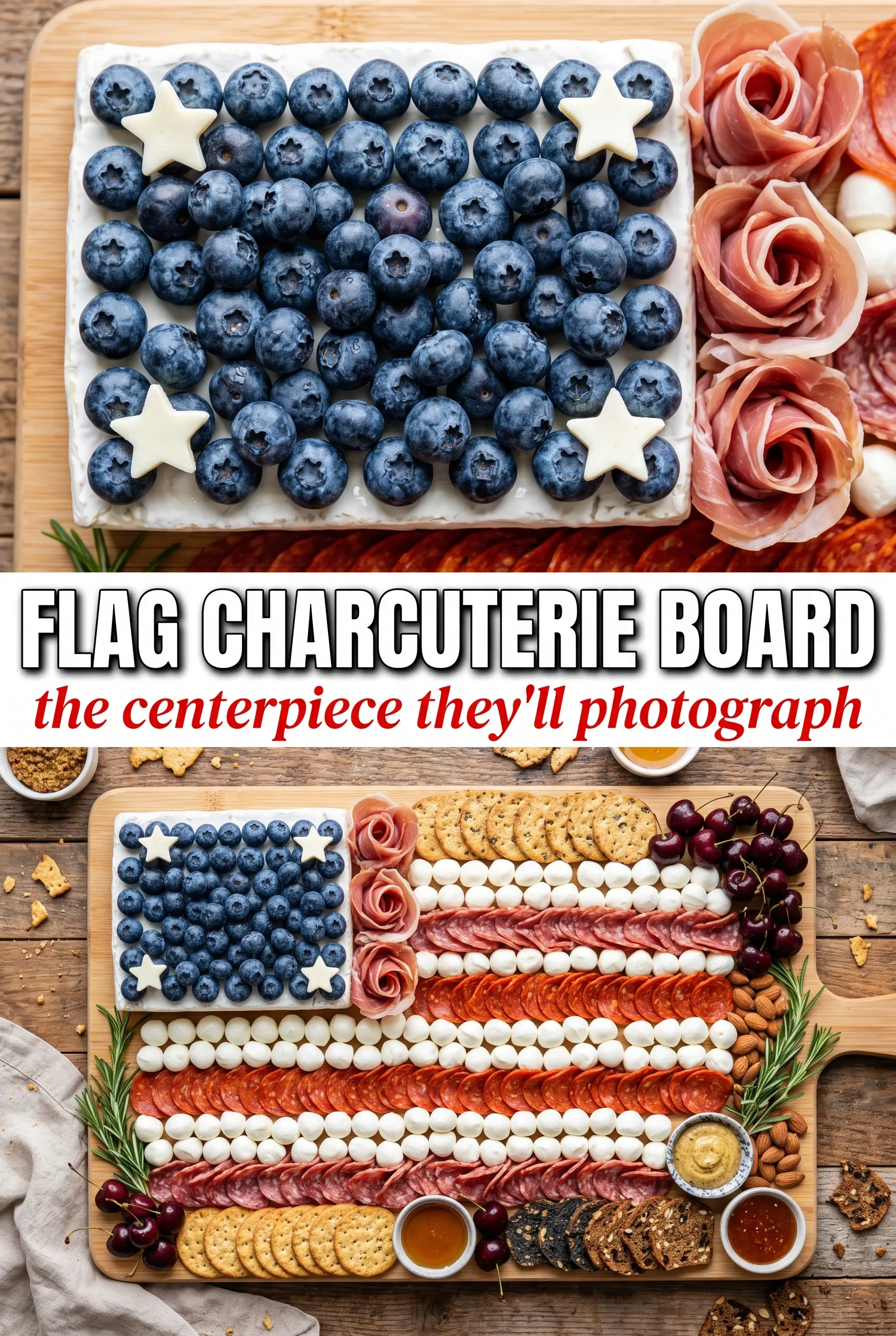
American Flag Charcuterie Board
Ingredients
Equipment
Method
- Use a large rectangular wooden board or serving tray and mentally divide the upper left into a canton rectangle.
- Fill the canton with fresh blueberries packed tightly together so the blue area looks solid.
- Tuck rolled salami pieces into the center of the blueberries to resemble small stars.
- Starting from the top right of the board, layer pepperoni slices in a clean row across the full width to form a red stripe.
- Repeat the layering pattern for each red stripe so the red rows are continuous end to end.
- Create the white stripes using rows of sliced white cheddar or alternating with fresh mozzarella balls, alternating with the red stripes down the full board.
- Keep the cheese rows evenly spaced so the white stripes stay crisp from top to bottom.
- Add prosciutto folds or strawberry halves along the red stripes to reinforce the red rows and fill any gaps in the pattern.
- Tuck rosemary sprigs at the corners and edges for a visible finishing accent.
- Arrange assorted crackers around the perimeter and serve.