Bright pineapple sorbet is one of those desserts that disappears fast because it hits every note at once: icy, vivid, sweet, and sharp enough to keep each spoonful from tasting flat. With just a blender and three ingredients, it turns frozen pineapple into something that tastes much more deliberate than the effort behind it. The texture lands somewhere between soft-serve and a clean, scoopable sorbet, depending on how long you freeze it after blending.
The trick is balance. Pineapple brings the sweetness and body, lime juice keeps the flavor awake, and a little honey or agave smooths out the edges so the sorbet doesn’t taste hard or one-dimensional. Letting the fruit soften for a few minutes before blending matters more than people expect; it gives the blender a head start and keeps the mixture from getting stuck around the blades. If you’ve ever ended up with icy chunks or a blender that just spins fruit around, the method here avoids both problems.
Below you’ll find the small details that make this sorbet work cleanly, plus a couple of smart ways to change the texture depending on whether you want it spoon-soft or firmly frozen.
The pineapple turned silky in the blender, and after a couple hours in the freezer it scooped like a dream. The lime kept it from tasting too sweet, which was exactly what it needed.
Love how the pineapple blends into a smooth, icy sorbet? Save this 3-ingredient pineapple sorbet for the days when you want a fast frozen dessert with almost no cleanup.
The Reason This Sorbet Stays Smooth Instead of Icy
The biggest mistake with fruit sorbet is treating frozen fruit like it will behave on its own. Pineapple has a lot of water, which is great for flavor but risky for texture if you freeze it too long before blending or skip the sweetener entirely. The honey or agave helps lower the freezing point a bit, which keeps the sorbet from turning into a hard brick.
Lime juice matters more than it looks like it should. It sharpens the pineapple and keeps the sweetness from going dull, especially after freezing. If your sorbet tastes flat, it usually needs acid, not more sugar. Add the lime before you judge the final flavor.
What Each Ingredient Is Actually Doing Here
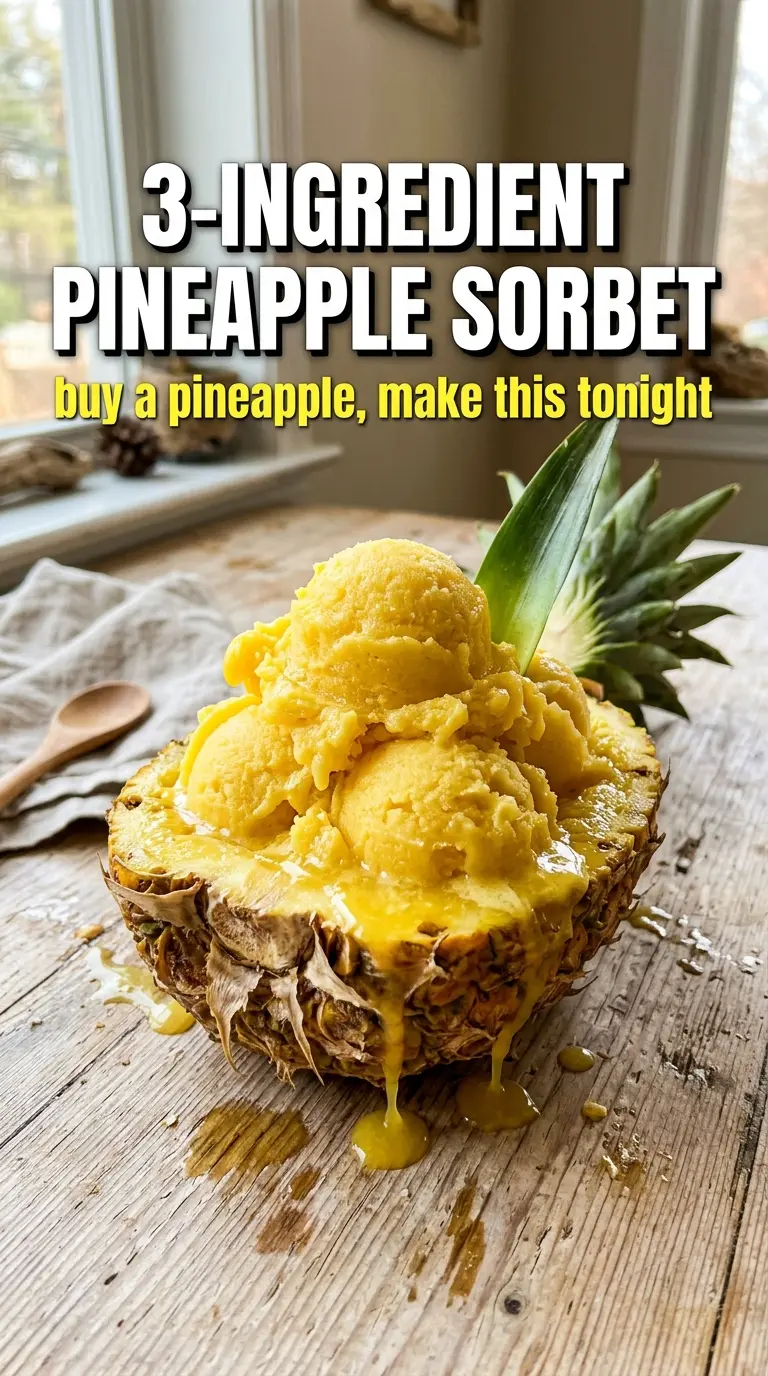
- Frozen pineapple chunks — Use fully frozen fruit for the cleanest, most intense texture. Fresh pineapple won’t give you the same instant body; it will blend thin and need a long freeze to firm up. If you’re using store-bought frozen pineapple, let it sit just long enough to take the edge off so the blender can catch it.
- Lime juice — This keeps the sorbet from tasting one-note and brings the pineapple forward. Bottled lime juice works in a pinch, but fresh tastes brighter and less tinny. If your pineapple is already very tart, start with less and add at the end.
- Honey or agave — This is the ingredient that softens the freeze and rounds out the fruit. Honey gives a slightly deeper flavor; agave stays more neutral and keeps the pineapple front and center. Either works, but don’t skip this entirely unless your pineapple is exceptionally sweet and you’re happy with a firmer, more icy result.
The Fast Blend That Decides the Texture
Softening the Fruit Just Enough
Let the frozen pineapple sit out for about 5 minutes before blending. You want the pieces to loosen slightly at the edges, not turn soft and wet. That short pause helps the blades grab the fruit instead of bouncing it around, which is the main reason home blender sorbet sometimes stalls.
Blending to a Creamy Base
Add the pineapple, lime juice, and honey or agave to a high-powered blender and blend until smooth. Stop and scrape down the sides if needed. If the mixture looks dry or won’t move, it usually needs a small splash more liquid or another minute of patience while the fruit catches. Keep blending until the texture turns glossy and even, with no gritty icy bits left.
Choosing Your Final Freeze
You can eat it right away for a soft, spoonable sorbet, or freeze it for 2 to 4 hours if you want a firmer scoop. The longer it sits, the more important it is to let it soften for a few minutes before serving. If it freezes hard, don’t microwave it. Let it stand on the counter until the edges relax, then scrape or scoop.
How to Adjust It When You Want a Different Finish
Make it dairy-free and vegan
This recipe already fits both, as long as you use agave instead of honey. Agave keeps the sorbet fully plant-based and gives a clean, light sweetness that won’t cover the pineapple.
Turn it into a granita-style dessert
Freeze the blended mixture in a shallow container, then scrape it with a fork every 30 to 45 minutes. That breaks up the ice crystals and gives you a fluffier, more crystalline texture instead of a smooth scoop. It’s a good move if your blender is struggling or you want something a little lighter.
Dial up the tang
Add an extra teaspoon or two of lime juice if you want a sharper finish. The sorbet will taste less sweet at first bite, but the pineapple flavor gets cleaner and more defined. That adjustment works best when the fruit is very ripe.
Storage and Reheating
- Refrigerator: Don’t store this in the fridge; it melts fast and turns watery.
- Freezer: Freeze in an airtight container for up to 1 week. After that, the texture starts to get frostier and less smooth.
- Reheating: There’s no reheating here. Let it sit at room temperature for 5 to 10 minutes before scooping so the surface softens before the center does.
Answers to the Questions Worth Asking
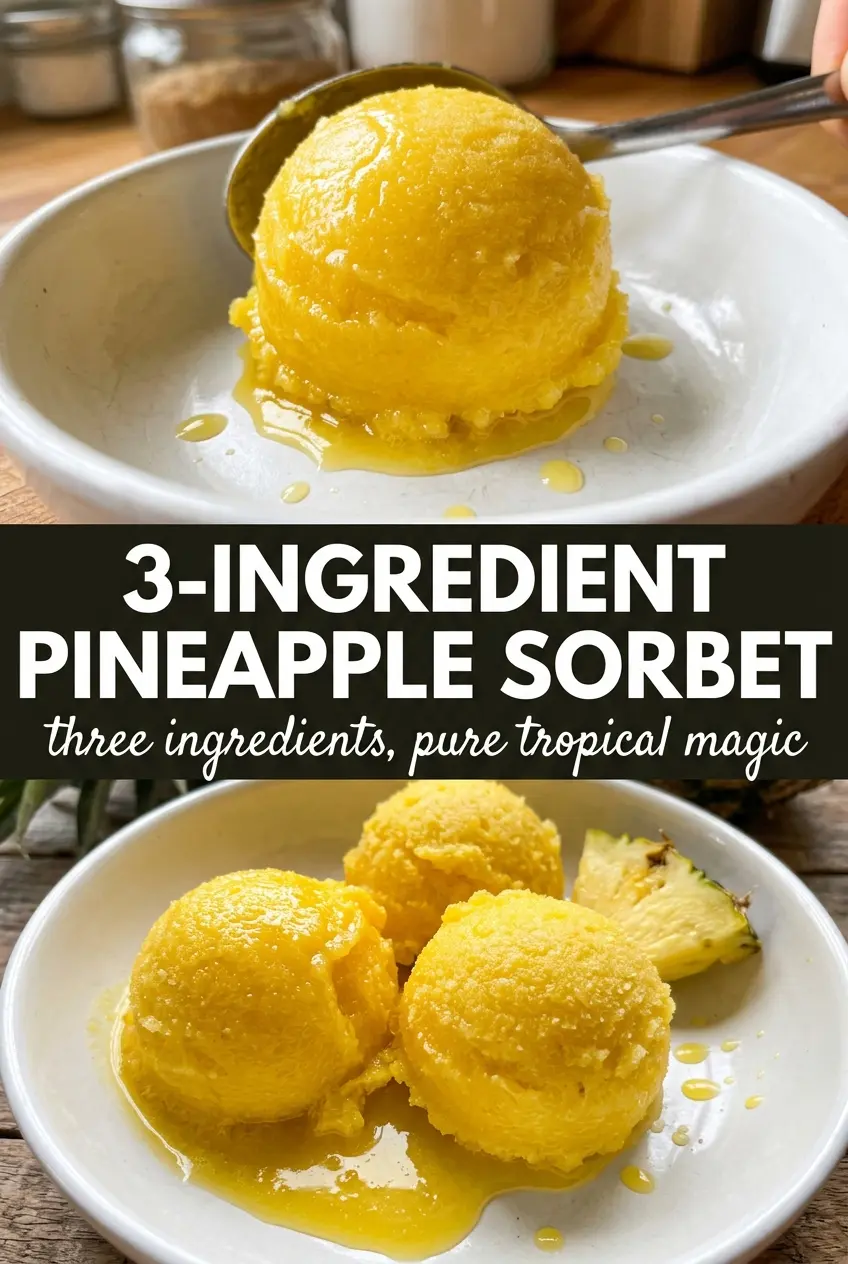
3-Ingredient Pineapple Sorbet
Ingredients
Equipment
Method
- Let frozen pineapple sit at room temperature for 5 minutes to soften slightly, so it blends smoothly.
- Blend the frozen pineapple, lime juice, and honey or agave in a high-powered blender until completely smooth, with no visible chunks.
- Taste the mixture and adjust sweetness or acidity by adding more honey or agave or a bit more lime juice, if needed.
- Serve immediately as a soft sorbet for the creamiest texture right after blending.
- Transfer to a freezer container and freeze 2–4 hours for a firmer scoop.
- Scrape the frozen mixture with a fork for a granita texture, or blend again briefly for a smooth sorbet after freezing.