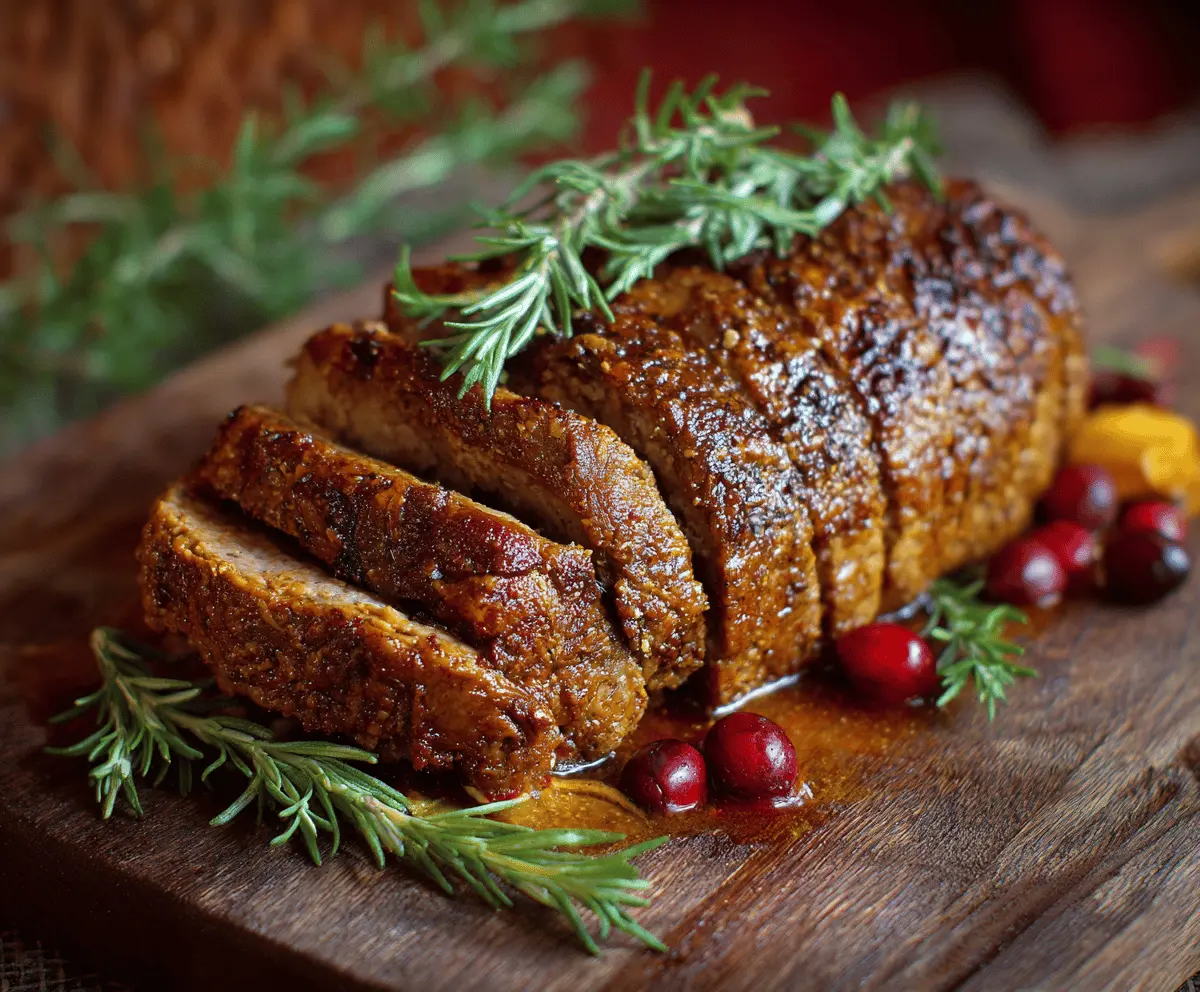
This Vegan Turkey Roast is a wonderful way to bring the holiday spirit to your table without any meat. It’s packed with a hearty mix of plant-based ingredients like lentils, mushrooms, and nuts that give it a texture and flavor that feels just right for a festive meal. Topped with a simple herb glaze, it looks beautiful and smells amazing as it bakes.
I love making this roast because it’s a dish everyone can enjoy—whether they’re vegan or not. It’s surprisingly satisfying and feels like a special treat without being complicated to prepare. One of my favorite parts is that it leftovers week well for sandwiches or hearty salads, so it’s great for days after the big meal too.
When I serve it, I like to pair it with classic sides like mashed potatoes, cranberry sauce, and green beans for a comforting plate that feels warm and inviting. It’s always a hit at my family dinners, and I find myself looking forward to making it every season. It’s like the kind of dish that brings people together just by being on the table.
Key Ingredients & Substitutions
Vital wheat gluten: This is the main ingredient that gives the roast a firm, meat-like texture. If you need a gluten-free option, try using mashed chickpeas or textured vegetable protein, though the texture will be softer.
Lentils and mushrooms: They create a savory, meaty filling. Brown or green lentils hold their shape well. Mushrooms add moisture and an umami boost. If you can’t find fresh mushrooms, canned or rehydrated dried mushrooms work too.
Seasonings (sage, thyme, garlic, onion powders): These herbs are classic for turkey flavor. If fresh herbs are available, use about 1 tablespoon each for a fresher taste. Nutritional yeast adds a subtle cheesy note but can be skipped if unavailable.
Soy sauce or tamari: Provides saltiness and depth. Tamari is a great gluten-free choice. For low sodium diets, use a lighter soy sauce or coconut aminos.
Maple syrup in the glaze: Adds a touch of sweetness balancing the savory flavors. You can swap agave nectar or brown rice syrup if preferred.
How Do You Shape and Steam the Vegan Turkey Roast to Get the Right Texture?
The shaping and steaming are key steps that make this roast hold together and cook evenly.
- Roll the dough out evenly to about 1/2 inch thickness to make sure the filling cooks well inside.
- When spreading the filling, leave a little space around edges for easier sealing.
- Roll the dough up carefully but snugly, like a jelly roll, to trap the filling without gaps.
- Seal the edges well to prevent filling leakage during steaming.
- Wrap the roulade tightly in foil to keep moisture in while steaming.
- Steam over boiling water for 1 hour—this gently cooks the dough, firming its “meaty” texture without drying it out.
- After steaming, unwrap carefully before glazing and roasting to avoid losing shape.
Taking your time during these steps helps the roast stay moist and slice nicely, making it a proud centerpiece for any meal.
Equipment You’ll Need
- Large mixing bowls – I use these to combine the dry and wet ingredients easily and get a good knead.
- Steamer basket or steaming setup – steaming for 60 minutes is key to a firm texture. A bamboo steamer or metal basket works well.
- Foil – to wrap the roulade securely for steaming and baking. This keeps it moist and helps hold its shape.
- Baking sheet – for roasting the final roast until golden. I like it because it gives a crispy exterior.
- Brush – for applying the glaze evenly over the roast before roasting. It helps give that shiny, caramelized finish.
Flavor Variations & Add-Ins
- Swap lentils for cooked quinoa or bulgur for a slightly different texture and flavor. Works great if you’re looking for variety.
- Mix in chopped sun-dried tomatoes or sautéed spinach into the filling for a burst of fresh flavor and color.
- Add a teaspoon of smoked paprika or cumin to the glaze for a smoky or spiced twist.
- Top with toasted almond slices or chopped fresh herbs like parsley or sage after baking for extra crunch and brightness.
Vegan Turkey Roast
Ingredients You’ll Need:
For the “Turkey” Roast:
- 2 cups vital wheat gluten
- 1/4 cup nutritional yeast
- 1 teaspoon garlic powder
- 1 teaspoon onion powder
- 1/2 teaspoon dried sage
- 1/2 teaspoon dried thyme
- 1/4 teaspoon black pepper
- 1 cup vegetable broth
- 1/4 cup soy sauce or tamari
- 1 tablespoon tomato paste
- 2 tablespoons olive oil
For the Filling:
- 1 cup cooked lentils (brown or green)
- 1/2 cup finely chopped mushrooms
- 1/2 cup finely chopped onion
- 2 cloves garlic, minced
- 1/2 teaspoon dried thyme
- 1/2 teaspoon dried sage
- 2 tablespoons olive oil
- Salt and pepper to taste
For the Glaze:
- 1/4 cup vegetable broth
- 2 tablespoons soy sauce or tamari
- 1 tablespoon maple syrup or agave nectar
- 1 teaspoon smoked paprika
Optional Vegetables for Roasting:
- Carrots, onions, potatoes, green beans
For Garnish:
- Fresh rosemary or thyme sprigs
How Much Time Will You Need?
This recipe takes about 30 minutes of active prep, including cooking the filling and preparing the dough. The steam cooking process requires 60 minutes, and the final roasting takes another 20-25 minutes. Allow an extra 5-10 minutes for resting before slicing and serving. Overall, expect roughly 2 to 2.5 hours from start to finish, but much of that time is hands-off steaming and roasting.
Step-by-Step Instructions:
1. Prepare the Filling:
Heat 2 tablespoons of olive oil in a skillet over medium heat. Add the chopped onions and cook until translucent, about 4 minutes. Stir in minced garlic and chopped mushrooms, cooking until the mushrooms are browned and the moisture has evaporated, around 7 minutes. Add the cooked lentils, dried thyme, dried sage, salt, and pepper. Mix well and cook for another 2 minutes to blend flavors. Remove from heat and let cool slightly.
2. Make the Dough for the Roast:
In a large bowl, combine the vital wheat gluten, nutritional yeast, garlic powder, onion powder, dried sage, thyme, and black pepper. In a separate bowl, whisk together the vegetable broth, soy sauce, tomato paste, and olive oil. Pour the wet ingredients into the dry and stir until a dough forms. Knead the dough for 3-5 minutes until it becomes elastic and firm.
3. Assemble the Roast:
On a clean surface, roll out the dough into a rectangle about 1/2 inch thick. Spread the lentil and mushroom filling evenly over the dough, leaving some space around the edges. Carefully roll up the dough tightly to encase the filling, sealing edges to form a roulade. Wrap the roulade tightly in foil, twisting the ends to secure.
4. Steam the Roast:
Place the foil-wrapped roulade in a steamer basket over boiling water. Cover and steam for 60 minutes. Remove from the steamer and carefully unwrap the foil.
5. Prepare the Glaze:
In a small bowl, mix together the vegetable broth, soy sauce, maple syrup (or agave nectar), and smoked paprika until well combined.
6. Roast and Finish:
Preheat your oven to 375°F (190°C). Place the steamed roulade on a baking sheet. Brush it generously with the glaze, then surround with any desired vegetables like carrots, onions, and potatoes. Roast for 20-25 minutes until the roast is browned and slightly crispy, basting once halfway through with more glaze.
7. Serve:
Let the roast rest for 5-10 minutes to firm up before slicing. Garnish with fresh rosemary or thyme sprigs and serve warm with the roasted vegetables on the side.
Can I Make the Vegan Turkey Roast Ahead of Time?
Yes! You can prepare and steam the roast a day in advance, then refrigerate it. When ready to serve, brush with glaze and roast it fresh to get that crispy, caramelized finish.
What Can I Use Instead of Vital Wheat Gluten?
Vital wheat gluten is essential for the chewy, meat-like texture, but if you need a gluten-free option, you can try using firm tofu or a combination of cooked lentils and breadcrumbs. Keep in mind the texture will be softer.
How Should I Store Leftovers?
Store leftovers in an airtight container in the refrigerator for up to 3 days. Reheat gently in the oven or microwave, adding a splash of vegetable broth if the roast feels dry.
Can I Freeze the Vegan Turkey Roast?
Definitely! Wrap the cooled roast tightly in foil or plastic wrap and place in a freezer-safe bag or container. Freeze for up to 2 months. Thaw overnight in the fridge before roasting and serving.