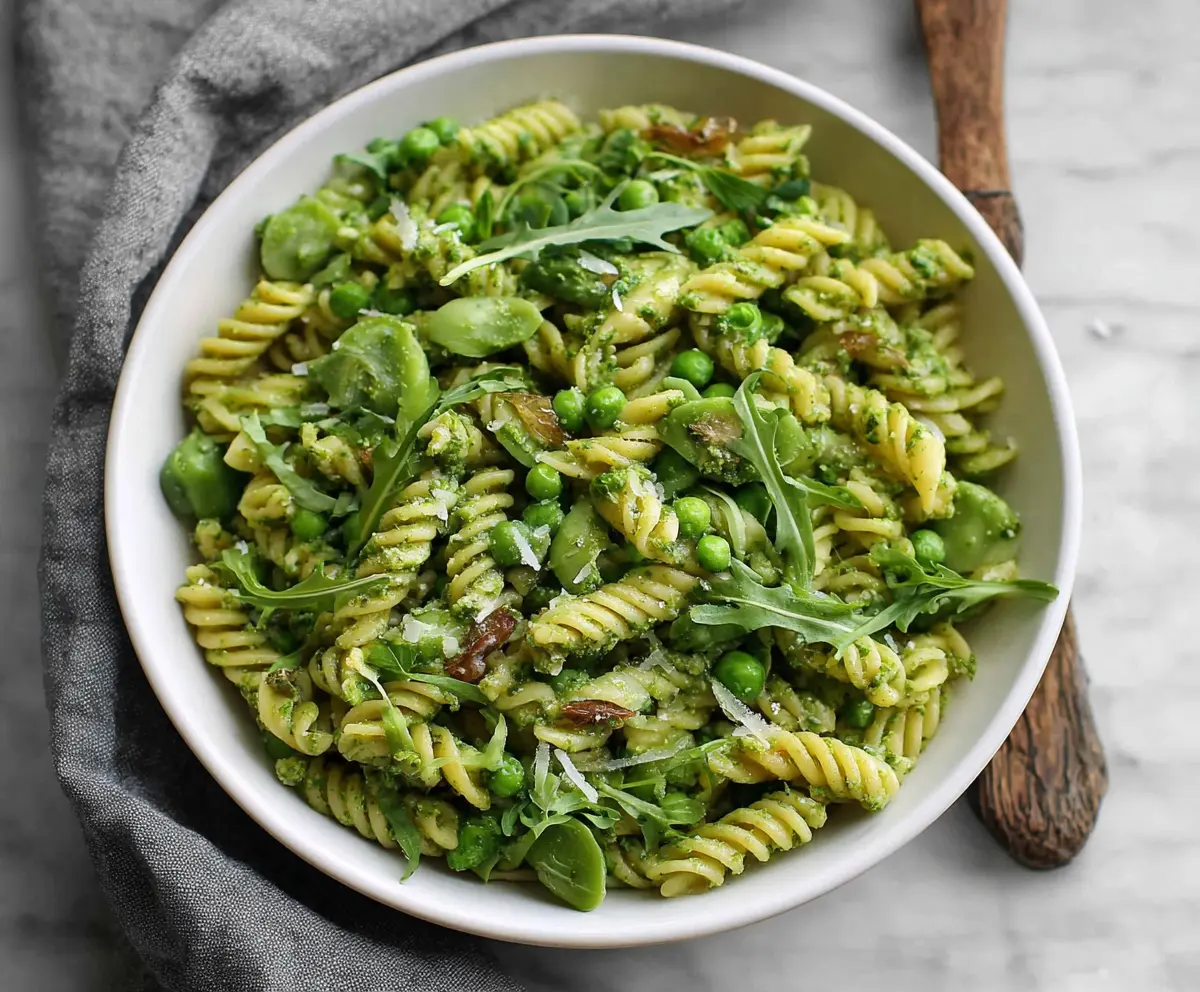
Spring Pea Pesto Pasta is a fresh and vibrant dish that’s perfect for welcoming warmer days. It features bright green peas blended into a creamy pesto sauce, tossed with your favorite pasta for a light but satisfying meal. The fresh flavors make it a wonderful way to enjoy the season’s best ingredients.
I love making this pasta when peas are at their sweetest and freshest. The pesto is quick to whip up, and I like to add a little lemon zest to brighten things even more. It’s one of those recipes that feels like a celebration of spring in every bite.
For me, this pasta shines when served warm with a sprinkle of Parmesan and some crunchy pine nuts on top. It’s great for a casual dinner or a lunch with friends. I find it’s both comforting and refreshing, which is exactly what I want from a spring meal.
Key Ingredients & Substitutions
Peas: Fresh peas add a sweet pop, but frozen peas work just as well and are super convenient. Make sure to thaw them before blending.
Basil & Arugula: Basil gives a classic pesto flavor, while arugula adds a peppery twist. If you can’t find arugula, spinach is a mild substitute.
Parmesan: This cheese adds saltiness and depth. For a dairy-free option, try nutritional yeast or omit it altogether.
Pine Nuts: Toasted pine nuts bring a lovely nuttiness. If they’re pricey or unavailable, walnuts or almonds are great swaps.
Broad Beans (Optional): These add texture and another veggie element. If you don’t have them, more peas or even asparagus can work well.
How Do You Make a Smooth and Bright Spring Pea Pesto?
Getting the pesto creamy yet fresh-tasting is key. Here’s how I do it:
- Start by pulsing peas, basil, arugula, garlic, lemon zest, and cheese in a food processor.
- Slowly add olive oil while blending to create a smooth sauce.
- Add lemon juice at the end for brightness and salt and pepper to taste.
- If the pesto is too thick, add a little reserved pasta water to loosen it up.
Blanching the peas briefly before blending keeps their color bright and flavor fresh. Using fresh garlic gives a nice kick, but adjust the amount if you prefer milder pesto.
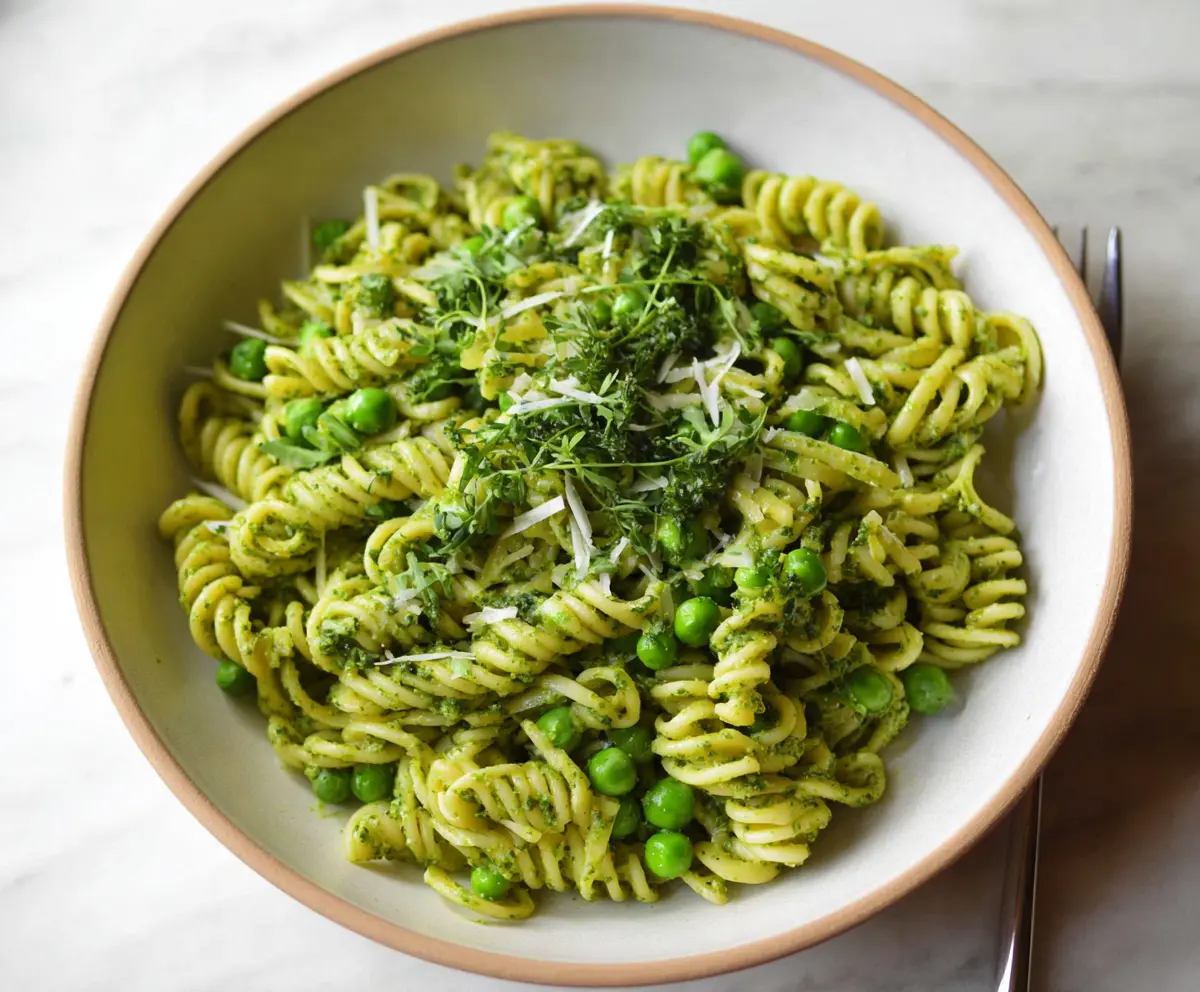
Equipment You’ll Need
- Large pot – I like it because it’s easy to cook the pasta and blanch the peas in the same pot, saving time and dishes.
- Food processor – makes blending the pesto quick and smooth, blending all flavors evenly.
- Measuring cups and spoons – keep things organized and ensure the perfect balance of ingredients.
- Chef’s knife and cutting board – useful for prepping herbs, garlic, and optional broad beans or other add-ins.
- Strainer or colander – for draining pasta and peas without it splashing everywhere.
Flavor Variations & Add-Ins
- Protein swap: Add cooked shrimp or grilled chicken for extra heartiness.
- Cheese change: Use pecorino or goat cheese if you want a different flavor twist.
- Veggie boost: Mix in roasted asparagus, cherry tomatoes, or sautéed zucchini for added texture and color.
- Flavor kick: A pinch of red pepper flakes adds a subtle heat that pairs well with the fresh herbs.
Spring Pea Pesto Pasta
Ingredients You’ll Need:
- 12 oz (340g) rotini or fusilli pasta
- 2 cups fresh or frozen peas (thawed if frozen)
- 1/2 cup fresh basil leaves
- 1 cup fresh arugula (plus extra for garnish)
- 1/3 cup grated Parmesan cheese (plus more for serving)
- 1/4 cup pine nuts or walnuts, toasted
- 2 cloves garlic
- Zest and juice of 1 lemon
- 1/3 to 1/2 cup olive oil
- Salt and freshly ground black pepper, to taste
- 1 cup broad beans (fava beans), blanched and peeled (optional)
- 1 tablespoon olive oil (for sautéing, optional)
How Much Time Will You Need?
This dish takes about 20-25 minutes total. You’ll spend 10-15 minutes cooking the pasta and prepping the pesto, then a few minutes combining everything. If you use broad beans and sauté them, add a little extra time, but it’s still a quick and easy meal.
Step-by-Step Instructions:
1. Cook Pasta and Peas:
Bring a large pot of salted water to a boil. Add the pasta and cook according to package directions until al dente. About 1–2 minutes before the pasta is done, add the peas to the boiling water to blanch them. Drain the pasta and peas, reserving ½ cup of pasta water.
2. Make the Pea Pesto:
While pasta cooks, place the peas, basil, arugula, Parmesan, toasted pine nuts, garlic, lemon zest, and lemon juice into a food processor. Pulse until everything is finely chopped.
3. Add Olive Oil and Season:
With the food processor running, slowly drizzle in the olive oil until the pesto is smooth and creamy. Season with salt and pepper to your liking.
4. Cook Broad Beans (Optional):
If using broad beans, heat 1 tablespoon olive oil in a small pan and sauté the beans for 2–3 minutes until warmed through.
5. Combine Pasta with Pesto:
Return pasta and peas to the pot or a large bowl. Toss with the pea pesto. If the sauce seems thick, add reserved pasta water a little at a time until it reaches the desired consistency.
6. Add Broad Beans and Arugula:
Gently fold in the sautéed broad beans and some fresh arugula leaves for extra freshness.
7. Serve and Garnish:
Serve the pasta warm, garnished with extra Parmesan, fresh arugula, and a drizzle of olive oil. Enjoy your bright, green, and delicious spring meal!
Can I Use Frozen Peas Instead of Fresh?
Yes! Frozen peas work great in this recipe. Just make sure to thaw them first for the best texture and flavor before blending into the pesto.
How Should I Store Leftovers?
Store any leftover pasta in an airtight container in the fridge for up to 3 days. Reheat gently on the stove or microwave, adding a splash of water or olive oil if the sauce has thickened.
Can I Make the Pesto Ahead of Time?
Absolutely! Prepare the pesto up to 2 days in advance and keep it refrigerated in a sealed container. Stir in a little olive oil before using if it thickens.
What Are Good Substitutes for Pine Nuts?
Walnuts or almonds are excellent alternatives if you don’t have pine nuts. Toast them lightly for extra flavor before blending into the pesto.