
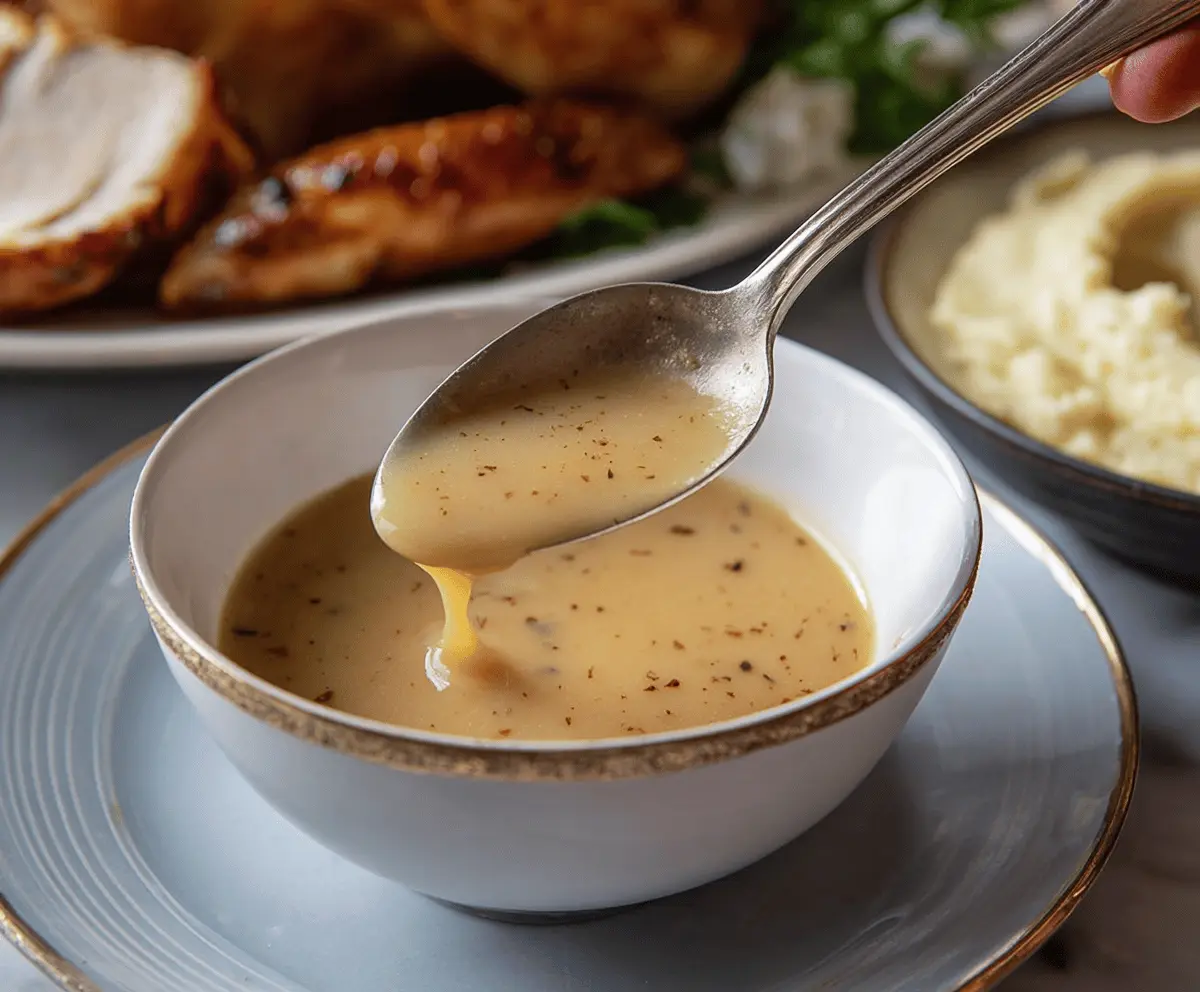
Perfect Turkey Gravy is the ultimate finishing touch to any turkey dinner. It’s rich, smooth, and packed with all the delicious flavors you get from the pan drippings after roasting your bird. This gravy is the kind that makes mashed potatoes sing and stuffing come alive, with just the right balance of savory and comforting taste.
I’ll be honest, I always look forward to making turkey gravy almost as much as the turkey itself. There’s something so satisfying about turning those browned bits and juices into a luscious sauce that ties the whole meal together. I like to whisk slowly and keep tasting to get it just right—sometimes a little extra salt or pepper, or a splash of broth if it gets too thick.
One of my favorite ways to serve perfect turkey gravy is over warm mashed potatoes with a bit of cranberry sauce on the side. It feels like a cozy hug on a plate, especially during holiday dinners or chilly weekends at home. And the best part? You can always make a bigger batch because turkey gravy somehow never gets old!
Key Ingredients & Substitutions
Turkey drippings and pan juices: These add deep, rich turkey flavor to your gravy. If you don’t have drippings, use turkey or chicken broth instead. For extra flavor, sauté some onions or garlic in butter before adding the flour.
Butter: Butter is key for making the roux, which thickens the gravy and adds a creamy texture. You can substitute with olive oil or a mix of oil and butter if you want a lighter taste.
All-purpose flour: Flour thickens the gravy and gives it that smooth body. If you need a gluten-free option, try cornstarch or a gluten-free flour blend—use half the amount of cornstarch mixed with cold water before whisking in.
Broth: Low-sodium turkey or chicken broth helps build flavor without overpowering the gravy. Using low-sodium allows you to control the salt level better. Vegetable broth can be used for a lighter, vegetarian-friendly twist.
Fresh thyme: This herb adds a subtle earthy aroma that complements turkey well. If you don’t have fresh thyme, dried thyme works too—use about half the amount since dried herbs are stronger.
How Do You Make Turkey Gravy Smooth and Lumpy-Free?
Getting gravy silky without lumps is all about how you combine the roux and liquid.
- Cook the butter and flour roux first—this breaks down the raw flour taste and helps thicken smooth.
- Add the liquid slowly and whisk continuously. Pour a little liquid in, stir well, then add more gradually—this prevents clumps.
- Keep the heat medium so the gravy thickens steadily without burning.
- Whisk regularly as the gravy simmers to keep it smooth and prevent sticking.
- If lumps form, try vigorously whisking or using an immersion blender right in the pot.
- For extra polish, strain the gravy through a fine sieve to catch any bits before serving.
Equipment You’ll Need
- Measuring cup – I use this to pour and measure the drippings and broth for accuracy and to catch any excess fat.
- Large skillet or saucepan – A sturdy pan that lets you whisk easily and evenly heat the gravy.
- Whisk – essential for mixing the roux with the liquids smoothly without lumps.
- Fine mesh sieve – optional, but great for straining the gravy for extra smoothness.
- Slotted spoon or spoon – for skimming excess fat from the drippings before making the gravy.
Flavor Variations & Add-Ins
- Stir in sautéed onions or garlic for a richer, more aromatic gravy.
- Add a splash of white wine or sherry for a tangy, boozy touch that enhances the depth of flavor.
- Mix in chopped herbs like rosemary or parsley for fresh herbal brightness.
- For a creamy twist, stir in a splash of heavy cream or sour cream just before serving.
Perfect Turkey Gravy
Ingredients You’ll Need:
Main Ingredients:
- 4 cups turkey drippings and pan juices (from roasted turkey)
- 4 cups low-sodium turkey or chicken broth
- 1/4 cup unsalted butter
- 1/4 cup all-purpose flour
- 1 teaspoon fresh thyme leaves (optional)
- Salt to taste
- Freshly ground black pepper to taste
How Much Time Will You Need?
This recipe takes about 10 to 15 minutes to prepare and cook. It’s quick to whip up once you have your turkey drippings ready. No extra resting or chilling time needed—just cook and serve!
Step-by-Step Instructions:
1. Collecting the Drippings:
After roasting your turkey, carefully pour the pan drippings into a measuring cup. Skim off any excess fat that rises to the top. You’ll want about 4 cups of liquid in total, so add turkey or chicken broth if needed to reach that amount.
2. Making the Roux:
In a large skillet or saucepan over medium heat, melt the butter. Once melted, whisk in the flour. Keep stirring constantly for about 2 minutes until the mixture becomes bubbly and turns a nice golden brown. This is your flavor-packed roux that will thicken the gravy.
3. Adding Liquid and Simmering:
Slowly pour in the turkey drippings and broth mixture while whisking continuously to avoid lumps. Add the fresh thyme leaves if you like a herby flavor. Bring the mixture to a gentle simmer, whisking often, until the gravy thickens and coats the back of a spoon—this usually takes 5 to 7 minutes.
4. Finishing Touches:
Season your gravy with salt and freshly ground black pepper to taste. For an extra smooth finish, strain the gravy through a fine mesh sieve. Then, just keep it warm and serve it hot alongside your turkey and mashed potatoes. Enjoy!
Can I Use Store-Bought Broth Instead of Turkey Drippings?
Yes, you can! If you don’t have enough turkey drippings, simply substitute with low-sodium turkey or chicken broth. For extra flavor, consider sautéing some onions or garlic in butter before making the roux.
How Do I Thicken Turkey Gravy If It’s Too Thin?
If your gravy is thinner than you like, whisk together a tablespoon of flour or cornstarch with a little cold water to make a slurry, then slowly stir it into the simmering gravy and cook until it thickens to your desired consistency.
Can I Make Turkey Gravy Ahead of Time?
Absolutely! Make the gravy up to 2 days ahead and store it in the fridge. Reheat gently on the stove over low heat, whisking occasionally. If it gets too thick when chilled, stir in a splash of broth or water to loosen it up.
What’s the Best Way to Store Leftover Turkey Gravy?
Keep leftover gravy in an airtight container in the refrigerator for up to 3 days. For longer storage, freeze it in a freezer-safe container for up to 3 months. Thaw overnight in the fridge before reheating.